
Fake Escritura in Mexico: How to Detect and Verify Title
Counterfeit escrituras are used to defraud foreign buyers in Mexico. Verify authentic title deeds at the public registry before any deposit or closing.
By Mexico Invest Editorial · Updated July 9, 2026 · 15 min read
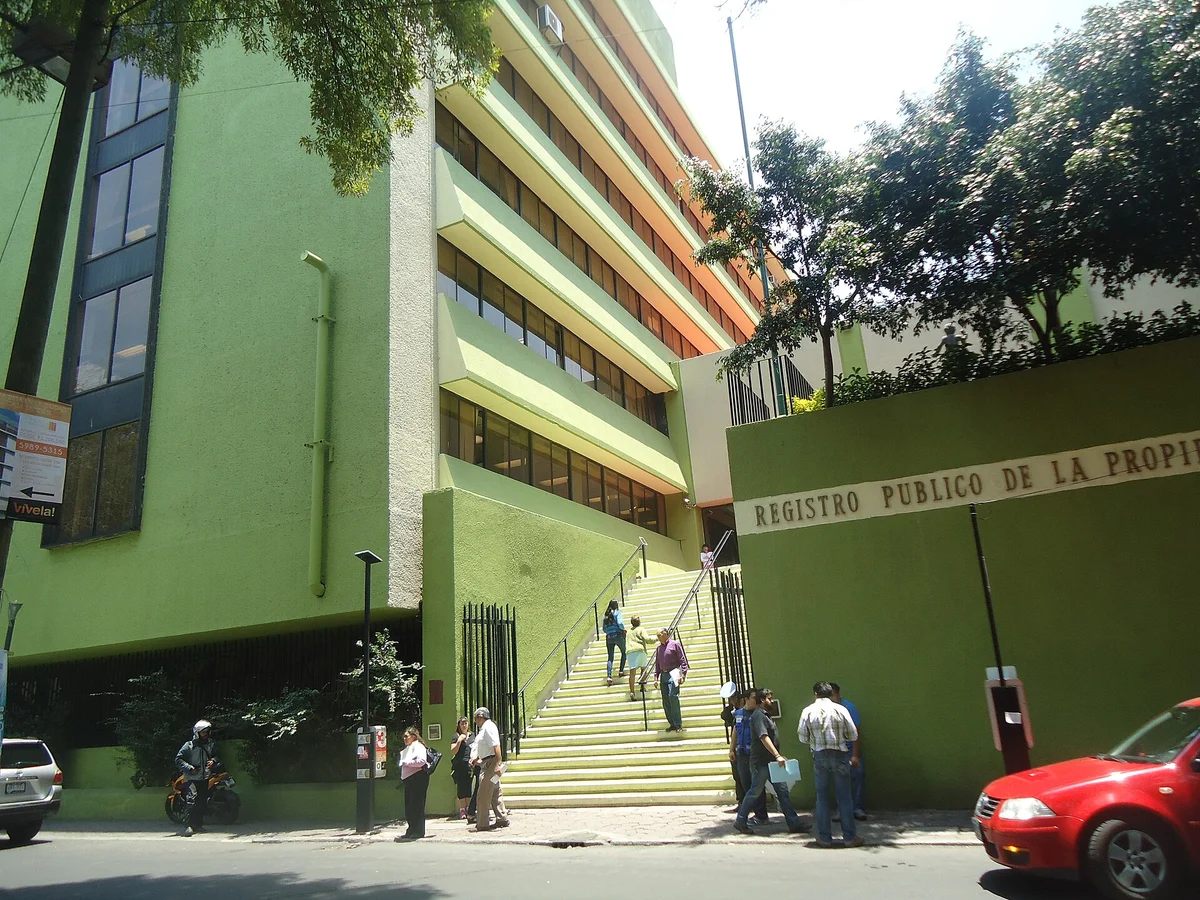
Quick answer: An escritura is Mexico’s fundamental proof of property ownership, and fraudulent versions of this document appear with enough regularity in coastal markets to make registry verification a non-negotiable step for every foreign buyer. Understanding what a genuine escritura contains, how fakes are constructed, and how to verify authenticity through the public registry eliminates this category of risk before any money changes hands.
This guide explains the anatomy of an authentic escritura, the most common fraud techniques, and a step-by-step process for independent verification. For the full due diligence picture, start with Due Diligence Mexico Real Estate.
What a genuine escritura contains
The word escritura translates literally as “writing,” but in Mexican real estate the term specifically refers to a notarized public instrument, escritura pública, prepared and authenticated by a notario público and recorded in the Registro Público de la Propiedad (RPP).
A legitimate escritura for a completed property transaction contains:
Identification section. Full legal names of grantor (seller) and grantee (buyer), their nationality, marital status, tax ID numbers (RFC), and identification document numbers.
Property description. The exact legal description of the property, surface area in square meters, boundaries on all four sides (norte, sur, oriente, poniente), the folio real number assigned by the registry, and condominium regime details if applicable.
Transaction details. The sale price, payment terms, and declaration that the seller has received payment and transferred possession.
Notario authentication. The notario’s name, license number (número de cédula profesional), protocol number (número de escritura), the date of signing, and the official seal.
Registry inscription. The registry’s stamp, folio, volume, and inscription date confirming the document is recorded in the public registry.
The registered escritura in the RPP is the controlling document. What the seller physically hands you is a certified copy. The original remains in the notario’s protocol book permanently.
How fraudulent escrituras are constructed
Understanding fraud mechanics is the fastest route to recognizing red flags: All three categories below defeat a visual inspection and all three are defeated by the same single step: an independent search at the Registro Público de la Propiedad against the folio real, run by your attorney rather than by anyone connected to the seller. A document that looks perfect and a registry that does not match it is the entire signature of this fraud.
Category 1: Entirely fabricated documents
These are printed documents that simulate the format of an escritura, complete with fake notario stamps and invented protocol numbers. The notario name may be real (copied from a legitimate professional) or fictional. The folio real and registry inscription information is simply invented.
Detection: A registry search immediately reveals that no escritura with the stated protocol number, folio, or seller exists for that property.
Category 2: Authentic documents for a different property
The seller presents a legitimate notarized escritura, but for a different property than the one being sold. Address, folio, and legal description are altered on the copy, while the authentic notario signature and stamps remain genuine.
Detection: Cross-referencing the folio real number against the registry reveals the mismatch between the document and the actual property record.
Category 3: Altered authentic escrituras
A genuine escritura is obtained for a property, then physically or digitally altered to change ownership names, folio numbers, or property boundaries. These are harder to detect visually but fail on registry comparison.
Detection: Any discrepancy between the certified copy presented and the registry inscription reveals the alteration.
Category 4: Escrituras with unauthorized subsequent encumbrances
The escritura itself is legitimate, but the seller has recorded mortgages, liens, or fideicomiso clauses after your preliminary review, creating encumbrances you did not know existed.
Detection: Libertad de gravamen certificate obtained close to closing date (within days, not weeks) reveals any recently recorded encumbrances.
Category 5: Ejido land with simulated escrituras
Communal ejido land that has not completed full privatization cannot legally carry a private escritura valid for fideicomiso trust. Fraudulent operators create convincing documents for land that legally cannot be privately owned. For detailed ejido risk analysis, read Mexico Real Estate Scams to Avoid.
Detection: Cross-referencing folio real with the RPP and confirming the land is not in the Registro Agrario Nacional as ejido.
The Registro Público de la propiedad: how it works
Every Mexican state has a public property registry (RPP) where real estate transactions must be inscribed to be legally valid against third parties. In Quintana Roo, which covers Cancún, Playa del Carmen, and Tulum, the registry is divided by municipality:
Registry search is the control that defeats every fraud pattern on this page, and it costs almost nothing relative to the exposure. A certificado de libertad de gravamen pulled fresh against the folio real shows the registered owner, the chain of title and any liens, and it must be current within 30 days because Mexican registries record encumbrances continuously. Have your own attorney order it at $1,500 to $5,000 for the wider review, never accept a copy supplied by the seller, and treat a refusal to permit a fresh search as the finding itself.
| Municipality | Covers | Registry location |
|---|---|---|
| Benito Juárez | Cancún area | Cancún RPP office |
| Solidaridad | Playa del Carmen, Akumal | Playa del Carmen RPP |
| Tulum | Tulum, Akumal Sur | Tulum RPP office |
| Cozumel | Cozumel island | Cozumel RPP |
Each property is assigned a unique folio real, a registration number that persists through all subsequent transactions. When you search the registry using the folio real, you see the complete chain of ownership inscriptions: who has owned the property, when each transfer was recorded, and what liens or encumbrances are registered against it.
The folio real should appear on the escritura you receive from the seller. If there is no folio real, or if the number cannot be found in the registry, the transaction should not proceed.
Step 1: Obtain the escritura copy from the seller
Request a complete certified copy of the current escritura, not a scan, not excerpts. The complete document should include all pages, the notario’s signature on each page, and the RPP inscription stamp.
Step 2: Identify the key verification elements
From the document, extract:
- Notario name and cédula profesional number
- Protocol number (escritura number within the notario’s book)
- Folio real (registry folio number)
- Seller’s name as it appears in the escritura
- Property surface area and legal description
Step 3: Verify the notario
Contact the Colegio de Notarios of the relevant state to confirm the notario exists, holds an active license with the stated cédula number, and practices in the stated jurisdiction. Most state notary colleges have phone lines and some have online directories.
Do not use contact information from the escritura itself, look up the notary college and notario contact through official channels.
Step 4: Request a registry search: independently
Your independent attorney should request an extract (constancia) from the RPP using the folio real number. This official registry extract shows:
- Current registered owner
- Date of last inscription
- Any mortgages, liens, restrictions, or annotations
- Folio history (prior owners)
Compare the registry extract to the escritura you received. Owner name, property description, folio number, and last inscription date should match. Any discrepancy warrants explanation.
Step 5: Obtain libertad de gravamen
The libertad de gravamen is the official certificate confirming no recorded encumbrances exist against the property. Request this from the RPP close to your planned closing date, within 5 to 10 business days. An older libertad de gravamen may miss recently recorded liens.
Step 6: Review the condominium regime (if applicable)
For condominium properties (apartments, fractional units), the property must be part of a registered condominium regime, an escritura constitutiva del régimen de condominio recorded at the RPP. This document establishes the legal existence of the individual units. Without it, the individual unit may not be legally separable from the underlying land, meaning your unit escritura describes something that does not formally exist as a separate property in the registry.
Step 7: Confirm seller identity matches the registry
The person signing as seller must be the same entity named as owner in the registry. If the registered owner is a corporation, trust, or fideicomiso, the signatory must have documented authority to act for that entity. Your notario handles this at closing, but your attorney should flag mismatches during pre-closing review.
What red flags should pause this Mexico purchase?
Forged escrituras rarely look forged. They look like documents, with seals and signatures and formatting that matches what a foreign buyer expects, which is why the flags below are all about verification rather than appearance. A missing folio real number means the document may never have been registered at all. A seller who cannot produce a full certified copy is a seller whose ownership may be disputed. A notario cédula that does not appear in the state registry means the credential itself is fabricated. Each of these is checkable in an afternoon, and each of them stops a fraud that a visual inspection would not.
| Red flag | What it may indicate |
|---|---|
| No folio real number on document | Document may be fabricated or unregistered |
| Seller cannot produce full certified copy | Ownership may be disputed or fraudulent |
| Notario cédula not found in state registry | Possible forged notario credentials |
| Property description does not match on-ground reality | Document may be for different property |
| Registry owner name differs from seller | Seller may not own the property |
| Libertad de gravamen shows unexpected lien | Undisclosed mortgage or legal claim |
| No registered condominium regime for individual unit | Unit may not be legally defined property |
| Seller pressures quick closing before verification completes | High risk signal |
| Registry folio shows no inscriptions for several decades | Possible abandonment, ejido, or missing history |
Role of the Notario
The notario público plays a central role in Mexico’s property system, distinct from a notary public in the US or Canada. Read Notario Público Mexico Property Role for a full explanation. The distinction that matters is that a Mexican notario is a state-appointed lawyer who holds public faith and bears personal liability for the instrument, not a witness who stamps signatures. That makes them a genuine safeguard at closing, and a poor one before it, because their verification happens at the moment your money is already committed.
The notario at closing conducts identity verification, reviews the chain of title, requests current registry information, and will refuse to inscribe a transaction with title defects. However, the notario is a neutral official, not your advocate. Their pre-closing diligence does not replace the buyer’s independent registry searches conducted weeks before closing, which are the primary tool for detecting fraud at the offer and deposit stage.
Pre-closing fraud prevention requires your attorney to be in the registry verification process early, not just present at the notario’s table on closing day. By the time you are at the closing table, you should have independent confirmation of clean title from multiple verification steps.
Title insurance As a secondary layer
Mexican title insurance from providers such as Stewart Title Latin America, First American Title, and others provides financial protection if title defects are discovered after closing. Coverage typically includes: Treat this as a backstop rather than a substitute for diligence: premiums typically run 0.5-1% of the insured value, underwriters will decline exactly the parcels that most need cover, and a claim pays money rather than restoring possession. Buy it after the registry search is clean, not instead of running one.
- Prior unrecorded liens or encumbrances
- Fraud or forgery in prior instruments
- Errors or omissions in public records
- Boundary or survey discrepancies
Title insurance does not prevent fraud, it provides financial recourse when fraud survives the pre-closing process. The premium typically ranges from 0.5% to 1% of the property purchase price. For high-value transactions or cases where title history is complex, title insurance complements rather than replaces registry verification. Read Title Insurance Mexico for coverage details.
Practical comparison: verification approaches
Ranking the verification routes by cost and certainty settles where to spend. A fresh registry pull through your own attorney runs $1,500 to $5,000 for the wider review and is decisive on title, showing the registered owner, the chain and any liens as of that week. A bank asked to constitute a fideicomiso underwrites the same title with its own capital at risk and will decline a defective parcel, which costs nothing to test. Title insurance at 0.5% to 1% of value, or $1,500 to $3,500 on $300,000, pays money afterwards rather than preventing the loss. Run the first two before considering the third, because a claim paid two years after closing does not restore possession of the property.
| Approach | Fraud detection | Time | Cost |
|---|---|---|---|
| Rely on seller’s copy only | Very low | None | Dangerous |
| Attorney review of seller’s copy | Moderate | 1-2 days | Included in legal fee |
| Independent RPP registry search | High | 3-10 business days | Modest registry fee |
| Libertad de gravamen + registry search | Very high | 3-10 business days | Registry fee |
| Full title insurance + registry | Highest | 2-4 weeks | 0.5-1% of price |
Summary: registry verification is what protects you
Fake escritura fraud fails at the registry verification step, always. Every category of escritura fraud, fabricated documents, altered copies, wrong-property documents, undisclosed encumbrances, is exposed by a registry search using the folio real number. This verification takes days and costs a fraction of the property price.
The single most important action you can take is having your independent attorney, not your broker, not the seller’s attorney, conduct a full registry search before you release any significant deposit. A broker who objects to this step or pressures you to waive it is not representing your interests.
For complete purchase protection, combine registry verification with the due diligence steps covered in Due Diligence Mexico Real Estate and consider Title Insurance Mexico for high-value transactions.
Indicative cost and timeline benchmarks (2026)
The number to weigh on this page is the registry search inside a $1,500 to $5,000 attorney engagement, set against a title defect that costs the entire purchase price and cannot be insured after the fact. Use the table below as underwriting stress inputs rather than quotes, and verify current registry practice before closing.
| What verification costs | Typical range | When |
|---|---|---|
| Chain search at the Registro Público | $150-$600 USD | Before any deposit |
| Certificado de libertad de gravamen | $50-$200 USD | Same visit as the search |
| Independent notario’s title opinion | $800-$2,500 USD | Once the chain is pulled |
| Full attorney engagement | $1,500-$5,000 USD | Runs through to closing |
| Title insurance premium, where available | 0.5-1% of value | Underwritten before signing |
| Time the registry search takes | 3-10 business days | State registry dependent |
| Time a fabricated deed survives it | Zero | The search is the whole defence |
Registry search fees are trivial next to what they protect; whatever the current rate at your state’s Registro Público, the search itself is never the line to economise on.
Buyer scenarios and decision framework
Every profile below is defeated by the same control, which is why the table is short: an independent registry search against the folio real, ordered by your own attorney within 30 days of closing, resolves each of these scenarios before money moves.
| What you were handed | What that document proves | What to demand next |
|---|---|---|
| A photocopy of an escritura | Nothing whatsoever | The folio real number, then your own registry search |
| An original-looking deed with seals | That someone can buy a seal | A certified registry extract, ordered by you |
| A notario’s letter confirming title | That a notario wrote a letter | Confirmation direct from the registry, not the letter’s author |
| A certified registry extract you ordered | Actual current title and liens | Nothing further; this is the document that settles it |
Check any deal already in progress against these patterns today; a chain search ordered late is still cheaper than a closing that shouldn’t happen.
What checklist should run before you sign?
The second row on this table is the defence against everything this guide describes. A forged or altered escritura survives exactly as long as nobody runs an independent chain search at the Registro Público, which is why the fabricated documents that reach foreign buyers are almost always accompanied by a reason not to bother, a seller in a hurry, a notario already engaged, a discount that expires. Order the search yourself, from a notario you selected, before any deposit moves. The other four flags below are the ones that most often appear alongside a document problem rather than instead of it.
| Red flag | Why it matters | Action |
|---|---|---|
| Seller supplies the notario and discourages your own | Your verification runs through the party being verified | Instruct a notario you found independently |
| Deed produced but no folio real quoted | The folio is what makes a search possible | Refuse to proceed without it |
| Urgency framed around a discount that expires | Time pressure exists to outrun the registry search | Let it expire; the search takes days |
| Registry extract older than 30 days | Liens and transfers can post in that window | Order a fresh one at your own cost |
| Seller cannot produce their own acquisition deed | A seller who cannot show how they got title may not hold it | Trace the chain back two transfers, not one |
| Seller supplies the notario and discourages a second opinion | Independent verification is the only test a forgery fails | Engage your own notario for the chain search regardless |
Frequently Asked Questions
An escritura pública is a notarized instrument recorded in the public property registry that proves ownership of real estate in Mexico. Unlike a US deed, it is a multi-page document prepared and authenticated by a notario público, a licensed official. The registered escritura is the definitive legal evidence of who owns a property. An unregistered or fraudulent escritura confers no valid title.
Fake escrituras typically fall into two categories: entirely fabricated documents with forged notario stamps and registry seals, and legitimately signed escrituras that name the wrong owner or describe a different property. More sophisticated fraud involves altering a genuine escritura's content after notarization. In all cases, a registry search exposes the fraud because the public record will not match the document presented.
Libertad de gravamen is an official certificate from the public property registry confirming that a property has no recorded liens, mortgages, or encumbrances. It is one of the primary documents requested during due diligence. A property with a clean libertad de gravamen shows no registered debts against the title, but this must be cross-referenced with the registered escritura to confirm ownership chain.
Request the original notarized escritura with notario seal and folio number, the most recent predial (property tax) receipt in the seller's name, the libertad de gravamen from the RPP, and a certificado de no adeudo from the HOA or condominium. Your attorney should independently obtain the registry search, not rely solely on seller-provided copies.
Mexican title insurance policies can cover losses resulting from title defects including undisclosed prior liens, forgery, and fraud discovered after closing. Coverage terms vary by insurer. Title insurance is a secondary protection layer, it provides financial recourse when fraud occurs, whereas registry verification prevents it. Both have their place in a comprehensive due diligence process.
Ejido land that has not been formally privatized through the PROCEDE or FANAR programs cannot legally have a private escritura that foreigners can hold via fideicomiso. Fraudulent sellers sometimes present internal ejido certificates or even forged escrituras for ejido parcels. These documents do not convey private title. No escritura on ejido land should be accepted without confirming full privatization at the Registro Agrario Nacional.

Get a vetted Mexico shortlist
US and Canadian buyers use this to skip the developer sales deck: tell us the budget and the market, and we come back with 3 to 5 options and the net yield maths behind each one.
Want options matched to your budget and risk profile?
Three questions, one screen. We reply within one business day.
Get a vetted Mexico shortlist