
Tulum Real Estate: Homes and Condos for Sale
Condos and homes for sale in Tulum by zone, indicative price bands for Aldea Zama, La Veleta and Region 15, and what the supply wave did to resale.
By Mexico Invest Editorial · Updated September 7, 2026 · 14 min read
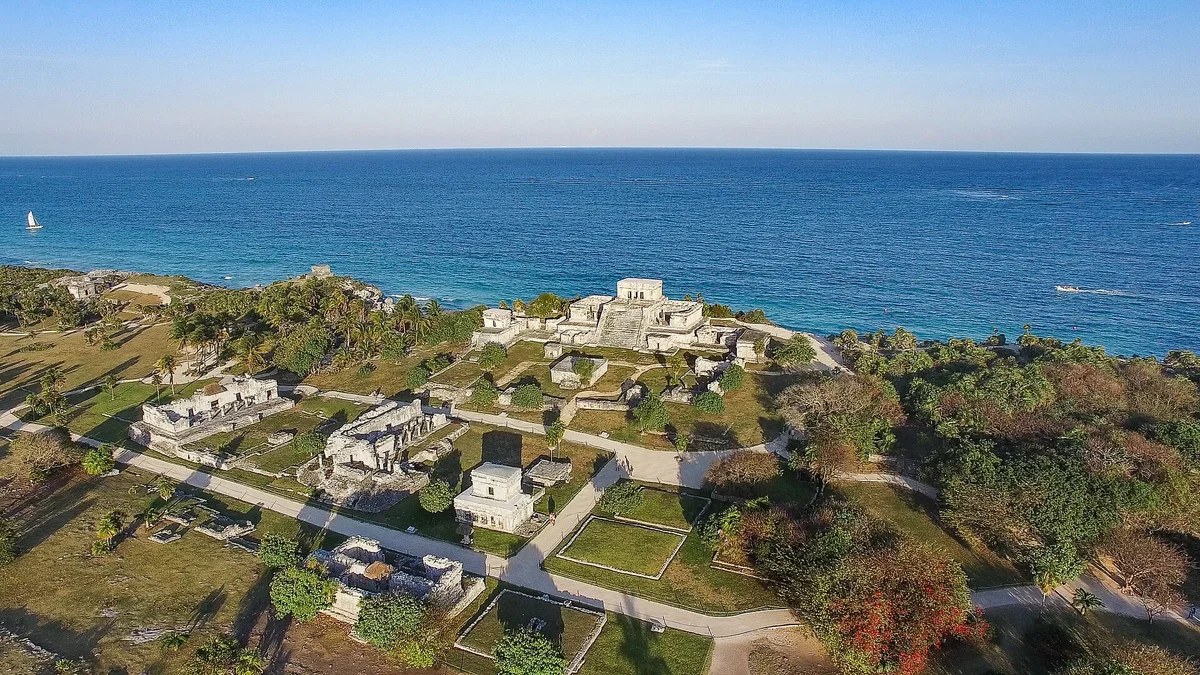
Quick answer: Tulum has the most new condo supply of any Mexican market and the widest gap between marketing and resale reality. Indicative asking bands run about $180,000 to $320,000 in La Veleta and Region 15, $250,000 to $450,000 in Aldea Zama, and well above that for anything genuinely beachfront, which is a very small share of what is sold as Tulum. Foreign buyers hold through a fideicomiso.
The brand is global: jungle wellness, beach clubs, digital nomads. The investment math is local: which grid, which tower, which HOA statement.
Zone map
Tulum divides into distinct investment zones where Aldea Zama offers master-planned infrastructure and established STR ecosystems, while Region 15 faces oversupply pressure with 74+ day DOM, requiring zone-specific analysis rather than city-wide assumptions about brand value and operational performance.
| Zone | Character | Investor note |
|---|---|---|
| Beach road / Hotel zone | Premium, permit-sensitive | High ticket |
| Aldea Zama | Master plan, STR ecosystem | Core grid |
| Region 15 | Tower supply | Oversupply risk 2026 |
| La Veleta | Mixed residential | DD per building |
| Jungle fringe | Lower price | Infrastructure variance |

Price and yield (1br indicative)
Aldea Zama achieves 3.4% net on $275K while Region 15 delivers only 2.6% net despite similar $285K pricing, demonstrating how zone selection and HOA efficiency create significant yield dispersion where premium beach access exceeds $400K but compresses net percentages on higher capital bases.
Dispersion inside Tulum is the widest of any Mexican coastal market and it makes the corridor average useless. Aldea Zama nets around 3.4% on a $240,000 to $320,000 entry while Region 15 nets 2.6% on $180,000 to $285,000, overlapping prices, an 80 basis point gap, and a resale that runs 70 to 100 days against 90 to 140. On a $300,000 purchase that spread is $2,400 a year before the slower exit is counted. Choose the building, not the town, and count the identical units competing inside it, because above 30 the pro forma stops meaning anything.
| Zone | Price | Gross | Net |
|---|---|---|---|
| Aldea Zama | $275K | 6.5% | 3.4% |
| Region 15 | $285K | 6.0% | 2.6% |
| Beach-access premium | $400K+ | Variable | Lower % on price |
2026 supply story
Region 15 faces post-2022 tower concentration with multiple similar buildings creating identical-unit competition and median $285K pricing with buyer leverage on extended DOM, requiring investors to underwrite specific building differentiation rather than relying on Tulum brand alone for occupancy success.
- Multiple similar towers in Region 15
- Median 1BR ~$285K with buyer leverage
- Developer launches still market lifestyle
Underwrite competition within 1 km, not Tulum brand alone.
Infrastructure
Tulum benefits from Felipe Carrillo Puerto airport improvements and Tren Maya connectivity, though water table regulations and variable power-internet quality in fringe developments require building-specific verification, as infrastructure improvements support demand but do not guarantee unit-level performance without operational execution.
- Tulum airport (FEL), international access improving
- Tren Maya station, RM connectivity
- Water table / cenote regulations, environmental DD
- Power and internet improving but verify per project
STR and permits
Tulum requires HOA permission, municipal registration, and lodging tax compliance with tightened enforcement creating zero yield if STR bans occur in buildings, making written HOA verification essential before purchase since permit compliance cannot override condominium restrictions.
Tulum municipal enforcement tightened versus laissez-faire era. Requirements:
- HOA permission
- Municipal registration
- Lodging tax compliance
Zero yield if STR banned in your building.
Ejido warning
Ejido land parcels south and west of core grids remain permanently unavailable to foreign ownership regardless of pricing, as fideicomiso cannot convert agrarian properties to private title, making attorney screening essential for any seemingly discounted land deals that may involve collective farming rights.
Cheaper land south and west of core grids may involve agrarian parcels. Foreigners: avoid. No fideicomiso fix.
Who Tulum fits
Selective value investors with local DD capacity can succeed in Aldea Zama resale markets while lifestyle buyers benefit from beach and AZ premium positioning, though pure yield hunters often discover net returns below expectations due to HOA burden and first-time Mexico buyers typically achieve better outcomes in Playa del Carmen.
| Profile | Fit |
|---|---|
| Selective value investor | Maybe, Aldea Zama resale |
| First Mexico purchase | Usually Playa first |
| Lifestyle + rent hybrid | Beach / AZ if HOA clear |
| Pure yield hunter | Scrutinise, net can disappoint |
Vs Playa del Carmen
Tulum offers thinner resale liquidity and wider yield dispersion compared to Playa’s deeper management supply and tighter net yield bands, while requiring car dependency for many zones versus Playa Centro walkability, creating operational complexity that favors experienced investors over first-time buyers.
| Factor | Tulum | Playa |
|---|---|---|
| Resale liquidity | Thinner | Deeper |
| Net yield stability | Wider dispersion | Tighter band |
| Management supply | Growing | Mature |
| Walkability | Car often needed | Centro walkable |
What the Tulum brand does and does not buy you
Tulum’s global brand genuinely lifts nightly rates in the wellness and eco-luxury segments, and it changes nothing below the revenue line. Three constraints apply here exactly as they do in a market nobody has heard of:
- HOA monthly reality
- Identical unit supply
- Municipal permit enforcement
- Resale buyer depth thinner than Playa
Brand premium does not apply to generic Region 15 studio facing parking lot.
Region 15 deep dive: 2026 investor caution zone
Region 15 demonstrates oversupply consequences with median DOM of 74+ days and net yields commonly 2.6-3.5% due to high identical-unit STR competition, requiring negotiation leverage and differentiation strategies or long hold horizons since buying cheap into oversupply does not automatically create positive returns.
| Metric | Signal |
|---|---|
| Median 1BR price | ~$285K |
| DOM | 74+ days |
| Net yield | 2.6-3.5% common |
| STR competition | High identical count |
Negotiation leverage exists, but buying cheap into oversupply is not automatic win. Need differentiation or long hold.
Aldea Zama: master plan mechanics
Aldea Zama is the part of Tulum that was actually planned, and that is the whole investment case: paved roads, a commercial village and an established operator base, which together explain why its net yields hold up where newer regions’ do not. What the master plan delivers:
- Paved internal road grid
- Commercial village (shops, restaurants)
- Established STR operator presence
- Mixed residential phases
Often considered core investable Tulum versus raw jungle parcels. Net yields mid-3% to low-4% on many 1BRs, verify HOA.
Beach zone and hotel strip
The beach road carries Tulum’s highest entry prices, $400K to $1M and above for quality product, and its highest concentration of risk. Environmental permitting and hurricane exposure both bite hardest here, and both are property-specific rather than street-wide.
Risks:
- Environmental permit sensitivity
- Hurricane exposure
- Premium HOA
- Lower net % on high price
For qualified buyers seeking ADR maximisation, not entry tier.
La Veleta and mixed residential
La Veleta sits between AZ and R15, building-by-building DD:
- Some established STR buildings
- Some owner-occupier heavy
- HOA variance extreme
No colonia-wide generalisation safe.
Tulum airport (FEL) impact timeline
Felipe Carrillo Puerto International Airport shortens the journey and lengthens the luxury demand story, but it does not touch the near-term problem. Direct access helps the top of the market; it does not absorb the Region 15 unit count already built:
- Reduces CUN transfer time for some routes
- Supports luxury tourism thesis long-term
- Does not clear R15 oversupply near-term
Infrastructure is necessary not sufficient for unit success.
Water, power, and infrastructure reality
Tulum built faster than its utilities, and the gap is a running cost rather than a one-off. Three building-level questions decide whether a unit can be let reliably through storm season: Tulum’s municipal water pressure and grid reliability were built for a town a fraction of its current size, so buildings compensate privately, cistern, pump, generator, second internet line. A building without them does not merely inconvenience guests; it produces the one-star reviews that permanently reset a listing’s ranking, which is a revenue problem rather than a comfort one.
- Verify backup water (cistern) in building
- Internet redundancy for remote owners
- Power outages in storms, generator?
Pre-construction marketing shows renderings, verify delivered infrastructure on resale.
Price bands by zone (1br indicative)
Tulum pricing spans $140K pre-construction launches to $800K+ beach premium with Region 15 resale at $150K-250K and Aldea Zama at $240K-320K, though lower sticker prices often correlate with operational challenges and yield compression requiring full due diligence rather than price-focused selection.
| Zone | USD band |
|---|---|
| Region 15 resale | $150K-250K |
| Aldea Zama | $240K-320K |
| La Veleta | $200K-280K |
| Beach premium | $400K-800K+ |
| Pre-construction launch | $140K-220K |
STR operations in Tulum
Car-dependent guests increase:
- Rental car coordination
- Parking disputes in dense towers
- Manager logistics cost
Walkable Playa reduces friction, Tulum operators charge accordingly.
Property Management Riviera Maya Cost.
What checklist should run before you sign?
Four checks are specific to Tulum and none of them appears on a generic Mexican due-diligence list. Each has stopped a closing in this market: Cenote setbacks and federal-zone lines are the two that catch buyers, because both are invisible on a site plan and both are enforced against the owner rather than the developer who built the violation. Tulum’s karst geology puts underground water systems under a large share of the municipality, and construction over them without SEMARNAT clearance is the origin of most of the closure orders the market has seen since 2023.
- Municipio building permit verified
- Cenote setback compliance
- No federal zone violation
- Flood history from seller disclosure
- HOA environmental assessments if any
Ghost buildings stopped mid-construction litter fringe, avoid adjacent distressed projects.
Resale liquidity by zone
Aldea Zama maintains 70-100 day DOM while Region 15 extends to 90-140 days with jungle fringe exceeding 120+ days, requiring hold period planning that accounts for slower exit timelines compared to Playa’s 60-90 day liquidity in comparable price ranges.
| Zone | Expected DOM |
|---|---|
| Aldea Zama | 70-100 days |
| Region 15 | 90-140 days |
| Beach premium | Variable niche buyer |
| Jungle fringe | 120+ days |
Plan hold period accordingly, not Playa-style exit.
Who Tulum suits in 2026
Experienced Mexico owners with selective Aldea Zama focus and eco-luxury lifestyle buyers benefit from Tulum positioning, while first-time foreign buyers and 4%+ net yield priorities typically achieve better outcomes in Playa del Carmen’s established systems rather than navigating Tulum’s execution complexity and oversupply risks.
| Profile | Fit |
|---|---|
| Experienced Mexico owner | Selective AZ |
| Eco-luxury lifestyle + rent | Beach/AZ premium |
| First-time foreign buyer | Usually Playa first |
| 4%+ net year 2 priority | Weak in R15 |
| Long hold value hunter | R15 with discount |
Who should buy Playa instead
- Need walkable STR operations
- Want deepest manager market
- Require faster resale option
- First Mexico purchase
Digital nomad and monthly rental segment
Tulum’s guest mix runs longer than Playa’s, and monthly stays change the economics rather than just the calendar: lower nightly rate, lower turnover cost, and a shoulder season that fills. The trade: The arithmetic behind the trade: a monthly let in Tulum typically prices at 55-65% of the equivalent nightly revenue, but it eliminates the cleaning turns, the gaps between bookings and most of the platform fees, and it fills May through October when nightly occupancy falls to the low fifties. Operators running a blended calendar generally land at a similar annual gross with materially less operating cost and volatility.
- Slower season revenue filler
- Lower turn cost vs nightly
- Rate per night lower on monthly deal
Operators blending nightly + monthly stabilise occupancy, verify HOA allows both.
Pre-construction inventory warning
A large share of what is marketed as Tulum inventory does not exist yet, which means much of this page describes a market you cannot buy into today. Anything off-plan is a bet on a developer rather than a purchase of a building.
If buying off-plan:
- Escrow discipline
- Permit verification
- Developer delivery track record
Area economics assume completed resale unless stated.
Tulum vs Cancún for investors
Cancún offers deeper institution and flight volume; Tulum offers brand ADR premium in niches.
Wellness tourism and ADR premium
Tulum wellness positioning supports premium ADR for:
- Rooftop yoga units
- Jungle view terraces
- Eco-design interiors
Generic tower without story competes on price, ADR race to bottom.
Car rental and guest logistics
Many Tulum guests rent cars, parking scarcity in dense towers creates:
- Guest complaints
- Extra parking fees
- HOA disputes
Verify parking escritura and guest parking rules before STR underwriting.
Cenote and eco marketing compliance
Listings citing “cenote nearby”, verify distance and access rights. False eco claims draw bad reviews and municipal scrutiny.
Aldea Zama commercial village
Shops and restaurants reduce car dependency within AZ, walk score improves vs R15. Premium for AZ partly reflects internal amenity completion.
Ghost projects and adjacent risk
Scan skyline for stalled construction, adjacent ghost sites affect view, noise, and guest perception.
Ask broker: “What stopped next door?”
Resale buyer pool depth
| Buyer type | Tulum share |
|---|---|
| US lifestyle | High |
| European wellness | Moderate |
| Mexican domestic | Growing |
| Investor flip | Lower post-2024 |
Thinner than Playa, price realistically for longer DOM.
Field due diligence weekend
| Day | Focus |
|---|---|
| Fri | AZ walk, dinner test traffic |
| Sat | R15 tower visits, HOA ask |
| Sun | Beach zone price reality |
One weekend clarifies spreadsheet assumptions, worth flight.
Art, hospitality, and brand events
Tulum festivals and pop-up events drive seasonal ADR spikes, do not annualise event week only.
Base underwriting on non-event months; treat events as upside.
Security and gated vs open grids
Aldea Zama gated sections vs open streets, guest perception of safety affects reviews.
Gated premium real but HOA higher, net trade-off.
Comparison to Bacalar and Chetumal (not rm beach)
Some buyers confuse southern Q.R. lake markets with Tulum beach thesis, different asset class entirely.
Tulum area guide is beach/jungle condo focus only.
Inventory type mix
| Type | Share growing |
|---|---|
| Condo towers | High R15 |
| Low-rise AZ | Stable |
| Villas jungle | Niche |
| Land (avoid foreign) | Ejido risk |
Condos dominate foreign buyer volume, this guide reflects condo STR thesis.
Municipal website monitoring
Bookmark Tulum municipio announcements, STR rule changes post without broker email.
Attorney subscription to regulatory updates worth fee.
Tulum at a glance (investor)
| Metric | Value |
|---|---|
| Best for | Selective / lifestyle |
| 1BR band | $150K-285K |
| Net yield | 2.6-5.8% spread |
| Risk flag | Region 15 supply |
| vs Playa | Thinner liquidity |
Tulum investor discipline
If spreadsheet net under 3.5% after stress test, brand alone does not justify purchase. Tulum rewards selective DD, punishes hype.
Tulum area guide: who should read this page
| Reader | Use this page for |
|---|---|
| Value hunter | Zone risk map |
| Lifestyle buyer | Beach vs AZ vs R15 |
| First-time buyer | Caution flags |
| Playa comparison | Liquidity contrast |
Quick links for Tulum buyers
Tulum closing reminder
Region 15 oversupply means longer DOM, negotiate resale price and verify permits. Ejido fringe land remains absolute pass for foreigners.
Tulum yield reminder
Model net yield with full HOA and 28% management, How to Calculate Rental Yield Mexico. Gross marketing overstates Region 15 returns.
Indicative 2026 data. Mexico Invest is editorial.
Project reviews in Tulum real estate
The entry price, HOA level and permit position vary enough between named developments here that the corridor average is close to meaningless. Individual reviews: The dispersion here is the widest in Mexico: net yields across named Tulum developments run from about 2.6% in the oversupplied Region 15 towers to roughly 3.4% in established Aldea Zama product, on entry prices that overlap almost completely. That means the corridor average tells you nothing useful and the building-level review is the only comparison that does.
Browse off-plan and resale listings we cover in this corridor: 101 Park Tulum · Aldea Tulum · Amara Tulum · Amaru Inka · Anah Tulum · Bacalar Lagoon Homes · Bacalar Mia Suites · Bardo Tulum.
What Tulum numbers look like once the deck is rebuilt
Tulum pre-construction and short-term rental stock priced through mid-2026 shows a consistent shape. Entry tickets ranged $320,000 to $480,000 with PM fees near 25% to 30% on nightly programs. Jungle flood overlays added $200 to $500 per year on insurance versus central Playa grids. Buyers who verified Ejido conversion status and CONAGUA maps before deposit avoided two stalled closings past 75 days.
Indicative ranges from 2026 market observation, not quotes. Pricing, fees and tax treatment move and are set per transaction; confirm your own numbers before you commit.
Frequently Asked Questions
Tulum is bifurcated in 2026. Aldea Zama and beach-access micro-markets can show mid-single-digit gross yields with net near 3-5% in select buildings. Region 15 faces oversupply with median 1BR DOM near 74 days and net yields that can fall below 3%. Colonia selection determines outcome.
1BR condos commonly list $150,000-285,000 USD depending on zone and build quality. Beach road and eco-luxury product exceeds $500K. Closing costs add 5-10%, higher percentage on sub-$200K tickets.
Region 15 is a rapidly developed residential zone inland from the beach with high condo tower supply. 2026 data shows lengthening days-on-market and compressed net yields, negotiate carefully and verify HOA health.
Aldea Zama is a master-planned community with paved roads, commercial village, and established STR ecosystem. Often considered Tulum's core investable grid versus frontier jungle parcels.
Felipe Carrillo Puerto International Airport improves direct access for luxury tourism, supportive for well-positioned product long term. It does not automatically clear oversupplied towers without STR differentiation.
Yes via fideicomiso. Tulum attracted global developers post-2020, foreign buyer share is high in condo corridors. Ejido land nearby remains a red-flag zone for foreigners.
Gross marketing shows 6-7%+ in spots; net after HOA $300-900/month and 25-30% management often lands 2.6-3.4% in Region 15 and mid-3%s in Aldea Zama unless ADR is exceptional.
Playa wins liquidity and stable net for most STR investors. Tulum suits selective buyers who accept supply risk for upside. See our comparison guide.


Get a vetted Mexico shortlist
US and Canadian buyers use this to skip the developer sales deck: tell us the budget and the market, and we come back with 3 to 5 options and the net yield maths behind each one.
Want options matched to your budget and risk profile?
Three questions, one screen. We reply within one business day.
Get a vetted Mexico shortlist