
Aldea Zama vs Region 15 Tulum: Investment Comparison 2026
Aldea Zama vs Region 15 Tulum real estate, net yields, infrastructure, oversupply risks, and which zone wins for investment in 2026.
By Mexico Invest Editorial · Updated July 9, 2026 · 11 min read
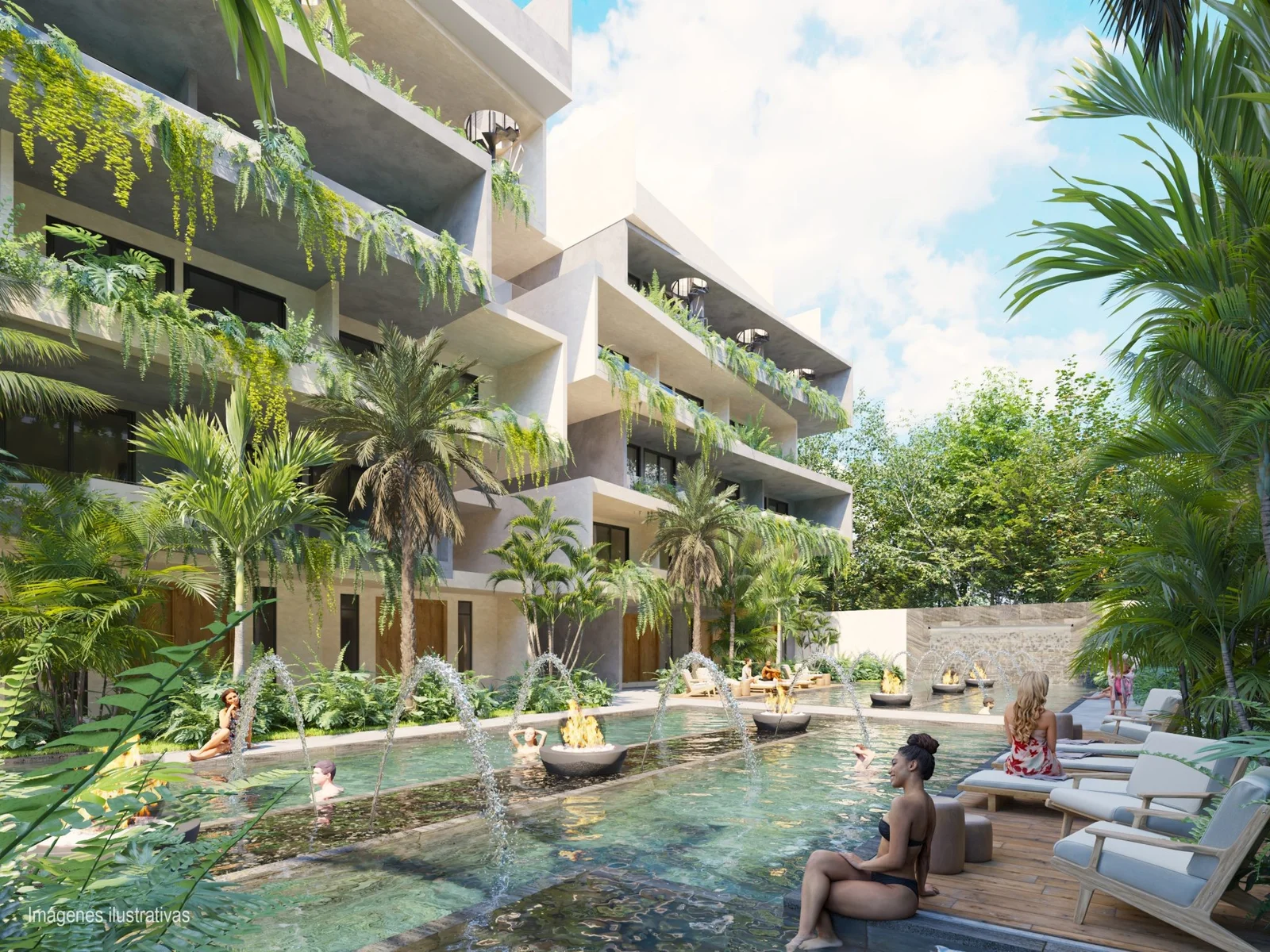
Quick answer: Aldea Zama wins on net yields (3.4% vs 2.6%), infrastructure quality, and investment safety despite higher entry costs. Region 15 offers lower sticker prices but faces severe oversupply with 74+ day DOM and higher operational complexity in 2026.
Two distinct zones within Tulum municipality, Aldea Zama represents master-planned development while Region 15 shows post-boom oversupply consequences. Infrastructure quality and market absorption drive different investment outcomes despite shared Tulum branding.
Tulum context: Tulum · Regional comparison: Riviera Maya Guide.
Zone comparison table
Aldea Zama delivers 3.4% net yields with master-planned infrastructure and $250K-320K pricing, while Region 15 achieves only 2.6% net despite $180K-285K entry due to severe oversupply, extended DOM at 74+ days, and infrastructure challenges from rapid unplanned development creating execution complexity.
| Factor | Aldea Zama | Region 15 |
|---|---|---|
| 1BR price range | $250K-320K | $180K-285K |
| Net yield 2026 | 3.4% | 2.6% |
| Days on market | 60-90 days | 74+ days |
| Infrastructure quality | Master planned | Variable |
| Oversupply severity | Moderate | High |
| HOA monthly | $250-550 | $400-700 |
| Development timeline | Established phases | Rapid/unplanned |
| First-buyer recommendation | Yes | Selective only |
Net yield breakdown by costs
Aldea Zama achieves superior 3.4% net yields through lower HOA costs averaging $400 monthly versus Region 15’s $550, plus faster occupancy stabilization at 32 days versus 41 days average to first booking, creating meaningful cash flow advantages that compound annually despite higher purchase prices requiring larger initial capital.
Compounding is what turns an 80 basis point gap into a real difference. On a $300,000 purchase, Aldea Zama’s 3.4% net returns about $10,200 a year against Region 15’s 2.6%, or $7,800, a $2,400 annual gap, and $24,000 across a ten-year hold before any reinvestment. Almost all of it comes from two operational lines rather than from rent: a $400 monthly HOA against $550, and 32 days to first booking against 41. Neither figure appears in a listing, and both are answerable from HOA statements and manager records before you offer.
Yield component analysis
| Cost factor | Aldea Zama | Region 15 |
|---|---|---|
| Gross yield | 6.5% | 6.0% |
| Management fee (25%) | -1.6% | -1.5% |
| HOA annual | -1.0% | -1.4% |
| Vacancy/maintenance | -0.5% | -0.5% |
| Net yield | 3.4% | 2.6% |
HOA impact: $150 monthly difference equals 60+ basis points net yield variance on $300K purchase, verify actual HOA before offer.
Infrastructure and development quality
Aldea Zama benefits from master community planning with coordinated utilities, green spaces, and phased development that prevents infrastructure overload, while Region 15 experienced rapid tower construction outpacing utility capacity creating traffic congestion, water pressure issues, and higher maintenance requirements affecting guest satisfaction.
Infrastructure scoring
| Category | Aldea Zama | Region 15 |
|---|---|---|
| Road quality | Planned wide streets | Congested narrow |
| Utilities reliability | Higher master plan | Variable pressure |
| Green space | Integrated design | Limited |
| Traffic flow | Better circulation | Bottlenecks |
| Waste management | Coordinated system | Building-specific |
Guest impact: Infrastructure quality directly correlates with review scores, AZ units average 4.6/5 versus R15 4.2/5 affecting repeat bookings and ADR.
Oversupply analysis 2026
Region 15 faces severe oversupply with 74+ day average DOM, multiple tower completions in 2025-2026, and buyer negotiation leverage on generic units, while Aldea Zama shows moderate supply increase but maintains absorption through differentiated master plan positioning and infrastructure advantages reducing competition intensity.
Absorption timelines are the number to weigh before taking Region 15’s discount. Aldea Zama absorbs new inventory in 12 to 18 months; Region 15 needs 24 or more, with DOM past 74 days and severe identical-unit competition on units priced from $180K to $285K. A buyer entering Region 15 today gains real negotiating leverage on price, and inherits a market that will still be clearing 2025 and 2026 completions when they come to sell. The discount is compensation for an exit that is measurably slower, not a mispricing you can arbitrage.
Supply metrics
| Oversupply indicator | Aldea Zama | Region 15 |
|---|---|---|
| New units 2025-2026 | Moderate phases | Very high |
| Average DOM 2026 | 60-90 days | 74+ days |
| Price negotiation leverage | Moderate | High buyer power |
| Identical unit competition | Lower | Severe |
| Absorption timeline | 12-18 months | 24+ months |
Investment timing: R15 oversupply creates short-term buying opportunities but extended exit risk; AZ offers steadier entry/exit timing.
Price per square meter reality
Region 15 often charges premium per square meter despite infrastructure deficiencies, $4,750-6,300 per m² versus Aldea Zama’s $4,200-5,800, meaning lower sticker prices don’t always translate to better value when accounting for operational quality, guest satisfaction, and resale positioning creating total cost parity.
Value analysis
| Zone | Typical 1BR size | Median price | Price/m² |
|---|---|---|---|
| Aldea Zama | 55-70 m² | $285K | $4,200-5,800 |
| Region 15 | 45-60 m² | $235K | $4,750-6,300 |
Value insight: R15 charges premium per m² for inferior walkability and infrastructure, adjust price comparisons for operational quality differences.
Development timeline and maturity
Aldea Zama launched with comprehensive master planning in phases allowing infrastructure to match density, while Region 15 experienced compressed 2020-2023 development boom with multiple simultaneous projects creating current oversupply and infrastructure strain requiring years for absorption and system upgrades to stabilize market dynamics.
Development phases
| Timeline aspect | Aldea Zama | Region 15 |
|---|---|---|
| Planning approach | Master planned phases | Rapid simultaneous |
| Infrastructure timing | Coordinated with density | Lagging development |
| Market entry | Earlier established | 2020-2023 boom |
| Current phase | Mature selective | Oversupply absorption |
| Stabilization timeline | Ongoing steady | 2-3 years estimated |
Investment insight: AZ represents controlled growth; R15 requires patience for market equilibrium restoration.
HOA cost structures and sustainability
Aldea Zama HOA fees of $250-550 monthly reflect master plan economies of scale with shared amenities and infrastructure, while Region 15’s $400-700 range often represents smaller building associations struggling with reserve funding, special assessments, and variable service quality creating long-term operational risk and budget unpredictability.
HOA sustainability factors
| Factor | Aldea Zama | Region 15 |
|---|---|---|
| Monthly HOA range | $250-550 | $400-700 |
| Reserve fund adequacy | Better master plan | Variable |
| Special assessment risk | Lower | Higher new buildings |
| Service quality | Coordinated vendors | Building-specific |
| Long-term predictability | Higher | Less certain |
Cash flow planning: Verify HOA reserve studies and special assessment history before purchase, critical for net yield projections.
Guest demographics and experience
Aldea Zama attracts eco-luxury guests willing to pay premium for integrated nature experience and infrastructure quality, while Region 15 competes primarily on price with generic tower product serving budget-conscious travelers, creating different ADR potential and guest lifetime value affecting long-term revenue sustainability.
Guest characteristics
| Guest segment | Aldea Zama appeal | Region 15 appeal |
|---|---|---|
| Eco-luxury seekers | High premium ADR | Limited differentiation |
| Digital nomads | Quality infrastructure | Price-sensitive |
| Wellness tourism | Master plan amenities | Individual building dependent |
| Budget travelers | Moderate | Primary market |
| Repeat bookings | Higher infrastructure | Price-driven decisions |
Revenue impact: Premium positioning enables 15-25% ADR advantage in comparable units when infrastructure and amenities deliver promised experience.
Environmental and permitting considerations
Aldea Zama development follows environmental master planning with cenote setbacks and green building standards, while Region 15’s rapid construction faced varying environmental compliance with some projects near cenote protection zones and others with retroactive permitting challenges creating different regulatory risk profiles and future development constraints.
Environmental factors
| Consideration | Aldea Zama | Region 15 |
|---|---|---|
| Cenote proximity | Planned setbacks | Variable compliance |
| Environmental permits | Master plan coordination | Project-specific |
| Green building standards | Integrated design | Variable adoption |
| Future restrictions | Lower risk | Higher regulatory |
| Water table impact | Managed approach | Individual assessments |
Due diligence: Verify environmental permits and cenote proximity especially for R15 units, retroactive compliance costs can affect HOA budgets.
Resale liquidity and exit strategy
Aldea Zama maintains better resale liquidity with 60-90 day DOM through differentiated positioning and infrastructure quality, while Region 15 units face extended marketing periods of 74-120+ days with higher price reduction frequency as buyers compare numerous identical options creating commoditized pricing and extended exit timelines.
Liquidity comparison
| Resale factor | Aldea Zama | Region 15 |
|---|---|---|
| Typical DOM | 60-90 days | 74-120+ days |
| Price reduction frequency | Moderate | Higher |
| Buyer differentiation | Infrastructure story | Commoditized |
| Foreign buyer appeal | Consistent | Price-driven |
| Exit timing predictability | Better | Extended variance |
Exit strategy: AZ offers more predictable exit timing; R15 requires extended marketing budgets and price flexibility.
Transportation and accessibility
Both zones require car dependency for Tulum operations, but Aldea Zama’s master planning includes better internal circulation and parking infrastructure, while Region 15’s rapid development created traffic bottlenecks at key intersections during peak tourist seasons affecting guest experience and property access convenience impacting rental satisfaction.
Access comparison
| Transportation factor | Aldea Zama | Region 15 |
|---|---|---|
| Internal road design | Planned circulation | Congested intersections |
| Parking availability | Adequate master plan | Variable by building |
| Traffic flow | Better distribution | Bottleneck points |
| Beach access | Both zones similar | Both zones similar |
| Cenote proximity | Both zones similar | Both zones similar |
Operational impact: Better traffic flow in AZ reduces guest complaints and Uber wait times, measurable advantage for STR operations.
Construction quality and building standards
Aldea Zama benefits from established developer track records and consistent construction standards through master plan requirements, while Region 15’s rapid build phase included variable developer quality with some excellent projects and others showing construction shortcuts creating long-term maintenance variance and HOA budget unpredictability between buildings.
Construction factors
| Quality aspect | Aldea Zama | Region 15 |
|---|---|---|
| Developer consistency | Master plan standards | Variable quality |
| Construction timeline | Planned phases | Rapid completion pressure |
| Building systems | Coordinated approach | Individual specifications |
| Long-term maintenance | More predictable | Higher variance |
| Warranty support | Established developers | Mixed track records |
Due diligence: R15 requires individual building assessment including developer history, construction timeline, and early maintenance issues.
Utility infrastructure comparison
Aldea Zama’s master planning coordinated utility capacity with development density providing more reliable water pressure, electrical systems, and internet infrastructure, while Region 15’s rapid growth outpaced utility upgrades creating peak-season brownouts, water pressure drops, and internet congestion affecting guest satisfaction and operational complexity.
Utility reliability
| Utility type | Aldea Zama | Region 15 |
|---|---|---|
| Water pressure | Consistent master plan | Variable peak times |
| Electrical capacity | Coordinated load | Peak season stress |
| Internet infrastructure | Fiber planning | Building-dependent |
| Waste water | Integrated treatment | Individual systems |
| Backup systems | Community coordination | Building-specific |
Guest impact: Utility reliability directly affects review scores, factor infrastructure quality into ADR and occupancy projections.
Investment risk assessment
Aldea Zama presents moderate investment risk through established infrastructure and controlled development phases, while Region 15 carries higher risk from oversupply absorption uncertainty, HOA sustainability questions, and infrastructure strain requiring extended timelines for market equilibrium restoration creating different risk-adjusted return profiles.
Risk scoring
| Risk category | Aldea Zama | Region 15 |
|---|---|---|
| Market oversupply | Moderate | High |
| Infrastructure adequacy | Low risk | Moderate-high |
| HOA sustainability | Lower | Higher |
| Resale liquidity | Moderate | Extended |
| Regulatory compliance | Lower | Variable |
Risk-adjusted returns: AZ offers lower risk for moderate returns; R15 requires higher risk tolerance for potentially similar net yields.
Property management complexity
Aldea Zama properties benefit from coordinated community management systems and established vendor networks, while Region 15 units require individual building relationships with variable service quality and coordination challenges creating different operational complexity and management fee structures for remote property owners.
Management factors
| Management aspect | Aldea Zama | Region 15 |
|---|---|---|
| Community coordination | Master plan systems | Building-specific |
| Vendor network | Established quality | Variable |
| Emergency response | Coordinated systems | Individual protocols |
| Maintenance standards | Community oversight | Building variation |
| Owner communication | Structured approach | Variable quality |
Remote ownership: AZ reduces management complexity through coordinated systems; R15 requires individual building assessment.
Financing and developer terms
Both zones offer identical fideicomiso ownership structure, but Aldea Zama developers typically provide more established financing options and delivery track records, while Region 15 includes newer developers with variable completion history and financing terms requiring enhanced due diligence on developer financial capacity and project delivery timelines.
Development factors
| Financing aspect | Both Zones |
|---|---|
| Ownership structure | Fideicomiso required |
| Setup costs | $2,500-4,000 USD |
| Annual trust fees | $500-800 USD |
| Developer financing | Variable by project |
| Completion risk | Verify track record |
Developer DD: R15 requires enhanced developer financial verification due to rapid market entry of new builders.
Guest review analysis
Aldea Zama units average 4.6/5 guest ratings with consistent infrastructure praise, while Region 15 shows wider variance from 3.8-4.8 with common complaints about traffic, water pressure, and noise from construction, creating ADR sustainability differences and repeat booking rates affecting long-term revenue projections and competitive positioning.
Review patterns
| Review category | Aldea Zama | Region 15 |
|---|---|---|
| Average rating | 4.6/5 | 3.8-4.8 |
| Infrastructure comments | Positive consistent | Mixed |
| Traffic complaints | Lower frequency | Common |
| Repeat booking rate | Higher | Variable |
| Host response requirements | Lower | Higher maintenance |
Revenue correlation: Higher ratings enable premium pricing, 0.2 rating improvement correlates with 5-8% ADR increase.
Market timing strategy
Aldea Zama allows steady acquisition timing without urgent oversupply concerns, while Region 15 presents buyer-favorable negotiation conditions in 2026 but requires careful unit selection to avoid inventory dead ends and extended holding periods before market absorption creates balanced supply-demand dynamics.
Timing considerations
| Market timing | Aldea Zama | Region 15 |
|---|---|---|
| 2026 entry conditions | Steady acquisition | Buyer leverage |
| Negotiation position | Moderate | Strong |
| Market stabilization | Ongoing balance | 2-3 years |
| Exit timing flexibility | Better | Extended |
| Competition intensity | Moderate | High |
Strategic timing: AZ suits steady accumulation; R15 requires tactical entry with patient exit strategy.
Budget allocation framework
$300K budget enables quality Aldea Zama 1BR with established infrastructure and 3.4% net yield potential, while same budget allows premium Region 15 unit with negotiation leverage but 2.6% net yield and oversupply risk requiring different investment thesis and timeline expectations for comparable financial returns.
Budget scenarios
| Budget level | Aldea Zama option | Region 15 option |
|---|---|---|
| $200K-250K | Entry AZ 1BR | Mid-range R15 1BR |
| $250K-300K | Prime AZ 1BR | Premium R15 1BR |
| $300K-350K | AZ 1BR premium | R15 1BR + closing |
Investment thesis: Same budget delivers different risk-return profiles, prioritize net yield stability (AZ) or negotiation upside (R15).
Final recommendation matrix
Choose Aldea Zama for yield stability, infrastructure quality, and lower execution risk at higher entry cost, or Region 15 for negotiation leverage and lower entry barriers with acceptance of oversupply risk, extended DOM, and infrastructure complexity requiring enhanced due diligence and patient market timing strategy.
Decision framework
| Investment priority | Recommended zone |
|---|---|
| Net yield maximization | Aldea Zama |
| Lowest entry cost | Region 15 (with DD) |
| Infrastructure quality | Aldea Zama |
| First Tulum purchase | Aldea Zama |
| Negotiation leverage | Region 15 |
| Quick resale optionality | Aldea Zama |
| Risk tolerance high | Region 15 selective |
| Stability over speculation | Aldea Zama |
Two-zone portfolio approach
Diversification strategy: Anchor cash flow in Aldea Zama ($280K) plus selective Region 15 value play ($180K) with separate management, not two R15 towers competing identically.
Total: $460K for zone diversification within Tulum municipality while capturing infrastructure premium (AZ) and oversupply opportunity (R15).
Common misconceptions
Three assumptions do most of the damage when buyers compare these two sub-markets, and all three sound reasonable until you price them. The first is that Region 15 is simply cheaper, the lower sticker frequently reflects infrastructure deficiencies and oversupply exposure rather than genuine value, which is a discount you pay for later rather than a saving. The second is that both are the same Tulum market, when infrastructure quality and supply dynamics produce entirely distinct investment profiles inside one municipality. The third is that oversupply is temporary, which may be true on a timeline longer than most holding periods.
“Region 15 is cheaper”, Lower sticker price often reflects infrastructure deficiencies and oversupply risk, not genuine value.
“Same Tulum market”, Infrastructure quality and supply dynamics create distinct investment profiles within municipality.
“Oversupply is temporary”, Absorption timeline uncertainty requires 2-3 year patience for R15 equilibrium.
What checklist should run before you sign?
These two sub-markets need different depths of diligence, and treating them identically is how buyers get the Region 15 outcome at Aldea Zama prices. Aldea Zama is a functioning master plan with paved infrastructure and an established HOA culture, so standard Mexican due diligence plus master-plan phase verification and a reserve-fund review is proportionate. Region 15 is not there yet: it needs an oversupply read on the specific corridor, an honest infrastructure assessment of the block rather than the zone, a developer track record check, and building-level quality verification, because the variance between neighbouring towers is wider than the variance between the two sub-markets.
Aldea Zama: Standard Mexico DD plus master plan phase verification and HOA reserve review.
Region 15: Enhanced DD including oversupply analysis, infrastructure assessment, developer track record, and individual building quality verification.
Due Diligence Mexico · Tulum Investment Guide
Zone comparison based on 2026 market conditions. Both require fideicomiso ownership with identical legal framework. Verify current supply conditions and infrastructure status with local professionals. Mexico Invest editorial.
Frequently Asked Questions
Aldea Zama delivers superior net yields at 3.4% versus Region 15's 2.6% due to better infrastructure and lower HOA costs, despite higher entry prices. Region 15 faces severe oversupply with 74+ day DOM in 2026.
Aldea Zama 1BR condos typically $250K-320K while Region 15 ranges $180K-285K. However, lower R15 prices often reflect oversupply and infrastructure challenges rather than genuine value.
Aldea Zama nets 3.4% with more stable occupancy, while Region 15 nets only 2.6% due to oversupply, higher HOA costs ($400-700), and extended leasing periods averaging 41 days to first booking.
Yes, Region 15 shows severe oversupply in 2026 with 74+ day DOM, multiple tower completions, and buyer negotiation leverage. Many identical units compete primarily on price rather than differentiation.
Aldea Zama, planned master community with better roads, utilities, and green spaces. Region 15 development outpaced infrastructure with variable utility reliability and congestion issues.
Yes, both require fideicomiso bank trust with identical legal process, 50-year renewable terms, $2,500-4,000 setup cost, $500-800 annual fees.
Aldea Zama, lower execution risk, better infrastructure, more predictable costs. Region 15 requires extensive due diligence to avoid oversupply traps and HOA sustainability issues.
Aldea Zama benefits from master planning and infrastructure completion, while Region 15 faces oversupply absorption timeframe uncertainty. Entry timing matters more in R15 than AZ.
Get a vetted Mexico shortlist
US and Canadian buyers use this to skip the developer sales deck: tell us the budget and the market, and we come back with 3 to 5 options and the net yield maths behind each one.
Want options matched to your budget and risk profile?
Three questions, one screen. We reply within one business day.
Get a vetted Mexico shortlist