
Dual Citizens Buying Property in Mexico: Full-Rights Guide
How Mexican nationality removes the restricted zone and fideicomiso, the consular descent route millions qualify for, and what US tax still requires.
By Mexico Invest Editorial · Updated August 26, 2026 · 13 min read
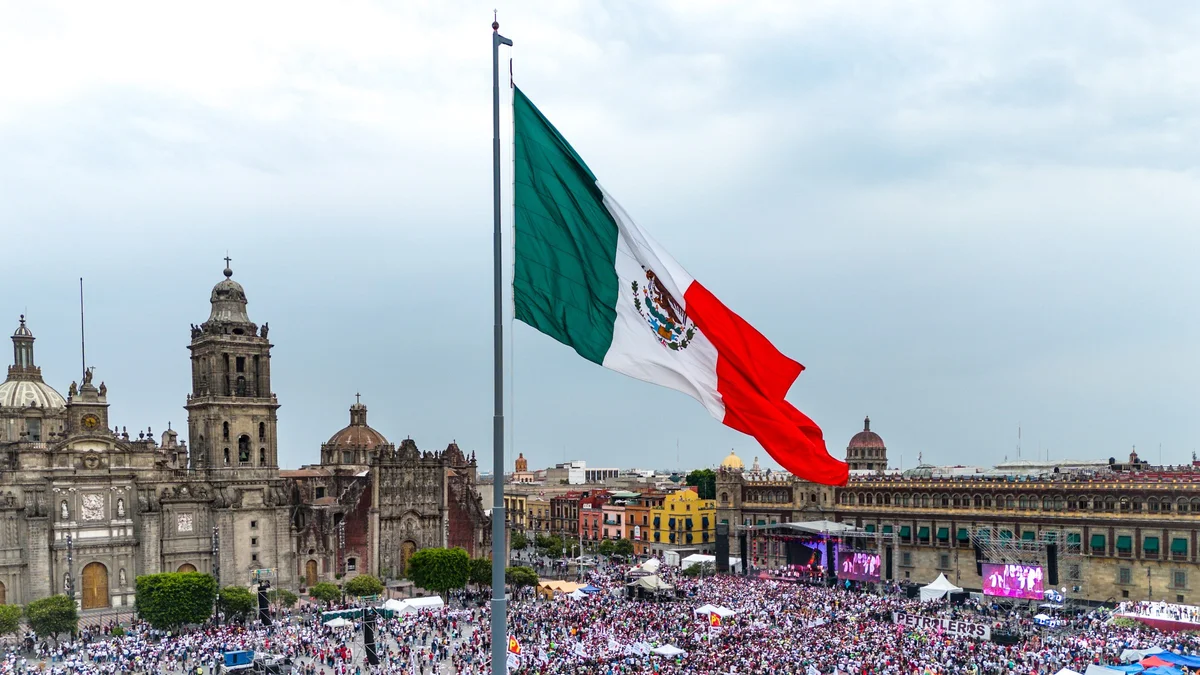
Quick answer: A dual citizen buys Mexican property as a Mexican: no restricted zone, no fideicomiso, no SRE permit, saving $2,700-5,000 at closing and $500-800 a year on any coastal purchase. The route runs through paperwork, transacting on Mexican documents, and for the US-born children of Mexican parents it starts with a consular birth registration that costs under $100.
Most of this site is written for foreigners, because most cross-border buyers are foreigners; this page is for the readers who are not, including the large group who do not yet realise it. Mexican nationality passes by blood, millions of US-born people hold an unexercised claim to it, and in property terms that claim is worth real money on every coastal transaction. The foreign buyer’s baseline is the comparison everything below improves on.
What does Mexican nationality change for a buyer?
Mexican nationality removes the two structures that define this market for foreign buyers: the restricted zone and the fideicomiso, since Article 27’s limits apply to foreigners and a dual national transacting as a Mexican is not one. Beachfront in Tulum closes by direct escritura exactly as a house in Guadalajara does, saving $2,700-5,000 at closing.
| Element | Foreign buyer, coastal | Dual citizen, same property |
|---|---|---|
| Restricted zone | Applies within 50 km of coast | Does not apply |
| Fideicomiso | Required; $1,500-2,500 set-up | None |
| SRE permit | MXN 21,650 federal duty | None |
| Annual trust fee | $500-800 for life of hold | None |
| Title | Trust beneficiary rights | Direct escritura, own name |
| Succession | Trust’s substitute beneficiary | Will and escritura, Mexican probate rules |
| Ten-year ownership cost delta | baseline | roughly $8,000-13,000 saved |
What nationality does not change deserves equal billing, because the pitch version of this story oversells. Predial, ISAI at 2-4.5%, notario fees near 1-1.5% and the diligence file are identical for everyone; the restricted zone’s disappearance removes a structure, not the need for clean title. A US passport in the same wallet keeps the entire US tax apparatus attached, a section of its own below, and the descent paperwork itself takes weeks to months of patience. The honest summary: Mexico gets simpler by $8,000-13,000 a decade on the coast, the US does not get simpler at all, and the net is still clearly positive.
The nationality many buyers already have
Mexican nationality passes by descent through a Mexican-born parent, which means millions of US-born adults hold an unexercised claim, and exercising it typically costs under $100 in consular fees. For foreign buyers who are secretly not foreign at all, a morning at the consulate is worth $8,000-13,000 across a ten-year coastal hold.
The sequence runs through documents rather than tests, and the order is fixed:
- Register the foreign birth at any Mexican consulate with the parent’s Mexican birth certificate, your birth certificate with apostille and translation, and identification; the consulate issues a Mexican acta de nacimiento.
- Obtain the CURP, generated with the acta, which is the identity key every later step uses.
- Apply for the Mexican passport at the same consulate, usually same-season; this alone suffices for most transactions.
- Obtain the INE credential on a later trip to Mexico if wanted; notarios accept a Mexican passport, but the INE is the everyday identity document.
Two cautions keep the route honest. Document chains with errors, a parent’s name spelled differently across certificates, a missing apostille, add months, so audit the papers before the appointment. And naturalisation, the route for spouses and long-term residents at 5 years of residency or 2 when married to a Mexican, is a genuinely different process with exams and timing of its own; descent is recognition of what already exists, which is why it is fast.
One legal footnote matters at the airport rather than the notario: Mexico expects dual nationals to enter and leave Mexico as Mexicans, on the Mexican passport. Adopting the habit early avoids explaining yourself at both borders for years.
Buying as a Mexican: the documents decide the treatment
A notario typically classifies the buyer by the identity file presented, not by what could have been presented, so a dual citizen who signs on a US passport is processed as foreign buyers are, restricted zone and all. Transacting as a Mexican requires the Mexican file: acta or carta de naturalización, CURP, and Mexican photo identification.
The practical checklist for the closing table is short, costs under $200 to assemble, and is worth confirming with the notario the week the offer is accepted rather than the week of signing, 45-90 days later:
- State the position explicitly: instruct the notario in writing that you transact as a Mexican national, so the escritura recites Mexican nationality and no SRE machinery is engaged.
- Bring the primary documents, acta de nacimiento or carta de naturalización plus CURP and INE or Mexican passport; copies of the US identity stay in the bag.
- Match the names: marriages, hyphenations and Anglicised spellings that differ between US and Mexican documents need a notarial clarification at MXN 2,000-6,000, cheap before closing and 10 times that after.
- RFC if letting or selling later: the tax identity follows the same Mexican papers, and registering while the file is assembled saves a second round.
Sellers and agents occasionally push back, since a foreign-looking buyer with a trust is a familiar transaction and a dual national is paperwork they know less well; the notario, not the agent, is the authority on classification. A notario who hesitates over a clean descent file is a signal to use a different notario, and the buyer chooses the notario in Mexico. The stakes justify the insistence: signing as a foreigner adds the $2,700-5,000 trust stack and 30-45 days to precisely the closing that nationality should have streamlined.
One citizen, one foreigner: the mixed-marriage title
A foreign spouse remains fully subject to Article 27’s 50 km coastal band, so mixed-nationality couples, common among foreign buyers in this market, typically choose between three title configurations. The choice interacts with the marital regime, sociedad conyugal or separación de bienes, and deciding it before the escritura costs MXN 15,000-30,000 against far more after.
| Configuration | How it works | The trade |
|---|---|---|
| Title solely in the Mexican spouse | Direct escritura, no trust; foreign spouse protected by wills | Cleanest and cheapest; concentrates legal ownership |
| Fideicomiso for the foreign spouse’s share | Trust covers the foreign interest at the usual $500-800 a year | Symmetry at the price of the structure nationality avoided |
| Sociedad conyugal holding | Community regime brings the foreign spouse’s interest in | Needs case-specific counsel; regimes vary by state |
The honest default in practice is the first row plus serious estate planning: a Mexican will covering the property, a home-country will coordinated with it, and explicit provision for the foreign spouse’s occupancy and inheritance. The casa habitación exemption adds one more argument for that shape, since a resident Mexican owner selling a primary home can reach an ISR shelter that a trust-held foreign share cannot.
What the configuration should never be is improvised at the closing table. Separación de bienes versus sociedad conyugal changes what the escritura can say, several states apply community rules differently, and a divorce or death that meets an ambiguous title costs multiples of the MXN 15,000-30,000 the planning would have.
Converting an existing fideicomiso to direct title
A trust beneficiary who documents Mexican nationality can extinguish the fideicomiso and take direct title by a new escritura, permanently ending the $500-800 annual fee that foreign buyers carry. The conversion typically costs MXN 40,000-90,000 all-in depending on state and value; payback runs 5-10 years, with the estate simplification arriving immediately.
The mechanics are notarial rather than adversarial: the bank consents as a matter of course, the notario drafts the extinction and the new deed, registration follows, and the state’s transfer-tax treatment of the conversion, a genuine variable, is the item your notario prices in advance. Banks process these routinely, and the applications that stall are stalled by identity paperwork, the same name-matching and document-chain issues the descent section covers, not by any reluctance in the system.
Three items make up the conversion file, and all three are the owner’s to produce:
- The Mexican identity documents, acta or carta plus CURP, matching the trust’s beneficiary records.
- The trust deed and the bank’s consent letter, issued routinely within 2-4 weeks.
- The new escritura and its registration, where the MXN 40,000-90,000 mostly sits.
Whether to bother is arithmetic plus intent. A holder five years from selling may reasonably ride out the trust; a holder keeping the property for decades, or planning to pass it to children, converts and stops paying a bank to stand between the family and its own deed. For anyone who acquired nationality after buying, the conversion is the last step of becoming the owner Mexico already considers you to be; the fideicomiso guide covers the trust’s mechanics for comparison.
The US side does not go away
US citizenship taxes worldwide income regardless of other passports, so the Mexican simplification is strictly one-sided in this market: Schedule E still reports the rental, the foreign tax credit still reclaims the 25%-band Mexican ISR, and the eventual sale is still a US capital gain computed in dollars. Buying as a Mexican changes none of it.
The reporting layer is where dual citizens specifically slip, because running a Mexican property as a Mexican makes Mexican accounts natural, and each account is a US reporting object:
- FBAR attaches once aggregate foreign balances pass $10,000 at any moment in the year, a threshold one closing wire crosses for a day.
- Form 8938 adds FATCA reporting at higher thresholds that a property sale easily reaches.
- Penalties for silence on either start in the five figures, disproportionate to the balances involved.
None of this argues against Mexican banking, which the property needs; it argues for telling the US preparer the accounts exist, every year, in a file that takes 15 minutes when kept current.
Estate planning is the second asymmetric layer: Mexico levies no federal inheritance tax on direct-line succession, while the US estate tax reaches worldwide assets at 40% above its exemption, and a $350,000 condo sits inside that estate wherever the deed lives. A Mexican will for the Mexican property, a US plan aware of it, and the Americans’ guide as the checklist keeps the two systems from surprising each other.
Worked example: Puerto Morelos beachfront, two ways
A $350,000 beachfront condo in Puerto Morelos, held 12 years then sold, prices the passport difference in this market precisely, because everything except the ownership structure is identical in both columns. The dual citizen closes by direct escritura; foreign buyers run the standard trust at $4,000 up front and $650 a year.
| Line, 12-year hold | As foreign buyer | As dual citizen |
|---|---|---|
| Trust set-up and SRE duty | about $4,000 | $0 |
| Annual trust fees | $7,800 (12 × $650) | $0 |
| Trust renewal admin, mid-hold | $300-600 | $0 |
| Conversion option later | n/a | already direct |
| ISAI, notario, registration | identical | identical |
| Predial, upkeep, management | identical | identical |
| Sale-side structure work | trust extinction or assignment | plain escritura transfer |
| Structure cost delta | about $12,000-12,600 | $0 |
Twelve thousand dollars is the visible number, and the invisible ones lean the same way. The dual citizen’s estate passes by will without a trust in the chain; a future primary-residence scenario keeps the casa habitación door open; and the sale closes marginally faster with no bank instruction letters on the critical path. Against all that stands one column the table cannot show: the descent paperwork, a consular morning and some certified documents, which is the entire price of admission for those born eligible.
The example generalises linearly: every coastal property a dual citizen ever buys repeats the saving, which is why documenting nationality once, before the first purchase, is the highest-yield hour in this corner of the market.
Pros and cons of buying as a dual citizen
Buying as a Mexican rather than among foreign buyers is close to strictly better on the Mexican side, worth $8,000-13,000 per coastal decade, so the honest ledger weighs the whole position: the US obligations dual citizenship keeps attached, and the frictions the route itself adds. The balance still reads clearly, and it reads in pesos saved.
| Advantages | Costs and cautions |
|---|---|
| No fideicomiso: $8,000-13,000 saved per coastal decade | US worldwide taxation unchanged, credits or not |
| Direct escritura in your own name, anywhere | FBAR and 8938 attach to the Mexican accounts |
| Casa habitación exemption reachable as a resident | Exemption still requires genuine residence and RFC |
| Succession by will, no trust in the chain | US estate tax reaches the asset regardless |
| One identity file serves every future purchase | Name mismatches across systems need notarial fixes |
| Existing trusts convertible for MXN 40,000-90,000 | Mixed-marriage titles need deliberate design |
Which dual-citizen scenarios work?
Three buyer scenarios capture most dual-national purchases in this market, and each typically leans on a different part of the advantage over foreign buyers. Budgets run the full spectrum, since nationality helps at $150,000 exactly as it does at $1.5 million, and every scenario begins with the same identity file.
| Scenario | Typical purchase | The advantage used most |
|---|---|---|
| Heritage buyer | $150,000-350,000, family regions | Descent documentation |
| Strategic beach buyer | $250,000-500,000, Riviera Maya | Trust savings as yield |
| Returning resident | $200,000-600,000, future home | Casa habitación positioning |
The heritage buyer. US-born to Mexican parents, documents nationality by descent, buys in the family’s home state or on the coast the family vacationed: direct title, often near relatives who can watch the property, and the emotional purchase carries an $8,000-13,000 structural discount the buyer’s foreign-passport friends cannot access.
The strategic beach buyer. Chooses between Tulum, Playa and Puerto Morelos on numbers, and banks the trust savings as extra yield: on a $300,000 condo netting 4.5%, the avoided $650 fee is roughly 0.2% of additional net annually, small but permanent, and the exit is cleaner. The yield framework prices the corridors themselves.
The returning resident. Plans an eventual move to Mexico, buys the future primary home now, establishes RFC and residence in time, and positions the casa habitación exemption for a sale decades away. Nationality converts that plan from visa-dependent to guaranteed, which is worth more than any single fee.
The scenario to decline politely is the borrowed passport: relatives suggesting the Mexican cousin hold title to a foreigner’s beach house. Nominee arrangements put real money behind an unenforceable handshake, and this market’s history with them is unkind.
What red flags apply specifically to dual citizens?
Five patterns cause most dual-citizen losses in this market, and none of them is the classic foreigner’s trap; they are the errors of buyers who assume nationality replaces diligence, which it never does. Each is preventable for less than 1% of any purchase price, and every one has cost someone five figures.
- Skipping the diligence file because the trust vanished. The escritura chain, certificado de libertad de gravamen and predial history protect Mexicans identically; the due diligence sequence is nationality-blind.
- Signing on the US passport out of habit, converting a full-rights purchase into a foreigner’s transaction the notario then papers accordingly.
- Ejido land confidence: nationality permits what foreigners cannot touch, but an incomplete dominio pleno conversion voids a Mexican’s purchase too.
- The undeclared Mexican bank account, opened for rent and predial, quietly crossing FBAR’s $10,000 line in its first month.
- Nominee title for foreign friends or family, which risks the citizen’s own legal position to lend an advantage the law deliberately withholds.
What should you verify before closing as a Mexican?
Eight verifications make a dual-citizen purchase as clean in practice as it is on paper, and the first three concern identity rather than property, since identity is what the entire advantage rests on. Budget $1,500-3,000 in fees beyond the standard diligence file.
- The nationality file complete and internally consistent: acta or carta, CURP, Mexican passport or INE, names matching across all of them.
- A written instruction to the notario that the transaction proceeds under Mexican nationality, acknowledged before drafting.
- Name discrepancies resolved by notarial clarification before, not at, the closing table.
- The standard property file, certificado de libertad de gravamen within 30 days, escritura chain, 5 years of predial, run in full.
- The marital regime and title configuration settled in writing where a foreign spouse is involved.
- RFC registration if letting or a future sale is in the plan, while the identity documents are already assembled.
- The US reporting file opened with your preparer: accounts, FBAR calendar, Schedule E readiness.
- Wills in both countries, drafted to the direct-title structure, with the Mexican will naming the property explicitly.
Frequently Asked Questions
Yes. Article 27's restricted zone limits foreigners, and a dual national is not a foreigner in Mexican law: a Mexican citizen with a second passport buys coastal and border property by direct escritura, with no SRE permit, no trust bank and no annual fee. The saving runs $2,700-5,000 at closing and $500-800 every year of the hold. The condition is transacting as a Mexican, which means presenting Mexican documents to the notario rather than the foreign passport.
Almost certainly yes, and it is the most under-used route in Mexican real estate. Mexican nationality passes by descent, so a person born abroad to at least one Mexican-born parent can register the birth at any Mexican consulate, receive a Mexican birth certificate, then obtain a CURP, passport and eventually INE credential. The process typically costs under $100 in consular fees, takes weeks to a few months, and converts a fideicomiso buyer into a full-rights owner permanently.
The notario classifies you by the identity you present, so buy with Mexican papers: a Mexican birth certificate or carta de naturalización establishing nationality, a CURP, and photo identification, ideally the INE credential or a Mexican passport. A dual citizen who signs the escritura on a US passport risks being processed as a foreigner, trust and all. Bring the Mexican file, tell the notario explicitly you are transacting as a Mexican national, and the restricted zone simply does not apply.
The foreign spouse remains subject to Article 27, so a couple has three clean configurations: title solely in the Mexican spouse's name with the foreign spouse protected through wills and, where chosen, the marital-property regime; a fideicomiso covering the foreign spouse's interest; or holding the property inside the marriage's sociedad conyugal, which needs specific legal advice because community-property rules interact with the restricted zone in ways that vary by case. Deciding the regime before the escritura is far cheaper than litigating it after.
Yes. A beneficiary who acquires or documents Mexican nationality can instruct the extinction of the trust and take direct title by a new escritura, ending the $500-800 annual fee permanently. The conversion is a notario transaction with registration and modest taxes, typically MXN 40,000-90,000 all-in depending on state and value, so it pays back in roughly 5-10 years of avoided trust fees and immediately simplifies inheritance. Banks process these routinely; the paperwork burden is the Mexican identity file, not the bank's consent.
Fully. US citizenship taxes worldwide income regardless of what other passports you hold, so rental income lands on Schedule E, Mexican ISR is claimed back through the foreign tax credit, and the eventual sale is a US capital gain with the same credits. Mexican bank accounts opened to run the property count toward FBAR's $10,000 aggregate threshold and possibly Form 8938. Buying as a Mexican simplifies the Mexican half completely and changes the US half not at all.
Indirectly but materially. The casa habitación exemption that can shelter a primary-home sale from ISR requires genuine residence and Mexican tax standing, an RFC, the CFDI trail, utility bills in your name, and nationality removes none of those requirements but makes establishing them straightforward: no visa clock, no immigration status to maintain, and no question of your right to reside. For a dual citizen actually living in the home, the exemption is reachable in a way it rarely is for visitors.




Get a vetted Mexico shortlist
US and Canadian buyers use this to skip the developer sales deck: tell us the budget and the market, and we come back with 3 to 5 options and the net yield maths behind each one.
Want options matched to your budget and risk profile?
Three questions, one screen. We reply within one business day.
Get a vetted Mexico shortlist