
Zihuatanejo Real Estate: Homes for Sale
Homes for sale in Zihuatanejo and Ixtapa, indicative price bands by bay and neighbourhood, and how the fishing town differs from the planned resort strip.
By Mexico Invest Editorial · Updated September 7, 2026 · 11 min read
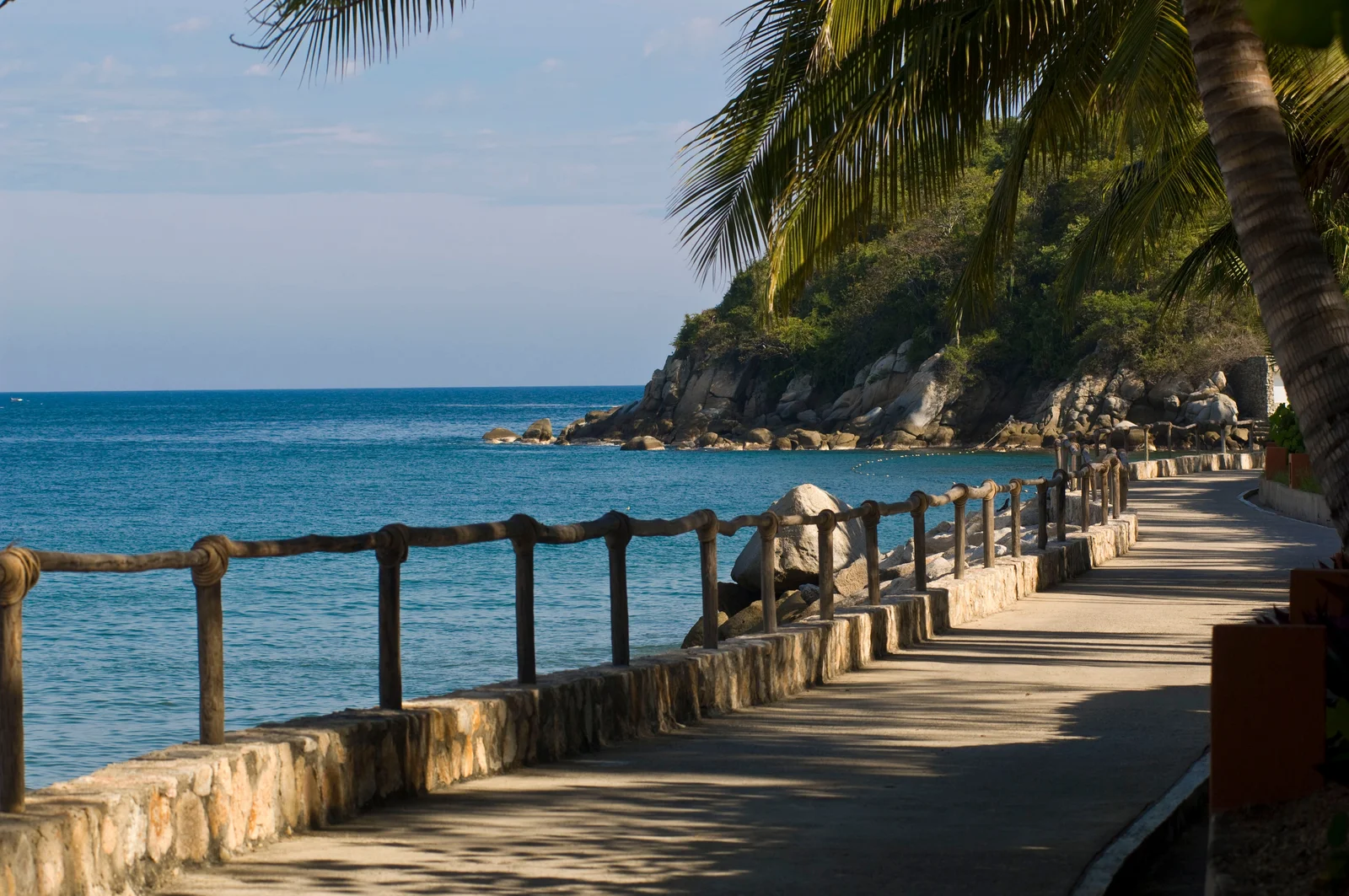
Quick answer: Zihuatanejo is a working Pacific fishing town on a sheltered bay, paired with the planned resort strip of Ixtapa seven kilometres away. Indicative asking bands run about $150,000 to $280,000 in town, $280,000 to $600,000 with a bay view, and higher for beachfront villas. Foreign buyers hold through a fideicomiso, and the choice between the two towns decides almost everything else.
Anyone who has seen the last scene of a certain prison film has seen this bay. That has been both the town’s marketing and its curse: a great deal of romance attached to a place that is, day to day, a working Mexican fishing port with a small and durable foreign community.
Where people buy, and what it costs
The market splits between the organic town and the planned strip, and within the town between the flat centre and the hills above the beaches. September 2026 asking observations follow, presented as ranges rather than as appraisals.
| Zone | Indicative band | Character | Note |
|---|---|---|---|
| Centro Zihuatanejo | $150,000 to $280,000 | Market, pier, restaurants, walkable | Older stock, narrow streets |
| Playa Madera | $250,000 to $500,000 | Hillside above the bay, short walk to town | Steps, and plenty of them |
| Playa La Ropa | $350,000 to $900,000 | The main swimming beach, best addresses | Highest prices in the area |
| La Ropa hillside | $300,000 to $700,000 | Bay views, quieter, car needed | Access road grade varies |
| Ixtapa strip | $180,000 to $400,000 | Planned resort, towers, golf | Rental-oriented, less residential |
| Ixtapa marina area | $220,000 to $450,000 | Boats, quieter than the hotel zone | Community fees apply |
| Barrio de la Noria and inland | $90,000 to $180,000 | Local residential | Local tenants, not tourist stock |
Playa La Ropa is the address that sets the ceiling here. It is the swimmable beach, it faces the sunset across the bay, and the supply of properties on or above it is small. Everything else in the market prices relative to it.
Season, flights and what fills the beds
| Period | Demand | Driver |
|---|---|---|
| December to April | Peak | Winter direct flights, dry weather, holidays |
| May to June | Moderate | Warm, quieter, sportfishing calendar |
| July to September | Low | Rains, humidity, storm season |
| October to November | Building | Season restarts, rates recover |
The airport is twenty minutes from either town and its winter schedule is the market’s demand curve. Direct service from North American cities has been added and dropped over the years, and each change moves occupancy here more than any local factor does.
Insider tip: ask a property manager for the last three winters of occupancy on comparable units, not one year. In a market whose season depends on a handful of routes, a single strong year can reflect one airline’s decision rather than the property’s quality.
The security question, answered honestly
Guerrero carries a difficult reputation nationally, and a foreign buyer deserves a factual treatment rather than either a sales pitch or a warning.
Conditions within the state vary enormously. The Zihuatanejo and Ixtapa corridor is a tourism economy with its own policing arrangement, an established foreign resident community measured in decades, and daily life that most residents describe as ordinary. Other parts of the state look nothing like it. Aggregating them into a single state-level judgement is how both the reassuring and the alarming accounts go wrong.
The practical approach is the one that applies in any market, executed properly here. Assess the specific colonia rather than the state. Visit at different hours, including after dark. Talk to people who live on the street rather than to the person selling you the house. Ask what the neighbourhood association or the condominium does about security and what it costs. And weigh the answer against your own tolerance, which is a personal judgement rather than a market fact.
That assessment is a normal part of due diligence everywhere in Mexico, and the full checklist sits in due diligence for Mexican real estate.
Ownership costs
| Line | Indicative annual | Note |
|---|---|---|
| Fideicomiso trustee | $500 to $800 | Every foreign purchase in the zone |
| HOA or community fee | $1,200 to $5,000 | Higher in the Ixtapa developments |
| Property insurance | $700 to $2,200 | Pacific storm exposure |
| Predial property tax | $200 to $700 | Low by North American standards |
| Caretaker through the rains | $600 to $1,500 | Worth budgeting on an empty house |
A hillside house left through a Guerrero summer needs someone checking it. Humidity, heavy rain and vegetation all move faster here than an absent owner expects, and the difference between a caretaker arrangement and none shows up in the repair bill.
The ownership structure is the standard coastal one, set out in the restricted zone explained and how the fideicomiso works, with the purchase costs in the closing cost breakdown. On older houses that have passed through several hands, and on anything built up the slope without full permits, title insurance is worth pricing before you decide it is unnecessary.
The bay itself, and why it shapes the market
Zihuatanejo sits on a bay almost closed by two headlands, which is the physical fact behind everything the town is.
The enclosure produces calm water. Playa La Ropa is swimmable in a way that most of the open Mexican Pacific simply is not, where shore break and rip currents make swimming a judgement call rather than a default. That single difference is why the best addresses here command a premium that looks steep against square-metre comparisons up and down the coast, and why families keep returning to the same stretch of sand for decades.
The enclosure also produced the fishing port. A sheltered anchorage is why a village grew here at all, why the fleet still works out of the pier each morning, and why the municipal market sells what came in that day. Buyers sometimes describe this as charm; it is more accurate to call it an industry that happens to be photogenic.
The constraint is geography. A bay ringed by hills has a limited flat footprint and a limited length of beachfront, and both were built on long ago. New supply comes either as infill in the town or as houses climbing further up the slopes, which is why so much of the attractive stock here involves steps. Anyone with mobility considerations should count them on the viewing rather than after the purchase.
Pros and cons
Pros. A genuine working town rather than a resort with a town attached. One of the best swimming bays on the Mexican Pacific. Prices well below Puerto Vallarta for comparable positions. An established foreign community with the professional services that brings. An airport twenty minutes away.
Cons. A security reputation at state level that affects both perception and resale, whatever the local reality. Steep streets and stepped access on many of the best-positioned houses. A winter-dependent rental season tied to a small number of flight routes. A small resale market. Summer rains that are heavier than the Baja or Yucatan equivalents.
Which buyer this market suits
Someone who wants a town, not a strip. Zihuatanejo has a market, a pier and a life that continues in September. Ixtapa does not, by design.
A boat or fishing buyer. The sportfishing here is genuine, the fleet is local, and the marina at Ixtapa serves it.
A buyer who will do their own security assessment properly. This market rewards people who look for themselves and penalises those who accept either the brochure or the headline.
It suits a buyer who needs a quick exit least, and someone unwilling to walk a neighbourhood at night least of all. For the neighbouring Pacific markets see Manzanillo and Huatulco, and for country price context homes for sale in Mexico.
Ranges quoted here come from public listings in September 2026 and describe asking levels rather than sale prices. Security conditions, flight schedules and insurance rates all change. Verify each independently and take local legal advice before committing funds.
Frequently Asked Questions
Indicative asking bands in September 2026 run about $150,000 to $280,000 for a house or condo in the town away from the water, $280,000 to $600,000 with a bay view above Playa La Ropa or Playa Madera, and $600,000 upward for villas with direct beach access. Ixtapa condos in the planned strip sit around $180,000 to $400,000.
They are about seven kilometres apart and were built by different logics. Zihuatanejo is a working fishing town that grew organically around a sheltered bay, with a municipal market, a pier and steep residential streets. Ixtapa is a FONATUR resort strip laid out in the 1970s with hotel towers along a straight beach and a golf course behind. Most foreign residents choose Zihuatanejo; most package tourism lands in Ixtapa.
Yes. Both Zihuatanejo and Ixtapa sit on the Pacific inside the 50 km restricted zone, so a foreign buyer holds residential property through a fideicomiso bank trust. Budget an indicative $2,500 to $4,000 to establish it and $500 to $800 a year in trustee administration on top of the purchase price.
This deserves a straight answer rather than either reassurance or alarm. Guerrero as a state carries a difficult security reputation, and conditions vary enormously within it. The Zihuatanejo and Ixtapa tourist corridor operates with its own security presence and a resident foreign community that has been in place for decades. The honest advice is the same as in any Mexican market: assess the specific neighbourhood rather than the state, visit at different times, and talk to residents of the street before you buy.
Yes, Ixtapa-Zihuatanejo international airport sits about twenty minutes from either town, with seasonal direct service from the United States and Canada in winter and year-round connections through Mexico City. Winter capacity is what drives nightly rental demand here, and it varies season to season with airline scheduling.
Winter-weighted, like most of the Mexican Pacific. Demand concentrates from December to April on North American visitors and on Mexican holiday periods, then drops sharply through the summer rains. Sportfishing tournaments support some shoulder demand. Plan on a strong season and a real trough rather than a flat annual figure.
Get a vetted Mexico shortlist
US and Canadian buyers use this to skip the developer sales deck: tell us the budget and the market, and we come back with 3 to 5 options and the net yield maths behind each one.
Want options matched to your budget and risk profile?
Three questions, one screen. We reply within one business day.
Get a vetted Mexico shortlist