
Gran Tulum vs 101 Park: Tulum Investment Comparison 2026
Gran Tulum vs 101 Park Tulum comparison, SIMCA projects, pricing $395K vs $290K, delivery timelines, 101 Tulum master plan advantages, and investment analysis.
By Mexico Invest Editorial · Updated July 9, 2026 · 14 min read
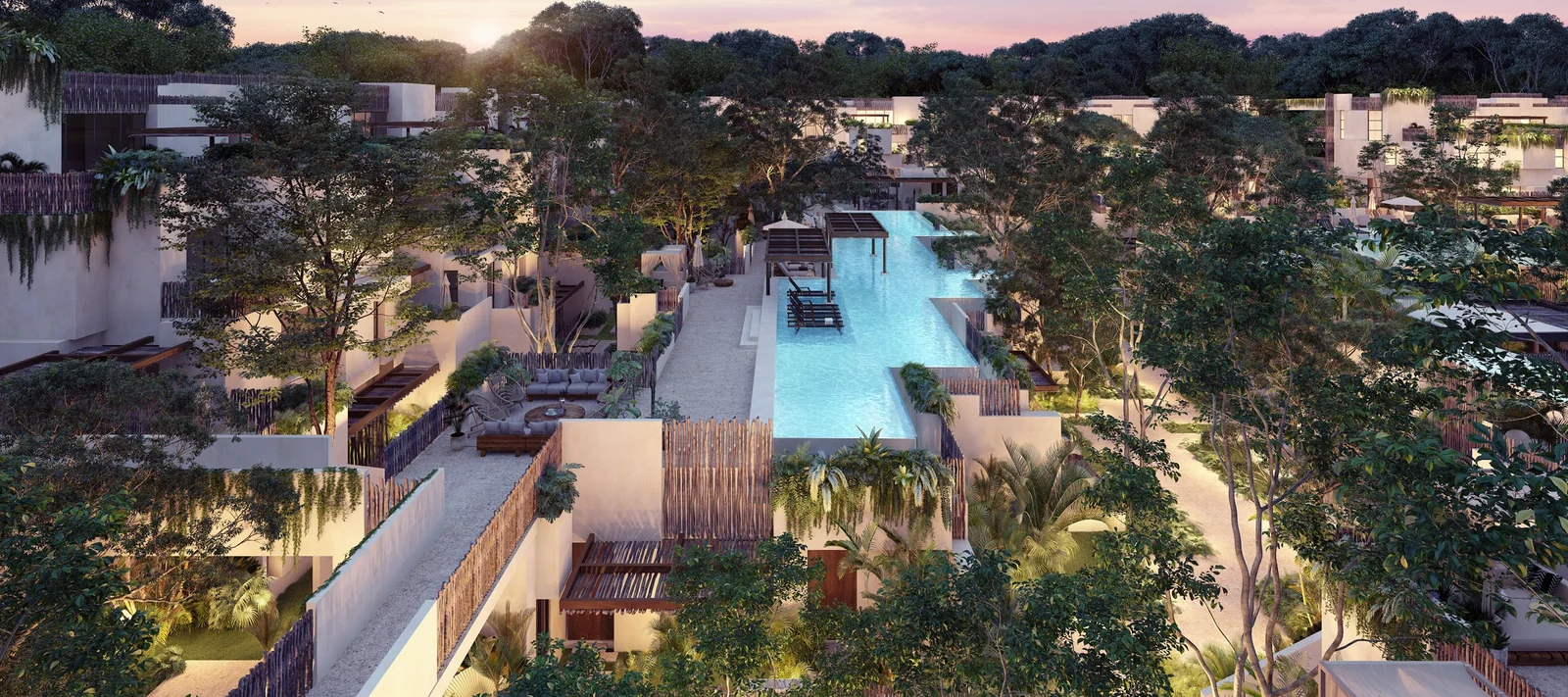
Quick answer: 101 Park wins on master plan infrastructure, lower entry pricing ($290K vs $395K), and earlier delivery (2025-2026) despite Gran Tulum’s lock-off design advantages. Both SIMCA developments within 101 Tulum ecosystem but 101 Park offers established infrastructure and reduced execution risk for first-time Tulum investors.
Two SIMCA projects within 101 Tulum master plan, 101 Park anchors the established development core while Gran Tulum expands the ecosystem with Phase 2 positioning and premium lock-off configurations, creating different risk-return profiles despite shared developer and location ecosystem.
Tulum context: Tulum · 101 Tulum master plan · SIMCA developer profile.
Project comparison overview
101 Park serves as the anchor development within 101 Tulum master plan with $290K-$850K pricing and 2025-2026 delivery, while Gran Tulum represents Phase 2 expansion at $395K-$611K with lock-off configurations and later timeline, both leveraging SIMCA development expertise and 101 Tulum ecosystem infrastructure for market positioning.
| Comparison factor | 101 Park | Gran Tulum |
|---|---|---|
| Price range | $290K-$850K | $395K-$611K |
| Entry point | $290K | $395K |
| Delivery status | 2025-2026 | Phase 2 pre-con |
| Unit types | 1-2BR condos | 2-3BR lock-off |
| Master plan position | Anchor development | Phase 2 expansion |
| Infrastructure status | Established | Development dependent |
Investment positioning: 101 Park provides lower-risk entry to proven master plan while Gran Tulum offers expansion opportunity with lock-off design advantages at higher entry cost and later timeline execution.
Pricing analysis and value positioning
101 Park’s $290K entry provides accessible master plan access with unit progression to $850K premium configurations, while Gran Tulum’s $395K-$611K range targets lock-off investors seeking rental flexibility despite higher barrier to entry and Phase 2 development risk within same ecosystem.
Overlap in the middle of the two ranges is where the real comparison sits. A 2BR standard costs $450,000 to $650,000 at 101 Park and $395,000 to $495,000 at Gran Tulum, so a buyer at the $450,000 to $495,000 mark can have either, and the decision turns on delivery status rather than on price. 101 Park is delivering and lets you inspect a finished unit, read actual HOA invoices and interview managers who already run units in the building; Gran Tulum is Phase 2 off-plan, which means a discount on paper and construction risk in practice. Paying the same money for delivered product removes an entire risk category.
Price breakdown by unit type
| Unit configuration | 101 Park | Gran Tulum |
|---|---|---|
| 1BR entry | $290K | Not offered |
| 2BR standard | $450K-$650K | $395K-$495K |
| 2BR premium | $650K-$850K | $495K-$611K |
| 3BR/lock-off | Limited availability | Primary focus |
Value assessment: 101 Park’s lower entry enables broader buyer access while Gran Tulum’s lock-off focus targets specific rental strategy investors willing to pay premium for flexible unit configuration despite ecosystem overlap.
Price context: Tulum pricing trends · Lock-off investment strategy.
Master plan infrastructure and development timing
101 Park benefits from established 101 Tulum infrastructure including gated security, coordinated utilities, and planned amenities with Phase 1 construction progress, while Gran Tulum depends on continued master plan development and Phase 2 infrastructure completion for full ecosystem realization.
Infrastructure development status
| Infrastructure element | 101 Park advantage | Gran Tulum dependency |
|---|---|---|
| Gated entry | Established operations | Phase 2 integration |
| Utilities coordination | Phase 1 infrastructure | Expansion dependent |
| Amenity facilities | Planned/construction | Phase 2 timeline |
| Security systems | Operating framework | System expansion |
| Road network | Phase 1 established | Phase 2 completion |
Infrastructure timing: 101 Park leverages existing master plan foundation while Gran Tulum requires continued ecosystem development for full infrastructure realization and operational effectiveness.
Delivery timeline and execution risk assessment
101 Park targets 2025-2026 delivery with visible construction progress and Phase 1 master plan foundation, while Gran Tulum represents Phase 2 pre-construction dependent on Phase 1 success, market absorption, and continued SIMCA development capacity within ecosystem expansion timeline.
Timeline risk comparison
| Timeline factor | 101 Park | Gran Tulum |
|---|---|---|
| Current status | Construction visible | Pre-construction |
| Delivery target | 2025-2026 | Phase 2 (later) |
| Master plan dependency | Phase 1 foundation | Phase 2 execution |
| Market absorption | Ongoing sales | Phase 1 dependent |
| Construction risk | Moderate | Higher |
Execution assessment: 101 Park provides lower timeline risk through established construction progress while Gran Tulum faces Phase 2 dependency and market absorption requirements for successful delivery execution.
Unit configuration and rental strategy
101 Park offers 1-2BR configurations targeting diverse buyer segments and rental strategies, while Gran Tulum focuses on 2-3BR lock-off designs enabling dual rental operations and family accommodation flexibility at higher operational complexity and management requirements.
Configuration advantages
| Rental strategy | 101 Park strength | Gran Tulum strength |
|---|---|---|
| Entry investor | $290K 1BR access | Not available |
| Standard STR | 1-2BR simplicity | 2-3BR capacity |
| Lock-off operation | Limited availability | Primary design focus |
| Family rental | 2BR maximum | 3BR configurations |
| Operational complexity | Simplified management | Dual rental coordination |
Strategy fit: 101 Park suits entry investors and simplified rental operations while Gran Tulum targets lock-off specialists willing to manage complex dual rental configurations for potentially higher yields.
Lock-off analysis: Lock-off rental operations Tulum · STR unit configuration strategy.
SIMCA developer context and ecosystem approach
Both projects leverage SIMCA’s Tier-1 Riviera Maya developer status and 101 Tulum ecosystem strategy with proven delivery capacity, but 101 Park serves as anchor project establishing master plan credibility while Gran Tulum represents expansion dependent on Phase 1 success and market reception.
Developer ecosystem positioning
| SIMCA factor | 101 Park role | Gran Tulum role |
|---|---|---|
| Master plan strategy | Anchor development | Expansion project |
| Developer resources | Priority allocation | Phase 2 dependency |
| Market credibility | Reputation establishment | Success dependent |
| Buyer confidence | Proven foundation | Track record reliant |
Ecosystem advantage: SIMCA’s established developer credibility benefits both projects while 101 Park’s anchor status provides priority positioning and Gran Tulum faces expansion execution requirements.
SIMCA profile: SIMCA developer analysis · 101 Tulum master plan strategy.
Investment yield potential and market dynamics
101 Park’s lower entry pricing typically generates higher percentage yields on $290K base despite Gran Tulum’s lock-off rental flexibility, while both projects benefit from 101 Tulum master plan positioning and gated community premiums versus open Tulum market developments.
Testing the entry-price argument with numbers shows it is thinner than it reads. At a $155 ADR and 63% annual occupancy, a 101 Park 1BR grosses about $35,600; after 27% management, a $500 monthly HOA and the trust and tax stack, net lands near $12,000 on a $290,000 basis, or roughly 4.1%. A Gran Tulum lock-off at $395,000 can run two revenue streams but competes for the same guest pool in the same master plan, and its second key typically adds 25% to 35% of gross rather than doubling it. Lower entry does win on percentage, but by tens of basis points rather than by a tier.
Yield calculation framework
| Yield factor | 101 Park | Gran Tulum |
|---|---|---|
| Entry price advantage | $290K base = higher % | $395K base = lower % |
| Lock-off premium | Limited availability | Dual rental potential |
| Master plan premium | Gated community ADR | Same ecosystem benefit |
| Operational complexity | Simplified management | Lock-off coordination |
| Market positioning | Entry accessible | Premium configurations |
Yield assessment: 101 Park’s entry pricing advantages typically outweigh Gran Tulum’s lock-off complexity benefits for investors prioritizing percentage returns versus operational sophistication.
Yield guides: Tulum rental yield analysis · Master plan yield premiums.
Gated community advantages and security positioning
Both projects benefit from 101 Tulum gated master plan with coordinated security, controlled access, and community amenities providing premium positioning versus open Tulum developments, but 101 Park leverages established security infrastructure while Gran Tulum depends on Phase 2 integration.
Security and community framework
| Community aspect | Shared 101 Tulum benefits | Implementation timing |
|---|---|---|
| Gated access control | Premium positioning | 101 Park: established / Gran Tulum: integration |
| Security coordination | Professional services | 101 Park: operational / Gran Tulum: expansion |
| Community amenities | Planned facilities | 101 Park: Phase 1 / Gran Tulum: Phase 2 |
| HOA framework | Coordinated management | 101 Park: established / Gran Tulum: development |
Community advantage: Gated positioning provides market differentiation while implementation timeline varies between established 101 Park operations and Gran Tulum’s Phase 2 integration requirements.
Market absorption and sales velocity analysis
101 Park demonstrates ongoing sales absorption within established master plan framework, while Gran Tulum’s Phase 2 positioning depends on Phase 1 market reception, buyer confidence, and continued ecosystem demand for successful sales velocity and construction timeline execution.
Absorption dynamics
| Market factor | 101 Park | Gran Tulum |
|---|---|---|
| Current sales activity | Ongoing absorption | Phase 1 dependent |
| Buyer confidence | Established foundation | Track record reliant |
| Price point accessibility | $290K entry appeal | $395K barrier higher |
| Market timing | Near-term delivery | Later timeline |
| Ecosystem maturity | Phase 1 validation | Phase 2 speculation |
Absorption assessment: 101 Park’s established absorption and lower entry pricing provide market validation while Gran Tulum faces Phase 2 market testing and higher price point accessibility challenges.
Infrastructure maturity and operational readiness
The two projects sit inside the same master plan at different stages of it, and that single fact drives most of the operational difference between them. 101 Park runs on completed Phase 1 infrastructure, utilities connected, road access built, security systems operating, which means a unit there is rentable from handover with no dependency on future construction. Gran Tulum requires Phase 2 to be delivered: utility expansion, road network extension and amenity build-out that are scheduled rather than existing. Both may end up equivalent; only one of them is equivalent today.
101 Park operates within Phase 1 infrastructure foundation with established utilities, road access, and security systems, while Gran Tulum requires Phase 2 infrastructure completion including utility expansion, road network extension, and integrated community systems.
Operational infrastructure comparison
| Infrastructure category | 101 Park status | Gran Tulum requirements |
|---|---|---|
| Utility systems | Phase 1 established | Phase 2 expansion needed |
| Road networks | Operational access | Extension construction |
| Security infrastructure | Functioning systems | Integration development |
| Communication networks | Phase 1 coverage | Expansion planning |
| Waste management | Established systems | Capacity expansion |
Infrastructure readiness: 101 Park leverages established operational systems while Gran Tulum requires infrastructure development and expansion for full community functionality and buyer satisfaction.
Competitive positioning within Tulum market
Both projects compete within 101 Tulum ecosystem against external Tulum developments including Aldea Zama (established), Region 15 (oversupplied), and other master plans, but 101 Park’s anchor status and Gran Tulum’s Phase 2 positioning create different competitive advantages and market reception dynamics.
Tulum market competitive framework
| Competitive factor | 101 Park advantage | Gran Tulum positioning |
|---|---|---|
| Master plan credibility | Anchor project validation | Ecosystem expansion |
| Price competitiveness | $290K Tulum entry | $395K premium positioning |
| Infrastructure differentiation | Established operations | Phase 2 development |
| Market timing | Near-term availability | Later market entry |
Market positioning: 101 Park competes as established master plan entry while Gran Tulum targets premium ecosystem expansion with lock-off specialization and higher barrier positioning.
HOA structure and community management
Both projects participate in 101 Tulum master plan HOA framework with coordinated community management, shared amenity costs, and integrated security systems, but 101 Park benefits from established HOA operations while Gran Tulum faces Phase 2 integration and potential assessment variations.
HOA framework analysis
| HOA aspect | 101 Park | Gran Tulum |
|---|---|---|
| Management structure | Established operations | Phase 2 integration |
| Assessment coordination | Phase 1 baseline | Expansion cost allocation |
| Amenity access | Current facilities | Phase 2 development |
| Community governance | Operating framework | Expansion representation |
| Reserve planning | Established budgets | Phase 2 contributions |
HOA considerations: Master plan HOA provides coordinated management while Phase 2 integration may affect assessment structures and amenity access timing for Gran Tulum versus established 101 Park operations.
Environmental compliance and development permission
Both projects operate within 101 Tulum master plan environmental framework with coordinated permitting and compliance systems, but Gran Tulum’s Phase 2 development faces additional environmental review and permit expansion requirements versus 101 Park’s established construction approvals.
Environmental framework
| Environmental aspect | Shared master plan | Phase-specific requirements |
|---|---|---|
| Master plan EIA | Coordinated assessment | 101 Park: approved / Gran Tulum: expansion |
| Construction permits | SIMCA coordination | 101 Park: active / Gran Tulum: pending |
| Water management | Integrated systems | 101 Park: operational / Gran Tulum: expansion |
| Waste systems | Master plan coordination | 101 Park: functioning / Gran Tulum: development |
Environmental advantage: Master plan coordination provides environmental framework while Phase 2 expansion requires additional compliance and permit processing for Gran Tulum versus established 101 Park approvals.
Financing options and developer terms
Both projects offer SIMCA developer financing options and standard fideicomiso ownership structure with identical legal framework, but 101 Park’s established sales and construction progress may provide enhanced financing flexibility versus Gran Tulum’s pre-construction payment structure requirements.
Financing comparison
| Financing aspect | 101 Park | Gran Tulum |
|---|---|---|
| Developer financing | Active construction basis | Pre-construction structure |
| Payment schedules | Construction milestones | Development phases |
| Ownership structure | Standard fideicomiso | Standard fideicomiso |
| Legal framework | Established process | Identical requirements |
Financing advantage: Construction progress enables milestone-based payments for 101 Park while Gran Tulum requires pre-construction payment structures with Phase 2 development timeline dependency.
Resale potential and market liquidity
101 Park’s established master plan positioning and lower entry pricing typically provide better resale liquidity and broader buyer appeal, while Gran Tulum’s lock-off configurations and premium positioning may appeal to specialized buyers but face narrower resale market accessibility.
Liquidity assessment
| Liquidity factor | 101 Park | Gran Tulum |
|---|---|---|
| Buyer pool size | $290K+ accessibility | $395K+ limitation |
| Master plan maturity | Established ecosystem | Phase 2 development |
| Unit configuration | Standard 1-2BR appeal | Lock-off specialization |
| Market timing | Near-term delivery | Later availability |
| Competitive positioning | Entry master plan | Premium ecosystem |
Resale considerations: 101 Park’s broader accessibility and established positioning typically provide superior liquidity versus Gran Tulum’s specialized configurations and higher price barriers.
Due diligence priorities and project-specific verification
Both projects require standard SIMCA developer verification and 101 Tulum master plan assessment, but 101 Park needs construction progress and delivery timeline confirmation while Gran Tulum requires Phase 2 development capacity and market absorption analysis.
Project-specific DD requirements
| DD category | 101 Park priorities | Gran Tulum priorities |
|---|---|---|
| Construction progress | Timeline verification | Phase 2 capacity assessment |
| Market absorption | Sales velocity tracking | Phase 1 performance impact |
| Infrastructure status | Operational confirmation | Phase 2 development planning |
| Developer capacity | Delivery execution | Expansion resource allocation |
DD focus: 101 Park requires delivery verification while Gran Tulum needs Phase 2 feasibility and market timing assessment within shared SIMCA developer and master plan evaluation framework.
Target buyer profiles and investment strategies
101 Park attracts entry-level Tulum investors, first-time Mexico buyers, and yield-focused investors seeking accessible master plan exposure, while Gran Tulum targets lock-off specialists, experienced investors, and buyers prioritizing rental flexibility over entry pricing accessibility.
Buyer segmentation
| Investor type | 101 Park fit | Gran Tulum fit |
|---|---|---|
| Entry Tulum investors | Excellent ($290K access) | Limited ($395K barrier) |
| Yield maximizers | Strong (percentage basis) | Moderate (operational complexity) |
| Lock-off specialists | Limited availability | Primary target market |
| First-time Mexico | Reduced risk profile | Higher execution complexity |
| Master plan seekers | Established ecosystem | Phase 2 expansion play |
Strategy alignment: 101 Park suits broader investor profile with entry accessibility while Gran Tulum targets specialized lock-off investors willing to accept higher entry cost and operational complexity.
Market timing and investment horizon recommendation
101 Park offers near-term delivery and established master plan entry suitable for 2-5 year investment horizons with moderate risk tolerance, while Gran Tulum requires longer-term perspective (3-7 years) and higher risk acceptance for Phase 2 development and lock-off rental strategy execution.
Investment timing framework
| Timeline consideration | 101 Park | Gran Tulum |
|---|---|---|
| Entry timing | Near-term opportunity | Phase 2 speculation |
| Delivery horizon | 2025-2026 | Later Phase 2 |
| Market cycle alignment | Established positioning | Expansion timing |
| Risk tolerance requirement | Moderate | Higher |
| Investment horizon | 2-5 years | 3-7 years |
Timing strategy: 101 Park enables near-term positioned entry while Gran Tulum requires patient Phase 2 development perspective and higher risk tolerance for successful investment execution.
Bottom line recommendation
101 Park offers superior master plan entry at $290K with established infrastructure, 2025-2026 delivery, and lower execution risk versus Gran Tulum’s $395K+ lock-off positioning with Phase 2 dependency. Both benefit from SIMCA developer credibility and 101 Tulum ecosystem, but 101 Park provides broader accessibility and reduced timeline risk for first-time Tulum investors.
Choose 101 Park for: Entry master plan access, lower risk tolerance, near-term delivery, broad buyer appeal. Choose Gran Tulum for: Lock-off rental strategy, higher risk acceptance, Phase 2 expansion opportunity, operational sophistication.
Enhanced DD: 101 Park construction progress verification; Gran Tulum Phase 2 capacity and market timing assessment.
Frequently Asked Questions
101 Park offers superior master plan infrastructure, earlier delivery (2025-2026 vs Phase 2 for Gran Tulum), and proven 101 Tulum ecosystem advantages despite higher entry pricing $290K vs Gran Tulum's $395K starting point.
101 Park starts $290K for 1-2BR units up to $850K, while Gran Tulum ranges $395K-$611K for 2-3BR lock-off configurations. 101 Park provides lower entry access to established master plan.
101 Park benefits from established 101 Tulum master plan with coordinated infrastructure, gated security, and planned amenities versus Gran Tulum's newer development in the 101 corridor with infrastructure development ongoing.
Yes, both Gran Tulum and 101 Park represent SIMCA developments within the 101 Tulum ecosystem, providing same developer credibility but different positioning and delivery timelines within the master plan framework.
101 Park's lower entry pricing and established infrastructure typically generate higher percentage yields, while Gran Tulum's lock-off design may provide rental flexibility, verify actual delivery and occupancy data.
101 Park targets 2025-2026 delivery with Phase 1 progress visible, while Gran Tulum represents Phase 2 pre-construction with later timeline dependency on Phase 1 success and market absorption.
Yes via fideicomiso bank trust for both projects in Tulum restricted zone, identical legal structure, $2,500-4,000 setup costs, $500-800 annual fees through authorized banks.
101 Park, lower entry pricing, established master plan infrastructure, earlier delivery timeline, and proven 101 Tulum ecosystem provide reduced execution risk versus Gran Tulum's Phase 2 development positioning.
Get a vetted Mexico shortlist
US and Canadian buyers use this to skip the developer sales deck: tell us the budget and the market, and we come back with 3 to 5 options and the net yield maths behind each one.
Want options matched to your budget and risk profile?
Three questions, one screen. We reply within one business day.
Get a vetted Mexico shortlist