
Playa del Carmen vs Cancún Investment: Which Wins 2026?
Playa del Carmen vs Cancún property investment comparison, yields, prices, tourism density, and which Riviera Maya gateway delivers better returns in 2026.
By Mexico Invest Editorial · Updated July 9, 2026 · 12 min read
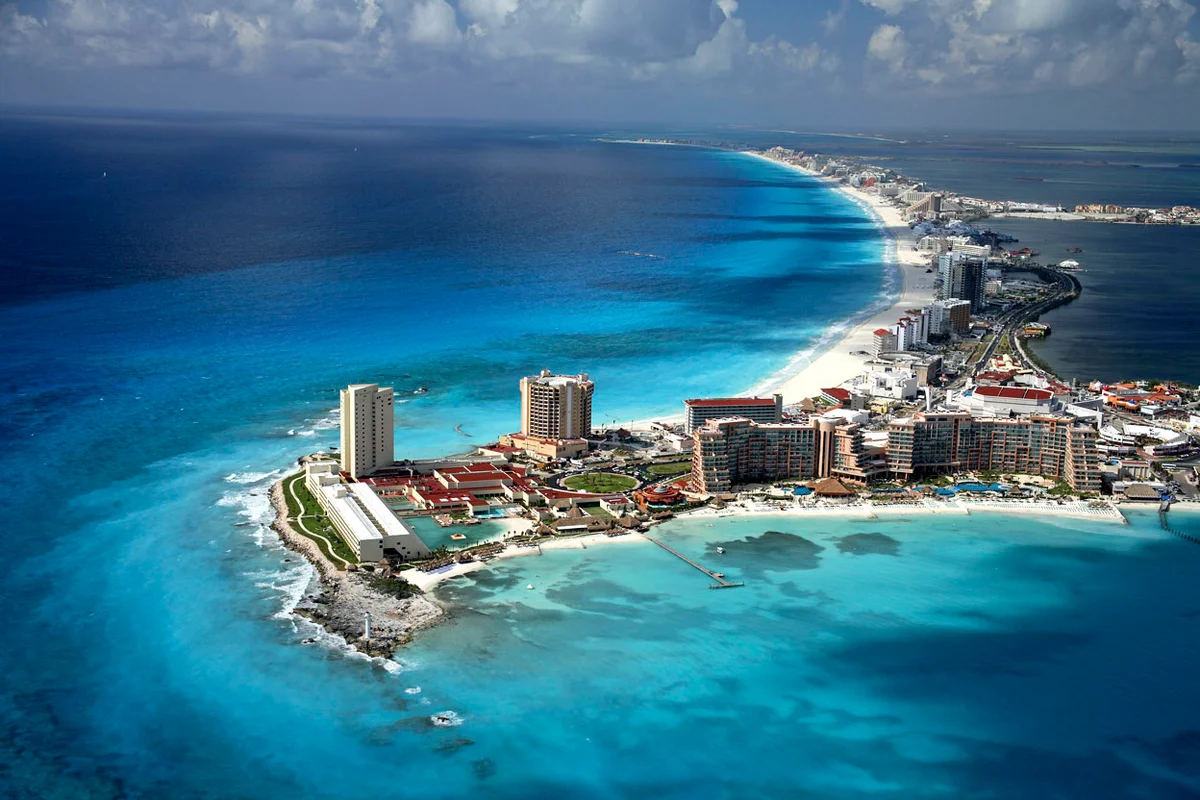
Quick answer: Playa del Carmen wins on net yields (4.3-5.2%) and STR potential with $200K-350K entry, while Cancún wins on stability, infrastructure, and institutional backing at $250K+ entry. Both require fideicomiso; different tourism density profiles create distinct operational needs.
Hotel Zone vs Centro walkability drives different investment approaches, Cancún serves institutional stability seekers while Playa attracts STR yield maximizers willing to manage higher guest turnover and operational complexity for superior cash flow returns.
Regional context: Riviera Maya Investment Guide · National: Mexico Property Investment.
Head-To-head investment comparison
Playa del Carmen delivers superior net yields of 4.3-5.2% in Centro and Gonzalo Guerrero with $200K-350K entry barriers and walkable tourism density, while Cancún provides institutional stability at 3.5-4.5% net yields with $250K+ entry requirements and mature infrastructure creating different risk-return profiles for foreign investors.
| Factor | Playa del Carmen | Cancún |
|---|---|---|
| 1BR entry price | $200K-350K | $250K-400K |
| Net yield (prime) | 4.3-5.2% | 3.5-4.5% |
| Tourism density | Walkable Centro | Hotel Zone concentrated |
| Market maturity | Developing competitive | Institutional mature |
| Airport access | CUN 50 min | CUN direct |
| Infrastructure | Variable by zone | Established consistent |
| STR management intensity | Higher | Moderate |
| First-time buyer | Higher complexity | Institutional safety |
Net yield analysis by zone
Playa Centro achieves 4.4% net yields through walkable guest density and competitive 20-25% management fees, while Cancún Hotel Zone delivers 3.8% net with higher operational costs and premium service requirements, creating 60+ basis point yield advantages for Playa despite higher guest turnover and management complexity requiring active oversight.
Converting the 100 basis point spread between the best and worst rows into cash shows what the choice is worth. On a $250,000 purchase, Playa Gonzalo Guerrero at 4.5% net returns about $11,250 a year while Cancún residential at 3.5% returns about $8,750, a difference of $2,500 annually or $50,000 across a twenty-year hold before compounding. That gap is real but it is not the whole decision: Cancún’s institutional buyer pool and decades of foreign recognition typically produce a faster, more predictable exit, and a single extra month on market at Playa’s carrying cost erodes a meaningful share of one year’s advantage.
Yield breakdown comparison
| Location | Gross yield | Management | HOA | Net yield |
|---|---|---|---|---|
| Playa Centro | 6.6% | -1.6% | -0.6% | 4.4% |
| Playa Gonzalo Guerrero | 6.8% | -1.7% | -0.6% | 4.5% |
| Cancún Hotel Zone | 6.0% | -1.5% | -0.7% | 3.8% |
| Cancún residential | 5.5% | -1.4% | -0.6% | 3.5% |
Yield drivers: Playa’s walkable tourism creates higher ADR and occupancy density; Cancún’s institutional demand provides steadier but lower-yielding cash flows.
Tourism and guest demographics
Playa attracts independent travelers and digital nomads seeking walkable experiences with 365-day booking potential creating higher booking density, while Cancún serves resort extension guests and business travelers with more predictable seasonal patterns but lower per-unit revenue potential due to resort competition and different guest spending profiles.
Guest profile comparison
| Guest type | Playa fit | Cancún fit |
|---|---|---|
| Independent travelers | Excellent walkable | Moderate hotel zone |
| Digital nomad monthly | Strong Centro | Limited residential |
| Resort extension | Good | Traditional strength |
| Business travelers | Moderate | Airport proximity |
| Bachelor/nightlife | Centro nightlife | Hotel zone options |
| Family vacation | Both | Resort alternative |
Revenue impact: Playa’s guest profile enables premium positioning for walkable experiences; Cancún competes with established resort infrastructure.
Market maturity and institutional presence
Cancún benefits from decades of institutional development with hotel chain presence, established management systems, and mature foreign buyer recognition creating predictable market dynamics, while Playa shows rapid commercialization with competitive management emerging but higher variance in service quality and operational standards requiring careful vendor selection.
Institutional factors
| Market aspect | Playa del Carmen | Cancún |
|---|---|---|
| Hotel chain presence | Growing | Extensive established |
| Management systems | Competitive emerging | Mature proven |
| Foreign buyer recognition | High recent | Decades established |
| Professional services | Growing density | Deep institutional |
| Banking relationships | Standard | Enhanced institutional |
Investment insight: Cancún’s institutional backing reduces execution risk; Playa’s emerging competition creates yield opportunities with higher complexity.
Infrastructure and connectivity
Cancún provides superior infrastructure with direct international airport access, established hospital systems, and mature utility networks built for high tourism density, while Playa relies on 50-minute CUN access with developing infrastructure that varies significantly by colonia creating different operational requirements and guest satisfaction levels.
Infrastructure comparison
| Infrastructure type | Playa del Carmen | Cancún |
|---|---|---|
| Airport access | CUN 50 min | CUN direct/taxi |
| Hospital quality | Adequate | Excellent private |
| Utilities reliability | Variable by zone | Consistent hotel standard |
| Road infrastructure | Centro good/variable | Comprehensive |
| Public transportation | Limited | Better hotel zone |
Operational impact: Infrastructure quality affects guest reviews and repeat bookings, Cancún provides more consistent baseline experience.
Investment price ranges and value
Playa Centro offers quality 1BR condos at $250K-350K with proven STR track records, while Cancún investment-grade properties begin at $300K-450K with institutional backing and hotel-quality amenities, creating different entry barriers and operational expectations where lower Playa entry enables portfolio scaling but requires active management.
Price segmentation
| Price range | Playa option | Cancún option |
|---|---|---|
| $200K-250K | Centro entry units | Limited older inventory |
| $250K-350K | Centro quality choice | Entry institutional |
| $350K-450K | Premium Centro | Hotel zone quality |
| $450K+ | Beachfront selective | Premium hotel zone |
Value insight: Similar budgets deliver different operational profiles, Playa for yield maximization, Cancún for stability and institutional backing.
STR management complexity
Playa Centro requires higher management intensity with daily guest turnover and walkable area competition demanding responsive pricing and service quality, while Cancún operates with more predictable guest patterns and established service standards but faces resort competition requiring premium amenities and potentially higher operational costs per booking.
Management requirements
| Operational aspect | Playa del Carmen | Cancún |
|---|---|---|
| Guest turnover frequency | Higher daily | Moderate weekly |
| Pricing competition | Intensive walkable | Resort-influenced |
| Service expectations | High responsive | Resort-level consistent |
| Management fee typical | 20-25% | 22-28% |
| Local vendor network | Competitive | Established premium |
Management selection: Playa rewards active operators; Cancún suits steady institutional approach with premium service requirements.
Airport proximity and guest logistics
Cancún’s direct airport access within 15-20 minutes provides seamless guest logistics and premium ADR potential from convenience, while Playa’s 50-minute CUN transfer adds guest complexity but creates less resort competition allowing independent property positioning with different pricing strategies and guest acquisition approaches.
Airport logistics
| Logistics factor | Playa del Carmen | Cancún |
|---|---|---|
| Airport transfer time | 50 min CUN | 15-20 min CUN |
| Transport costs | $60-80 round trip | $30-40 round trip |
| Guest convenience | Transfer planning | Direct arrival |
| Premium positioning | Independent property | Airport proximity |
| Competition density | Moderate walkable | High hotel zone |
Guest experience: Cancún’s proximity convenience enables premium pricing; Playa requires transfer logistics but offers walkable authenticity.
Resale liquidity and buyer depth
Cancún maintains deeper institutional buyer pools with hotel chain acquisition potential and established foreign recognition creating consistent resale demand, while Playa offers strong liquidity in Centro through STR operator demand but more variable by specific colonia requiring market timing and building selection for optimal exit conditions.
Days on market is the honest expression of the liquidity difference, and the gap is narrower than the framing suggests. Playa Centro moves in roughly 60 to 90 days and Cancún in 70 to 100, so Playa is actually faster on the median, what Cancún offers is a wider range of buyer types rather than a quicker sale. The distinction matters at the extremes: in a soft market Playa’s exit depends on short-term-rental operators who disappear when yields compress, while Cancún retains lifestyle buyers, domestic purchasers and occasional hotel-chain interest that do not price on nightly returns.
Liquidity factors
| Resale aspect | Playa del Carmen | Cancún |
|---|---|---|
| Buyer pool depth | STR operator focused | Institutional broad |
| Hotel chain interest | Limited | Acquisition potential |
| Foreign recognition | High recent | Decades established |
| DOM typical | 60-90 days Centro | 70-100 days |
| Price stability | Higher yield focus | Institutional backing |
Exit strategy: Cancún offers broader buyer appeal; Playa provides yield-focused liquidity with operator demand.
Development and supply dynamics
Playa faces moderate new tower development with established centro core providing resale alternatives, while Cancún shows balanced institutional development with hotel conversions and established supply-demand equilibrium creating different market timing considerations and inventory selection strategies for optimal investment positioning.
Supply analysis
| Supply factor | Playa del Carmen | Cancún |
|---|---|---|
| New development pace | Moderate towers | Balanced institutional |
| Supply-demand balance | Centro established | Institutional equilibrium |
| Hotel competition | Moderate | Direct resort |
| Resale inventory | Good Centro depth | Steady institutional |
| Market timing pressure | Lower urgency | Consistent entry |
Investment timing: Playa allows selective entry; Cancún provides consistent acquisition opportunities with institutional competition.
Guest spending and ADR potential
Playa Centro captures independent traveler spending on local restaurants, tours, and experiences with 365-day booking potential creating higher guest lifetime value, while Cancún guests often utilize resort amenities reducing local spending but providing steadier occupancy patterns with different revenue optimization strategies required.
Revenue characteristics
| Revenue factor | Playa del Carmen | Cancún |
|---|---|---|
| Guest local spending | High walkable economy | Resort-contained |
| Seasonal variance | Moderate | More predictable |
| ADR premium potential | Independent positioning | Airport convenience |
| Booking seasonality | 365-day potential | Traditional patterns |
| Competition intensity | Walkable density | Hotel zone saturation |
Revenue optimization: Playa rewards local experience curation; Cancún benefits from resort-alternative positioning.
Healthcare and expat services
Cancún provides excellent private healthcare with international standards and mature expat services developed over decades, while Playa offers adequate healthcare with growing English-speaking services but requires Cancún access for complex medical needs, affecting long-term lifestyle investor appeal and emergency service access for remote property owners.
Service infrastructure
| Service category | Playa del Carmen | Cancún |
|---|---|---|
| Hospital quality | Adequate | Excellent private |
| English medical services | Growing | Extensive established |
| Expat community | Active | Large established |
| Professional services | Developing | Mature institutional |
| Banking/finance | Standard | Enhanced expat |
Lifestyle factor: Cancún attracts mixed-use investors; Playa focuses on STR-primary strategies with lifestyle secondary.
Hurricane and insurance considerations
Both locations face identical Atlantic hurricane exposure with similar insurance requirements and costs, but Cancún’s established infrastructure and emergency protocols provide better disaster preparedness and recovery systems, while Playa’s variable infrastructure creates different resilience levels by specific colonia requiring location-specific risk assessment.
Risk management
| Risk factor | Both Markets |
|---|---|
| Hurricane exposure | Atlantic season identical |
| Insurance requirements | Comprehensive hurricane coverage |
| Infrastructure resilience | Cancún higher / Playa variable |
| Emergency services | Cancún established / Playa developing |
| Recovery logistics | Cancún institutional / Playa community |
Insurance costs: Similar hurricane premiums but Cancún infrastructure may reduce deductibles and recovery time affecting total risk costs.
Currency and economic sensitivity
Both markets show high USD correlation through US tourism dependence, but Cancún demonstrates lower volatility through institutional backing and diverse visitor markets including business travel, while Playa shows higher correlation to discretionary tourism spending creating different economic cycle sensitivity and revenue predictability patterns.
Economic exposure
| Economic factor | Playa del Carmen | Cancún |
|---|---|---|
| USD tourism correlation | High discretionary | High but diversified |
| Business travel component | Low | Moderate buffering |
| Economic cycle sensitivity | Higher volatility | Institutional buffering |
| Revenue predictability | Variable | More consistent |
| Crisis resilience | STR operator dependent | Institutional backing |
Portfolio consideration: Cancún provides better economic cycle resilience; Playa offers higher upside with more volatility.
Investment complexity and execution
Playa requires higher due diligence complexity with colonia-specific infrastructure assessment and building quality variance, while Cancún offers more standardized institutional processes with established legal networks and predictable service quality reducing execution risk but potentially limiting yield upside through standardized approaches.
Execution factors
| Complexity aspect | Playa del Carmen | Cancún |
|---|---|---|
| Due diligence depth | Zone-specific required | Standardized institutional |
| Legal service quality | Competitive variable | Established premium |
| Building assessment | Critical variance | More predictable |
| Management selection | Performance-critical | Institutional standards |
| Operational setup | Higher customization | Systematic processes |
First-time buyers: Cancún reduces execution risk through institutional processes; Playa rewards experienced operators.
Tax and regulatory environment
Both markets operate under identical Mexican tax structure with 25%/35% capital gains for foreign sellers and fideicomiso requirements, but Cancún’s institutional presence provides better access to cross-border tax planning resources while Playa’s competitive market may offer more aggressive local structuring approaches requiring careful compliance verification.
Regulatory landscape
| Tax/regulatory | Both Markets |
|---|---|
| Capital gains structure | 25% gross / 35% net method |
| Fideicomiso requirement | Identical process |
| Professional resources | Cancún institutional / Playa competitive |
| Compliance support | Cancún established / Playa developing |
| Cross-border planning | Cancún enhanced access |
Capital Gains Tax · Fideicomiso Process
Portfolio diversification considerations
Geographic diversification between Playa and Cancún reduces single-market risk while capturing different tourism segments, Centro walkable density and Hotel Zone institutional stability, though managing both markets requires doubled professional networks and understanding different operational requirements for optimal performance across diverse property types.
Diversification strategy
| Allocation approach | Rationale |
|---|---|
| 70% Playa / 30% Cancún | Yield focus with stability |
| 50% / 50% | Balanced risk-return |
| 30% Playa / 70% Cancún | Stability with yield option |
Management complexity: Dual-market requires separate vendor networks and operational systems, factor coordination costs.
Future development and growth potential
Playa benefits from tourism expansion with Tren Maya connectivity and continued centro development creating growth potential with higher volatility, while Cancún shows mature market appreciation with steady institutional demand and established infrastructure providing predictable growth with lower upside variance creating different total return expectations.
Growth outlook
| Growth factor | Playa del Carmen | Cancún |
|---|---|---|
| Tourism expansion potential | High Tren Maya | Mature steady |
| Infrastructure development | Active improvement | Established base |
| Appreciation volatility | Higher variance | Steady institutional |
| Long-term positioning | Growth potential | Stability platform |
Total return focus: Playa for growth speculation; Cancún for yield plus steady appreciation strategy.
Financing and developer landscape
Both markets offer identical fideicomiso structure with limited foreign financing, but Cancún provides better institutional lender relationships and established developer track records, while Playa shows competitive developer entry with variable quality requiring enhanced due diligence on construction completion and financial capacity verification.
Development quality
| Developer aspect | Playa del Carmen | Cancún |
|---|---|---|
| Institutional developers | Growing presence | Established track records |
| Completion risk | Moderate new entrants | Lower institutional |
| Financing options | Standard limited | Enhanced institutional |
| Construction standards | Variable quality | Institutional consistency |
Developer selection: Cancún offers institutional safety; Playa requires individual developer assessment.
Guest review and satisfaction analysis
Playa Centro properties average 4.5/5 ratings with walkable experience praise but occasional infrastructure complaints, while Cancún Hotel Zone achieves 4.3/5 with consistent infrastructure scores but competition saturation comments, creating different reputation management requirements and guest expectation frameworks for operational success.
Guest satisfaction
| Review aspect | Playa del Carmen | Cancún |
|---|---|---|
| Average rating | 4.5/5 | 4.3/5 |
| Infrastructure consistency | Variable | Predictable |
| Walkability praise | Frequent positive | Zone-dependent |
| Competition comments | Moderate | Saturation noted |
| Repeat booking rate | High Centro | Moderate institutional |
Operational insight: Higher ratings correlate with ADR premium, Playa’s walkable advantage creates pricing power when infrastructure delivers.
Final investment recommendation matrix
Choose Playa del Carmen for yield maximization with acceptance of higher management complexity and infrastructure variance, or Cancún for institutional stability with lower yields but predictable operations, recognizing both require fideicomiso ownership and professional local support for successful remote investment execution.
Decision framework
| Investment priority | Recommended market |
|---|---|
| Maximum net yield | Playa del Carmen |
| Institutional stability | Cancún |
| Entry budget under $300K | Playa del Carmen |
| First Mexico purchase | Cancún |
| STR operator experience | Playa del Carmen |
| Steady cash flow priority | Cancún |
| Resale liquidity priority | Cancún |
| Growth speculation | Playa del Carmen |
Common investment misconceptions
Three assumptions do most of the damage in this comparison, and all three come from treating a 68-kilometre drive as market equivalence. The first is that Playa and Cancún are the same Riviera Maya market: they share a coastline and an airport, and almost nothing else operationally. Tourism density, infrastructure maturity, guest profile and management depth all differ enough to produce distinct operating models. The second is that Cancún is saturated, which conflates hotel-zone room supply with residential investment opportunity, two different markets with different competitors. The third is that Playa is risky, when the Centro core is the most established short-term-rental market on the coast.
“Cancún is saturated”, Hotel zone saturation differs from residential investment opportunities with institutional backing advantages.
“Playa is risky”, Centro core provides established STR market with competitive advantage requiring active but manageable operations.
Three-scenario budget allocation
$300K single market: Playa Centro quality or Cancún entry institutional.
$600K diversified: Playa Centro $350K + Cancún Hotel Zone $250K.
$900K portfolio: Dual Playa $400K + Cancún premium $500K with separate management systems.
What red flags should pause this Mexico purchase?
Playa: Avoid non-Centro fringe areas without walkable density, verify infrastructure quality, assess management track records.
Cancún: Watch for aging condo special assessments, verify hotel zone positioning versus residential, confirm institutional backing.
Due Diligence Mexico · Mexico Investment Mistakes
Operational timeline comparison
The two markets take about the same time to reach a stable operating position, six to twelve months, but they get there along different paths, and knowing which path you are on prevents a lot of misdiagnosis in month three. Playa front-loads the complexity: more management companies to choose between, more variation in building quality, and a walkable positioning that has to be matched to the right sub-market. That work pays back faster in yield optimisation. Cancún takes longer to set up because more of it runs through institutional processes, and then settles into a steadier and more predictable cash flow.
Cancún: Longer setup with institutional processes but steadier operational trajectory and predictable cash flow patterns.
Both require 6-12 months for operational optimization with different complexity profiles and management intensity requirements.
Investment comparison based on 2026 market conditions. Both require fideicomiso ownership with identical legal requirements. Verify current market dynamics and infrastructure status with local professionals. Mexico Invest editorial.
Frequently Asked Questions
Playa del Carmen typically delivers higher net yields at 4.3-5.2% with better STR potential and lower entry costs ($200K-350K), while Cancún offers institutional stability at 3.5-4.5% net with higher entry barriers ($250K+) and mature infrastructure.
Playa del Carmen, Centro nets 4.4% while Gonzalo Guerrero reaches 4.5%, outpacing Cancún's typical 3.5-4.5% range. Playa benefits from walkable tourism density and competitive management ecosystems.
Playa del Carmen entry starts at $200K-350K in prime zones, while Cancún investment-grade condos begin around $250K-400K. However, lower Playa entry comes with higher guest turnover and management intensity.
Both appreciated strongly 2020-2023. Cancún shows mature market stability with steady institutional demand, while Playa offers higher growth potential with tourism expansion but more volatility risk.
Cancún, more predictable institutional market, better healthcare, established expat services. Playa suits STR-focused investors comfortable with higher management intensity and guest turnover.
Both require fideicomiso with limited financing, 50-70% LTV at 9-14% rates. Cash purchases dominate in both markets, though Cancún offers slightly better institutional lender relationships.
Cancún, international airport hub, mature hospital system, established services. Playa improving but still relies on CUN airport and has variable infrastructure quality by zone.
Cancún, deeper institutional buyer pool, hotel chain acquisitions, steady foreign demand. Playa offers good liquidity in Centro but more variable by specific colonia and building.

Get a vetted Mexico shortlist
US and Canadian buyers use this to skip the developer sales deck: tell us the budget and the market, and we come back with 3 to 5 options and the net yield maths behind each one.
Want options matched to your budget and risk profile?
Three questions, one screen. We reply within one business day.
Get a vetted Mexico shortlist