
Apostille Requirements for Mexico Property Closing
Which documents need apostille for Mexico property purchases, the Hague Convention chain, state processing times, and how to avoid apostille delays at closing.
By Mexico Invest Editorial · Updated July 9, 2026 · 10 min read
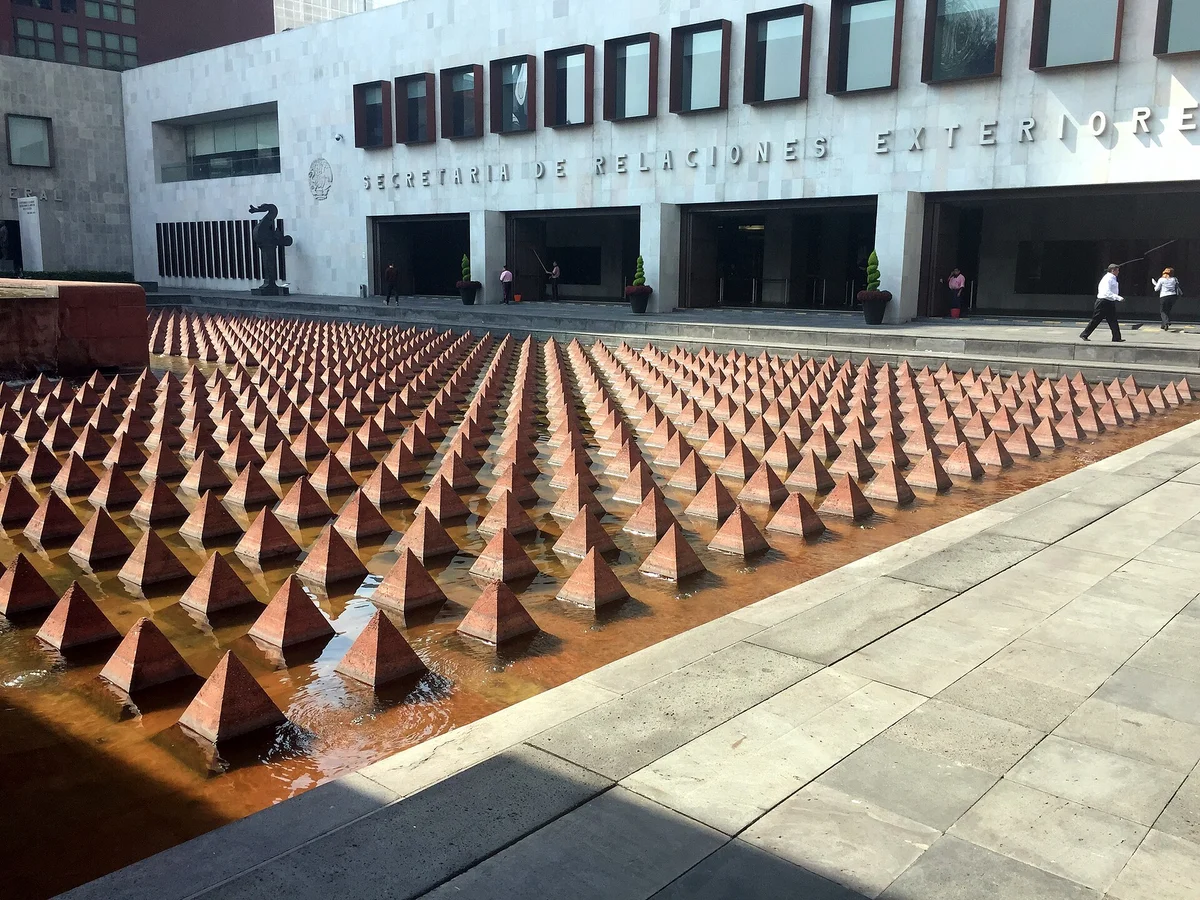
Quick answer: Foreign buyers typically need apostille only for a power of attorney or corporate documents executed outside Mexico. The apostille process takes 1-3 weeks depending on state and service level. Eliminate the apostille step entirely by executing your POA at a Mexican consulate or traveling to sign before a Mexican notario.
Apostille requirements trip up foreign buyers because the requirement is specific and the consequences of getting it wrong are disruptive: a closing delayed waiting for properly authenticated documents while the seller’s patience runs thin.
This guide explains exactly which documents need apostille for a Mexico property purchase, the Hague Convention chain that makes it work, and how to avoid apostille delays derailing your closing timeline.
Full document context: Remote Notarization Mexico.
What is the Hague Apostille and why Mexico requires it
The Hague Convention of 1961 (formally the “Convention Abolishing the Requirement of Legalisation for Foreign Public Documents”) created a simplified chain for recognizing public documents across member countries. Both the United States and Mexico are signatories. Canada joined in 2024.
Before the Hague Convention, a US document needed to be authenticated by a US notary, then the state authority, then the US State Department, then the Mexican embassy, a four-step chain called legalization. The Hague Apostille replaced that with a single-step certificate from the state authority.
The apostille certifies one thing: that the person who signed or notarized the underlying document had the authority to do so. It does not:
- Translate the document
- Verify the content’s accuracy
- Certify the document meets Mexican legal requirements
- Replace independent legal review
Think of apostille as the international equivalent of a notary acknowledgment, it verifies identity and authority, not substance.
Which documents require apostille for Mexico property transactions
Most documents foreign buyers submit to Mexican notarios do not require apostille. The requirement is specific. A straightforward purchase in your own name, signed in person, needs none at all. The requirement appears when a document created outside Mexico has to carry legal weight inside it: a power of attorney executed abroad, corporate formation papers, a death certificate in an inheritance matter, or a marriage certificate where marital property regime is in question. Everything else, bank statements, proof of funds, identification, is submitted as an ordinary copy.
| Document | Apostille required? | Notes |
|---|---|---|
| Power of attorney (executed in US/Canada) | Yes | Unless executed at Mexican consulate or in Mexico |
| Passport copy | No | Certified copy accepted |
| Bank statements (fideicomiso KYC) | No | Direct submission to bank |
| Tax returns | No | Translated copy suffices |
| US LLC/Corp formation docs | Yes | If entity is the buyer |
| Officer certification for corporation | Yes | If entity is the buyer |
| Marriage certificate (if relevant to title) | Yes | If establishing joint ownership |
| Death certificate (inheritance purchase) | Yes | Plus probate documentation |
| Birth certificate (rarely required) | Yes if required | Consult attorney |
For the vast majority of individual foreign buyers purchasing a resale condo through a new fideicomiso, the only document requiring apostille is the power of attorney; if executed outside Mexico.
The apostille chain step by step
Understanding the chain prevents the common mistake of getting the apostille from the wrong authority. The apostille comes from the authority that certifies the notary, not from the notary and not from a Mexican consulate. In the United States that is the Secretary of State of the state where the document was notarised, and for federally issued documents it is the US Department of State. Getting this wrong costs one to three weeks, which on a 45-day closing is the difference between signing on time and renegotiating the date.
Step 1: Execute the underlying document
For a power of attorney, the document is drafted by your Mexican attorney and you sign it before a licensed notary public in your state. The notary witnesses and acknowledges your signature. At this point you have a notarized document, not yet apostilled.
The notary must be commissioned in the state where the document is executed. A California notary cannot apostille a Texas-executed document, and vice versa. The apostille must come from the state where the notary is commissioned.
Step 2: Submit to the issuing state’s apostille authority
In the US, apostille authority sits with the Secretary of State of each state (not the federal State Department, that was the old legalization path). Submit the original notarized document with the required fee and processing time request.
| State apostille authority | Website | Contact |
|---|---|---|
| California | sos.ca.gov | Sacramento in-person for same-day |
| Texas | sos.texas.gov | Online submission available |
| Florida | dos.fl.gov | In-person at Tallahassee or mail |
| New York | dos.ny.gov | Albany office, mail or in-person |
| Arizona | azsos.gov | Mail or in-person Phoenix |
Step 3: Receive the apostilled document
The state authority attaches an apostille certificate to your document, a separate page or stamp (format varies by state) that certifies the notary’s commission and authority. The document is now a valid international public document.
Step 4: Courier to Mexico
Send via international courier (DHL, FedEx, UPS) to your Mexican attorney. Allow 3-5 business days for international delivery plus local Mexico City or resort area delivery. Your attorney receives the document, confirms apostille validity, and holds it for the closing.
Processing times by US state in 2026
Apostille turnaround is the item most likely to move a Mexican closing date, and it varies more by state than buyers expect. Secretary of State processing commonly runs 1 to 2 weeks, with expedited service available in some states for an additional $25 to $50, and certified Spanish translation follows afterwards rather than in parallel. Budget 2 to 4 weeks end to end for the full chain, and longer where a document must first be certified by a county clerk before the state will apostille it. Start it the week the purchase contract is signed, because on a 45 to 90 day Mexican closing it is the one dependency that no amount of money reliably accelerates.
| State | Standard processing | Expedited | Same-day option |
|---|---|---|---|
| California | 10-15 business days | Yes (3-5 days, fee) | Yes at Sacramento |
| Texas | 7-10 business days | Yes (online, 2-3 days) | No |
| Florida | 5-10 business days | Yes, in-person | No (mail only expedited) |
| New York | 10-15 business days | Yes, in-person Albany | No |
| Illinois | 7-10 business days | In-person option | No |
| Washington | 5-10 business days | Yes | No |
| Colorado | 5-10 business days | In-person Denver | No |
| Nevada | 5-7 business days | Yes | No |
Add 3-5 business days for courier transit after apostille completion. Total time from executing the POA to your attorney receiving the apostilled document: 2-4 weeks typical.
Canada: Global Affairs Canada (since 2024)
Canada joined the Hague Convention in January 2024. Documents executed in Canada are apostilled through Global Affairs Canada in Ottawa.
- Standard processing: 15-30 business days (mail)
- In-person Ottawa: 3-5 business days
- Fee: CAD 35 per document (2026 rate)
- Address: Consular Services, 125 Sussex Drive, Ottawa
For Canadian buyers, the Mexican consulate path beats the mail-in apostille in most cases: schedule an appointment at the nearest Mexican consulate in Canada to execute the POA directly.
The consulate alternative: skip apostille entirely
Mexico’s consulates abroad serve as de facto Mexican notario offices for document execution. A power of attorney executed before a Mexican consulate official is already a Mexican public document, it requires no apostille in Mexico.
Executing before a Mexican consulate removes the apostille chain altogether and is the faster route where it is available. A poder notarial signed at a consulate in the US or Canada is already a Mexican instrument, needing no Secretary of State certification and no certified translation, which removes 1 to 2 weeks and $25 to $50 of apostille cost plus $400 to $1,500 of translation. The constraint is appointment availability, which in busy consulates can itself run 2 to 6 weeks, and the consulate’s own document requirements, so check both before assuming this route is faster in your city.
Mexican consulate locations in the US
Major cities with full consulate services for property POA execution:
- Los Angeles (large capacity)
- New York (large capacity)
- Chicago (large capacity)
- Houston (large capacity)
- Miami (large capacity)
- Phoenix, San Antonio, Dallas, San Diego (standard capacity)
Schedule online at mexitel.sre.gob.mx. Bring valid passport and the draft POA document from your Mexican attorney. The consulate charges a nominal fee (approximately USD 50-75 per document in 2026).
Consulate processing time
Appointment waiting times vary: in major cities during peak winter season (November-March), appointments may be 2-3 weeks out. Schedule early once you know you will be purchasing.
Corporate buyer apostille requirements
If a US LLC, corporation, or trust is purchasing Mexico property, documentation requirements expand significantly. Corporate buyers must prove: Expect three documents rather than one: formation papers proving the entity exists, a resolution or operating agreement proving who may sign for it, and a certificate of good standing. Each needs its own apostille and its own certified Spanish translation, and Mexican notarios vary in what they will accept from a foreign entity; confirm with the specific notario before spending on translation.
- The entity is validly formed and in good standing
- The individual representative has authority to execute the transaction
- The entity is permitted to hold foreign real estate
Documents a corporate purchase must produce, and their apostille status:
| Document | Source | Apostille needed |
|---|---|---|
| Articles of incorporation | State of incorporation | Yes |
| Certificate of good standing | State of incorporation | Yes |
| Operating agreement or bylaws | Internal | No (but certified copy) |
| Board resolution authorizing purchase | Internal | No (but notarized) |
| Officer/manager certificate | Internal | Yes if used for transaction authority |
Corporate apostille from Delaware (the common incorporation state) processes through the Delaware Secretary of State in 5-7 business days standard, next-day expedited.
Estate and trust buyers have similar requirements. An estate executor needs apostilled letters testamentary. A trust buyer needs apostilled trust certification. Budget 3-4 weeks for corporate or trust buyer documentation regardless of urgency.
Common apostille mistakes and how to avoid them
| Mistake | Consequence | Prevention |
|---|---|---|
| Getting apostille from wrong state | Document rejected | Apostille from state where notary is commissioned |
| Apostille on photocopy not original | Document rejected | Original document must be apostilled |
| Incorrect notary commission (expired) | Apostille invalid | Verify notary commission current before signing |
| Corporate documents not current (good standing lapsed) | Closing blocked | Order updated good standing certificate within 90 days of closing |
| Not allowing enough lead time | Closing delayed | Start apostille process the week purchase contract is signed |
| Sending apostille by standard mail | Lost or delayed | Always use international courier with tracking |
What checklist should run before you sign?
Before signing a purchase contract, confirm: Start the apostille chain the week you go under contract, not the week before closing. The notarisation is same-day, the state-level apostille runs one to three weeks depending on the state and whether you use expedited service, and the certified translation adds several days on top. That sequence, not the Mexican side, is what moves closing dates.
- Power of attorney drafted by Mexican attorney (not a US template)
- Notary appointment scheduled in your state (or consulate appointment if using that path)
- Apostille authority processing times verified for your state
- Courier pre-scheduled to Mexico attorney (DHL or FedEx account)
- Corporate documents identified if entity buyer (and good standing current)
- Target apostille receipt date mapped against closing timeline
- Mexican attorney email confirmed for tracking apostille arrival
For remote buyers, complete this checklist the day you sign the purchase contract. The apostille timeline is the critical-path item for the target closing date more often than anything on the Mexican side.
How apostille fits into the total closing timeline
| Closing phase | Apostille timing |
|---|---|
| Purchase contract signed (Day 1) | POA drafted by attorney, notary appointment scheduled |
| Days 3-7 | POA executed before notary |
| Days 7-21 | State apostille processing |
| Days 21-26 | Courier to Mexico attorney |
| Days 26-30 | Attorney confirms receipt, valid POA in hand |
| Days 30-55 | Due diligence and fideicomiso parallel |
| Days 50-65 | Closing with valid POA |
Notice that apostille completes well before the closing date when started immediately at contract signing. The mistake is starting apostille after due diligence clears, at that point, apostille becomes the critical path item delaying the closing.
Full timeline: Mexico Property Closing Timeline.
Buyer scenarios for apostille planning
Individual US buyer, first purchase: Execute POA at Mexican consulate in your nearest major city. One appointment, no apostille processing time, lower complexity. Schedule the consulate appointment within 3 days of signing the purchase contract.
Individual US buyer, no consulate nearby: Standard notary plus state apostille. Use expedited service and overnight courier. Allow 2-3 weeks total. In states with same-day apostille (California), this can compress to under 1 week with planning.
US LLC buyer: Budget 3-4 weeks for complete corporate document apostille. Delaware entities have fast apostille processing. Identify all required corporate documents before offer submission to avoid surprises.
Canadian buyer: Apostille through Global Affairs Canada takes 4-6 weeks by mail, use in-person Ottawa or the Mexican consulate path. Mexico opened new consulates in Canada post-2024 Hague Convention accession; appointments may be available within 1-2 weeks.
Apostille requirements and state processing times change. Verify current fees and timelines with your state’s Secretary of State and your Mexican attorney before executing documents. This guide is educational, not legal advice.
What the document chain itself costs
Apostille money is small and apostille time is not, which inverts the usual budgeting instinct. The state fee runs $2-50 per document depending on the issuing state, certified translation by a perito traductor adds roughly MXN 350-700 per page on the Mexican side, and two courier legs add $60-150. The full chain for an individual buyer, notarisation, apostille, translation, delivery, rarely clears $400 in fees while consuming 2-4 weeks of a 45-90 day closing calendar.
Three timeline rules keep the chain off the critical path:
- Start the apostille the week the offer is accepted, not the week the notario asks, because the state queue is the one segment nobody can expedite meaningfully.
- Batch every document needing apostille into one submission; a forgotten corporate certificate restarts the whole clock.
- Let the notario nominate the perito traductor before translating anything, since a translation by an unrecognised translator is repeated, not reused.
Red flags checklist before you wire funds
Document defects and the flags below fail in the same way: quietly, at the notaría, on the day of closing. An apostille that names a slightly different version of your name than your passport, or a power of attorney apostilled in the wrong state, does not announce itself in advance; it simply stops the escritura from being signed. Run this list alongside document preparation rather than after it; every row is a defect the notaria discovers on exactly the day it is most expensive.
| Red flag | Why it stops the closing | Fix |
|---|---|---|
| Name spelled differently across passport, apostille and draft escritura | The notario cannot reconcile identities at the table | Correct at source before anything is apostilled |
| POA apostilled by the wrong state | Certification authority does not match the notarisation | Re-execute where the notary is commissioned |
| Apostilled POA older than 6-12 months | Notarios question stale authority | Re-execute close to the closing date |
| Translation done before the notario named a perito | Unrecognised translator, work repeated | Ask for the perito first |
| Corporate set missing one officer certificate | Authority chain incomplete, escritura waits | Submit the full constitutional set in one batch |
| Consulate route assumed available | Appointment queues run weeks in busy consulates | Book the consulate slot before choosing that path |
Frequently Asked Questions
The most common documents requiring apostille for foreign buyers are: power of attorney (if executed outside Mexico), corporate formation documents (if buying through a US LLC or corporation), and death certificates or probate documents (for inheritance transactions). Passports, bank statements, and tax returns typically do not require apostille, the notario accepts certified copies.
A Hague Apostille is a standardized international certification that verifies the authenticity of a public document for use in another Hague Convention member country. Both the US and Mexico are Hague Convention members. The apostille certifies the authority of the official who notarized or executed the underlying document, making it valid without further authentication in Mexico.
US state apostille processing runs 5-20 business days depending on the state and service level. California standard is 10-15 business days; same-day service is available at the Sacramento office. Texas runs 7-10 business days with online submission. Canada's Global Affairs Canada apostille takes 15-30 business days by mail. Use expedited service whenever timeline matters.
No. A power of attorney executed before a Mexican notario in Mexico requires no apostille, it is already a Mexican public document. Apostille is only required for documents executed outside Mexico that must be recognized in Mexico. If you can travel to Mexico, signing before a local notario eliminates the apostille step entirely.
Yes. Documents executed before a Mexican consulate official abroad are treated as Mexican public documents and require no apostille in Mexico. This is often faster than the US notary plus apostille chain. Make an appointment at your nearest Mexican consulate, bring your passport and the draft POA, and the consulate executes it in recognized form.
Apostille only certifies the authority of the person who signed or notarized the document, it does not translate it, verify its content, or guarantee it meets Mexican legal requirements. A badly drafted power of attorney with apostille is still badly drafted. Your Mexican attorney must review the document content regardless of apostille status.
Yes. If a US or Canadian corporation or LLC is the buyer, the corporate formation documents (articles of incorporation, officer certifications) require apostille from the issuing state's Secretary of State. Mexico's notario must verify that the corporate representative has authority to execute the purchase. Plan 2-4 extra weeks for corporate buyer documentation.
Apostilles themselves do not technically expire, but they authenticate a document as of a specific date. Mexico's notarios may question the currency of a corporate officer authorization or power of attorney that is more than 12 months old. For property transactions, ensure your apostilled documents are executed within 6 months of the closing date to avoid notario objections.


Get a vetted Mexico shortlist
US and Canadian buyers use this to skip the developer sales deck: tell us the budget and the market, and we come back with 3 to 5 options and the net yield maths behind each one.
Want options matched to your budget and risk profile?
Three questions, one screen. We reply within one business day.
Get a vetted Mexico shortlist