
Deed Translation Requirements for Mexico Property Buyers
Translation requirements for Mexico property deeds: certified Spanish, apostille chain, notario expectations, and foreign buyer checklist.
By Mexico Invest Editorial · Updated July 9, 2026 · 9 min read
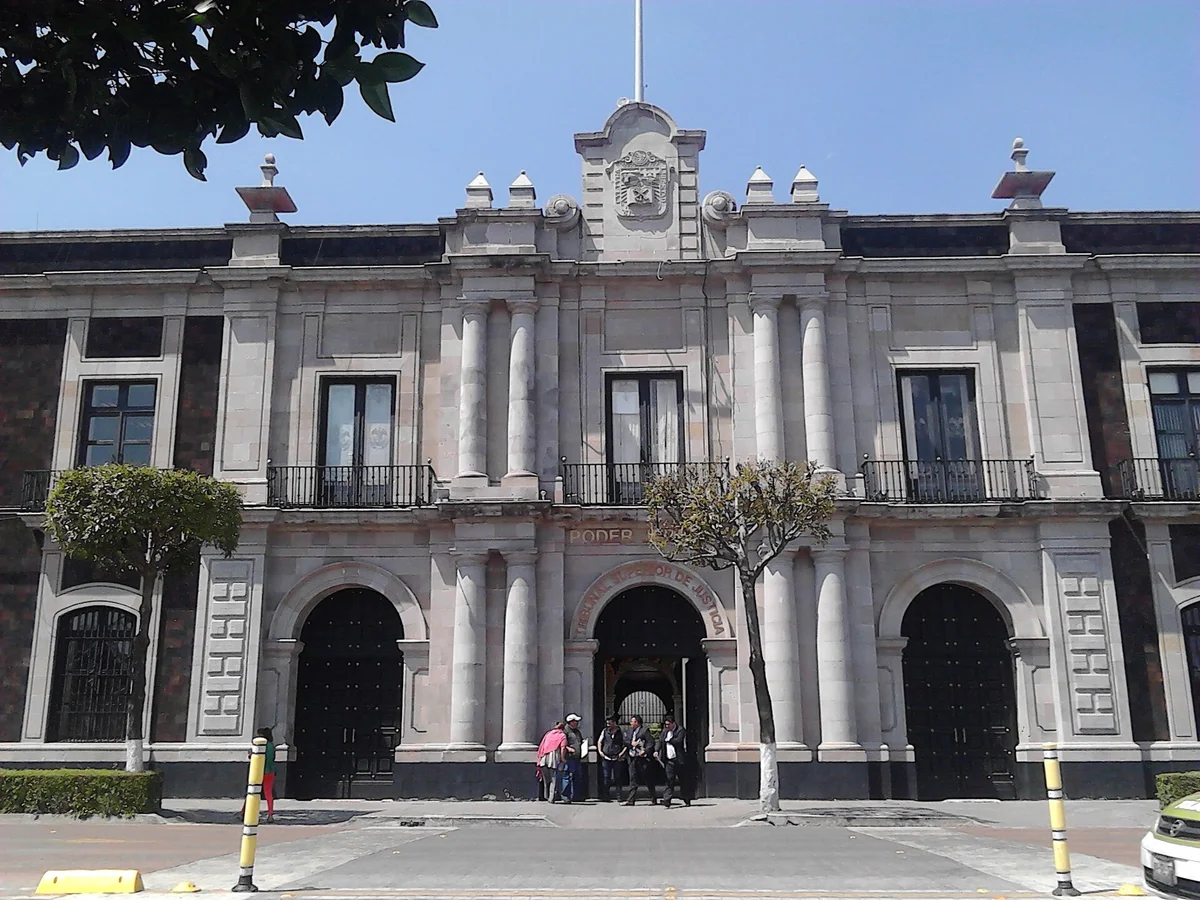
Quick answer: The official Mexico property deed (escritura) is always in Spanish. Foreign buyers need working translations for understanding but certified translations only when submitting Mexican documents to US, Canadian, or other foreign authorities. Documents from abroad going into Mexico must be certified-translated into Spanish by a registered perito traductor.
Translation requirements in Mexico property transactions run in two directions: foreign-language documents entering Mexico must be translated into Spanish by a certified expert, and Spanish-language Mexican documents you need for US purposes require certified English translation. The two directions have different requirements and different qualified translators.
Buyers who skip translation planning end up either confused about what they signed or facing delays when US banks, CPAs, or courts ask for certified translations months later.
Full document context: Apostille Requirements Mexico Property.
Direction 1: foreign documents entering Mexico
When you submit non-Spanish documents to a Mexican notario or government authority, those documents require certified Spanish translation by a registered perito traductor. A perito traductor is court-registered and their certification is what makes the document admissible; a fluent bilingual friend or a commercial translation service is not a substitute, and the notario will reject it.
Documents that typically need Spanish translation for Mexico closing
Corporate formation documents (if entity buyer) US LLC operating agreements, corporate articles, officer certifications, all must be translated into Spanish when submitted to the notario. The notario must verify corporate structure and representative authority, which requires a legible Spanish-language version.
Foreign court orders Divorce decrees, probate orders, custody agreements, or other court documents relevant to the transaction (for example, showing a divorced seller has full authority) require certified Spanish translation.
Foreign death certificates or marriage certificates When required for title chain verification or joint ownership establishment, foreign vital records need certified Spanish translation.
Note on passports: Passports submitted for identification purposes do not require translation. Notarios review passports directly as identification documents. The same applies to most financial institution KYC documents submitted directly to banks for fideicomiso setup.
Direction 2: Mexican documents going
After closing, you will interact with US or Canadian systems that require certified English translations of your Spanish-language Mexican documents. US and Canadian tax filings, estate documents and bank compliance all periodically require certified English versions of your escritura or trust deed, and the standard applied is the receiving institution’s rather than Mexico’s.
When you need certified English translation of Mexican documents
| Situation | Document | Why certified translation needed |
|---|---|---|
| US tax filing | Escritura (for cost basis) | IRS may request original documents with translation |
| US lender (HELOC for second purchase) | Escritura, fideicomiso | Lender title review |
| US estate planning | Escritura, fideicomiso deed | Attorney must understand document |
| US court proceedings | Any Mexican public document | Court rules require certified translation |
| FBAR or FATCA compliance | Fideicomiso trust deed | Financial institution reporting |
| Canadian CRA reporting | Escritura, fideicomiso | Foreign property reporting requirements |
Who is qualified to provide certified translation
The certification system for property document translation differs by direction. Into Spanish for Mexican use: a perito traductor registered with the relevant state judiciary. Into English for foreign use: whatever the receiving institution accepts, which is usually a translator’s certificate of accuracy rather than a court registration.
For documents entering Mexico: Perito Traductor
A perito traductor (expert translator) is a translator certified by the Supreme Court of Justice (Tribunal Superior de Justicia) of a Mexican state. They hold an official government credential authorizing them to produce legally valid translations for Mexican authorities.
Key points:
- Each perito is certified in specific language pairs (e.g., English-Spanish)
- Certification is state-specific, a Quintana Roo perito is the right choice for Riviera Maya transactions
- Their translations include an official certification stamp and signature
- Fees are not regulated and vary by translator
Where to find a certified perito traductor:
- Ask your Mexican attorney, they regularly work with specific translators
- Mexico’s state supreme court websites publish registered perito lists
- PROTRADUS and similar translation associations maintain directories
For documents going to US authorities: ATA-certified translator
For US purposes, the American Translators Association (ATA) certification is widely recognized. ATA-certified Spanish-to-English translators produce translations accepted by US courts, the IRS, USCIS, financial institutions, and most government agencies.
Some US government agencies (USCIS, for example) have specific translation format requirements. Confirm requirements with the specific US agency before commissioning translation.
Overlap: bilingual perito traductores
Some perito traductores also hold ATA certification or equivalent credentials from professional associations in both countries. These translators can produce certified translations valid on both sides of the border, useful for documents that must satisfy requirements in Mexico and the US.
Ask your attorney for referrals to translators with this dual credential if you anticipate submitting translated documents to authorities in both countries.
Translation costs in 2026
Translation costs vary by document complexity, length, and urgency. Rough ranges for planning: Budget a few hundred dollars per document set rather than treating it as a trivial line, and add a week to the timeline, urgency premiums on certified translation are substantial.
Certified translation is a small line that delays large transactions, which is why it belongs early on the calendar rather than late. Perito traductor work typically runs $25 to $60 per page, so a full foreign-document set for a corporate or trust buyer, articles, resolutions, passports, proof of address, commonly totals $400 to $1,500. The cost is trivial against a $320,000 purchase; the schedule is not, since translation follows apostille rather than running in parallel, and the pair together routinely add 2 to 4 weeks to a closing already running 45 to 90 days.
| Document | Approximate length | Certified translation cost |
|---|---|---|
| Standard purchase contract | 8-15 pages | USD 400-900 |
| Full escritura (deed) | 15-30 pages | USD 750-2,500 |
| Fideicomiso trust deed | 10-20 pages | USD 500-1,500 |
| HOA bylaws (condominio regime) | 20-40 pages | USD 1,000-3,000 |
| Corporate charter (for US entity buyer) | 5-15 pages | USD 300-900 |
| US death certificate (into Spanish) | 1-2 pages | USD 100-200 |
Per-word rates from registered translators typically run MXN 2-4 per word (roughly USD 0.10-0.20) with minimum fees per document. Rush surcharges of 25-50% apply for 24-48 hour turnaround.
For planning purposes: budget USD 500-800 for working translations during closing and USD 1,500-3,000 for certified translations of your complete closing documents for US purposes.
What your attorney should explain in plain English
Your Mexican attorney is not a certified translator, but part of their service is explaining critical document terms to you before you sign. Expect your attorney to walk through: Specifically: the exact obligations in the promesa de compraventa, the release conditions on any deposit, the trust’s permitted uses, and any clause limiting your ability to rent or sell.
Purchase contract key provisions:
- Deposit amount and conditions for return
- Due diligence contingency terms
- Title warranty representations
- Closing timeline and force majeure
- What happens if either party defaults
Fideicomiso trust deed key provisions:
- Your beneficiary rights (use, rent, sell, improve, inherit)
- Bank’s role and limitations (administrative only)
- Annual fee structure and renewal terms
- Modification process for future sale or inheritance
Escritura key provisions:
- Property description and boundaries
- Seller’s title warranty to you
- Tax calculations and payment records
- Fideicomiso integration terms
If your attorney is not explaining these in language you understand before you sign, either they lack English fluency for your needs or they are rushing the process. Either is a problem worth addressing.
What does not require certified translation
Many buyers over-translate, paying for certified translation of documents that only needed a working translation for their own understanding. HOA minutes, marketing materials and correspondence need only a working translation for your own understanding. Paying for certification on those is a common and avoidable expense.
Knowing what falls outside the requirement saves real money on a corporate purchase. Marketing materials, correspondence, bank statements used only for your own planning, and documents that never reach the notario need no certified translation at all. What does require a perito traductor is anything the notario will attach to the escritura or rely on for identity, authority or source of funds. Ask your attorney for the exact list before commissioning work, because a buyer who translates everything at $25 to $60 a page can spend $1,000 or more on pages nobody will read, and delay the closing while they are produced.
| Document | What you need |
|---|---|
| HOA meeting minutes (for your review) | Working translation for understanding |
| Predial (property tax) receipts | Your attorney explains; no translation needed |
| Utility statements | Working translation sufficient |
| Rental income history | Working translation sufficient |
| Developer marketing materials | No translation needed (they may already be in English) |
| Closing cost breakdown from notario | Your attorney walks through this |
| Property inspection report | Most inspectors provide English reports |
Certified translation is for documents entering official processes (courts, government agencies, lenders, tax authorities). Working translation is for your own informed participation in the transaction.
Pre-construction purchase contracts
Developer contracts for pre-construction properties often run 40-80 pages, include payment schedules, delivery guarantees, and penalty provisions, and are frequently in Spanish only. Budget for full certified translation before signing, these are binding contracts with significant financial consequences and your understanding of delivery conditions matters more than the closing deed.
Inheritance property with Mexican deed
If you inherit a property in Mexico or purchase from an estate, you may need: certified Spanish translation of foreign probate documents, certified English translation of Mexican inheritance deed for US estate tax purposes, and coordination between translators working in both directions. Budget USD 2,000-4,000 for full translation coverage in inheritance transactions.
Timeshare cancellation documents
If you purchased a timeshare and are canceling (see the important distinctions in Timeshare vs Condo Mexico), cancellation documents and any refund receipts should be translated and retained. Consumer protection filings with PROFECO may require translated documentation.
What checklist should run before you sign?
Before closing:
- Working translation of purchase contract from attorney
- Working translation of fideicomiso terms from bank or attorney
- Certified Spanish translation of any foreign-language documents submitted to notario
- Verify attorney has English fluency sufficient for your needs
After closing (US/Canada purposes):
- Certified English translation of escritura (for CPA and estate planning)
- Certified English translation of fideicomiso deed (for FBAR, estate attorney)
- Retain all translated documents with originals for 5+ years
If corporate or trust entity buyer:
- Certified Spanish translation of corporate charter for notario submission
- Certified English translation of Mexican corporate documents if US reporting required
How translation fits the closing timeline
Like apostille, translation planning needs to start when the purchase contract is signed, not at closing.
| When | Translation action |
|---|---|
| Day 1 (contract signed) | Identify all foreign documents needing Spanish translation; commission immediately |
| Day 3-7 | Receive certified Spanish translations of corporate/foreign docs |
| Days 10-25 | Attorney provides working translations during due diligence |
| After closing | Commission certified English translation of escritura and fideicomiso |
| Tax season | Use certified translations for IRS Schedule E and CPA documentation |
Certified translation turnaround (3-7 days standard) fits comfortably within the overall 45-70 day closing timeline if started promptly. The problem arises when buyers realize they need corporate document translation at Week 5, then translation becomes the critical path item.
Full timeline context: Mexico Property Closing Timeline.
Buyer scenarios for translation planning
Individual US buyer, English-speaking attorney: Your attorney handles working translations during the transaction. Commission certified translation of escritura and fideicomiso after closing for your CPA and estate attorney. Budget USD 1,000-1,500.
US LLC buyer: Budget USD 500-900 for certified Spanish translation of corporate documents before closing. Also commission certified English translation of closing documents for US tax and compliance reporting. Total translation budget: USD 1,500-2,500.
Buyer with complex HOA or pre-construction contract: Commission certified translation of the HOA bylaws or developer contract before signing anything. Pre-construction contracts are long and legally binding. USD 800-2,000 depending on document length.
Buyer with future resale plans: Retain certified translations of all closing documents, escritura, fideicomiso, purchase price documentation, for use in future ISR capital gains calculation and eventual resale. Missing documentation increases Mexican tax liability on exit.
Translation requirements and translator certification systems change. Verify current credentials and requirements with your Mexican attorney before submitting documents to any authority. This guide provides education, not legal or translation services.
Indicative cost and timeline benchmarks (2026)
Cost is modest on this page at $25 to $60 a page, and the schedule is not: certified translation follows apostille rather than running beside it, so a full corporate document set can add two weeks on its own. Use these as underwriting stress inputs and verify current notario requirements before closing.
| Document set | Pages, typical | Certified cost | Calendar |
|---|---|---|---|
| Individual buyer: POA + IDs | 4-8 | $100-480 | 3-5 business days |
| Marriage / probate additions | 3-6 more | $75-360 | adds 2-4 days |
| Corporate constitutional set | 20-40 | $500-2,400 | 1-2 weeks |
| Escritura for your own records | 15-30 | optional, $375-1,800 | after closing |
Perito traductor rates vary by state and document length; budget from the high end of each band and confirm the translator’s court registration before engaging.
Buyer scenarios and decision framework
The profiles differ by document volume rather than by risk. An individual buyer typically needs a passport and proof of address translated; a corporate or trust buyer needs the constitutional documents and resolutions, which at $25 to $60 a page is where a $1,000-plus bill and a two-week delay come from.
| Who you are | What actually gets translated | Where the delay hides |
|---|---|---|
| Individual, present at closing | Often nothing at all | Only if a foreign document enters the file |
| Individual closing remotely | The apostilled POA | Translation must follow the apostille, never precede it |
| Corporate or trust buyer | The full constitutional set | 20-40 pages through one perito, sequentially |
| Heir in a succession | Foreign certificates and probate acts | Court-recognised translation, the slowest class |
Match your own document set against these scenarios before closing week, when a missing certified translation becomes a delay.
Red flags checklist before you wire funds
A translation problem and a title problem look identical from the buyer’s side: you signed something whose meaning you took on trust. That is why the escritura chain row belongs at the top of a translation guide’s checklist, a perito traductor renders the document you were given, faithfully, including any defect it contains. Translation confirms what the deed says; it does not confirm that what the deed says is true. Run the independent chain search alongside the translation rather than treating one as covering the other.
| Red flag | Why it matters | Action |
|---|---|---|
| Revised wire instructions arrive in English only, by email | Fraudsters exploit the language gap at exactly this moment | Verify with the notaría by phone, in Spanish, on a known number |
| Nobody has reviewed the escritura chain in a language you read | Title defects hide behind vocabulary you skipped | Commission an independent translated summary of the registry search |
| ”STR permitted” appears in the brochure but not in the translated bylaws | The Spanish reglamento governs, not the marketing copy | Have the perito translate the actual HOA rules |
| An ejido-adjacent lot marketed on untranslated conversion papers | The risk lives in the documents you cannot read | Insist on translated dominio pleno documentation in full |
| Renovation invoices left as informal receipts | SAT recognises only CFDI at sale, whatever language the receipt is in | Register facturas to your RFC as you go |
| Translation supplied by the seller’s side | No independent check on what the document actually says | Commission your own perito traductor, court-registered |
Frequently Asked Questions
The official escritura is a Spanish-language Mexican public document and is not issued in English. Mexico does not require an English translation for the closing process. However, most attorneys provide an unofficial working translation for their foreign clients. If you need a certified English translation for US tax, mortgage, or estate planning purposes, hire a certified translator after closing.
You typically need unofficial working translations (for your understanding) of: the purchase contract, escritura, HOA bylaws, and fideicomiso trust deed. You may need certified translation for: foreign source documents submitted to Mexican authorities (corporate charters, marriage certificates), and Mexican documents submitted to US or Canadian courts, lenders, or government agencies after closing.
In Mexico, perito traductores (expert translators) are certified by the Supreme Court of Justice of their state and authorized to produce official translations. For documents going to US authorities, a translator certified by the American Translators Association (ATA) is typically accepted. For documents going to Mexican authorities, use a perito traductor registered in the relevant Mexican state.
Certified translation in Mexico costs approximately USD 0.10-0.20 per word or USD 50-150 per page depending on complexity. A typical escritura of 15-25 pages runs USD 750-2,500 for certified translation. Rush translation adds 25-50%. Budget USD 200-500 for a purchase contract translation and USD 1,000-2,500 for full escritura certified translation.
Yes. Documents submitted to the Mexican notario in a foreign language must be accompanied by a certified Spanish translation by a registered perito traductor. This applies to corporate formation documents, foreign court orders, and other foreign-language source documents. Passports submitted to the notario do not require translation, they are accepted as-is.
Mexican attorneys can provide working translations for your understanding, but they are not certified perito traductores unless they hold that additional certification. For documents requiring official certified translation, use a registered perito traductor. Ask your attorney to recommend certified translators they work with regularly.
Standard certified translation turnaround is 3-7 business days per document. Rush service (24-48 hours) is available at premium rates. A complex escritura may take 5-10 days for quality certified translation. Plan translation for documents you will need for US tax filing, lender submissions, or estate planning well in advance of those deadlines.
Yes, the fideicomiso trust deed is a Spanish-language Mexican legal document. Most fideicomiso banks with foreign client experience provide an English summary or working translation for beneficiary understanding, but the legal document itself is Spanish. For estate planning or US legal purposes, commission a certified translation. Your Mexican attorney should explain all fideicomiso terms before you sign.


Get a vetted Mexico shortlist
US and Canadian buyers use this to skip the developer sales deck: tell us the budget and the market, and we come back with 3 to 5 options and the net yield maths behind each one.
Want options matched to your budget and risk profile?
Three questions, one screen. We reply within one business day.
Get a vetted Mexico shortlist