
Commercial Property Mexico: Guide for Foreign Buyers
Commercial property in Mexico for foreigners: fideicomiso limits, SAT filings, tenant risk, and when condos beat retail assets.
By Mexico Invest Editorial · Updated July 9, 2026 · 13 min read
Quick answer: Foreign investors buy Mexican commercial property through a Mexican corporation (SA de CV) for active operations or fideicomiso for passive holdings. Commercial lease income triggers IVA (16% VAT) and ISR (30% corporate tax), significantly different from residential investment. Industrial property in nearshoring corridors is the strongest commercial opportunity in Mexico for 2026.
Commercial property in Mexico for foreign investors operates under different rules than residential purchases. The ownership structures, tax treatment, lease law, and operational requirements diverge significantly from what US or Canadian investors experience at home. Understanding these differences before committing capital determines whether the investment performs as underwritten.
This guide covers the complete commercial property landscape for foreign investors: ownership structures, asset classes, tax treatment, and the specific due diligence that differs from residential purchases.
Structure comparison: Fideicomiso vs Mexican Corporation.
Why commercial property in Mexico differs from residential investment
Foreign buyers of residential condos use a relatively standardized process: fideicomiso, notario closing, ISR on eventual sale. Commercial investment adds: A corporate structure rather than a trust in most cases, Foreign Investment Commission notification on some acquisitions, commercial lease law that runs differently from US practice, and IVA on rent that residential letting does not attract. Each of those changes the diligence, and together they change who should be buying.
Structure is the first thing that changes and it changes the cost base substantially. Commercial property inside the restricted zone is normally held through a Mexican corporation rather than a fideicomiso, which brings entity-level tax, monthly accounting at $200 to $600, annual filings, a legal representative and, for US owners, Form 5471 reporting. Against a residential trust at $2,500 to $4,000 plus $500 to $800 a year, the corporation costs roughly $27,500 over five years versus $8,200, a difference that only makes sense when rental income and asset count justify the overhead.
Active tax obligations: Commercial lease income is subject to IVA (16% VAT) and ISR (30% corporate income tax). The property must have a Mexican tax entity (RFC, CFDI invoicing capability) to legally collect and remit these taxes.
Corporate structure requirements: Operating a hotel, retail center, or office building requires Mexican employees, labor law compliance, municipal permits, and ongoing corporate accounting. A fideicomiso alone does not provide these capabilities.
Different lease law: Commercial leases in Mexico have different legal protections than residential leases, with specific notice periods, renovation rights, and renewal terms that must be explicitly drafted.
Currency exposure: Commercial tenants may pay in pesos (domestic businesses) even when the property purchase was in USD. This creates sustained currency exposure that residential USD-priced condos may not have.
Option 1: Fideicomiso (bank trust)
Fideicomiso works for commercial property in the restricted zone exactly as it does for residential. The bank holds legal title; you are beneficiary with all use rights. Best suited for:
- Single-tenant commercial properties
- Commercial land held for appreciation
- Mixed-use where a residential component dominates
- Simpler commercial assets with passive income
Limitations: The trust itself is not a legal business entity. To operate a business from the property (hotel with employees, restaurant, retail), you still need a corporate entity. The combination of fideicomiso (property holder) plus SA de CV (operating entity) is common.
Option 2: Mexican corporation: SA de CV
The SA de CV (Sociedad Anónima de Capital Variable) is Mexico’s standard corporate vehicle. A foreign investor can own 100% of the shares in most commercial sectors. The corporation can:
- Hold property (in restricted zone via corporation’s fideicomiso, or direct title outside)
- Sign commercial leases
- Hire employees
- Invoice with CFDI
- Hold permits and licenses
- Remit IVA and file ISR returns
Formation time: 3-5 weeks. Cost: USD 2,000-4,000 in formation fees. Requires Mexican corporate address, RFC registration, and ongoing accounting.
Option 3: SAPI de CV (institutional investors)
The SAPI (Sociedad Anónima Promotora de Inversión) provides enhanced flexibility for institutional capital structures: preferred shares, anti-dilution rights, information rights, and exit mechanisms not available in standard SA de CV. Used primarily for larger transactions with multiple foreign investors requiring defined equity terms.
For individual foreign investors and family offices, SA de CV is typically sufficient. SAPI adds legal complexity and cost that most single-asset commercial deals do not require.
| Structure | Best for | Restricted zone | Active operations |
|---|---|---|---|
| Fideicomiso only | Passive single-tenant | Yes | Limited |
| SA de CV + direct title | Outside restricted zone, active | N/A | Yes |
| Fideicomiso + SA de CV | Coastal, active operations | Yes | Yes |
| SAPI de CV | Multi-investor institutional | Varies | Yes |
Industrial property: nearshoring corridor opportunity
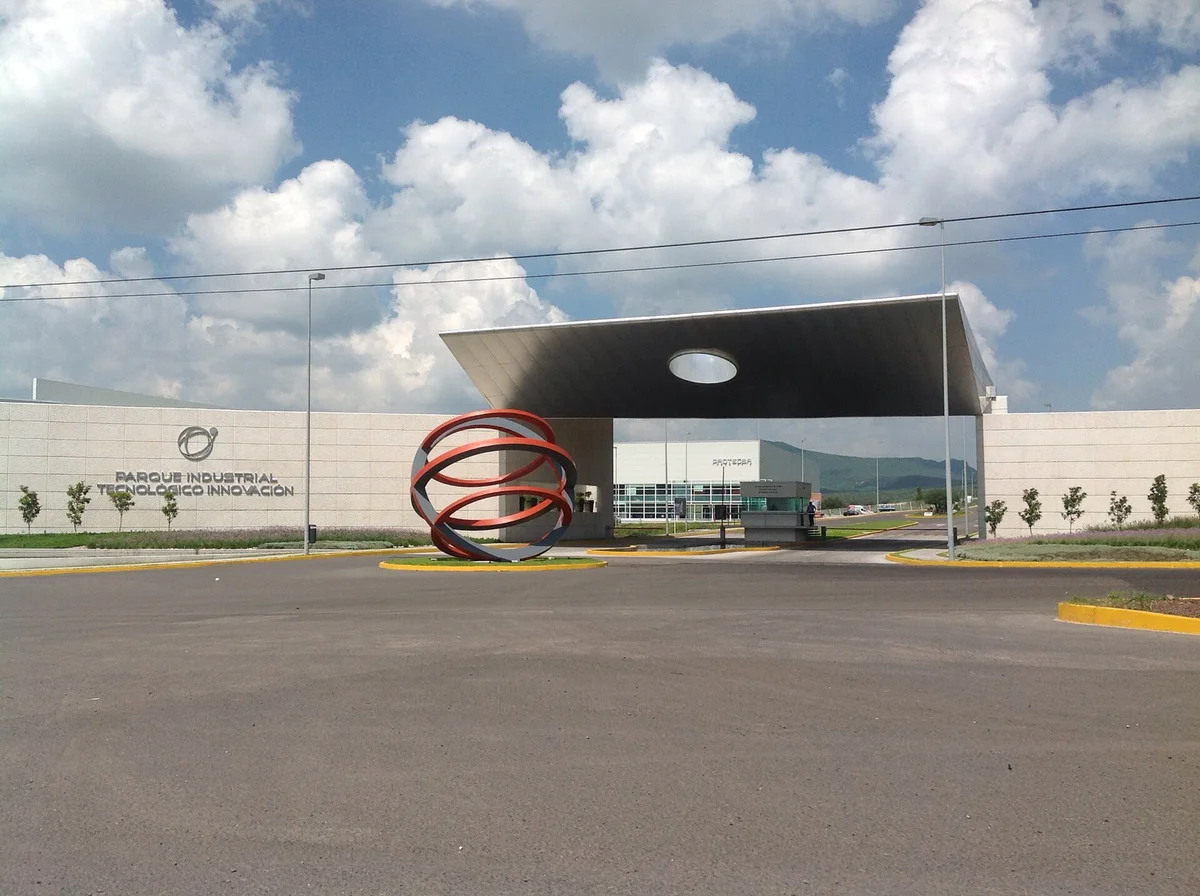
Industrial real estate is Mexico’s strongest commercial opportunity in 2026. Nearshoring, US companies relocating manufacturing from Asia to Mexico to reduce supply chain risk under USMCA, has driven demand for warehouse, logistics, and manufacturing facilities that exceeds current supply in key corridors.
Prime industrial markets:
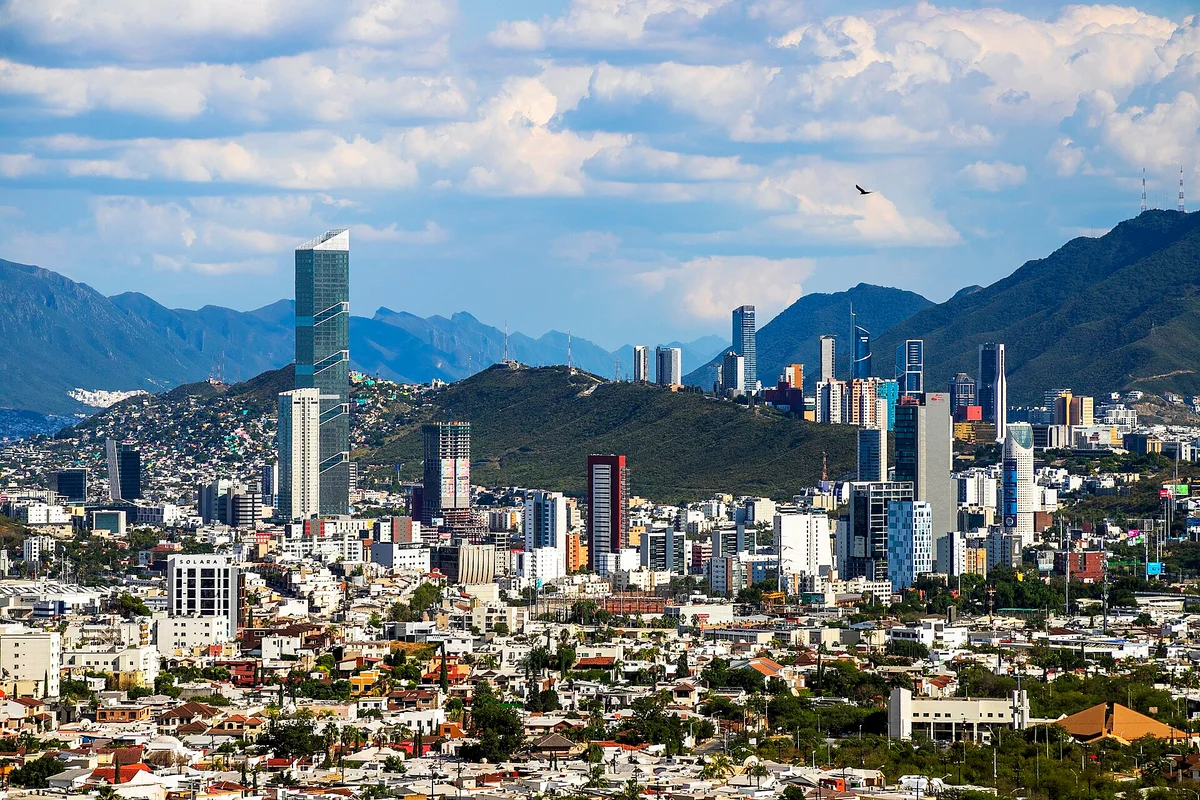
- Monterrey metro (Nuevo León): 8-9% cap rates, Class A facilities, automotive and electronics
- Juárez-El Paso corridor: Cross-border manufacturing, US proximity premium
- Guadalajara metro: Tech manufacturing, electronics, healthcare devices
- Querétaro: Aerospace, automotive, distribution
- Bajío region: Strong USMCA manufacturing base
Industrial deal characteristics:
- Single-tenant net leases common (NNN structure)
- USD-denominated rents for export-oriented manufacturing
- Triple-net reduces landlord management burden
- 5-10 year lease terms standard
See Nearshoring Mexico Industrial Real Estate for market depth.
Retail and mixed-use
Retail in Mexico’s resort corridors operates in a two-tier market: international brand retail in high-traffic tourist zones (Quinta Avenida Playa del Carmen, Puerto Morelos, Cabo San Lucas) and local-service retail in residential neighborhoods.
Tourist-corridor retail:
- High foot traffic, USD-priced rents possible
- Significant seasonality (October-March peak)
- Competition from online and hotel shopping
Local-service retail:
- Peso-denominated rents
- More stable occupancy (pharmacies, supermarkets, services)
- Lower rent per square meter but consistent
Hotel and hospitality
Hotel acquisition or development in Mexico’s coastal markets involves additional regulatory layers: SEMARNAT environmental permits for coastal construction, tourism ministry registration, brand licensing requirements for flags, and complex operational staffing under Mexican labor law.
Hotel acquisitions typically require:
- Mexican corporate entity for operations
- Hotel operating license from Secretaría de Turismo (SECTUR)
- IMSS (social security) registration for employees
- Fire, health, and municipal permits
- Environmental impact assessment for coastal properties
Office and professional
Mexico City, Monterrey, and Guadalajara have established office markets with international-standard A-class inventory. Resort market office demand is limited to professional services serving the expatriate and development community.
Office yields in Class A Mexico City submarkets (Santa Fe, Polanco, Insurgentes): 7-9% depending on location and lease term. Significant vacancy in some submarkets following pandemic-era supply overhang.
Tax framework for commercial property
Commercial property tax treatment differs materially from residential. Plan before you invest. Commercial rent attracts IVA at 16% on top of income tax, and a corporate holder pays corporate rates with its own compliance calendar rather than the non-resident withholding regime. The structure decision has to precede the purchase, because converting afterwards is a taxable disposal.
IVA (Value Added Tax: 16%)
Commercial lease income is subject to 16% IVA. The tenant pays IVA on top of the base rent; the property entity remits to SAT monthly. A property entity without RFC cannot legally collect commercial rents, the lease is technically unenforceable.
This means:
- Mexican corporation or trust with RFC is required
- Monthly IVA returns to SAT (or quarterly for smaller volumes)
- CFDI invoice (factura) must be issued for every rental payment
- Input IVA credits available for construction and improvement expenses
ISR (Corporate Income Tax: 30%)
Mexican corporations pay 30% ISR on net income. Commercial property income less depreciation, financing costs, maintenance, and operating expenses. Favorable depreciation schedules for commercial property (2-5% annually for structures, faster for equipment) reduce taxable income.
Foreign investors in Mexican corporations also face dividend withholding: 10% withholding on dividends distributed to foreign shareholders from corporate after-tax profits.
ISAI and predial
Acquisition tax (ISAI): same as residential, 2-4% at closing. Predial: commercial property predial rates are typically higher than residential on a percentage of cadastral value basis. Budget 0.2-0.5% annually for larger commercial assets.
Full tax analysis: Mexico Property Taxes Explained.
Commercial lease law key points
Mexican commercial lease law provides tenant protections that foreign investors from the US may find different from their home market experience. Mexican commercial tenants hold stronger renewal and possession rights than a US landlord expects, and eviction runs through courts rather than an administrative process. Read the existing leases before valuing the income: what you are buying is the leases as much as the building.
Mexican commercial tenancy is far more negotiable than residential and that cuts both ways. Terms, rent escalation, IVA treatment and improvement obligations are contractual rather than statutory, so a well-drafted lease can secure inflation-linked increases and a solvent guarantor, and a poorly drafted one leaves a foreign landlord with a peso-denominated rent that erodes against a dollar cost of capital. IVA at 16% applies to commercial rent, unlike residential leases, and must be invoiced and remitted monthly through CFDI, on $60,000 of annual rent that is $9,600 flowing through your account and out to SAT.
| Provision | Mexico commercial lease | US commercial lease comparison |
|---|---|---|
| Lease term | Defined by contract | Defined by contract |
| Tenant renewal rights | Statute gives preference right | By contract only |
| Rent increases | CPI-indexed common, by contract | By contract |
| Tenant improvements | Detailed documentation required | By contract |
| Eviction for non-payment | Judicial process required | Judicial process, varies by state |
| NNN structure | Available, must be explicit | Common |
| Force majeure | Civil Code provisions apply | By contract |
The key point: commercial evictions in Mexico require judicial process, which takes 6-18 months in most markets. Well-drafted leases with clear payment terms, guarantor requirements, and security deposits reduce exposure but do not eliminate the need for judicial process.
Engage a Mexican attorney who specializes in commercial real estate law, not just residential conveyancing, for lease drafting.
Due diligence differences
Commercial due diligence extends significantly beyond residential title and HOA review. Add land-use and operating licences for the tenant’s actual activity, environmental liability on any industrial site, existing lease review, and the building’s compliance with commercial construction and accessibility norms. Any of the four can make an otherwise sound asset unlettable.
Title and legal (same as residential, plus):
- Lien certificate (RPP), same requirement
- Ejido screening, same requirement
- Zoning certification (Certificado de Uso de Suelo), confirms commercial use is permitted
- Pending rezoning or development plan changes in the municipality
Operational and regulatory:
- Building permits for all structures on site
- Fire department certificate of occupancy (Visto Bueno de Bomberos)
- Municipal operating license (if active business)
- Environmental compliance certificate (SEMARNAT where applicable)
- IMSS compliance (if existing employees)
Financial and tenancy:
- Existing tenant leases, review all terms, expiration, options
- Tenant financial stability analysis (request financial statements for anchor tenants)
- Rent roll verification (actual vs pro forma occupancy)
- CAM (common area maintenance) expense documentation
- Capex requirements in next 5 years (roof, HVAC, parking)
Environmental:
- Phase 1 environmental site assessment (if industrial or former industrial)
- Contaminated soil or water documentation for industrial parcels
- Hazardous material storage compliance for manufacturing sites
What risks should buyers plan for before they commit?
Commercial risk in Mexico is mostly tax and tenancy risk, and both are structural rather than situational. IVA applies to commercial rent at 16% and non-compliance surfaces as back taxes plus penalties from SAT, which is why the RFC and the accounting have to exist before the first rent receipt rather than before the first filing. Tenant default is the second: eviction in Mexico is a judicial process measured in months rather than weeks, and six to eighteen months of lost rent is a realistic assumption rather than a worst case. The currency mismatch below compounds both.
| Risk | How it manifests | Mitigation |
|---|---|---|
| IVA non-compliance | Back taxes plus penalties from SAT | Set up RFC and accounting before first rent receipt |
| Tenant default, slow eviction | 6-18 months of lost rent during eviction | Strong lease, guarantors, security deposit |
| Peso lease, USD debt | Currency mismatch destroys yield | Match currency of lease income to financing currency |
| Zoning change | Commercial use restricted by municipality | Long-term use certificate plus zoning protection clause in purchase contract |
| Environmental liability | Industrial cleanup cost assigned to new owner | Phase 1 before acquisition; indemnification clause |
| Management complexity | Remote commercial management is harder than residential | Hire experienced local property management before closing |
Industrial property example: nearshoring warehouse
A worked example for context. A 5,000 m² logistics warehouse in Monterrey industrial park: The nearshoring case is the one foreign capital most often asks about, and it is also the one least accessible to an individual buyer, institutional competition, long lease negotiations and a capital scale that starts well above residential tickets.
| Item | Detail |
|---|---|
| Purchase price | USD 2,500,000 |
| ISAI (2%) | USD 50,000 |
| Closing and legal | USD 40,000 |
| Total acquisition | USD 2,590,000 |
| Annual rent (NNN, USD) | USD 210,000 |
| Cap rate | 8.1% |
| Corporate ISR (30% of net) | ~USD 42,000 |
| Net after-tax yield | ~6.5% |
| Dividend withholding (10%) | Additional on distributions |
Industrial NNN leases with AAA tenants (Tier-1 automotive, electronics manufacturers) in Monterrey and Juárez provide strong risk-adjusted returns compared to residential condos with management-intensive STR operations. The trade-off is higher minimum investment threshold and more complex corporate setup.
Buyer scenarios
Commercial strategy in Mexico is set by cheque size more than by preference, because the asset classes available at each level are genuinely different rather than scaled versions of each other. Between USD 500,000 and 2 million the practical universe is a small warehouse in a secondary nearshoring market or a single-tenant retail unit in a resort corridor, held through an SA de CV with a USD-denominated lease. Above USD 5 million the options open into portfolio industrial and boutique hotel acquisition, where a SAPI structure supports multi-investor equity and institutional management becomes available. The two profiles below spell out what each level actually looks like in practice.
USD 500K-2M individual investor: Industrial property or single-tenant commercial is most practical at this scale. A small warehouse in a secondary nearshoring market (Juárez, San Luis Potosí) or a single-tenant retail unit in a resort corridor. Form SA de CV, engage commercial property manager, USD-denominated lease preferred.
Family office, USD 5M+: Larger industrial portfolio or boutique hotel acquisition. Consider SAPI for multi-investor equity structure. Engage institutional commercial broker (Cushman, CBRE Mexico). Full corporate, tax, and labor law team required.
Developer investor: Commercial land acquisition for development requires all the ejido and title verification from the land guide, plus zoning confirmation, environmental clearance, and pre-leasing strategy before committing capital. Commercial development without pre-leased anchor tenants carries significant vacancy risk.
Commercial property investment, tax rates, and corporate structures in Mexico change. Retain qualified Mexican commercial real estate counsel and a tax attorney before any commercial acquisition. This guide is educational, not legal, tax, or investment advice.
Buyer scenarios and decision framework
The threshold that separates these profiles is roughly three assets. A Mexican corporation costs about $27,500 over five years against $8,200 for a fideicomiso on a single property, so the structure only earns its keep where one compliance umbrella covers several income streams or the asset is genuinely commercial.
| Profile | Typical budget | What to verify first | Realistic outcome |
|---|---|---|---|
| US cash buyer | $200K-$400K | Fideicomiso quote, HOA STR rules, escrow wire path | 30-90 day resale closing in Quintana Roo |
| Canadian investor | $250K-$500K | SAT rental registration, PM fee band 25-35% | Net yield often 3-5% after HOA and management |
| Remote closer | Any | Apostille/POA chain, notario timeline, FX policy | Closing without travel if documents are clean |
| Yield-focused buyer | $180K-$280K | Occupancy stress at 50%, not developer 75% | Cash flow rarely matches gross marketing sheets |
Run your target asset through these profiles with your accountant before the LOI; commercial mistakes compound through IVA and tenancy law.
What checklist should run before you sign?
Commercial purchases carry every residential flag below plus a structural one: a foreign buyer taking commercial property inside the restricted zone generally holds through a Mexican corporation rather than a fideicomiso, and that changes the tax, reporting and exit position entirely. Settle the holding structure before you work this list, then read the STR row as a broader use-permission question, for commercial product the equivalent issue is whether the uso de suelo actually permits the business you intend to run there, and that is verified at the municipality, not in the lease.
| Red flag | Why it matters | Action |
|---|---|---|
| Last-minute wire change | Classic BEC fraud pattern | Stop and call notario on verified number |
| No escritura chain review | Title defects surface at sale | Independent notario search before deposit |
| STR promised but not in HOA minutes | Building can block rentals | Written HOA confirmation |
| Ejido-adjacent lot without conversion proof | Foreign ownership risk | Full ejido exit documentation |
| Missing CFDI on improvements | Zero cost basis at ISR sale | Register invoices with SAT early |
| Uso de suelo not verified for the intended business | Permitted use is parcel-specific, not zone-wide | Confirm at the municipality before the deposit |
Frequently Asked Questions
Yes. Foreign investors purchase commercial real estate in Mexico through two primary structures: a fideicomiso bank trust (in the coastal restricted zone) or a Mexican corporation (SA de CV or SAPI). Commercial property outside the restricted zone can be held by a Mexican corporation with foreign shareholders or via direct fideicomiso. The structure choice depends on property location, investment objectives, and operational requirements.
Mexican corporations (SA de CV) are typically preferred for active commercial properties, retail, hospitality, office, and industrial, because they allow business operations, staffing, lease contracts, and tax invoicing in the corporate entity. Fideicomiso is simpler for passive commercial assets. Many investors use both: a corporation as operating tenant and fideicomiso as the property holder.
SA de CV is the standard Mexican corporation suitable for most commercial property and business operations. SAPI de CV offers additional flexibility for equity structuring, investor rights, and exit mechanisms, used for larger institutional deals or when multiple foreign investors need defined equity waterfall structures. For most individual foreign commercial property buyers, SA de CV is sufficient.
Foreign investment in commercial property is broadly permitted, with restrictions in specific sectors. Airports, ports, banking, and certain energy infrastructure have limitations. Standard commercial categories, retail centers, office buildings, industrial parks, hotels, restaurants, are fully accessible to foreign investors through proper corporate structures.
Commercial property owners pay: predial (municipal property tax), IVA (16% VAT on commercial lease income), ISR (corporate income tax, 30% on net income), and ISAI acquisition tax at closing (2-4%). If using a Mexican corporation, the entity files ISR returns and pays IVA on lease income. Lease income is subject to full tax accounting requirements.
Yes. Hotels and resorts are among the most common large-scale foreign investments in Mexican coastal markets. The typical structure is a Mexican corporation (or trust beneficiary) holding the property, with a hotel management company operating under a management agreement. The corporate entity handles employment, licensing, and tax compliance.
Nearshoring refers to US companies relocating manufacturing from Asia to Mexico to reduce logistics risk and costs under USMCA trade rules. This has driven significant demand for industrial property in northern border states and the Bajío region. Industrial cap rates in prime nearshoring corridors run 7-9% in 2026.
Commercial property financing in Mexico for foreign investors typically requires a Mexican corporate entity as the borrowing entity. LTV ratios of 50-65% are standard for commercial loans. Mexican banks and international banks with Mexican operations provide commercial loans at rates 200-400 basis points above comparable US commercial rates. Some US institutional investors use cross-border financing with Mexican collateral.


Get a vetted Mexico shortlist
US and Canadian buyers use this to skip the developer sales deck: tell us the budget and the market, and we come back with 3 to 5 options and the net yield maths behind each one.
Want options matched to your budget and risk profile?
Three questions, one screen. We reply within one business day.
Get a vetted Mexico shortlist