
Your First Million in Mexican Real Estate: The Playbook
Deploying $1M into Mexican property without leverage: a four-market allocation, blended 4.4% net, buy sequencing, the management stack and the exit ladder.
By Mexico Invest Editorial · Updated August 26, 2026 · 15 min read
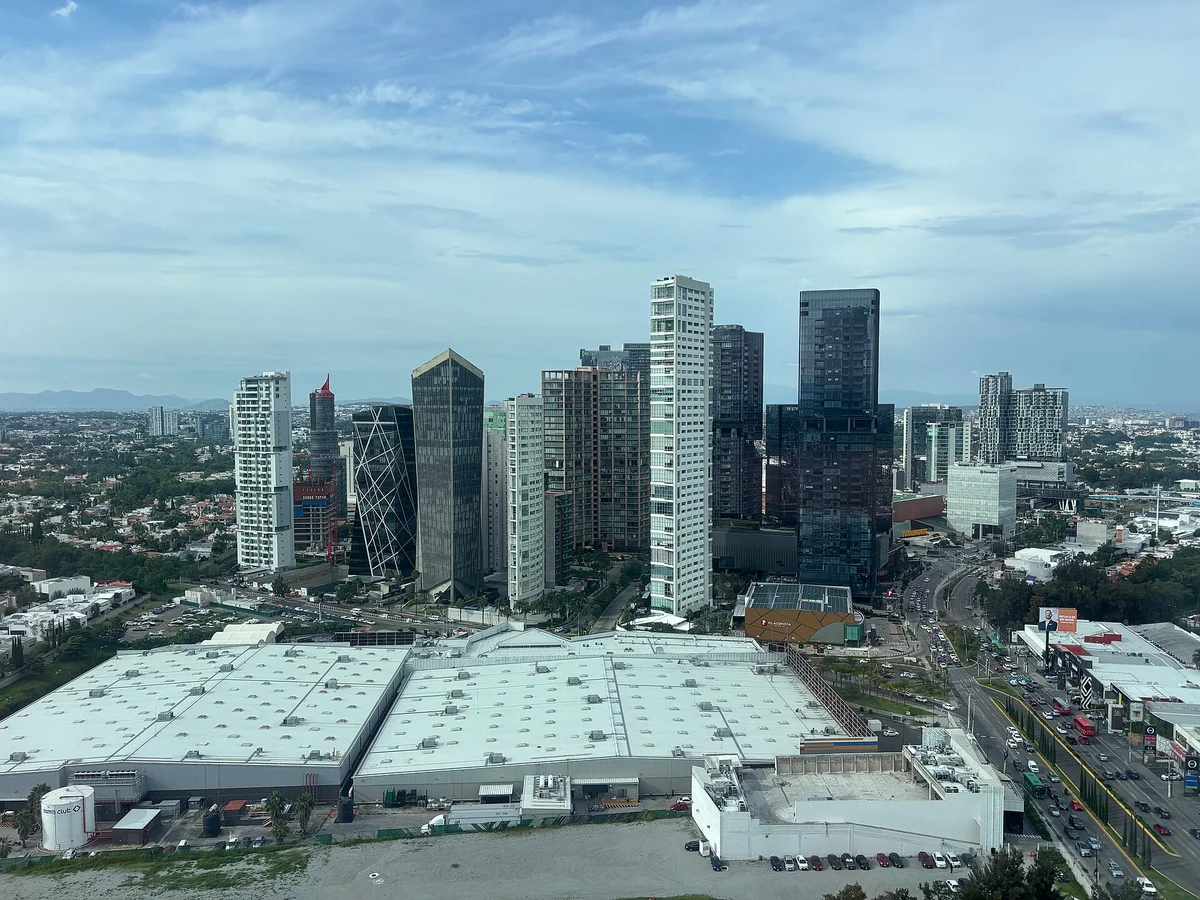
Quick answer: A million dollars builds a four-asset Mexican portfolio across three demand engines, capital annual lets, coastal tourism, Bajio industry, producing a blended 4.4% net, roughly $41,000 a year, with $55,000 held in reserve. The method is sequence, not simultaneity: one purchase every 6-9 months, hardest market first, structure decisions after unit two.
Most content about Mexican property answers the one-condo question, and a million dollars asks a different one: not which property, but which combination, in which order, under what operating system. This guide is the portfolio answer, built from the market numbers documented across this site and honest about the constraint that shapes everything, which is that nobody will lend you the second million. The yield framework underpins every figure here.
What does $1 million actually buy in Mexico?
A million dollars buys three to five income properties in this market’s strongest corridors, and the representative allocation below deploys $943,500 across four assets in three demand engines, holding $56,500 as reserve. Nothing in it is exotic; every unit type appears in this site’s market guides with its numbers shown.
| Sleeve | Asset | All-in cost | Demand engine |
|---|---|---|---|
| Capital | Roma Norte 1BR, 62 sqm | $237,500 | Domestic professionals, annual lets |
| Coast | Playa del Carmen 1BR, compliant STR | $250,000 | USD tourism, nightly |
| Bajio | Queretaro 2BR, Juriquilla | $159,000 | Nearshoring payrolls, corporate lets |
| Colonial | Merida house, 200 sqm | $297,000 | Lifestyle demand, medium lets |
| Reserve | Cash, both currencies | $56,500 | Repairs, voids, opportunities |
The allocation’s logic is engine diversity rather than geography for its own sake, and the ownership paperwork follows the map: direct escritura in the capital, Queretaro and Merida, a fideicomiso only on the Playa unit. Mexico City rents track domestic salaries in pesos; Playa’s calendar tracks US and European travel in dollars; Queretaro tracks industrial order books; Merida tracks a slower lifestyle migration. Those four demand curves do not move together, which is the entire point of holding all four, and the currency mix, roughly half peso income and half dollar, hedges the exchange rate that single-market portfolios simply ride.
Substitutions preserve the logic where taste differs: Guadalajara’s Americana swaps for Roma at $190,000, Oaxaca for Merida, a second Bajio unit for the coast entirely for buyers allergic to hurricane season. What should not be substituted away is the reserve, treated below as a working asset rather than idle cash.
The cash-market rule: equity does all the work
Mexican property is bought with money, not mortgages: peso rates of 10-13% against net yields near 5% make leverage negative-carry, and cross-border lending barely exists, so a portfolio in this market grows only as fast as capital and retained income allow. Every US-style instinct about scaling with debt mis-fires here.
The constraint reorganises three decisions that leveraged investors never think about. Pace is set by cash: at $41,000 of net income a year, the portfolio itself finances a fifth unit only every 4-5 years, so growth beyond the first million is a capital-contribution question, not a refinancing one. Mistakes are expensive: an underperforming unit cannot be refinanced into patience, only operated better or sold at the 6-8% round-trip cost, which is why the sequencing section below front-loads the learning. And the reserve is structural: with no credit line behind the portfolio, the $56,500 cash sleeve is the credit line, sized to roughly 15 months of all-in operating costs across the four units.
Three planning consequences follow directly:
- Pace: at $41,000 of net income a year, retained earnings fund a fifth unit only every 4-5 years.
- Error cost: a bad unit is sold at 6-8% round trip, escritura by escritura, or operated better; it cannot be refinanced into patience.
- Reserve: the $56,500 cash sleeve is the portfolio’s only credit line, and it is sized like one.
What the constraint gives back is equally real. A debt-free portfolio’s 4.4% net is genuinely yours, no rate reset can turn the position negative, a vacancy is an annoyance rather than a margin call, and the 2023-24 peso rally that punished dollar-budget buyers passed through an owned portfolio as a valuation gain. Cash markets are slower and calmer, and a million-dollar plan should be built calm.
Three demand engines, one portfolio
Diversification in this market means demand engines, not dots on a map, because two beach towns share one engine and fail together. The portfolio above holds three: domestic-salary rentals in the capital and Bajio, dollar tourism on the coast, and lifestyle migration in the colonial south, weighted 42%, 27% and 31% of deployed capital.
| Engine | What drives it | What breaks it | Portfolio weight |
|---|---|---|---|
| Domestic salaries | CDMX professionals, Queretaro payrolls | Peso recession, oversupply in new towers | $396,500, 42% |
| Dollar tourism | Flight capacity into Cancun, US travel cycles | Hurricanes, STR regulation, sargassum seasons | $250,000, 27% |
| Lifestyle migration | Retirees and remote workers settling inland | A stronger peso pricing arrivals out | $297,000, 31% |
The table’s third column is the honest one, and reading it as a correlation matrix is the skill. STR regulation in Quintana Roo does not touch a Juriquilla corporate let; a peso recession that softens Roma rents leaves Playa’s dollar calendar intact; sargassum on the Caribbean has no opinion about Merida. The 2020-22 period ran the experiment live: tourism collapsed and recovered violently while capital rents barely moved, and portfolios holding both engines rode it out on the stable sleeve.
Concentration is the failure mode this section exists to prevent, and it usually arrives dressed as expertise: a buyer who knows Tulum buys four Tulum condos, one engine, one municipality, one weather system, with every fideicomiso at the same trust bank, and calls it a portfolio. It is one bet, sized four times, and the Playa market guide itself argues against making it.
How should the buying be sequenced?
One purchase every 6-9 months, hardest operational market first, is the sequence that compounds learning instead of multiplying errors, and it deploys a million dollars across roughly 24-30 months. Simultaneous buying forfeits exactly the lessons each closing teaches, which is why experienced foreign buyers pace even when the capital is ready.
- Start in the capital or the Bajio. An annual-let unit teaches the full Mexican stack, RFC, CFDI, a manager, predial, the escritura process, on a tenant who pays monthly and cannot flood the calendar with problems.
- Add the coastal STR second, once the compliance machinery runs. Nightly letting layers dynamic pricing, platform withholding, lodging tax and a heavier manager relationship onto systems that already work; done first, it teaches everything at once, expensively.
- Buy the lifestyle hold third or fourth, when patience is cheap. Merida and Oaxaca reward slow shopping, and nothing about their 3.5% net punishes waiting a season for the right house.
- Keep the reserve unspent. Every sequence meets one roof, one special assessment or one seller who suddenly needs a fast close at a discount, and the reserve is what turns the last of those from a story into a purchase.
The discipline that makes the sequence work is a written thesis per unit before offering: which engine, which tenant, what net after every real cost, and what would make you sell. Four theses beat one enthusiasm, and the due diligence file repeats per purchase without shortcuts; diligence does not amortise across a portfolio.
The worked portfolio: $1 million deployed
Deploying the allocation across 30 months typically produces the operating statement below, with every unit’s numbers drawn from this site’s own market guides rather than from brochures aimed at foreign buyers. Blended performance lands at roughly $41,400 net on $943,500 deployed, a 4.4% net yield, with the reserve uncounted.
| Unit | Net annual income | Net yield | Currency |
|---|---|---|---|
| Roma Norte 1BR, annual let | $10,700 | 4.5% | MXN |
| Playa del Carmen 1BR, compliant STR | $12,000 | 4.8% | USD |
| Queretaro 2BR, corporate let | $8,300 | 5.2% | MXN |
| Merida house, furnished medium lets | $10,400 | 3.5% | mixed |
| Portfolio | $41,400 | 4.4% blended | ~55% MXN / 45% USD |
Three features of the statement deserve reading before the total does. The currency split is a built hedge: peso strength lifts the dollar value of MXN rents while softening USD tourism, and weakness runs the reverse, so the blended figure breathes less than any sleeve. The spread between best and worst sleeve, 5.2% against 3.5%, is the price of holding an appreciation asset inside an income portfolio, a deliberate choice rather than a flaw. And the operating cost lines inside each net figure, management at 8-27% by model, predial, trust fees on the coastal unit, insurance, are already deducted; this table is what survives, not what is advertised.
Stress the statement rather than admiring it: a hurricane year that halves the Playa sleeve costs the portfolio 1.3 points of blended yield; a 20% peso move swings the dollar total by roughly $4,500 either way; losing the Queretaro tenant for a quarter costs $2,100. The portfolio absorbs each without touching principal, which is the design working.
Managing four properties from abroad
Four units in four cities run through four local managers and one owner-side system, and the system is what separates a portfolio from four part-time jobs for foreign buyers at distance. Total management drag runs $6,000-9,500 a year across the mix, already inside the worked numbers above, and it buys the owner’s absence.
The stack that works is boring and layered:
- One manager per market, chosen for that market’s model: an annual-let administrator in the capital and Bajio at 8-10%, a full STR operator in Playa at 25-27%, a caretaker-plus-agent hybrid in Merida. National one-size firms consistently underperform specialists at both ends.
- One fiscal spine: a single RFC, CFDI issuance through one accountant at MXN 2,500-4,000 a month covering all four units, platform withholding reconciled quarterly. Fragmented bookkeeping is how portfolio owners fail audits they should pass.
- One dashboard cadence: monthly statements from each manager into one spreadsheet, quarterly video walk-throughs, and an annual in-person circuit timed to lease renewals and hurricane-season prep. Twelve days a year of presence, roughly, keeps four managers honest.
- Written playbooks per unit: the storm protocol for Playa, the tenant-turnover checklist for Queretaro, the maintenance calendar Merida’s climate dictates. Institutional memory beats the owner’s memory at 3,000 km.
The failure pattern at this scale is drift: managers unwatched for a year, statements unread, small deferrals compounding into the $15,000 repair that a $500 fix would have prevented. The cadence above is the antidote, and it costs attention rather than money.
When does the structure question arrive?
Personal ownership with fideicomisos where the coast requires them carries a four-unit portfolio comfortably, and for foreign buyers the entity conversation properly starts between units two and four, priced rather than assumed. The threshold tests are staff, consolidation and gross revenue past roughly $90,000-150,000 a year.
- Under those thresholds: personal RFC, managers, trusts as needed, wills in order.
- At them: price a Mexican operating company against MXN 30,000-72,000 of annual accounting.
- Past them, with staff: incorporate the operating layer and keep the escrituras personal.
At this portfolio’s scale, the honest answer is usually no entity, for reasons the structure guide prices in full: a Mexican corporation adds MXN 30,000-72,000 of annual accounting against benefits that materialise only when the operation employs people or runs as one business; a US LLC as trust beneficiary adds estate and partnership mechanics for $700 a year, worth it for co-invested capital and rarely otherwise. What the portfolio does need structurally is cheaper: substitute beneficiaries named in each fideicomiso, a Mexican will covering the direct-title units, and the US estate plan aware of all four escrituras.
The question changes character if the plan scales past the first million. A second million deployed into three more units starts to look like a business by any test, staff enter the picture, and incorporating the operating layer, keeping the escrituras personal while a company runs the lettings, becomes the pattern worth pricing. That decision belongs at unit five, made with numbers, and this guide’s scope ends where it begins.
Pros and cons versus one big asset
The alternative deployment, one $950,000 trophy, beachfront Cabo, a Polanco penthouse, keeps recurring whenever foreign buyers discuss portfolios, so the comparison deserves its table. The four-unit portfolio typically wins on income and risk; the single asset wins on simplicity and story, and stories are expensive at this scale.
| Four-unit portfolio | One $950,000 asset |
|---|---|
| Blended 4.4% net, roughly $41,400 a year | Luxury stock nets 2.5-4% at best |
| Three demand engines, two currencies | One engine, one municipality, one storm path |
| Exit ladder: sell one escritura, keep three | One exit, into a 180-day-plus luxury resale market |
| Four managers to run, one system | One relationship, genuinely simpler |
| Voids cost 1-1.3 points of yield each | A void costs 100% of income while it lasts |
| Diligence and closing costs four times | One closing, one file, one negotiation |
Which portfolio-builder scenarios work?
Three builder scenarios reach a working million-dollar portfolio in this market, and each typically differs in where the capital starts rather than where it ends, with timelines running 2-10 years. All three converge on the same allocation discipline, the same sequencing rule and the same closing machinery: an escritura per unit, a fideicomiso where the coast requires one.
| Scenario | Capital source | Timeline to four units |
|---|---|---|
| Lump-sum deployer | Business sale, inheritance | 24-30 months |
| Ladder builder | Income plus savings | 6-10 years |
| Converter | Home-country property sold | 3-5 years |
The lump-sum deployer. Capital ready, often from a business sale or an inheritance, deployed across 24-30 months on the sequence above. The risk is impatience, since the money’s availability argues for speed and every market lesson argues against it; the reserve and the 6-9 month spacing are this buyer’s guardrails.
The ladder builder. Starts with one $150,000-240,000 unit, reinvests income and adds savings, reaches four units across 6-10 years. Slower and structurally safer: each purchase is funded partly by the last one’s performance, which makes the portfolio self-correcting in a way no plan document matches.
The converter. Sells concentrated home-country property, a rental duplex, an overweight primary home, and rebuilds diversified in Mexico at two to three times the yield spread after the tax treatment of both sides is priced. Works when the home-market gain is real and the Mexican operating plan is honest; fails when it is nostalgia arbitrage.
The scenario that fails is the tower collector: four pre-construction units, one developer, one delivery date, bought as a “portfolio” with a bulk discount. Delivery risk, engine concentration and a single resale cohort arrive together, roughly 30 months later, as one correlated problem.
What red flags should stop a portfolio buyer?
Portfolio scale attracts its own sales patterns aimed at foreign buyers, and five of them account for most seven-figure regret in this market. Each converts diversification’s vocabulary into concentration’s reality, which is why the check is structural rather than intuitive: count the engines, count the counterparties, count the exits.
- Bulk deals from one developer, four units for the price of 3.6: one delivery risk and one resale cohort, discounted precisely because it concentrates everything.
- “Portfolio management” firms owning the whole chain, sourcing, closing, managing and reselling, with the conflicts priced into every step; unbundle or walk.
- Guaranteed blended yields above 6% at this scale, which require either leverage that does not exist or occupancy this site’s own data contradicts.
- Skipping diligence on units three and four because the first two closed cleanly; every escritura earns its own file, and sellers can smell a buyer in a rhythm.
- A plan with no written exit ladder: a portfolio without staged sale logic is four illiquid decisions deferred, and deferral compounds at 6-8% round-trip a unit.
What should you verify at portfolio scale?
Ten verifications govern a million-dollar deployment, and they split into once-per-portfolio systems and per-unit files that repeat without shortcuts for foreign buyers. Professional costs across the full build run $12,000-20,000, roughly 1.5% of capital, and every line below is cheaper than its absence.
- The allocation thesis in writing: engines, weights, currency mix and the numbers each unit must clear before an offer exists.
- The full diligence file per unit, certificado de libertad de gravamen, escritura chain, predial, HOA or condo regime, repeated all four times.
- Fideicomiso quotes from two banks per coastal unit, and substitute beneficiaries named at set-up.
- The fiscal spine built at unit one: RFC, accountant, CFDI issuance, platform-withholding reconciliation.
- Manager references per market from owners at your distance, not local ones.
- The reserve sized to 12-18 months of portfolio operating costs and actually held, in both currencies.
- A stress test on paper: hurricane year, 20% peso move, one lost tenant, all at once, survived without selling.
- The structure decision made deliberately between units two and four, against the ten-year cost table.
- Wills and estate coordination covering every escritura and trust, in both countries, updated per purchase.
- The exit ladder written before unit four closes: sale order, tax-year spacing, and the number at which each unit converts from hold to sell.
Frequently Asked Questions
Three to five income properties across different markets, which is the point: at $150,000-300,000 per unit in the strongest corridors, a million dollars builds a genuinely diversified portfolio rather than one trophy. A representative allocation runs a Mexico City one-bedroom near $237,000 all-in, a Playa del Carmen rental near $250,000, a Queretaro two-bedroom near $159,000 and a Merida house near $297,000, holding $50,000-60,000 as the operating reserve.
A blended 4-5% net after every real cost is the honest planning band, roughly $40,000-45,000 a year on a fully deployed million. Individual sleeves range wider: capital annual lets near 4.5% net, coastal short-term rentals 4.3-5.2%, Bajio annual tenancies around 5%, colonial lifestyle holds 3.5%. Projections above 6% blended at this scale are either taking concentrated risk or overstating occupancy, and both deserve the skepticism they rarely receive.
Because Mexico is a cash market, a single $1M asset concentrates everything: one municipality's rules, one hurricane path, one buyer pool at exit, and luxury coastal stock above $800,000 sits in the market's thinnest resale segment with 180-day-plus marketing periods. Four assets across three demand engines diversify regulation, weather, currency mix and exit timing, and the blended yield is usually higher, since mid-market units out-let trophies per dollar.
It mostly cannot be, and planning should absorb that early. Peso mortgages price at 10-13% against net yields near 5%, so leverage is negative-carry; cross-border financing barely exists; developer stage payments on pre-construction are the only common credit and carry completion risk rather than cheap money. The equity-only reality shapes everything: pace, reserve sizing and the discipline that a mistake cannot be refinanced away, only sold at 6-8% round-trip cost.
One at a time, 6-9 months apart, hardest market first. Start with the capital or the Bajio, where annual tenancies teach Mexican operations, RFC, CFDI, management, predial, at low drama; add the coastal short-term rental once the compliance stack is running; finish with the lifestyle or appreciation hold. Buying all four inside a quarter forfeits every lesson each closing teaches, and the sequence's whole value is that lesson compounding.
Not automatically. Four units across markets, run through managers on a personal RFC, sit comfortably under personal ownership with fideicomisos where the coast requires them; the Mexican corporation conversation starts when the operation employs staff, consolidates as one business, or scales past roughly $90,000-150,000 of gross. The structure decision belongs after the second property and before the fourth, priced against $15,000-35,000 a decade of extra administration.
As a ladder rather than an event. Each escritura sells separately, each sale bears ISR with the notario withholding at source for non-residents, and US 1031 exchanges do not connect US and Mexican property, though foreign-to-foreign exchanges can work for US taxpayers. Staggering sales across tax years manages both countries' brackets, and the portfolio's four separate exits are themselves a feature: partial liquidity without selling the whole position into any single season's market.



Get a vetted Mexico shortlist
US and Canadian buyers use this to skip the developer sales deck: tell us the budget and the market, and we come back with 3 to 5 options and the net yield maths behind each one.
Want options matched to your budget and risk profile?
Three questions, one screen. We reply within one business day.
Get a vetted Mexico shortlist