
Mexico City Real Estate: Foreign Buyer Guide 2026
How foreigners buy in Mexico City: direct title, no fideicomiso, ISAI 3-4.5%, seismic zones that decide value, and net yields by colonia.
By Mexico Invest Editorial · Updated August 23, 2026 · 17 min read
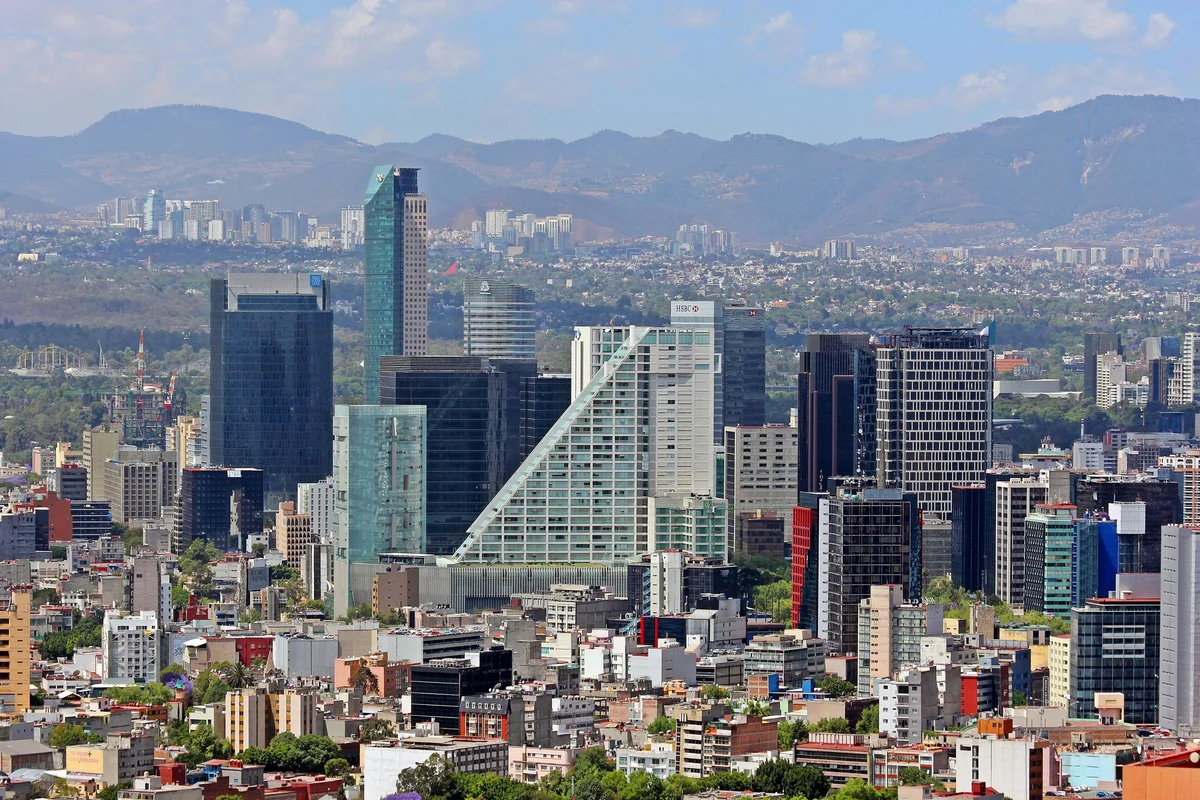
Quick answer: Foreigners buy in Mexico City with direct fee-simple title and no fideicomiso, because the capital sits outside the restricted zone. Budget 6-7% closing with ISAI at 3-4.5%, expect 4-4.8% net on annual tenancies, and treat the building’s seismic zone and construction era as the decisive diligence item.
Mexico City is the largest real estate market in Latin America and the one foreign buyers reach last, having spent their attention on 1,100 km of Caribbean coastline first. The ownership regime here is simpler, the tenant pool is deeper, and the diligence is different rather than lighter. Start with the restricted zone explained to understand why the economics diverge from Playa del Carmen so sharply.
Colonia detail: Roma Norte and Condesa and Polanco. Hub: can foreigners buy property in Mexico.
Why does Mexico City sit outside the restricted zone?
Article 27 of the Mexican Constitution restricts direct ownership by foreign buyers within 50 km of any coastline and 100 km of any international border. Mexico City sits roughly 300 km from both the Gulf and the Pacific and over 900 km from the northern border, so no part of this market falls inside that band and no fideicomiso is required anywhere in it, on any property, at any price.
Constitutional geography produces a materially different transaction, and the difference compounds over a hold. A coastal purchase requires an SRE permit carrying a federal duty of MXN 21,650, a trust bank selection, a fifty-year trust instrument and an annual fee that recurs for the life of the holding. A Mexico City purchase requires a notario, an escritura and a registration entry. Over ten years the avoided cost runs $7,700-13,000 on a single property, which is roughly 3-5% of an entry-level apartment price and enough to change a yield calculation outright.
| What the capital’s closing statement never contains | What it always contains |
|---|---|
| SRE permit (MXN 21,650 on the coast) | Notario fees near 1.5% |
| Trust set-up of $1,500-2,500 | ISAI at 3-4.5% progressive |
| Annual trustee fee, $500-800 for life | Registry and certificates, about 0.5% |
| Bank instruction letters at resale | Independent legal review, about 1% |
Three practical consequences follow for a foreign buyer:
- Closing runs 30-60 days rather than 45-90, with no SRE permit on the critical path
- Nothing recurs annually beyond predial of MXN 6,000-26,000 and building maintenance
- Resale carries no trust-assignment question, which reprices roughly 1 in 10 coastal deals
Direct title also simplifies estate planning and resale. A foreign owner wills the property under ordinary succession rules, and a future buyer inherits no trust assignment question, a friction that recurs on every coastal resale and occasionally reprices one.
What does buying actually cost?
Closing costs in this market run 6-7% of the purchase price, of which the ISAI acquisition tax is the largest single line. ISAI is progressive and reaches roughly 4.5% at luxury price points against about 3% at entry level, so the percentage is not constant and a flat assumption misprices the budget for foreign buyers at both ends of the range.
| Cost line | Share of price | On $250,000 | On $450,000 |
|---|---|---|---|
| ISAI acquisition tax | 3-4.5% | $8,000 | $19,000 |
| Notario fees | ~1.5% | $3,750 | $6,750 |
| Registry and certificates | ~0.5% | $1,250 | $2,250 |
| Independent legal review | ~1% | $2,500 | $4,500 |
| Total closing | 6-7% | ~$15,500 | ~$32,500 |
| All-in basis | n/a | ~$265,500 | ~$482,500 |
Two lines deserve comment. The notario is a state-appointed officer rather than a hired advocate, so their fee buys authentication and legal certainty, not representation of your interests, which is why the independent legal review line exists and should never be cut. And ISAI is calculated on the higher of the sale price or the cadastral value, so an artificially low declared price does not reduce it and creates a capital gains problem on exit.
Ongoing costs run lower than most foreign buyers expect. Predial on a typical foreign-buyer apartment runs MXN 6,000-26,000 a year depending on cadastral value, building maintenance runs MXN 2,500-14,000 a month by service level, and there is no trust fee at all. Read Mexico property taxes explained for the full national picture.
Seismic zones: the diligence item that decides value
Mexico City’s Reglamento de Construcciones divides the valley into three seismic zones by how ground behaves under load, and for foreign buyers that classification is the most consequential single fact about any building in this market. Zone III lakebed clay amplifies ground motion rather than damping it, which is why the September 2017 event concentrated roughly 40% of its recorded collapses inside that soil band.
| Zone | Ground | Principal colonias | Amplification |
|---|---|---|---|
| Zone I | Firm rock and volcanic | San Angel, Coyoacan west, Santa Fe | Lowest |
| Zone II | Transition | Polanco, Anzures, Del Valle west | Moderate |
| Zone III | Lakebed clay | Roma, Condesa, Centro, Doctores | Highest |
Soil zone transfers directly into money rather than remaining an abstraction. Mexican insurers price earthquake cover on soil classification and construction era together, so a Zone II building of post-2004 vintage typically insures 30-45% below an equivalent Zone III structure of the same age and value. Resale behaves the same way: buyers who lived through September 2017 ask about the zone before they ask about the kitchen, and a Zone III address now carries a discount that simply did not exist in 2015. None of this makes Zone III unbuyable, and Roma Norte remains the strongest yield market in the city; it makes the engineering file non-negotiable.
Four documents settle the question, and a seller who treats the request as unusual has answered it:
- Constancia de seguridad estructural, the safety certificate CDMX requires for defined building classes, on a 5-year renewal cycle
- Licencia de construcción, establishes the real permit year, not the year the listing claims
- Post-September-2017 assessment, what was inspected, what was found, what was repaired
- DRO sign-off on any retrofit, the Director Responsable de Obra carries personal legal responsibility for that certification
Budget MXN 15,000-35,000 for an independent structural engineer and about 10 business days. That is under 1% of a $250,000 purchase, and no other spend described here separates an asset from a liability.
Where foreign buyers actually buy
Five areas account for the overwhelming majority of foreign purchases in this market, and they separate by tenant type rather than by price alone. Entry ranges from $2,800 per square metre in Juárez to $7,500 in the Masaryk corridor, a spread of roughly 2.7 times across one city.
Treat the table below as a shortlist rather than a ranking. The colonia decides the tenant, the tenant decides the lease length, and the lease length decides how much of the gross survives to the net. Whichever one you choose, the escritura, the predial account and the seismic zone are checked identically, and a buyer checklist should carry all three regardless of address.
| Colonia | USD per sqm | Seismic zone | Tenant base | Indicative net |
|---|---|---|---|---|
| Polanco | $4,500-7,500 | II | Corporate, embassy | 3.5-4.2% |
| Condesa | $3,400-5,200 | III | Remote workers, professionals | 4.2-4.6% |
| Roma Norte | $3,200-4,800 | III | Remote workers, creatives | 4.4-4.8% |
| Coyoacán / San Ángel | $3,000-4,500 | I | Families, academics | 4.0-4.5% |
| Juárez | $2,800-4,000 | III | Young professionals | 4.5-5.0% |
| Nuevo Polanco | $3,200-4,600 | II-III | Corporate, new-build buyers | 4.2-4.6% |
Reading the table, three patterns matter more than the price column:
- Zone I colonias (Coyoacán, San Ángel) carry firm ground and heritage-constrained supply
- Zone III colonias (Roma, Condesa, Juárez) deliver the highest net but demand the full engineering file
- Polanco and Nuevo Polanco share a postcode and differ by roughly 30% per square metre
Coyoacán and San Ángel deserve more foreign attention than they receive. Both sit on Zone I firm ground in the city’s south, both carry genuine colonial architecture with UNESCO-adjacent heritage protection, and both draw an academic and family tenant base anchored by UNAM. Yields land mid-range, but the combination of firm ground and heritage-constrained supply is the closest thing Mexico City offers to a defensive asset.
Rental economics: a worked example
Model the city’s quieter default rather than its famous streets: a 78 square metre two-bedroom in Del Valle or Nápoles at $2,750 per square metre, priced at $214,500, with closing at 6.5% bringing the all-in basis to about $228,400. A family or professional-couple tenancy at MXN 22,500 a month converts to roughly $14,840 a year, a 6.5% gross.
| Line | Annual USD |
|---|---|
| Gross rent, MXN 22,500/month | $14,840 |
| Building maintenance, MXN 2,200/month | −$1,451 |
| Predial | −$520 |
| Landlord insurance | −$430 |
| Management at 8% | −$1,187 |
| Vacancy reserve, one month | −$1,237 |
| Repairs reserve at 5% | −$742 |
| Net operating income | $9,273 |
Just above 4% net on the all-in basis, earned with almost no operation: these residential colonias between Insurgentes and Eje Central are where the capital’s professional families rent for years at a time, renewal beats turnover, and the landlord’s year consists of one ISR filing. The famous colonias run the same machine with hotter inputs, the Roma-Condesa page works that example, while Del Valle’s version trades a half-point of yield for tenants who stay longer and buildings that mostly sit on firmer transition soil.
What no colonia in this city offers is the coastal short-term model, and the difference is structural: an annual peso lease has no lodging tax, no guest operation, no furnishing cycle, and a vacancy measured in weeks per year rather than nights per week. The rental yield guide holds both machines side by side; they produce similar nets by entirely different routes and fail in different weather.
Short-term letting and the 2024 rule change
Short-term letting in this market is legal but capped: a 2024 reform limits hosting on a single dwelling to roughly 180 nights a year and requires registration in a hosting padrón, after sustained pressure over housing costs in Roma, Condesa and Juárez. The measure is contested and has been revised, so foreign buyers must confirm the operative count with the borough before underwriting any nightly income.
Compliance for a host in the capital runs on three stacked layers, and the process ordering matters because each layer can veto the ones below:
- The city rule: registration in the hosting padrón, the night cap, and whatever revision is current: confirm at the borough, in writing, at offer stage.
- The condominium regime: bylaws voted by the assembly reach an owner directly, and a sub-30-day ban in the reglamento ends the question whatever the padrón says. Pull the bylaws and the last two assemblies’ minutes; 2-3 days and often decisive.
- The tax layer: any letting model beyond a plain annual lease needs an RFC and SAT filings, and platform withholding without registration is punitive.
Where the layers leave a buyer in practice is colonia-dependent, the Roma-Condesa page prices the three letting models against each other for the district where enforcement actually concentrates. City-wide, the stable observation is simpler: buildings and boroughs keep tightening, medium-term furnished lets sit outside most of the machinery, and any underwriting built on nightly income in this city needs a written answer at all three layers first.
Pros and cons for investors
One structural truth runs through the capital’s entire ledger: this is a domestic residential market that foreign capital merely visits. That is why annual tenancies net 4-4.8% with no lodging tax, and equally why nightly letting is capped at roughly 180 nights and politically exposed. Foreign buyers trade operational upside for tenant depth and a 30-60 day close.
| The city’s case | The city’s costs |
|---|---|
| Escritura in your own name, 30-60 day close, zero trust machinery | Acquisition tax runs 3-4.5%, a point above Quintana Roo |
| A tenant economy of 22 million people, not a flight schedule | Lakebed colonias make engineering review non-optional |
| Annual leases net 4-4.8% with one tax filing a year | Nightly models face caps, registries and assembly votes |
| Demand has no season and no hurricane deductible | Air, traffic and altitude are real liveability taxes |
| Exit buyers are Mexican families and funds, every year | Rent arrives in pesos while the capital went in as dollars |
Put a number on that last row before it surprises anyone: a 10% peso depreciation trims roughly $1,700 of annual dollar income on a $223,000 purchase while changing nothing about the asset itself, and a strong-peso year does the reverse. The currency risk guide treats the mechanics; the practical rule is to judge this market’s returns in pesos over multi-year horizons.
Who should buy in Mexico City?
Sorting successful foreign purchases in the capital by intent produces three recognisable buyers, and the city has a colonia for each of them:
| Intent | Where it points | Entry | Typical net |
|---|---|---|---|
| Income first | Juárez, Roma Sur, Del Valle | $175,000-230,000 | 4.5-5.0% |
| A base that also earns | Condesa, Roma Norte, Nápoles | $214,000-300,000 | depends on own use |
| Capital preservation | Polanco, San Ángel, Coyoacán | $450,000+ | 3.5-4.2% |
All three run the same light compliance: an RFC, one ISR filing a year, predial between MXN 6,000 and 26,000. The buyer the capital does not reward is the nightly-revenue maximiser, that model belongs on the coast, where no night cap, assembly vote or resident tenant pool stands in its way.
What should you verify before committing?
Work the following eight checks from cheapest to most expensive, and treat a failure as a stop rather than a discount. The engineering record comes first for a reason foreign buyers underestimate: a Zone III building without one carries a defect no price reduction repairs, and establishing it costs MXN 15,000-35,000 over about 10 business days.
- Establish the seismic zone for the specific address, not the colonia generally.
- Date the building from its licencia de construcción rather than the listing, because the distinction between pre-1985, 1985-2004 and post-2017 construction decides which seismic standard it was built to.
- Obtain the constancia de seguridad estructural and any post-2017 assessment.
- Commission an independent structural engineer, MXN 15,000-35,000.
- Pull the escritura chain back at least two owners, with a certificado de libertad de gravamen issued inside the last 30 days.
- Read the reglamento de condominio for letting restrictions and reserve rules.
- Confirm there are no predial arrears with a constancia de no adeudo, and check the water account as a separate item.
- Price comparable rents on the same street in pesos, from live listings rather than the seller.
Title defects are comparatively rare in Mexico City and largely fixable. A Zone III building with no engineering record is neither, order the spending accordingly.
Frequently Asked Questions
Yes. The capital lies outside the 50 km coastal and 100 km border restricted zone, so a foreign national takes direct fee-simple title before a notario with no SRE permit, no trust bank and no annual fee, removing about $2,700-5,000 at closing and $500-800 a year.
Budget 6-7%: ISAI at 3-4.5% progressive, notario about 1.5%, registry about 0.5%, legal review about 1%. That is roughly $15,500 on a $250,000 apartment and $32,500 on a $450,000 one, with no fideicomiso line.
Polanco at $4,500-7,500 per sqm, Condesa at $3,400-5,200, Roma Norte at $3,200-4,800, Coyoacán and San Ángel at $3,000-4,500, and Juárez at $2,800-4,000. Nuevo Polanco offers new construction at $3,200-4,600.
Roughly 6.5-7.5% gross and 4-4.8% net on annual unfurnished tenancies, with Roma Norte at the top and Polanco at the bottom. Gross exceeds coastal corridors because entry prices are lower relative to rent and annual lets avoid lodging tax and 25-35% management.
It is the decisive diligence item. Zone III lakebed clay under Roma, Condesa and the Centro amplifies ground motion, concentrating roughly 40% of September 2017 collapses. Construction era decides the outcome, so obtain the constancia de seguridad estructural and commission an engineer at MXN 15,000-35,000.
Legally yes but restricted. A 2024 reform caps hosting at roughly 180 nights a year with a padrón registration requirement, since contested and revised, so confirm current rules with the borough. Many buildings separately ban stays under 30 days in their reglamento.
Thirty to sixty days for a resale, faster than the coast because no SRE permit or trust establishment sits on the critical path. Foreign buyers need a passport, usually a CURP or RFC, and documented proof of funds under anti-money-laundering rules.
Get a vetted Mexico shortlist
US and Canadian buyers use this to skip the developer sales deck: tell us the budget and the market, and we come back with 3 to 5 options and the net yield maths behind each one.
Want options matched to your budget and risk profile?
Three questions, one screen. We reply within one business day.
Get a vetted Mexico shortlist