
Queretaro Real Estate: Homes for Sale
Homes for sale in Queretaro by district, indicative price bands, direct title with no bank trust, and what the nearshoring economy does to rental demand.
By Mexico Invest Editorial · Updated September 7, 2026 · 14 min read
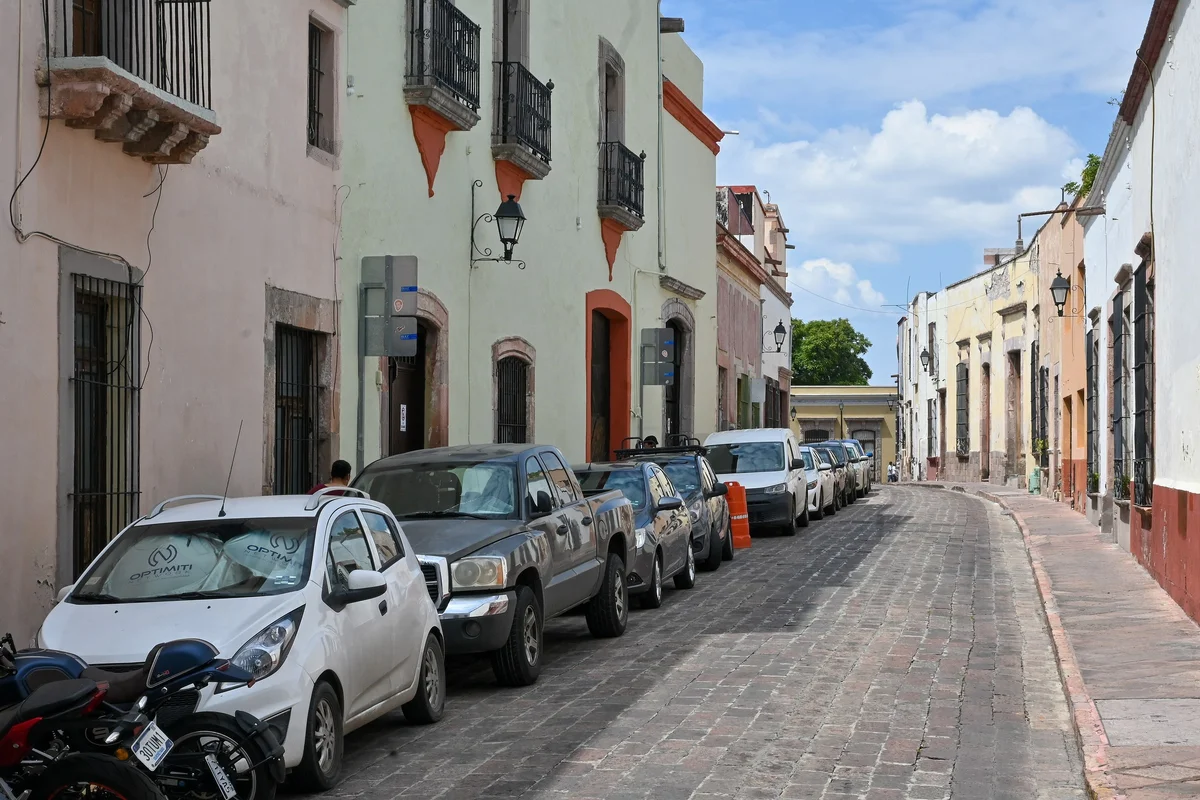
Quick answer: Queretaro is an inland industrial and colonial city about two and a half hours north of Mexico City, and it sits entirely outside the restricted zone, so foreign buyers take direct title with no bank trust. Indicative asking bands run about $110,000 to $220,000 in the established residential districts, $180,000 to $400,000 in Juriquilla and the northern corridors, and higher in the historic centre.
Queretaro is the market that most contradicts the assumption that Mexican real estate means a beach. It has no coastline, no tourism economy to speak of, and a tenant base of aerospace engineers and relocating Mexico City professionals, which is precisely why it produces net yields that coastal short-term rentals struggle to match. Read nearshoring and industrial real estate for the macro case before the local detail.
Hub: can foreigners buy property in Mexico. Compare: Mexico City and Merida.
Districts and indicative prices
Queretaro divides between the historic core, the northern professional corridors and the industrial belt, and the rental tenant differs in each. Figures here are September 2026 asking levels taken from public listings.
| District | Indicative band | Character | Who rents |
|---|---|---|---|
| Centro Historico | $180,000 to $450,000 | UNESCO colonial, walkable, restaurants | Short stays, professionals |
| Juriquilla | $200,000 to $450,000 | Northern corridor, lake, gated | Corporate relocations |
| El Refugio | $150,000 to $300,000 | Newer residential, families | Local professionals |
| Milenio and Zibata | $180,000 to $380,000 | Planned developments, schools | Engineers and managers |
| Centro Sur | $130,000 to $260,000 | Business district, mid rise | Office workers |
| Established colonias | $110,000 to $220,000 | Local residential | Local families |
The tenant base here is the thing to understand. Aerospace, automotive and logistics employers have concentrated in the corridor around the city, and the housing demand that follows is corporate relocation and professional families on twelve-month leases. That produces steadier occupancy than any beach market and a rental income denominated in pesos.
Insider tip: ask which employers the building’s current tenants work for. A block whose occupancy rests on one plant carries a concentration risk that looks invisible until that plant changes shift patterns, and a letting agent will usually tell you if you ask directly.
Why does Queretaro sit outside the restricted zone?
Queretaro is roughly 300 km inland from the Gulf and over 400 km from the Pacific, which places the metropolitan area outside the 50 km coastal and 100 km border bands that Article 27 restricts. Buying here means an ordinary escritura before a notario; the restricted zone guide maps the line itself.
Where the trust question actually bites in Queretaro is proportionality. Entry tickets in this market start near $120,000, the lowest of any corridor this site covers, so the trust stack a coastal buyer pays, call it $2,700-5,000 once plus $500-800 for every year held, would have been 2-4% of the purchase up front and roughly 40 basis points of yield annually. Skipping it is worth more per invested dollar here than anywhere on the coast-versus-inland map, and it is the quiet arithmetic behind Queretaro’s standing with smaller foreign buyers: at $150,000, avoided structure moves a 5.4% net to 5.8% with no operational change at all.
What does property cost in Queretaro?
Restored Centro Historico houses cost $1,800-3,000 USD per square metre in 2026, while modern apartments in the northern corridors range from $1,400 to $2,200. Pricing in this market tracks water availability and road access far more than architectural quality, which is the opposite of how Mexico City or Merida price and the first thing foreign buyers get wrong.
| Zone | USD per sqm | 90 sqm 2BR | Character |
|---|---|---|---|
| Centro Historico | $1,800-3,000 | $162K-270K | UNESCO heritage, restoration rules |
| Juriquilla | $1,600-2,200 | $144K-198K | Established north, lake, universities |
| El Refugio | $1,400-1,900 | $126K-171K | Family suburbs, newest stock |
| Zibata | $1,500-2,100 | $135K-189K | Master-planned, golf, gated |
| Milenio III | $1,300-1,800 | $117K-162K | Value entry, corporate proximity |
Inside each band the spread is set by services and tenancy prospects rather than by finish. Three factors account for most of it:
- A confirmed factibilidad de agua, the state water feasibility authorisation, adds 10-15% and removes the single largest stall risk
- Gated access with functioning security commands 8-12% in a market where safety is the migration driver
- Centro Historico heritage status cuts both ways: it constrains supply permanently but restricts renovation, and INAH approval adds 3-6 months to any structural work
Asking price is not the only number that matters in Queretaro. The notario computes ISAI from the higher of the transaction price and the avaluo, and the municipality assesses predial from a cadastral value that is usually far below both. Reconcile all three before budgeting, because a colonial house in the Centro Historico can carry a cadastral value a third of its market price and an ISAI bill calculated on the full one.
What is actually driving demand here?
Three forces compound in this market, and none of them is tourism. Nearshoring built an aerospace cluster around Queretaro Intercontinental Airport that now anchors Bombardier, Safran and a tier-one supplier base; internal migration from Mexico City accelerated after 2020; and the state records among the lowest homicide rates in the country, which converts temporary postings into permanent residence.
Demand composition explains why this market behaves unlike anywhere else covered on this site. A Playa del Carmen apartment competes for tourists whose numbers move with flight capacity and hurricane season, and its occupancy collapses in September. A Juriquilla apartment houses an aerospace engineer on a three-year contract or a family that left Mexico City permanently, and its occupancy does not have a season at all. That difference shows up as a 35-45% vacancy gap between the two models across a full year, and it is the entire reason Queretaro nets 5-6% on gross yields that look unremarkable next to a coastal headline.
| Demand driver | Tenant produced | Lease length | Cyclicality |
|---|---|---|---|
| Aerospace cluster (QRO airport) | Engineers, technicians | 24-36 months | Order-book, 2-4 quarter lag |
| Automotive supply chain | Plant management, staff | 12-24 months | North American vehicle demand |
| CDMX internal migration | Families, remote professionals | 12-24 months | Structural, low cyclicality |
| UNAM and Tec campuses | Academics, graduate students | 10-12 months | Academic calendar |
The corollary is that Queretaro demand tracks industrial investment rather than consumer sentiment. A slowdown in North American automotive or aerospace orders reaches this housing market with a lag of roughly two to four quarters, a real cyclical exposure that a beach market does not share in the same form. The wider industrial picture sits in our nearshoring guide; the checklist below applies it to a single purchase.
Rental economics: a worked example
Work the numbers foreign buyers actually face on a 90 square metre two-bedroom in Juriquilla. It lists at $150,000, which works out to $1,667 per square metre. Add 6% for closing and the all-in basis is $159,000. A professional tenant on an annual lease pays about MXN 16,000 a month. At the Banxico reference rate that is $10,549 across the year, and which is 6.6% gross before operating costs.
| Line | Annual USD |
|---|---|
| Gross rent, MXN 16,000/month | $10,549 |
| Building maintenance, MXN 1,600/month | −$1,055 |
| Predial (Queretaro) | −$320 |
| Landlord insurance | −$300 |
| Management at 7% | −$738 |
| Vacancy reserve, three weeks | −$608 |
| Repairs reserve at 4% | −$422 |
| Net operating income | $7,106 |
That NOI is 4.5% net on the $159,000 all-in basis at conservative assumptions, and rises toward 5.5-6% where the tenant is corporate-placed and the void falls to two weeks. The structure of the return is what distinguishes it: a Queretaro corporate tenancy is closer to an industrial lease than to hospitality. The tenant is frequently an aerospace or automotive employer placing staff, the contract renews on the plant’s calendar rather than the tourist one, rent tracks payroll reviews, and the operating drag is a 7% administrator plus predial near $320, no lodging tax, no furnishing cycle, no guest turnover at all. When this market disappoints, it does so through the same channel: an order-book downturn at the plants reaches rents within two to four quarters.
Water: the constraint that decides which developments survive
Queretaro sits in a semi-arid basin with declining aquifer levels, and water feasibility is the single most important non-title diligence item in this market. The state water operator issues a factibilidad de agua, a formal authorisation confirming a development can be connected, and a project without one can stall regardless of how complete the construction looks.
The factibilidad is issued by the state water operator and recorded against the development rather than the buyer, so it survives a change of owner but not a change of project scope. Aquifer stress is structural rather than cyclical here, which is what distinguishes it from an ordinary infrastructure risk. Queretaro’s population has grown faster than almost any Mexican metropolitan area for two decades, largely through in-migration, while its recharge basin has not expanded at all. State authorities have responded by rationing new connection authorisations rather than by expanding supply, which means the factibilidad is now a genuinely scarce asset that transfers with the land. A development holding one trades at a 10-15% premium to an equivalent that does not, and the gap has widened every year since 2020.
Pricing reflects that scarcity directly: a development holding a current factibilidad trades 10-15% above an equivalent without one, adding roughly $15,000-22,000 to a $150,000 apartment. Against that, the review costs MXN 8,000-20,000 and takes about 5 business days through the state operator.
Four checks settle the water question before an offer:
- Factibilidad de agua in writing, issued to the specific development and current, not a letter of intent
- Confirmed connection, meaning water physically arrives rather than being scheduled
- Storage capacity on site, cisterns and pressurisation, which mitigate rationing but not absence
- The development’s history of tandeo, the rotating supply schedule applied in constrained districts
Pros and cons for investors
One fact organises everything about Queretaro: the buyer is exposed to Mexican industry, not to tourism. That is why annual tenancies net 5-6% with no lodging tax and no seasonality, and equally why demand tracks aerospace and automotive order books with a two-to-four-quarter lag rather than flight arrivals or hurricane seasons.
| Advantages | Disadvantages |
|---|---|
| Escritura in your own name from day one | No foreign resale pool; exit is to domestic buyers |
| Entry at $1,400-3,000 per sqm, half of Mexico City | Water feasibility can stall a development indefinitely |
| 5-6% net on annual tenancies, strongest band here | Yields depend on industrial employment cycles |
| Among the lowest homicide rates of any state | Almost no short-term rental market to fall back on |
| Predial near $320 a year, no lodging tax | Peso rent against a dollar purchase creates mismatch |
| No hurricane exposure, no seasonality | Centro heritage rules add 3-6 months to structural work |
The exit point deserves weight. Coastal Mexican property resells to foreign buyers who find it through the same channels that found you; Queretaro resells almost entirely to Mexican buyers financed in pesos, which means your exit depends on domestic mortgage conditions and Banxico policy rather than on North American appetite for a beach.
Who should buy in Queretaro?
Queretaro sorts foreign buyers into three positions, and the entry price for each is genuinely different: roughly $117,000-162,000 for a Milenio III or El Refugio yield unit, $144,000-198,000 for a Juriquilla apartment let to corporate tenants, and $250,000-450,000 for a Centro Historico colonial house bought substantially for lifestyle rather than for return.
- Yield-focused diversifier → El Refugio or Milenio III 2BR, $117,000-171,000, annual tenancy, 5-6% net
- Corporate-tenancy buyer → Juriquilla or Zibata, $135,000-198,000, gated, aerospace tenant base
- Lifestyle and heritage buyer → Centro Historico house, $250,000-450,000, lower yield, INAH constraints
Compliance across all three profiles is the same light stack: RFC, a single ISR filing each year, predial near $320. The short-term rental operator should look elsewhere. Queretaro has a modest business-travel nightly market and nothing resembling the tourism depth of Quintana Roo, so a nightly model here competes for a thin, corporate, weekday-only demand pool.
What red flags should pause a Queretaro purchase?
Six patterns recur in this market, and the first two are close to unique to the Bajio. The economics strongly favour looking hard before committing: MXN 8,000-20,000 buys an independent legal and water review, while the cheapest of these six patterns costs several times that to unwind after the escritura is signed.
- No factibilidad de agua, or a developer who treats the request as unusual
- A development on tandeo, the rotating water schedule, presented as fully serviced
- Ejido land history on the urban fringe without documented conversion to dominio pleno
- Gated community marketed on security with no functioning guard contract or reserve fund
- Unpaid predial riding on the title: the bill is small here, roughly $320 a year, which is exactly why arrears go unnoticed until the notario finds them
- Dollar-denominated rent projections, since Queretaro’s professional tenants are paid in pesos and any USD pro-forma is aimed at the buyer, not the market
What should you verify before committing?
Eight checks decide a Queretaro purchase, and water leads the order rather than title. A development without a current factibilidad is the defect that no discount offsets, and foreign buyers should treat it as a stop; the verification requires about 5 business days and a written response from the state water operator.
- Obtain the factibilidad de agua in writing, issued to this development and current.
- Confirm water physically arrives, and ask directly about tandeo history.
- Trace title through the state registry: full escritura chain, a fresh libertad de gravamen, and check that the registered square metres match the cadastral file, since new-corridor developments here have generated more area discrepancies than title defects.
- On anything at the urban fringe, demand the agrarian paper trail: parcels north and east of the city entered private title at very different dates, and an incomplete dominio pleno conversion voids the purchase.
- Read the condominium regime with one question in mind: what the letting rules and reserve say about a building filling with corporate tenants.
- Ask the municipality for a constancia de no adeudo covering predial, which in Queretaro is low enough that arrears are frequently overlooked until closing.
- For Centro Historico, confirm INAH heritage constraints before pricing any renovation.
- Benchmark the asking rent against what Juriquilla and Milenio III listings are actually quoting in pesos this month.
What the checklist above costs, and how long it takes: a water review is MXN 8,000-20,000 and about 5 business days; the escritura and libertad de gravamen search is MXN 4,000-9,000 across 3-5 days; independent legal review adds MXN 18,000-35,000. Total diligence lands near 1.5-2% of a $150,000 purchase.
Title work in Queretaro is comparatively straightforward and largely fixable. A development that cannot demonstrate water is neither, hence water first, paper second.
For the ownership route see the restricted zone explained, for the annual position property taxes in Mexico, and for the purchase the closing cost breakdown. Within the same colonial belt, Guanajuato trades industrial demand for a university town, and Puebla offers the same direct-title position two hours from the capital.
Frequently Asked Questions
Yes. Queretaro sits roughly 300 km inland from the Gulf and over 400 km from the Pacific, outside the restricted zone, so foreign buyers take direct fee-simple title with no SRE permit, no trust bank and no annual fee, saving about $2,700-5,000 at closing and $500-800 a year.
Restored Centro Historico houses run $1,800-3,000 per sqm; modern apartments in Juriquilla, El Refugio and Zibata run $1,400-2,200. A 90 sqm two-bedroom costs roughly $126,000-198,000, about half Mexico City and a third of Playa del Carmen per square metre.
Roughly 7-9% gross and 5-6% net on professional tenancies. A $150,000 Juriquilla two-bedroom at MXN 16,000 a month grosses $10,549 and nets about $7,106 after maintenance, predial of $320, insurance, 7% management, a three-week void and repairs.
Queretaro consistently records among the lowest homicide rates of any Mexican state, and that record is the principal reason for the internal migration driving housing demand from relocating Mexico City families and multinational staff.
Aerospace and automotive nearshoring around Queretaro Intercontinental Airport, internal migration from Mexico City that accelerated after 2020, and a safety record that converts temporary postings into permanent residence. None of it is tourism.
Water. The city sits in a semi-arid basin with declining aquifer levels, and the state rations new connection authorisations. Confirm the development holds a current factibilidad de agua in writing before buying; without one a project can stall indefinitely.
Queretaro is the industrial and professional play at 5-6% net with a corporate tenant base. Merida is the lifestyle and retiree play with colonial architecture and a large expat community at lower yields. Queretaro rents better; Merida resells better to foreigners.
Get a vetted Mexico shortlist
US and Canadian buyers use this to skip the developer sales deck: tell us the budget and the market, and we come back with 3 to 5 options and the net yield maths behind each one.
Want options matched to your budget and risk profile?
Three questions, one screen. We reply within one business day.
Get a vetted Mexico shortlist