
Land for Sale Mexico: Foreigner Risks and Red Flags
Land for sale in Mexico as a foreigner: ejido risks, restricted zone rules, title traps, and why raw land deals fail more than condos.
By Mexico Invest Editorial · Updated July 9, 2026 · 12 min read
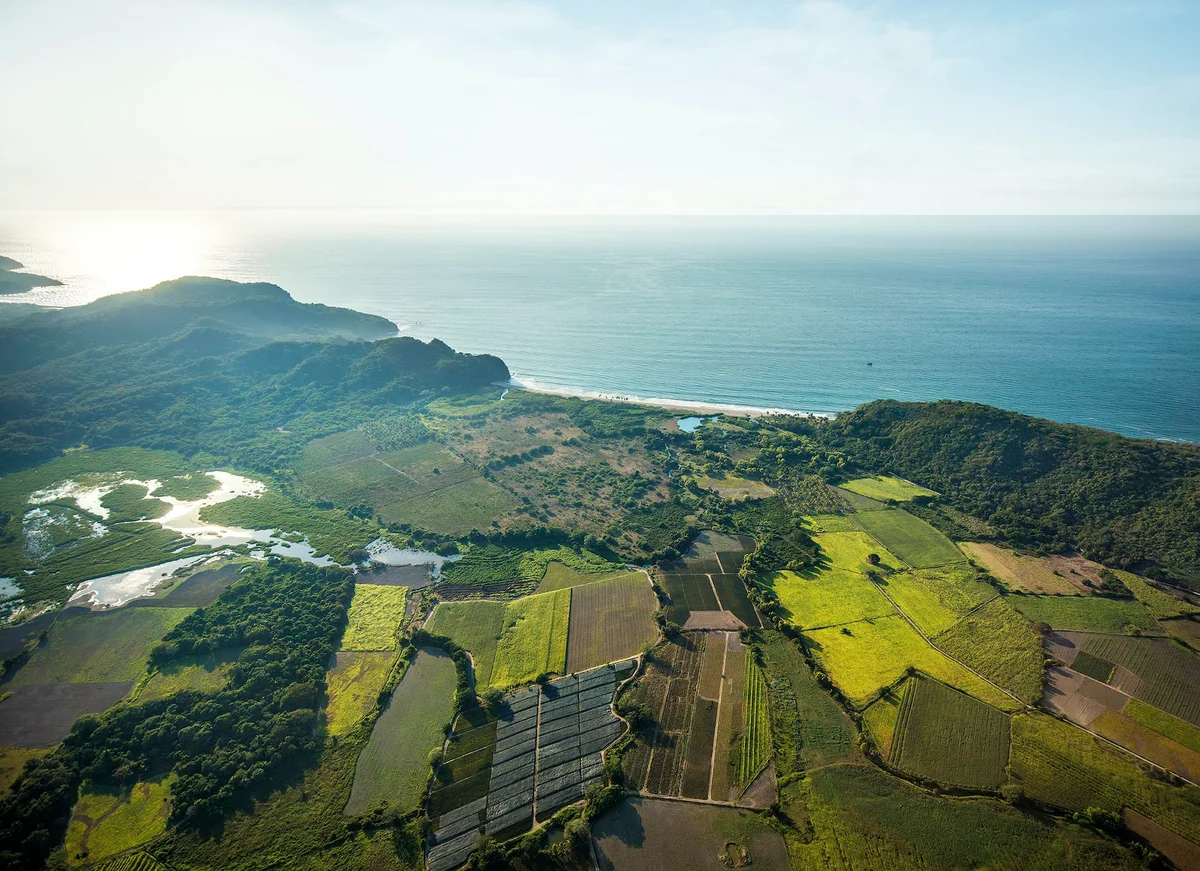
Quick answer: Foreigners can buy private-titled land in Mexico through fideicomiso (coastal restricted zone) or direct title (inland). Ejido communal land, roughly 50% of Mexico’s land area, cannot legally be sold to foreigners under any structure. This distinction is absolute. No attorney, no structure, and no price justifies buying ejido land. The verification step takes 3 days and costs nothing extra.
Land purchases in Mexico for foreign buyers carry different risks than condo purchases. With condos in established developments, the title chain is typically well-documented and ejido exposure is low, the developer cleared it decades ago. Raw land parcels, rural lots, beachfront land, and jungle plots carry elevated ejido risk that requires explicit verification before any deposit.
This guide maps the complete risk framework for foreigners buying land in Mexico: what you can legally own, what you cannot, how to verify which type you are looking at, and the red flags that have cost foreign buyers their entire investment.
Foundation reading: Ejido Land Risks Mexico.
How do foreign buyers complete this purchase legally?
Mexico’s land law is a two-track system. Understanding which track a parcel sits on is the first question before any other due diligence. Private property can be sold to anyone under the ordinary civil code; ejido land is communal, governed by agrarian law, and cannot be sold to a foreigner at all until it has been formally converted, a process that takes years and often does not complete.
Track 1: Private titled land (título de propiedad)
Private land is registered in the Registro Público de la Propiedad (RPP), governed by state civil codes, and can be bought, sold, mortgaged, inherited, and held in fideicomiso. This is the land that foreign buyers can legally purchase.
Private titled land in Mexico’s coastal zones typically originated through:
- Private subdivision of original land grants
- Completed ejido regularization (dominio pleno conversion)
- Historical hacienda land divisions
- Municipal and state development concessions
When the ownership chain is clean, escritura pública at each transfer, RPP registration maintained, no lien or encumbrance, this land can be purchased by foreigners through the standard fideicomiso or direct title process.
Track 2: Ejido land (tierra ejidal)
Ejido land is social property established under Mexico’s Agrarian Reform Law (Ley Agraria). It is registered in the Registro Agrario Nacional (RAN), governed by agrarian courts (Tribunales Agrarios), and cannot be sold to foreigners under private real estate law.
Ejido land covers approximately 50% of Mexico’s total land area, including large portions of coastal zones in Quintana Roo, Oaxaca, Guerrero, and Nayarit. Many of the “beachfront lots” and “jungle parcels” marketed to foreign buyers in informal markets sit on ejido land.
| Characteristic | Private Title | Ejido Land |
|---|---|---|
| Registry | RPP (Registro Público) | RAN (Registro Agrario) |
| Governing law | Civil Code | Ley Agraria |
| Foreign purchase | Permitted (via fideicomiso) | Not permitted |
| Fideicomiso possible | Yes | No |
| Mortgage possible | Yes | No |
| Resale rights | Full | None (ejidal members only) |
| Title instrument | Escritura pública | Certificado de Derechos Ejidales |
What ejido regularization means (and when it matters)
The PROCEDE program (1992 onwards) allowed ejido members to convert their ejidal rights to private title through a process called adopción del dominio pleno. When completed, the converted parcels enter the RPP and can be sold privately.
Regularization is a completed legal process or it is nothing, and the distinction decides whether a parcel can be sold to a foreigner at all. Conversion to dominio pleno requires an ejido assembly resolution and registration with the Registro Agrario Nacional; until both exist and are recorded, there is no private title to transfer. Agrarian tribunal processes commonly run 3 to 7 years with $5,000 to $15,000 of cumulative survey and legal cost, and the outcome is binary. A seller describing conversion as under way is describing a hope, not an asset.
This conversion matters because some land being marketed today is “formerly ejido, now private.” This can be legitimate, or it can be partial, incomplete, or fraudulent.
When regularization is safe for foreign purchase
A PROCEDE conversion is safe when:
- The conversion is complete (dominio pleno adopted)
- The parcel appears in the RPP with clean escritura
- The RAN record shows conversion completion
- The ownership chain from conversion to current seller is documented in RPP
Your attorney verifies this by checking both registries. It takes 2-3 days and costs nothing extra. Skipping it is not a time-saving measure, it is a catastrophic risk acceptance.
When regularization is NOT safe
Ejido land that is “in the process of regularization” cannot be legally purchased by foreigners. The conversion must be complete, not promised, not in process, not expected to complete by next year. Sellers who say “we are regularizing, you can buy now and we will transfer title later” are describing a transaction that cannot be completed under law.
Other problematic regularization scenarios:
- Partial regularization (some parcels converted, not the one you want)
- Disputed conversion (other ejido members challenge the conversion)
- Conversion fraud (forged or disputed RPP inscription)
If an attorney says they can structure around incomplete regularization, that is not a solution, it is a fraudulent transaction that will not hold in court.
Restricted zone rules for land purchases
Even on fully private titled land, the restricted zone rules apply to foreigners. Land within 50 km of a coast or 100 km of a border still requires a fideicomiso even when the title is impeccable, and a trust over a vacant parcel raises questions about permitted use that a condo purchase never does.
The restricted zone covers land within 50 km of any Mexican coastline and 100 km of international borders. Nearly all beachfront land in Quintana Roo, Baja California Sur, Jalisco coast, and Pacific beaches falls within the restricted zone.
| Location | Restricted zone? | Foreign ownership mechanism |
|---|---|---|
| Beachfront, Quintana Roo | Yes | Fideicomiso required |
| 5 km inland, Tulum area | Yes | Fideicomiso required |
| Mérida city center | Yes (~35 km from Gulf) | Fideicomiso |
| San Miguel de Allende | No | Direct title permitted |
| Monterrey suburbs | No | Direct title permitted |
| Mexico City (some areas) | No (far from coast) | Direct title permitted |
| Puerto Vallarta beach zone | Yes | Fideicomiso required |
See Mexico Restricted Zone Explained for boundary maps and full detail.
Types of land foreign buyers are frequently offered
Understanding what different marketed land types actually represent helps buyers ask the right questions. The categories to distinguish: fully regularised private title, land in the process of regularisation, ejido parcels marketed as “about to be regularised”, and communal land with no path at all. Only the first is buyable.
Price is the most reliable signal across every category on this list. A parcel offered 40% or more below comparable private land is almost never a bargain; it is the market pricing a title that cannot be insured, registered or lent against. Screening costs $300 to $800 through an attorney with Registro Agrario Nacional access, and the cheapest decisive test is asking a Mexican bank to quote a fideicomiso on it, since a bank taking title with its own capital at risk will decline exactly the parcels a buyer should.
”Beachfront lots” in resort corridors
Legitimate beachfront lots in established resort areas of Cancún, Playa del Carmen, and Los Cabos typically have clean private title from original developer-era subdivision decades ago. These are among the safest land purchases in Mexico, the developers cleared title before building, and the resulting lots have documented ownership chains.
Price: USD 500,000 and up in premium corridors. Parcels at prices significantly below market warrant title investigation.
”Jungle lots” and “eco lots” in Tulum and Riviera Maya
High-risk category. The Tulum jungle and Riviera Maya inland zone contains significant ejido land alongside private parcels. Marketing terms like “eco-parcel,” “jungle lot,” “investment land,” and similar do not indicate title status. Some of these are legitimate private parcels; many are ejido or partially regularized.
Verification is non-negotiable. Do not rely on the broker or seller’s verbal representation.
Agricultural land marketed as investment
Foreign buyers are sometimes offered agricultural parcels as investment opportunities near growing cities. Agricultural land can be private titled, ejido, or a complex mix. Additional restrictions may apply to land use change (cambio de uso de suelo), converting agricultural to residential use requires municipal permits that are not guaranteed. Buy only if title is private, conversion rights are documented, and an attorney confirms feasibility.
Beachfront lots with “beach rights” or “access rights”
Beachfront in Mexico is federal zone (zona federal marítimo terrestre, ZOFEMAT). The first 20 meters above the high tide line belong to the federal government and cannot be privately owned. What is sold is the land behind the federal zone. “Beach rights” typically mean a concession to use the federal zone, not ownership of beach. Understand exactly what parcel you are buying versus what concession rights accompany it.
What checklist should run before you sign?
Land due diligence is more involved than condo due diligence because title complexity is higher. Budget 3-4 weeks minimum. Three to four weeks is the minimum because the registry search, the agrarian check and the survey all run separately, and the answer from any one of them can end the purchase.
Registry verification (non-negotiable):
- Certificado de Libertad de Gravamen from RPP, confirms clean private title with no liens
- RAN check, confirms parcel is NOT in ejido or agrarian registry
- Ownership chain review, every transfer documented with proper escritura
- Property boundary survey (deslinde), confirms parcel boundaries match escritura description
Land use and development rights:
- Certificado de Uso de Suelo, confirms zoning and permitted use
- Plan parcial de desarrollo, municipal development plan for the area
- Planned infrastructure (roads, utilities), or evidence they are your obligation
- Environmental restrictions, protected zones, cenote setbacks, mangrove buffers
Federal zone (beachfront only):
- ZOFEMAT federal zone boundary confirmed (20 meters from high tide)
- Concession status verified if any beach-adjacent use planned
- SEMARNAT environmental permits if coastal construction planned
Title history:
- Original subdivision or conversion documents
- Regularization chain if formerly ejido (complete to dominio pleno)
- No agrarian rights registered against the parcel
Full checklist: Due Diligence Mexico Real Estate.
What red flags should pause this Mexico purchase?
Any of these signals requires you to stop and verify before proceeding further: The most common is a price well below comparable private land, which is almost always the market pricing a title problem you have not found yet.
Title and registry red flags:
- Seller cannot immediately produce RPP certificate with clean ownership chain
- Title shows “derechos ejidales” or any agrarian reference
- Property description refers to “ejidal parcel,” “agrarian rights,” or similar
- Seller mentions “regularization in process”
- No RPP registration, seller claims title exists “in process”
Transaction red flags:
- Price significantly (30%+) below comparable private-title land in the same area
- Seller or broker resists your independent attorney’s involvement
- Quick-close pressure with “other buyers interested”
- Wire instructions change during the process
- Seller offers to handle all documentation without your attorney review
Advisor red flags:
- Only the seller’s attorney is available (no independent counsel option)
- Attorney claims to have “solved the ejido problem” through a special structure
- Broker claims ejido land has “been resolved by the courts”
- Multiple assurances that “everyone buys this type” in the area
Any legitimate land transaction can withstand 30 days of due diligence with independent counsel. Sellers who cannot wait are sellers with something to hide.
How does this comparison stack up for Mexico investors?
Raw land and a built condo are priced as if the difference were square metres and finish. The table below shows that the real difference is risk transfer. On a built unit a developer has already cleared the title, obtained the permits, absorbed the construction cost overruns and carried the timeline, and priced all of that into what you pay. On raw land you take every one of those back, which is why the entry looks cheap and why land deals produce a disproportionate share of the foreign-buyer disasters in this market. The ejido exposure line is the one that turns a bad outcome into an unrecoverable one.
| Factor | Raw land | Built condo/home |
|---|---|---|
| Title risk | Higher (ejido exposure possible) | Lower (developer cleared it) |
| Due diligence complexity | Higher | Standard |
| Development cost/risk | Buyer bears all | Already built |
| Customization | Full | Limited |
| Financing options | Very limited | More available |
| STR income during hold | None until built | Immediate |
| Liquidity | Lower | Higher |
| Permit certainty | Uncertain until applied | Already permitted |
| Price entry | Lower for raw land | Higher |
For first-time Mexico buyers, established condos in permitted developments carry lower execution risk. Raw land belongs in the portfolio after you understand the market, or when you have the development team, permit expertise, and capital reserves to manage the build process.
What legitimate land purchases look like
When foreign buyers do successfully purchase land in Mexico for development, the pattern is: Clean registry chain going back decades, a current survey with no agrarian boundary issue, a notario willing to close, and a bank willing to constitute the trust. If any of the four hesitates, the answer is no.
- Private title with clean RPP registration (attorney-confirmed, no RAN issue)
- Fideicomiso established with authorized bank (restricted zone)
- Certificado de Uso de Suelo obtained before committing
- Survey conducted by licensed land surveyor
- Building permits confirmed feasible before purchase (consultant engaged)
- Environmental restrictions identified (cenotes, mangroves, setbacks)
- Infrastructure costs quantified (road access, utility connections)
- Development budget and timeline confirmed realistic
Buyers who treat land purchase as “just like a condo, but cheaper” end up with undevelopable parcels or, worse, ejido land they cannot build on or sell.
Buyer scenarios for land purchase decisions
Retired US couple, build custom home: Stick to private titled lots in established communities with HOA and existing infrastructure. Costa Palmas, Playacar, El Pedregal (Los Cabos). Clean title, established services, clear HOA for community standards. Avoid isolated jungle parcels without infrastructure regardless of price.
Developer investor, 5+ lots: Full development feasibility study required before any purchase. Engage AMPI commercial broker, Mexican development attorney, and environmental consultant before LOI. Confirm zoning, water/electricity availability, road access costs, and permit timeline. Ejido screening for every parcel in the portfolio.
Buyer attracted by “great deal” price: Price significantly below market on Mexico land is almost always a risk signal. The discount reflects either ejido issues, title defects, development restrictions, or infrastructure absence. Request RPP certificate immediately. If seller delays or resists, walk away.
Mexican land law and registry procedures vary by state. This guide reflects general principles as of mid-2026. Always retain independent Mexican legal counsel for land purchase due diligence. Mexico Invest provides education, not legal services.
Indicative cost and timeline benchmarks (2026)
The number worth acting on here is the $300 to $800 ejido screening through an attorney with Registro Agrario Nacional access, set against a discount of 40% or more that is pricing a title no foreigner can lawfully receive. Read the rest as stress inputs and verify current registry and agrarian records before closing.
| Line item | Typical range | Notes |
|---|---|---|
| Independent legal review | $1,500-$5,000 USD | Before deposit |
| Fideicomiso setup | $2,500-$4,000 USD | Restricted zone |
| Annual trust fee | $500-$800 USD | Bank-dependent |
| Closing timeline (resale) | 30-90 days | Notario schedule |
| Acquisition tax (ISAI) | 2-4% | State/municipality |
| STR management fee | 20-35% gross | Platform bookings |
| Net yield (Riviera Maya) | 3-5% | After HOA and PM |
| Playa 1BR median | $200K-$350K | 2026 listing band |
| Tulum 1BR median | $150K-$285K | Higher execution risk |
| Los Cabos 1BR entry | $350K+ | Lower net yield band |
Survey and title-study pricing scales with parcel complexity, on raw land, assume the high end of every band above and treat any quote materially below it as a scope warning.
Frequently Asked Questions
Yes, with critical restrictions. Foreigners can buy private titled land through fideicomiso bank trust in the coastal restricted zone or direct title outside it. Ejido communal land, a distinct form of social property covering roughly 50% of Mexico's land area, cannot legally be sold to foreigners under any structure. The distinction between private titled land and ejido land is the most important due diligence step for any land purchase.
Ejido land is communal social property created by Mexico's agrarian reform, governed by the Agrarian Reform Law, not the Civil Code. Ejido parcels belong collectively to ejido members and can only be transferred under strict agricultural procedures. Even when individual ejido members sell to foreign buyers, those transactions are legally unenforceable because the sellers do not hold privately-owned title. Mexico's Supreme Court has repeatedly confirmed foreigners cannot hold ejido land.
Ask your independent attorney to request the Certificado de Libertad de Gravamen from the Registro Público de la Propiedad AND run a parallel check with the Registro Agrario Nacional (RAN) for ejidal status. Private titled land will appear in the RPP with a clean chain of ownership. Ejido land appears in the RAN registry. Never rely on a seller's verbal representation.
Your purchase has no legal validity. The 'seller' cannot convey title they do not hold under private law. You cannot resell, mortgage, or bequeath ejido land acquired this way. You have no legal remedies in Mexican civil courts because the transaction is void from inception. Your investment is effectively lost. This is not a documentation problem your attorney can fix after the fact.
Yes. Regularization programs (PROCEDE) have converted some ejido parcels to private title over the past 30 years. Regularized ejido land that has completed the full conversion process (dominio pleno) can be sold privately. The conversion must be complete and documented in both RPP and RAN records. Partial or in-process regularization does not qualify for private sale.
The Mexican Constitution restricts direct foreign ownership of land within 50 kilometres of any coastline and 100 kilometres of international borders. Foreign buyers in this zone must use a fideicomiso bank trust for any property, land or built. Outside the restricted zone, foreigners can hold direct title to land without a trust. Most beachfront land and buildable coastal lots fall within the restricted zone.
Major red flags: seller cannot produce a clean RPP registration chain, price significantly below comparable private-title land, seller mentions 'regularization in process', seller resists attorney involvement, deed shows 'derechos ejidales' rather than escritura pública, land borders known ejido territories, seller pressures quick close before due diligence completes.
Yes. Fideicomiso beneficiaries have full rights to improve, develop, and build on private-title land held in trust. You need proper municipal building permits, architect plans, and construction supervision, same requirements as a Mexican citizen. Building on land without proper permits creates risk: unpermitted construction can be ordered demolished regardless of the fideicomiso structure.
Get a vetted Mexico shortlist
US and Canadian buyers use this to skip the developer sales deck: tell us the budget and the market, and we come back with 3 to 5 options and the net yield maths behind each one.
Want options matched to your budget and risk profile?
Three questions, one screen. We reply within one business day.
Get a vetted Mexico shortlist