
Mexico Property for Canadians: Taxes, Flight Access & Buying
Canadian guide to Mexico real estate, fideicomiso setup, CRA reporting, peso exposure, top flight corridors from Toronto-Vancouver, closing safely 2026.
By Mexico Invest Editorial · Updated July 9, 2026 · 14 min read

Quick answer: Canadians are Mexico’s second-largest foreign buyer group (15-20% share) using identical fideicomiso structures as Americans. Plan for CRA worldwide tax reporting, currency exposure (USD-denominated resort pricing), 5-10% closing costs, and direct flight access from Toronto/Vancouver to Cancún, Puerto Vallarta. Budget peso volatility impact on operational expenses.
You probably already fly to Cancún for vacation. Now consider: what if that winter escape also delivered rental income and peso diversification? Canadian buyers gravitate toward Mexico because of established flight corridors, visa-free purchase process, and winter demand from fellow Canadians seeking sun.
This guide addresses the Canadian-specific layer: tax reporting to CRA, currency considerations, flight accessibility, and how to avoid the mistakes Canadians make when they assume Mexico works like buying a Muskoka cottage.
Why Canadians choose Mexico
Canadians choose Mexico beach property for direct flight access from major hubs (2-4 hours from Toronto/Vancouver), winter season demand from Canadian tourists, lower entry costs versus comparable Canadian coastal markets, peso diversification outside CAD/USD exposure, and established expat communities in retirement markets like Puerto Vallarta and Lake Chapala.
| Driver | Canadian angle |
|---|---|
| Flight access | Direct Toronto/Vancouver to Cancún, PV |
| Winter escape | December-March high season matches Canadian winter |
| Entry costs | Lower than Whistler, Muskoka, Maritime coasts |
| Currency hedge | Peso exposure versus CAD (varies by market USD share) |
| Expat community | Established retiree infrastructure PV/Chapala |
Roughly 15-20% of Mexico’s 40,000 annual foreign purchases come from Canadian buyers, making this a well-trodden path with established service providers and legal precedents.
Compare broader context: can foreigners buy property in Mexico.
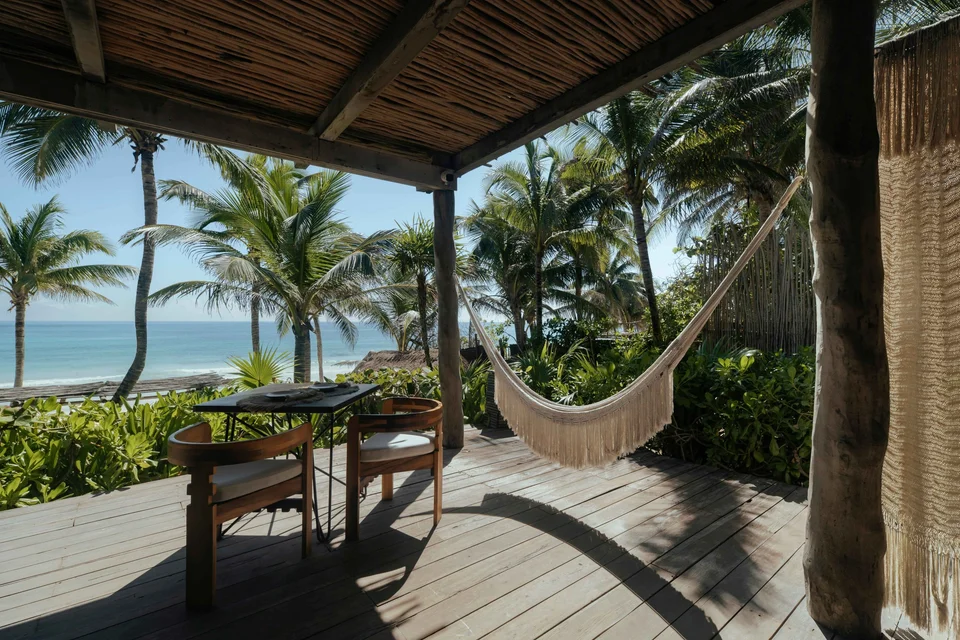
Legal structure: identical to other foreigners
Canadians use fideicomiso bank trusts in restricted zones, no special Canadian treaty or structure. Nationality changes nothing in the constitutional test: the fideicomiso costs $2,500 to $4,000 to establish and $500 to $800 a year for a Canadian exactly as for an American, and the 50 km coastal band applies identically. What is Canada-specific sits on the reporting side, CRA Form T1135 once specified foreign property passes CAD 100,000 in cost, and the foreign tax credit against Mexican withholding, not in how title is held.
- Setup $2,500-4,000 USD
- Annual $500-800 USD
- 50-year renewable term
- Bank trustee holds title; Canadian is beneficiary
Not a Canadian corporation wrapper by default, though some add Canadian holding structures for estate or tax planning. Consult cross-border counsel before layering entities.
Fideicomiso Explained · Currency Risk Considerations
Top Canadian buyer markets
Puerto Vallarta attracts the highest Canadian concentration with established expat infrastructure, direct flights from Vancouver/Calgary, and winter rental demand from snowbirds. Riviera Maya (Cancún, Playa del Carmen) draws Toronto/Eastern Canada buyers via direct routes and appeals to younger Canadian travelers seeking cenotes and beach clubs. Los Cabos serves affluent Western Canadians via US connections, while Lake Chapala and San Miguel offer inland retirement communities with direct title ownership.
| Market | Canadian buyer profile |
|---|---|
| Puerto Vallarta | Highest Canadian density, retiree infrastructure |
| Riviera Maya | Toronto hub, younger demographics |
| Los Cabos | Affluent Western Canada via US hubs |
| Lake Chapala | Retirement, direct title, lower costs |
| San Miguel de Allende | Arts community, mountain climate |
Each market offers different CAD purchasing power dynamics based on local USD penetration versus peso pricing.
Currency exposure framework
Mexican resort markets create complex currency triangles for Canadian buyers. Purchase prices are often USD-denominated (natural CAD/USD exposure), but ongoing expenses split between USD (HOA, management) and pesos (predial, utilities, local services). This creates partial peso hedge benefits but requires currency planning for operational cash flows.
Three currencies is one more than most Canadian buyers plan for, and the middle one does the damage. Purchase price, HOA and management are typically USD-denominated in resort markets, so a Canadian carries full CAD/USD exposure on the asset and the largest operating costs, while predial and utilities sit in pesos. A 10% CAD weakening against the dollar raises a $310,000 purchase to the equivalent of $341,000 with nothing changed about the property. Budget a 10% to 15% cushion and consider a forward contract on the purchase commitment itself.
Three-currency exposure
| Expense type | Typical currency | CAD impact |
|---|---|---|
| Purchase price | USD in resort markets | CAD/USD exchange rate |
| HOA fees | USD (most developments) | CAD/USD exchange rate |
| Property management | USD (STR operators) | CAD/USD exchange rate |
| Property taxes (predial) | MXN | CAD/MXN exchange rate |
| Utilities, local services | MXN | CAD/MXN exchange rate |
| Maintenance, supplies | Mixed USD/MXN | Blended exposure |
Planning approach: Budget 10-15% currency cushion for peso-denominated expenses if peso weakens versus CAD. Consider forward contracts for large USD purchase commitments.
Canadian tax obligations (CRA reporting)
Canadian tax residents must report Mexico rental income to CRA regardless of where taxes are paid in Mexico. The foreign tax credit mechanism prevents double taxation but requires proper documentation of Mexican taxes withheld. Consult cross-border accountant for T1135 foreign property reporting thresholds and rental income treatment.
Form T1135 is the filing Canadians most often miss and the threshold is low. Specified foreign property with a total cost above CAD 100,000 triggers it, and a Mexican condo alone clears that on almost any purchase in Playa, Puerto Vallarta or Los Cabos. Penalties start at CAD 25 a day to a CAD 2,500 maximum per year and rise sharply for gross negligence. Rental income is reportable to CRA regardless of Mexican tax withheld, with the foreign tax credit preventing double taxation only where the Mexican withholding is properly documented on a retención certificate. Expect CAD 1,500 to 4,000 a year in cross-border accounting fees on a rented property.
Key CRA considerations
Rental income: Report gross Mexican rental income converted to CAD at Bank of Canada rates. Deduct eligible expenses: Mexican property taxes, management fees, HOA, fideicomiso fees, depreciation (following Canadian rules).
Capital gains: Canadian residents pay capital gains tax on Mexican property sales. Mexican ISR paid may qualify for foreign tax credit. Document all Mexican tax payments for CRA credit claims.
T1135 filing: Foreign property over CAD $100,000 may trigger T1135 reporting requirements. Rental properties generally qualify as specified foreign property.
Record keeping: Maintain Mexican CFDI receipts, tax payments, exchange rate records for CRA audits. Mexican tax compliance helps foreign tax credit claims but doesn’t eliminate Canadian obligations.
Never assume Mexico-only tax filing suffices for Canadian residents. CRA expects worldwide income reporting regardless of foreign tax treaties.
Flight connectivity and STR demand
Direct flight access drives both Canadian buyer preference and rental guest demand. Toronto-Cancún and Vancouver-Puerto Vallarta routes support owner usage and create built-in Canadian guest pools for vacation rentals. WestJet, Air Canada, and charter carriers maintain winter service to top Mexican destinations, reducing Canadian guest acquisition costs for STR operators.
Canadian flight capacity is the demand signal worth tracking for a Canadian owner, because it drives both your own access and your guest mix. Direct winter service from Toronto, Montreal, Calgary and Vancouver into Cancún, Puerto Vallarta and Los Cabos concentrates Canadian visitors between December and April, which is exactly when Riviera Maya occupancy peaks near 80%. That overlap is convenient and it is also a constraint: the weeks you most want for personal use are the weeks your listing earns its highest rate, at $3,000 to $5,000 of gross per peak week on a Playa 1BR.
Primary flight corridors
| Canadian hub | Mexican destination | Carriers | Flight time |
|---|---|---|---|
| Toronto (YYZ) | Cancún (CUN) | Air Canada, WestJet, charter | 5.5 hours |
| Vancouver (YVR) | Puerto Vallarta (PVR) | WestJet, Air Canada | 6 hours |
| Calgary (YYC) | Puerto Vallarta (PVR) | WestJet, charter | 6.5 hours |
| Montreal (YUL) | Cancún (CUN) | Air Transat, charter | 6 hours |
| Toronto (YYZ) | Los Cabos (SJD) | Connect via LAX/PHX | 8+ hours |
STR advantage: Canadian winter travelers represent predictable high-season demand (December-March) when Canadian buyers most want to use properties personally. Market familiarity reduces guest acquisition versus targeting unfamiliar nationalities.
Operational note: Flight disruptions during Canadian holiday periods can impact both owner plans and STR bookings. Budget backup travel contingencies for peak usage periods.
Closing process for Canadian buyers
Canadian buyers follow standard foreign buyer closing procedures with currency planning considerations. Most purchase via wire transfer in USD for resort properties, requiring CAD conversion timing strategy. Power of attorney (POA) allows remote closing but requires apostilled Canadian documents and notarization at Canadian consulate.
Standard closing timeline
Weeks 1-2: Offer acceptance, deposit (typically 1-5% held in escrow or with notario), due diligence period begins.
Weeks 3-6: Title verification, fideicomiso setup (if new trust), property inspections, HOA document review, final financing arrangements.
Weeks 7-12: Final walk-through, wire transfer coordination, closing at notario office (or via POA), title registration, key transfer.
Canadian-specific considerations
Currency conversion: Time USD purchases carefully versus CAD strength. Large transactions may benefit from forward contracts or currency hedging services rather than spot bank rates.
Document apostille: Canadian documents (POA, corporate certificates) require Global Affairs Canada apostille for Mexican legal acceptance, budget 2-4 weeks processing.
Banking setup: Consider Mexican bank account for peso-denominated expenses (predial, utilities) to avoid monthly wire transfer fees from Canadian banks.
Legal counsel: Use independent Mexican attorney, not seller’s counsel. Many Mexican law firms have Canadian client experience, ask for references.
Common Canadian buyer mistakes
Canadian buyers often underestimate peso depreciation effects on rental income, assume vacation rental legality without checking municipal permits, skip independent legal review to save costs, chase ejido “beach bargains” without understanding communal land risks, and fail to establish proper CRA reporting procedures from acquisition date.
Top mistake categories
Currency misjudgment: Focusing only on CAD/USD exchange rates while ignoring peso exposure on operational costs. Peso weakness can significantly impact net yields when local expenses rise in CAD terms.
Legal shortcuts: Using seller’s attorney exclusively, skipping HOA bylaw reviews, inadequate title verification. Mexican legal process is routine but requires proper checkpoints.
Tax unpreparedness: No CRA reporting plan, missing Mexican tax payment documentation, inadequate record-keeping for foreign tax credits. Cross-border tax compliance requires advance planning.
Market misconceptions: Assuming all beachfront is legally saleable, believing Airbnb listings prove STR legality, expecting Canadian-style consumer protections. Mexico has established property rights but different legal frameworks.
Operational oversight: Underestimating STR management complexity, ignoring seasonal vacancy patterns, inadequate reserve funds for hurricane season or HOA special assessments.
Professional guidance costs less than fixing mistakes. Budget Mexican legal counsel, Canadian cross-border accountant, and currency hedging consultation for purchases above CAD $300,000.
Net yield expectations by market
Realistic Canadian buyer net yields vary significantly by market and currency exposure management. Playa del Carmen Centro typically delivers 4-5% CAD net yields for well-managed 1BR condos accounting for all currency conversions and expenses. Tulum ranges from 2.6% in oversupplied areas to 5% in selective neighborhoods. Los Cabos branded resorts often net 3-4% after premium HOA fees and seasonal fluctuations.
Conservative yield framework (CAD terms)
| Market segment | Gross yield | Net yield (CAD) | Currency risk level |
|---|---|---|---|
| Playa del Carmen Centro 1BR | 6.5-7% | 4-5% | Medium (USD/peso split) |
| Tulum Aldea Zama 1BR | 6-7% | 3.5-4.5% | Medium (USD/peso split) |
| Tulum Region 15 1BR | 5.5-6.5% | 2.5-3.5% | High (peso exposure + vacancy) |
| Los Cabos Corridor 2BR | 5-7% | 3-4% | Low (USD-heavy) |
| Puerto Vallarta Marina 1BR | 5.5-6.5% | 3.5-4.5% | Medium (peso services) |
Methodology: Net yield calculated after management (25-30%), HOA, predial, fideicomiso fees, vacancy (25-35%), currency conversion costs, and Canadian tax on rental income.
Risk factors: Peso depreciation versus CAD increases peso-denominated expense burden. STR regulation tightening affects gross rental potential. HOA special assessments can eliminate annual cash flow.
Conservative Canadian underwriting should stress-test 15-20% peso weakness and 10-15% vacancy increase versus base case projections.
How does this comparison stack up for Mexico investors?
Mexican coastal property offers different risk-reward profiles versus Canadian cottage country, urban condos, or prairie farmland. For Canadians seeking international diversification, Mexico provides peso exposure, winter-use alignment, and established expat infrastructure. However, cross-border tax complexity, currency management, and legal system differences require higher operational sophistication than domestic alternatives.
Comparative framework
| Investment type | Entry cost | Net yield | Currency exposure | Complexity |
|---|---|---|---|---|
| Mexico Riviera Maya 1BR | CAD $275-400K | 3.5-5% | MXN/USD | High |
| Muskoka cottage rental | CAD $400-700K | 2-4% | CAD | Medium |
| Toronto condo rental | CAD $500K+ | 2-3% | CAD | Low |
| Calgary rental condo | CAD $250-350K | 4-6% | CAD | Low |
| BC interior cabin | CAD $300-500K | 1-3% | CAD | Medium |
Mexico advantage: Lower entry costs, winter use alignment with Canadian demand patterns, peso diversification benefits, established STR infrastructure in resort zones.
Mexico disadvantage: Cross-border tax compliance, currency management requirements, legal system learning curve, distance for hands-on management.
Decision framework: Mexican property suits Canadian investors comfortable with international complexity seeking winter-use assets with rental income potential. Domestic alternatives offer simplicity but may lack diversification benefits and winter usability overlap.
What checklist should run before you sign?
Canadian buyers should verify Mexican title integrity, confirm STR rental legality, establish cross-border tax planning, and secure independent legal representation before any substantial deposits. The legal framework for foreign ownership is well-established, but proper verification prevents costly mistakes common among first-time international buyers.
Essential verification steps
Title and ownership:
- Libertad de gravamen (lien-free certificate) from public registry
- Ejido exclusion verification, communal lands cannot be privately owned by foreigners
- Fideicomiso status check if purchasing existing trust property
- Predial tax currency verification, ensure no outstanding property tax debts
Rental and operational:
- Municipal STR permit requirements and compliance status
- HOA bylaws regarding vacation rental restrictions
- Zoning confirmation for intended rental use
- Property manager references and fee structure verification
Financial and tax planning:
- Mexican ISR (capital gains tax) estimation for future sale scenarios
- Canadian CRA reporting requirements and foreign tax credit planning
- Currency hedging options for large USD purchase commitments
- Reserve fund planning for peso-denominated ongoing expenses
Legal structure:
- Independent Mexican attorney retention (not seller’s counsel)
- Power of attorney preparation if remote closing required
- Fideicomiso bank selection and fee structure comparison
- Estate planning implications for Canadian tax residents
Market and property specific:
- Comparable sales verification using MLS data where available
- Property condition assessment including hurricane/structural history
- HOA financial health review and special assessment history
- Local market STR saturation and regulatory trends
Never rush due diligence to secure “limited time” pricing. Legitimate sellers accommodate proper verification timelines.
Financing options for Canadian buyers
Most Canadian buyers purchase Mexican property with cash or Canadian home equity financing rather than Mexican mortgages. HELOC or refinancing Canadian properties often provides better rates than foreign buyer mortgages from Mexican banks. For Canadians requiring financing, some Mexican banks offer foreign buyer programs at 50-70% LTV with higher rates (9-14% MXN) and extensive documentation requirements.
Primary financing approaches
Canadian HELOC/refinancing: Most cost-effective for equity-rich buyers. Rates typically 3-7% CAD versus 9-14% MXN. Consider currency hedging for USD purchases funded with CAD credit facilities.
Mexican bank mortgages: Available from HSBC Mexico, Scotiabank Mexico, Santander. Typical terms: 50-70% LTV, 9-14% MXN rates, extensive income documentation, fideicomiso compatibility required.
Cross-border lenders: Specialized firms offer USD financing for Mexican purchases to Canadian borrowers. Rates higher than Canadian domestic but potentially better than Mexican banks. Limited provider options.
Developer financing: Some resort developments offer buyer financing, particularly pre-construction sales. Terms vary widely; compare carefully versus conventional options.
Purchase considerations:
- Currency mismatch: CAD income servicing USD/MXN debt
- Legal complexity: Cross-border enforcement varies by lender
- Documentation: Mexican banks require extensive financial disclosure
- Insurance: Lender requirements may exceed voluntary coverage levels
Cash purchases eliminate financing complexity but require larger capital deployment and currency conversion timing strategies.
Property management for Canadian owners
Canadian owners typically require professional property management given distance from Mexican holdings. Full-service STR management in resort markets charges 20-35% of gross rental revenue plus cleaning fees, handling guest communications, maintenance coordination, permit compliance, and financial reporting. Long-term rental management costs 8-12% monthly rent with lower operational demands but reduced income potential.
Management service tiers
Full-service STR (20-35% gross revenue):
- Guest acquisition and communication
- Pricing optimization and calendar management
- Cleaning and maintenance coordination
- Municipal permit and tax compliance
- Monthly financial reporting in CAD/USD
- Emergency property response
- Utility and HOA payment management
Basic STR (15-25% gross revenue):
- Guest booking and basic communication
- Cleaning coordination
- Limited maintenance oversight
- Owner handles pricing, permits, payments
Long-term rental (8-12% monthly rent):
- Tenant screening and lease management
- Rent collection and remittance
- Basic maintenance coordination
- Annual property inspections
Selection criteria: Verify manager’s municipal permit compliance knowledge, insurance coverage, financial reporting capabilities in preferred currency, Canadian client references, and local emergency response procedures.
Red flags: Managers unable to explain local STR regulations, no insurance or bonding, reluctance to provide Canadian client references, unrealistic yield projections, requests for unusual fee structures.
Quality management is essential for Canadian owners unable to respond personally to property issues or guest problems.
Seasonal patterns and Canadian alignment
Mexican resort markets align well with Canadian seasonal preferences, with peak rental demand during Canadian winter months when owners most desire personal property use. High season (December-April) coincides with Canadian snowbird travel patterns, creating natural synergy between owner usage and rental income optimization.
Seasonal rental dynamics
| Season | Mexican demand | Canadian owner use | Management approach |
|---|---|---|---|
| High (Dec-Apr) | Peak tourism, premium rates | Prime personal use period | Balance owner blocks with peak rates |
| Shoulder (May, Nov) | Moderate demand, good rates | Comfortable weather for use | Flexible owner/rental mix |
| Low (Jun-Oct) | Softer demand, hurricane risk | Hot/humid, least desirable | Maximize rental bookings |
Owner-use strategy: Many Canadian buyers reserve 2-4 weeks during high season for personal use while maximizing rental income during remaining peak periods. Property managers can coordinate owner blocks with optimal rental calendar management.
Financial impact: Personal use during peak season reduces gross rental income but delivers maximum lifestyle value. Budget 15-25% gross revenue reduction for typical Canadian owner-use patterns.
Hurricane season planning: June-November hurricane risk affects both rental demand and owner visit timing. Property insurance, management emergency procedures, and booking cancellation policies become critical considerations.
Successful Canadian owners coordinate personal vacation timing with rental income optimization rather than treating these as competing priorities.
Exit strategy considerations
Canadian owners should plan exit strategies accounting for Mexican capital gains tax (ISR), Canadian tax implications, currency conversion timing, and market liquidity factors. Most foreign buyers underestimate transaction costs and tax obligations when selling Mexican property, leading to disappointing net proceeds versus purchase price appreciation.
Sale process and costs
Mexican ISR (capital gains tax): Foreign sellers face 25% withholding on gross sale price (gross method) or 35% on documented gains (net method). Proper CFDI documentation from purchase critical for net method eligibility.
Canadian capital gains: Canadian residents pay capital gains tax on foreign property sales. Mexican ISR paid may qualify for foreign tax credit to offset Canadian obligations.
Transaction costs: Budget 2-5% selling costs including agent commissions, notario fees, title updates. Currency conversion timing affects net CAD proceeds for USD-denominated sales.
Market liquidity: Resort markets offer better liquidity than remote locations. Playa del Carmen and established Tulum neighborhoods typically sell faster than newer developments or off-beach locations.
Timing considerations: Seasonal market patterns affect buyer activity. High-season (December-March) often brings more serious buyers than low-season periods.
Documentation requirements: Maintain complete Mexican tax payment records, CFDI receipts, and improvement documentation for optimal ISR treatment. Poor documentation forces gross method taxation significantly impacting net proceeds.
Plan exit strategy from purchase date, not when ready to sell. Proper documentation and tax planning throughout ownership period maximizes exit flexibility and net returns.
Frequently Asked Questions
Yes. Canadians are the second-largest foreign buyer group in Mexico (roughly 15-20% of international purchases). Coastal properties use fideicomiso bank trusts. The process mirrors other foreign buyers, not a special treaty, but established routine with proper legal counsel.
Yes. Canadian residents must report worldwide income to CRA. Mexico rental income is taxable in Canada with foreign tax credit mechanisms for Mexican taxes paid. Consult a cross-border accountant, do not assume Mexico-only filing is sufficient.
Direct routes run Toronto/Vancouver to Cancún and Puerto Vallarta. Los Cabos typically connects via LAX or Phoenix. WestJet, Air Canada, and Sunwing serve major corridors. Flight access supports both owner use and Canadian STR guest demand, a core advantage over many overseas markets.
Most resort inventory is USD-denominated even with peso legal tender. This creates natural currency hedge versus CAD/MXN exposure but adds USD conversion layer. Consider hedging strategies for large purchases, peso weakness versus CAD varies significantly year to year.
Underestimating peso depreciation impact on rental income, ignoring HOA STR restrictions, using seller's lawyer only, buying ejido 'bargains,' and failing to plan CRA reporting from day one. Nationality isn't the risk, due diligence shortcuts are.
No visa is required for property purchase. Tourist visa suffices for transactions. Long stays may require temporary/permanent resident permits for immigration, separate from ownership. Fideicomiso rights don't depend on visa status.
CAD/USD and CAD/MXN volatility affects purchase power and ongoing expenses. A strong CAD versus peso helps with local costs (predial, utilities), but most major expenses (HOA, management) are USD-denominated in resort markets.
Different risk profiles, not universally safer. Mexico offers lower entry points and peso diversification but adds currency exposure and cross-border tax complexity. US property offers familiar legal structures but higher entry costs. Compare net yields and execution risk by market.


Get a vetted Mexico shortlist
US and Canadian buyers use this to skip the developer sales deck: tell us the budget and the market, and we come back with 3 to 5 options and the net yield maths behind each one.
Want options matched to your budget and risk profile?
Three questions, one screen. We reply within one business day.
Get a vetted Mexico shortlist