
La Paz Real Estate: Homes for Sale in Baja Sur
Homes for sale in La Paz, Baja California Sur, indicative price bands by area, and why the state capital costs a fraction of Los Cabos two hours south.
By Mexico Invest Editorial · Updated September 7, 2026 · 15 min read
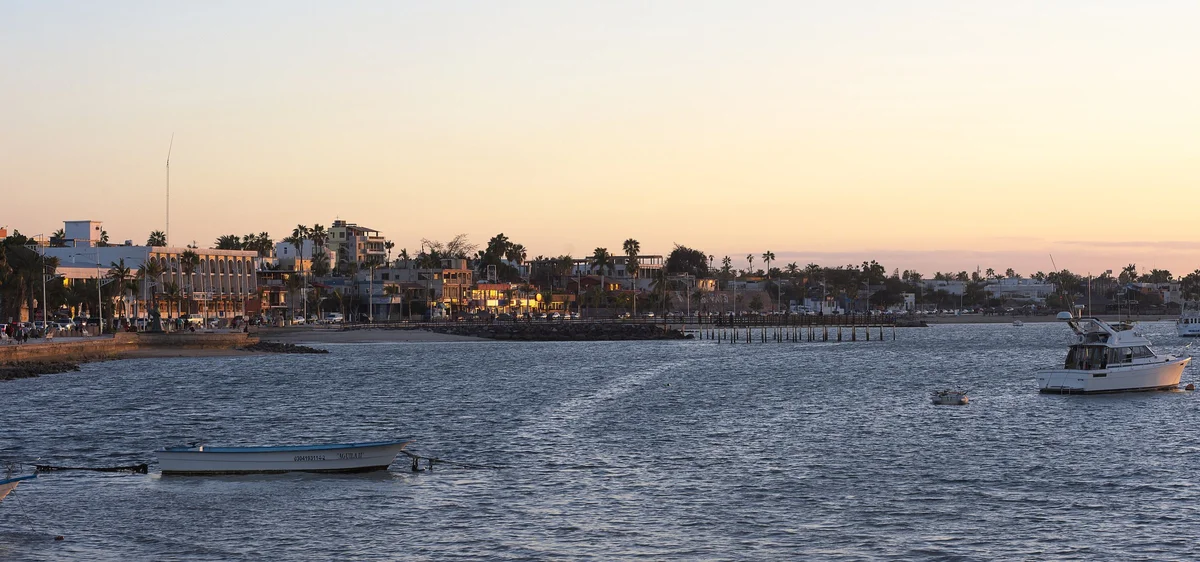
Quick answer: La Paz is the capital of Baja California Sur and the value alternative to Los Cabos, two hours south. Indicative asking bands run about $150,000 to $280,000 for a house in the established neighbourhoods, $250,000 to $450,000 with a bay view or in a gated development, and above that on the Costa Baja marina. Foreign buyers hold through a fideicomiso.
La Paz is the answer to a question most Baja buyers ask too late: what does the same money buy two hours north of Cabo San Lucas. The answer is roughly twice the square metres, a city with hospitals and a university rather than a resort corridor, and a rental model that works in August. Read Los Cabos for the comparison and Todos Santos for the other Baja alternative.
Hub: can foreigners buy property in Mexico. Related: Los Cabos.
Homes for sale in La Paz by area
Prices here track the bay view and the distance to the malecon rather than beach frontage, because most of the city faces a sheltered bay rather than open ocean. The figures below were read off public listings in September 2026 and are asking levels rather than closings.
| Area | Indicative band | Character | Note |
|---|---|---|---|
| Centro and malecon | $150,000 to $280,000 | Walkable, restaurants, the waterfront promenade | Older stock, mixed condition |
| Fidepaz | $180,000 to $320,000 | Established residential, near the marina | Popular with local professionals |
| Costa Baja | $350,000 to $800,000 | Marina, golf, resort community | Highest HOA in the city |
| El Centenario | $150,000 to $300,000 | West along the bay, larger plots | Services vary by street |
| Lomas de Palmira | $250,000 to $500,000 | Hillside, bay views | Access road grade |
| Pedregal de La Paz | $280,000 to $600,000 | Gated, views, newer construction | HOA and security included |
The comparison that drives most purchases here is with Los Cabos, two hours by road. A house that would list at $600,000 in the Cabo Corridor commonly appears here between $250,000 and $350,000, and the difference buys a genuinely different life: a city with a resident population rather than a resort economy, and a season that is quieter in both directions.
Insider tip: ask what the property does about water during the driest months, and whether the neighbourhood is on the municipal network or supplemented by delivery. Baja California Sur is arid, and in La Paz the answer varies more by street than most buyers expect.
Why does La Paz price so far below Los Cabos?
La Paz runs $1,800-3,600 USD per square metre in 2026 against $3,500-7,000 in the Cabo Corridor, a discount of roughly 50% on comparable stock. The gap is structural rather than cyclical: this market is a working state capital of about 300,000 people running on government, university and fishing employment, while Los Cabos is a resort corridor built substantially for foreign buyers.
| Factor | La Paz | Los Cabos |
|---|---|---|
| USD per sqm, typical | $1,800-3,600 | $3,500-7,000 |
| Economic base | Government, university, fishing, tourism | Tourism and second homes |
| International flight access | Limited; mostly domestic via LAP | Direct US and Canada via SJD |
| Foreign buyer share | Modest | Very high |
| Typical days on market | 120-200 | 90-150 |
| Summer occupancy | Supported by resident letting | Thin |
Flight access is the variable that most reliably explains the price gap, and it is worth understanding before treating the discount as mispricing. Los Cabos receives direct service from more than a dozen US and Canadian cities, a schedule that converts a foreign buyer’s second home into a property they actually use eight weekends a year. La Paz airport handles mostly domestic traffic, so the same buyer connects through Mexico City or drives the 2 hours from SJD, adding roughly 4-6 hours of door-to-door travel. That single friction removes perhaps 30-40% of the casual foreign demand that supports Cabo pricing, and it is unlikely to change quickly. Model it against yield in our rental yield guide.
The discount buys a genuine trade rather than a bargain. Los Cabos delivers flight access, a mature management industry and a resale market that clears; La Paz delivers price, yield and a city that functions in September. Foreign buyers who need to sell inside three years should weigh that days-on-market column carefully.
What does property cost in La Paz?
Prices range from $1,800 per square metre in inland residential districts to $3,600 on the malecon and in the Marina area. Pricing in this market tracks water reliability and proximity to the malecon more than it tracks construction quality, which is the first thing a Cabo-trained buyer needs to unlearn.
| Zone | USD per sqm | 120 sqm 3BR | Character |
|---|---|---|---|
| Malecon / Centro | $2,600-3,600 | $312K-432K | Waterfront, walkable, tourist-facing |
| Marina / Fidepaz | $2,400-3,200 | $288K-384K | Marina access, newer stock |
| El Centenario | $2,000-2,800 | $240K-336K | Bay views, quieter, growing expat pocket |
| Residential inland | $1,800-2,400 | $216K-288K | Resident districts, best yield per dollar |
| Balandra corridor | $2,800-3,600 | $336K-432K | Beach proximity, limited supply |
Water, not finish level, is what separates two apparently identical La Paz houses on the same street. Price these three attributes as separate line items rather than folding them into a view of the property:
- A documented, non-rationed water connection adds 8-12% and removes the largest operational risk in this market
- Cistern storage with pressurisation is worth $3,000-8,000 and functions as insurance against tandeo
- Walking distance to the malecon supports nightly letting at $120-220 ADR that inland stock cannot achieve
Three separate valuations attach to the same La Paz property and buyers routinely conflate them. The asking price is what the seller wants, the avaluo is what the notario uses to compute ISAI, and the cadastral value drives predial. In Baja California Sur the gap between the first and the last is wide enough that a buyer checklist should record each number separately rather than assuming they move together.
Water: the constraint that shapes the market
La Paz depends on an over-extracted aquifer supplemented by desalination, and for foreign buyers water reliability is the most consequential non-title diligence item in this market. Some districts operate under tandeo, a rotating supply schedule applied during peak demand, and connection status varies street by street rather than by neighbourhood, with a cistern retrofit costing $3,000-8,000.
The operator records connection status against the address rather than the owner, so the answer transfers with the property and takes about 5 business days to obtain in writing. That single document is the cheapest piece of diligence available in La Paz and the one most often skipped.
Aquifer stress here is structural rather than seasonal, which is what separates it from an ordinary utility question. The La Paz basin has been extracted beyond recharge for decades, saline intrusion has affected wells nearer the coast, and the state’s response has been desalination capacity plus rationing rather than new groundwater. For a foreign buyer that translates into a specific and checkable risk: a property on a tandeo street receives water on a schedule, an unprepared building runs dry between deliveries, and retrofitting a cistern and pump costs $3,000-8,000 that no asking price reflects. A property with reliable service and existing storage is materially more valuable than an identical unit two streets away, and almost no listing states which it is.
| District type | Typical supply | What to budget |
|---|---|---|
| Malecon / Centro | Municipal, generally reliable | Cistern advisable, $3,000-8,000 |
| Marina / Fidepaz | Municipal, newer infrastructure | Verify pressurisation |
| Inland residential | Tandeo in parts during peak demand | Cistern essential |
| Fringe / El Centenario | Mixed; some private wells | CONAGUA concession check |
Four checks settle the water question before an offer:
- Written confirmation of connection status from the operator for that specific address
- Tandeo history on the street, asked directly of neighbours rather than of the seller
- Cistern capacity and pump condition, with the installation date
- Any desalination surcharge applied to the district, and how it is billed
How much hurricane exposure does La Paz carry?
La Paz sits on the Sea of Cortez side of the peninsula rather than the Pacific side, which reduces but does not remove tropical cyclone exposure in a season running June to November. Foreign buyers should budget insurance at 0.4-0.8% of insured value a year and treat a deductible of 2-5% on named-wind cover as standard rather than negotiable.
The sheltered position is genuine and frequently overstated by sellers. Storms that cross the peninsula or track up the Gulf still reach the city, and La Paz has taken direct damage within living memory. What the position does change is the mix of damage: wind loading is typically lower than on the Pacific coast, while rainfall and the flash flooding that follows it through the arroyos are the more common cause of loss. A house at the bottom of a dry watercourse is exposed in La Paz in a way that a beachfront house in Cabo is not.
| Exposure | La Paz | Pacific-side BCS |
|---|---|---|
| Direct named-wind landfall | Less frequent | More frequent |
| Arroyo flash flooding | Primary loss driver | Secondary |
| Storm surge | Limited by Gulf fetch | Material on exposed coast |
| Typical annual premium | 0.4-0.8% of insured value | 0.5-1.0% |
| Named-wind deductible | 2-5% | 2-5% |
| Post-event repair lead time | 4-12 weeks | 6-16 weeks |
Three items belong on the checklist before an offer, and each is answerable in a single afternoon:
- Where the property sits relative to the nearest arroyo, checked on the municipal drainage map rather than by eye on a dry day.
- Whether the existing policy carries named-wind cover at all, since standard fire-and-allied-perils cover in Mexico frequently excludes it.
- Whether the building has been through a prior claim, which the insurer will disclose and which materially affects renewal pricing.
The BCS hurricane insurance guide sets out how the cover is structured and what the deductible actually costs in a claim.
Rental economics: a worked example
Model a 120 square metre three-bedroom a few streets back from the malecon. Malecon-adjacent stock runs $2,800 per square metre, putting the price at $336,000. Closing at 7% takes the committed capital to $359,500. The winning model in this market is hybrid rather than pure nightly: roughly 165 tourist nights through the October-to-April season, then a long-term resident tenancy through the summer.
| Line | Annual USD |
|---|---|
| Nightly, 165 nights at $175 ADR | $28,875 |
| Summer long-let, 4 months at MXN 22,000 | $5,808 |
| Gross revenue | $34,683 |
| Management, blended 27% | −$9,364 |
| HOA and common costs | −$2,900 |
| Predial, insurance, trust fee | −$2,650 |
| Utilities, maintenance, water | −$3,400 |
| Net operating income | $16,369 |
That NOI is 4.6% net on the $359,500 all-in basis, which sits inside this site’s 4.3-5.2% coastal band and materially above Todos Santos. The hybrid structure is what produces it, and the mechanism is worth naming:
- The summer months earn resident rent instead of standing empty, adding roughly $5,800 a year
- Blended management at 27% beats the 30-35% that pure resort markets charge
- A working city means tradespeople and maintenance cost less than in a resort corridor
- Trust fee of $500-800 applies here exactly as it does in Los Cabos
Pros and cons for investors
La Paz advantages and constraints derive from one fact: this market is a working state capital that also receives tourists, rather than a resort that also has residents. That is why a summer resident let adds roughly $5,800 a year that Cabo stock cannot earn, and equally why days on market run 120-200 against 90-150 and international flight access stays limited.
| Advantages | Disadvantages |
|---|---|
| Roughly 50% cheaper per sqm than Los Cabos | Foreign resale pool much smaller than Cabo |
| 4.5-5.5% net on hybrid letting, above Todos Santos | Days on market 120-200 versus 90-150 in Cabo |
| Resident tenant base fills the summer trough | Water rationing affects specific districts |
| Working hospitals, university, year-round services | Limited international flights; mostly domestic via LAP |
| Espiritu Santo, Balandra and whale sharks drive season | Season concentrated October to April |
| Lower cost of living than Cabo for owner-users | Fideicomiso required, $500-800 a year |
Three of those lines are worth a number rather than a phrase:
- The Cabo discount is roughly $200,000 on a 120 sqm three-bedroom at comparable quality
- Summer resident letting adds about $5,800 a year that pure resort stock cannot earn
- Days on market of 120-200 means an exit takes two to three times longer than in Playa del Carmen
Who should buy in La Paz?
Foreign buyers have three workable positions in La Paz at genuinely different entry prices, and choosing between them is mostly a choice of letting model: roughly $216,000-288,000 for an inland residential unit bought on yield, $312,000-432,000 for malecon or Balandra-corridor stock that supports nightly letting, and $240,000-336,000 for El Centenario property bought principally for owner use.
- Yield-focused buyer → inland residential 3BR, $216,000-288,000, long-term resident tenancy, best yield per dollar
- Hybrid operator → malecon or Marina, $288,000-432,000, nightly in season plus summer long-let, 4.5-5.5% net
- Retiree or owner-user → El Centenario, $240,000-336,000, bay views, lower cost of living than Cabo
Each profile holds through a fideicomiso at $500-800 a year and files an annual ISR return against an RFC. The pure luxury buyer should look at Los Cabos instead, La Paz has limited inventory above $600,000 and a correspondingly thin resale pool at that level.
What red flags should pause a La Paz purchase?
Six patterns show up repeatedly in La Paz transactions, and the first two would not appear at all outside Baja California Sur. An independent legal and water review costs foreign buyers MXN 25,000-50,000 here, and every one of these six patterns costs more than that to resolve once the escritura is signed.
- No written confirmation of water connection status for the specific address
- A property on a tandeo street presented as fully serviced, with no cistern
- Ejido land history on the urban fringe without documented conversion to dominio pleno
- Nightly occupancy projections above 200 nights, which the season does not support
- Predial arrears, which attach to the property rather than to the seller
- ZOFEMAT concession unverified on any beachfront or beach-adjacent parcel
What should you verify before committing?
Eight checks settle a La Paz purchase, and water leads the order because it is the one item a discount cannot fully repair. A property that cannot demonstrate reliable supply stays unreliable at any price, and foreign buyers should allow about 5 business days plus a conversation with the neighbours to establish it.
- Obtain written confirmation of water connection status for the specific address.
- Ask neighbours directly about tandeo history on that street, not the seller.
- Document cistern capacity, pump condition and installation date.
- Pull the escritura chain and a certificado de libertad de gravamen, and confirm the fideicomiso is correctly constituted, since La Paz sits inside the restricted zone.
- Verify no ejido origin on fringe parcels, or documented dominio pleno conversion.
- Confirm ZOFEMAT concession status on any beach-adjacent property.
- Obtain a constancia de no adeudo for predial, and separately confirm the water account carries no arrears.
- Request two years of booking records before accepting any occupancy figure.
Expect to spend MXN 25,000-50,000 and 5-10 business days on the combined water and legal review, MXN 4,000-9,000 on the escritura search, and $600-1,200 on a structural inspection. Total diligence lands near 1-1.5% of a $336,000 purchase, against a hybrid model that lives or dies on whether the taps run in August.
For the peninsula’s insurance picture see hurricane insurance for Baja California Sur, and for the purchase itself the closing cost breakdown.
Frequently Asked Questions
Roughly half per square metre. La Paz runs $1,800-3,600 against $3,500-7,000 in the Cabo Corridor, so a 120 sqm three-bedroom costs about $216,000-432,000 here versus $420,000-840,000 two hours south.
Yes. La Paz sits on the Sea of Cortez inside the 50 km restricted zone, so foreign buyers hold through a bank trust. Budget $2,700-5,000 setup including the MXN 21,650 SRE duty, plus $500-800 a year.
Roughly 6.5-8% gross and 4.5-5.5% net on a hybrid model. A $336,000 malecon three-bedroom at 165 nights and $175 ADR plus a four-month summer let grosses $34,683 and nets about $16,369 after blended 27% management, HOA, predial, trust fee and utilities.
The city depends on an over-extracted aquifer plus desalination, and some districts operate under tandeo rotating supply. Confirm connection status in writing for the specific address, ask neighbours about tandeo history, and check cistern storage, which costs $3,000-8,000 to retrofit.
Genuine but seasonal, weaker than Los Cabos, stronger than most of Baja. Whale shark season, Espiritu Santo tours and Balandra produce roughly 150-190 bookable nights at $120-220 ADR. The winning model is hybrid: nightly in season, resident long-let through summer.
Mexican professionals and government employees form the resident base and most transaction volume; North American retirees choose it over Cabo for cost of living and city character; and a remote-worker cohort has grown since 2020, drawn by fibre and prices about half Cabo San Lucas.
Los Cabos offers direct international flights, a mature management industry and 90-150 day resale. La Paz offers roughly half the entry price, better net yields from mixed letting and a functioning city, at the cost of flight access and a thinner foreign resale pool.
Get a vetted Mexico shortlist
US and Canadian buyers use this to skip the developer sales deck: tell us the budget and the market, and we come back with 3 to 5 options and the net yield maths behind each one.
Want options matched to your budget and risk profile?
Three questions, one screen. We reply within one business day.
Get a vetted Mexico shortlist