
Hurricane Insurance in Los Cabos: Costs and Coverage 2026
Hurricane insurance for Los Cabos and BCS property: premiums, named-storm deductibles, windstorm exclusions, and what foreign owners verify before buying.
By Mexico Invest Editorial · Updated July 10, 2026 · 13 min read
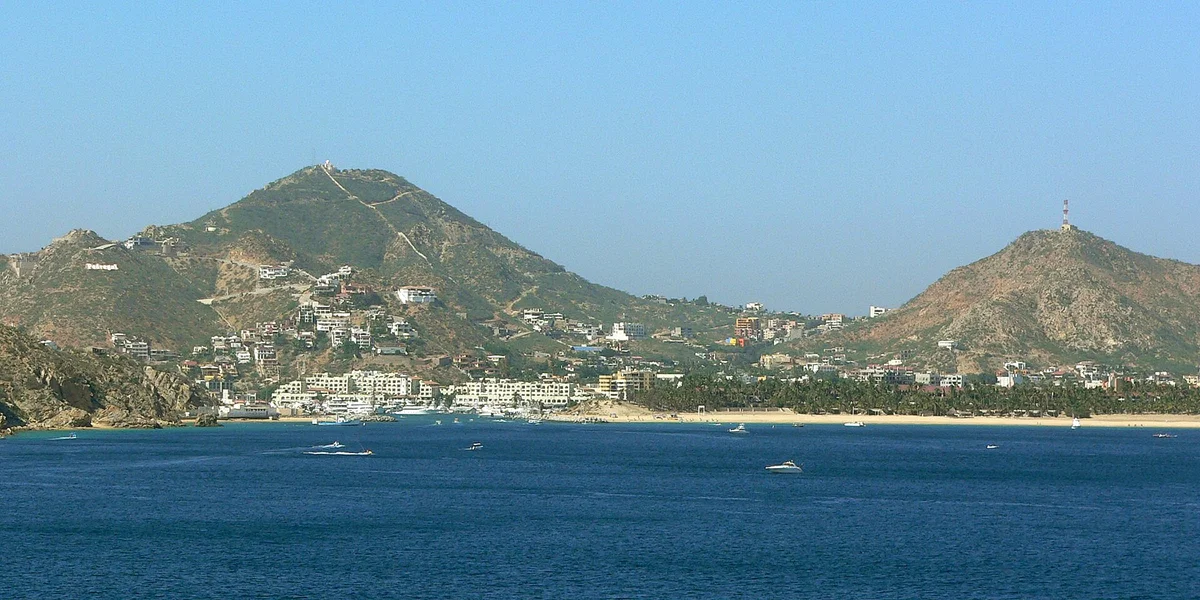
Quick answer: Hurricane insurance in Baja California Sur is not legally required but is strongly advisable given the region’s documented exposure, Hurricane Odile (2014) caused USD 2.6 billion in regional damage. Annual premiums for a condo run USD 1,200-2,500; villas more. Watch for flood exclusions in wind policies, verify HOA policy scope before assuming you’re covered, and buy from a carrier actively writing new BCS business. All figures indicative, get quotes from licensed Mexican insurance brokers.
Baja California Sur’s reputation as one of Mexico’s premier investment and lifestyle markets comes with one non-negotiable physical reality: the region sits in the Eastern Pacific hurricane basin and experiences direct hits at a frequency that makes insurance a financial necessity, not an optional expense.
Hurricane Odile’s September 2014 Category 3 landfall near San José del Cabo remains the reference catastrophe for the region. Properties with proper coverage recovered; properties without adequate coverage, or owners who discovered their HOA policy left their unit contents and liability unprotected, spent years in dispute and out of pocket.
This guide covers the BCS hurricane exposure, what insurance covers (and critically, what it does not), how to buy, and how to compare coverage options intelligently.
Understanding the hurricane risk
The Gulf of California and the Eastern Pacific produce tropical systems that track northwestward, frequently targeting the Baja Peninsula during the June through November season. This geographic reality distinguishes BCS sharply from the Riviera Maya, which faces Atlantic hurricane exposure but from a different basin with different storm characteristics.
Historical storm record for Los Cabos
Major impacts on the Los Cabos region in recent decades include:
| Storm | Year | Category at landfall | Estimated regional damage |
|---|---|---|---|
| Hurricane Odile | 2014 | Cat 3 | USD 2.6 billion |
| Hurricane Rosa | 2018 | Cat 3 (Pacific) | Significant BCS rain/flooding |
| Hurricane Kay | 2022 | Tropical storm → Cat 1 | Flooding across peninsula |
| Hurricane Lidia | 2023 | Tropical storm | Minor BCS impact |
| Multiple tropical storms | Various | Tropical storm | Moderate to minor damage |
The frequency of significant events, meaningful damage roughly every 3-5 years, justifies insurance premiums that may seem high relative to perceived risk until the event occurs.
BCS versus Riviera Maya hurricane exposure
Property buyers comparing BCS and Caribbean Mexico markets often ask about relative hurricane risk. The comparison is nuanced:
BCS faces Eastern Pacific storms which are often smaller in geographic footprint but can be intensely powerful (Odile). The Riviera Maya faces Atlantic basin storms (including Gulf of Mexico systems) which can be larger in footprint. Both regions have documented catastrophic events. Insurance premiums reflect historical claims experience in each region.
What hurricane insurance in BCS actually covers
Coverage scope varies between carriers and policies. The following is general, verify every detail with your specific policy and licensed broker. The structural point for Baja: Pacific storms reach Los Cabos less often than Atlantic storms reach Quintana Roo, but the policy mechanics are identical, named-storm wind on a percentage deductible, flood as a separate endorsement, and lost bookings covered only by a rider you have to ask for.
Standard covered perils in comprehensive policies
Wind damage: Physical damage to structures from hurricane-force winds, including roof damage, wall failure, window/door damage, and structural compromise from wind loading.
Flying debris damage: Damage caused by wind-borne objects (airborne materials, other buildings’ components) striking your property.
Consequential rain intrusion: Water damage that occurs inside the property as a consequence of wind-caused structural damage (e.g., roof failure allowing rain entry). This is different from flood damage, it requires the wind damage to be the proximate cause.
Emergency protective measures: Costs of emergency boarding, temporary tarps, and immediate protection measures taken to prevent further damage, typically reimbursable up to a policy sublimit.
Additional living expenses: Costs to rent alternative accommodation if your property is rendered uninhabitable by a covered loss. Relevant for primary residences and relocation situations; less relevant for investment properties.
Contents coverage (if elected): Personal property, furniture, appliances, and electronics. For STR investors, this may need special treatment as commercial contents or rental furnishings.
Common exclusions and limitations
Flood damage: Storm surge flooding and rain runoff flooding are almost universally excluded from standard wind/hurricane policies. This is the most critical gap to understand. Hurricane-caused flooding requires a separate flood endorsement or policy. In BCS, storm surge events following hurricane landfall are documented, verify your flood exclusion explicitly.
Gradual damage: Damage that accrued over time and is claimed after a hurricane is not covered. Insurers investigate whether damage predates the storm event.
Construction defects: Damage resulting from improper construction, unpermitted additions, or building code violations may be excluded or reduced. This creates particular risk for properties with unpermitted improvements.
Business interruption for rentals: Lost rental income during uninhabitable periods is typically not covered by standard property policies. Short-term rental business interruption requires specific commercial endorsement.
Deductible structure: BCS wind/hurricane policies commonly use percentage deductibles (5-10% of insured value) rather than fixed dollar deductibles. On a USD 400,000 property, a 7% wind deductible means USD 28,000 out-of-pocket before coverage begins. Understand and budget this.
HOA insurance: what the master policy covers
For condo buyers in Los Cabos resort communities, the HOA master insurance policy is the starting point for coverage analysis, but cannot be assumed to provide complete protection. The seam to check is flood on common elements: if the master policy excludes it, the building funds lift pits and lobbies by special assessment, and a loss you assumed was the association’s arrives as a bill addressed to you.
Walls-out vs. all-in: critical distinction
Walls-out (bare walls) policy: The HOA insures the building structure from exterior walls outward. Interior improvements (tile, fixtures, cabinets, appliances), personal property, and unit owner liability are excluded. This is the most common structure in Los Cabos resort condos.
All-in policy: The HOA insures everything including unit improvements and sometimes contents. Less common but does exist in some developments.
The difference is significant: a walls-out HOA policy means you need individual condo insurance covering:
- Interior improvements (could be USD 50,000-150,000+ in value)
- Contents/furnishings (USD 20,000-80,000 for furnished STR unit)
- Personal liability inside your unit and to guests
- Loss assessment coverage (your share of HOA losses exceeding the master policy)
Loss assessment coverage: often overlooked
If the HOA master policy is insufficient to cover total losses from a major hurricane, the HOA can assess individual owners for their proportional share of the shortfall. Loss assessment coverage on your individual policy, typically available for an additional small premium, covers your assessed share up to the policy limit.
After Hurricane Odile, some Los Cabos condominiums experienced HOA special assessments ranging from USD 5,000 to USD 25,000+ per unit for damage exceeding master policy limits. Owners with loss assessment coverage fared better than those without.
Request the HOA insurance policy declarations page and current coverage limits before purchasing. See HOA Fees Mexico Condo Guide for related due diligence.
Licensed insurance brokers vs. direct carriers
Foreign buyers in BCS should work with licensed Mexican insurance brokers who have established relationships with carriers active in the market and can advocate on your behalf at claim time. Buying directly from a carrier website without broker representation leaves you without professional claims advocacy.
Look for brokers with:
- CNSF (Comisión Nacional de Seguros y Fianzas) licensed status
- Demonstrated experience with foreign buyer clients
- English-language service capability
- References from other foreign property owners in the area
Carrier considerations for BCS
Several events shaped the current BCS insurance market:
Post-Odile (2014-2016), several international carriers reduced their BCS exposure or increased rates significantly. The market has stabilized but remained selective. When obtaining quotes, verify that your proposed carrier is actively writing NEW policies in BCS, not only renewing existing ones. A carrier technically available but not actively writing new BCS business may exit the market at renewal.
What information insurers request for BCS quotes
- Property address and full legal description
- Construction year and type (reinforced concrete preferred)
- Gross covered area (square meters)
- Replacement value (important: not market value, but cost to rebuild)
- Story height and floor number
- Distance to ocean and elevation above sea level
- Current occupancy (owner-occupied, STR rental, vacant)
- Prior claims history on the property
- HOA master policy details (to coordinate coverage and avoid duplication)
Insured value: replacement cost vs. market value
A common and expensive mistake in Mexico property insurance: insuring at market value rather than replacement cost. The two numbers can differ by a factor of two in a market where land carries much of the price. Insuring at market value overpays in premium; insuring at a market value below replacement cost underpays at claim time, which is the more expensive error.
Insuring to market value is the error that leaves owners underinsured on the only claim that matters. Land carries no rebuild cost, so on a $500,000 Los Cabos condo the replacement cost of the structure may be $250,000 to $350,000, and a policy written at market value overpays premium on land while a policy written too low triggers coinsurance penalties that reduce every partial claim proportionally. Ask the carrier for the replacement-cost basis in writing and review it every 3 to 4 years as construction costs move.
Market value reflects what someone would pay to purchase the property, including land value, location premium, and market demand factors.
Replacement cost is the cost to rebuild the physical structure to current condition, materials, labor, permits, debris removal.
In BCS, where land values represent 30-50% of total property value in premium locations, insuring at market value means significantly over-insuring (paying premium on non-insurable land) or under-insuring relative to actual rebuild cost.
Obtain a replacement cost estimate from a local licensed contractor or quantity surveyor, not a real estate appraisal. For a USD 400,000 condo, replacement cost may be USD 150,000-200,000. Insurance premiums calculated on USD 200,000 replacement cost (not USD 400,000 market value) are meaningfully lower.
Note: some lenders require insurance based on loan balance; verify your specific financing requirement.
Premium estimation and budgeting for BCS owners
These ranges are illustrative as of mid-2026 and will vary based on individual property characteristics, carrier, and deductible structure. Obtain current quotes for accurate budgeting. Budget $1,500-4,000 a year for a full stack on a Los Cabos condo, and treat the named-storm deductible, typically 2-5% of insured value rather than a fixed sum, as the number that determines what a claim actually pays.
Deductibles matter more than premiums in Baja California Sur and the table above prices only the premium. A named-storm deductible set at 2% to 5% of insured value means the first $6,000 to $15,000 of damage on a $300,000 unit is yours before cover responds, and most realistic claims on a modern Los Cabos condo, windows, terrace doors, roof membrane, water ingress, land inside that band. Convert the percentage to dollars against your own sum insured and hold that amount as an uninsured retention rather than treating the policy as full protection.
| Property type | Insured value | Indicative annual premium | Hurricane deductible |
|---|---|---|---|
| Modern condo (walls-out) | $150K rebuild | $600-1,200 | 5-10% ($7,500-15,000) |
| Condo with contents | $200K total | $1,000-2,000 | 5-10% |
| Boutique villa | $350K rebuild | $2,000-4,500 | 5-10% |
| Beachfront luxury villa | $600K+ rebuild | $4,000-8,000+ | 7.5-10% |
For STR investment properties, include commercial endorsements for short-term rental exposure in your quote specifications.
What checklist should run before you sign?
Nine checks, timed before June rather than during the season, because carriers restrict new business once a named storm forms and a policy arranged in August may simply be unavailable. The two that owners skip are photographing the property’s pre-season condition and confirming what the HOA master policy excludes, both cost nothing and both decide how a claim resolves.
Every year before June 1 (hurricane season start), complete this checklist:
- Review and renew insurance policy if expiring; do not let it lapse
- Confirm insured replacement value reflects current rebuild costs
- Review flood exclusion, determine if separate endorsement is needed
- Verify HOA master policy is current and coverage limits are adequate
- Confirm loss assessment coverage is on your individual policy
- Document property condition with dated photos and video walkthrough
- Ensure emergency contacts list includes insurer’s 24-hour claims line
- Test storm shutters or impact window hardware; repair if not functioning
- Brief property manager on hurricane response protocol
- Confirm any STR guests have evacuation plan communicated to them
Buyer scenarios for hurricane insurance in BCS
New condo buyer in Los Cabos resort tower: HOA carries a walls-out master policy. Buyer needs individual condo insurance for interior improvements ($80,000), STR furnishings ($25,000), liability ($500,000 minimum), and loss assessment ($25,000). Annual individual policy premium: approximately $700-1,200 in addition to HOA fee, which includes the structure premium.
Beachfront villa owner, BCS south corridor: Standalone villa, no HOA. Owner carries comprehensive structure policy ($450,000 replacement cost), contents ($75,000), liability ($1M), and separate flood endorsement. Annual total: estimated $5,000-7,000. Deductible: 7.5% wind = $33,750. Maintains liquid reserve to cover deductible.
STR investor with property manager: Absentee owner relies on licensed property manager to execute hurricane prep protocol. Policy includes commercial endorsement for STR furnishings and STR liability. Manager has authority to authorize emergency protective measures up to $3,000 without owner approval (policy covers this). Management agreement includes storm response protocol.
Insurance coverage terms, carrier availability, and premiums change frequently. All figures are indicative as of mid-2026. Obtain current quotes from CNSF-licensed Mexican insurance brokers before purchasing or renewing coverage. Review all exclusions with your broker. Mexico Invest provides educational content, not insurance advice.
Indicative cost and timeline benchmarks (2026)
The figure to carry away from this page is the deductible rather than the premium: a named-storm deductible at 2% to 5% of insured value on a $300,000 Los Cabos unit is $6,000 to $15,000 of your own money before cover responds. Treat every number below as a stress input, not a quote, and confirm current carrier terms before closing.
| Line item | Typical range | Notes |
|---|---|---|
| Independent legal review | $1,500-$5,000 USD | Before deposit |
| Fideicomiso setup | $2,500-$4,000 USD | Restricted zone |
| Annual trust fee | $500-$800 USD | Bank-dependent |
| Closing timeline (resale) | 30-90 days | Notario schedule |
| Acquisition tax (ISAI) | 2-4% | State/municipality |
| STR management fee | 20-35% gross | Platform bookings |
| Net yield (Riviera Maya) | 3-5% | After HOA and PM |
| Playa 1BR median | $200K-$350K | 2026 listing band |
| Tulum 1BR median | $150K-$285K | Higher execution risk |
| Los Cabos 1BR entry | $350K+ | Lower net yield band |
Cat-zone pricing hardens after every major storm season; the bands above are underwriting inputs, and a live BCS broker quote on your specific building is the number that matters.
What a named-storm deductible actually costs in Los Cabos
Wind cover in Baja California Sur is priced through the deductible, not the premium. Wind coverage deductibles at 2% to 5% of insured value added $6,000 to $15,000 out-of-pocket on a $400,000 unit after a named storm. HOA master policies often capped common-area wind at $5 million while unit interiors needed separate HO-6 style riders. Buyers who confirmed CONAGUA flood overlays and insurer moratoriums 45 days before closing avoided three denied binders in the same quarter.
Indicative ranges from 2026 market observation, not quotes. Pricing, fees and tax treatment move and are set per transaction; confirm your own numbers before you commit.
Frequently Asked Questions
No law requires homeowners to carry hurricane insurance in Baja California Sur. However, if you have a mortgage on the property, the lender will typically require comprehensive coverage including hurricane. For cash buyers, insurance is optional but strongly advisable given BCS's documented hurricane exposure. HOA regimes often require structure insurance on the building while individual unit owners may need contents and liability coverage separately.
Baja California Sur sits at the southern tip of the Baja Peninsula, directly in the Eastern Pacific hurricane basin. The region averages 1-2 tropical storm or hurricane systems per year that track toward or across the peninsula during June-November, with peak intensity in September-October. Hurricane Odile (2014, Category 3) caused an estimated USD 2.6 billion in regional damage, the benchmark event local insurers use for premium modeling.
For a USD 300,000 condo in a modern reinforced concrete tower, annual comprehensive coverage runs approximately USD 1,200-2,500 per year. Villas and standalone structures at higher risk locations may run USD 3,000-6,000+ per year. Deductibles for hurricane/wind events are often expressed as a percentage of insured value (5-10%) rather than a fixed dollar amount. All figures indicative, get quotes from multiple brokers.
Standard comprehensive policies cover: structural damage from wind and flying debris; roof damage; rain infiltration damage consequent to structural wind damage; emergency boarding and temporary protection costs; additional living expenses if the property becomes uninhabitable; and contents coverage if selected. Storm surge and flooding are frequently excluded and require separate endorsement.
HOA insurance varies dramatically. Many resort community regimes carry a master policy covering the building structure (walls out), meaning the structure from exterior walls outward is covered, but interior improvements, fixtures, appliances, personal property, and liability inside your unit are your responsibility. Request the current HOA insurance policy declarations page and review exactly what is covered before deciding if individual unit coverage is needed.
Several international and Mexican insurance carriers write BCS property coverage: GNP Seguros, AXA Mexico, HDI Seguros, Zurich Mexico, and several specialty Lloyd's underwriters for high-value or complex properties. After Hurricane Odile, several carriers reduced BCS exposure, verify that your proposed insurer is actively writing new policies in the region, not just renewing existing ones.
Before hurricane season: review policy coverage; prepare storm shutters; document property condition with photos/video. When a storm is approaching: contact property manager immediately; do not enter during the storm. After the storm: document all damage with photos before any cleanup; contact insurer before making emergency repairs where possible; retain all receipts for emergency protective measures. Verify all procedures with your specific insurer.
Storm surge flooding and surface flood damage from hurricane rainfall are frequently excluded from standard hurricane/wind policies in Mexico. Flood damage requires separate endorsement or policy. In Los Cabos, hurricane events deliver both wind damage (typically covered) and flooding (often not covered without specific endorsement). Review your policy's flood exclusion language carefully and confirm with your broker whether storm surge damage is covered.

Get a vetted Mexico shortlist
US and Canadian buyers use this to skip the developer sales deck: tell us the budget and the market, and we come back with 3 to 5 options and the net yield maths behind each one.
Want options matched to your budget and risk profile?
Three questions, one screen. We reply within one business day.
Get a vetted Mexico shortlist