
Los Cabos Property Investment Guide 2026: Yields, Areas
Los Cabos real estate guide for US investors, Cabo San Lucas, San José del Cabo, Corridor prices, net yields, fideicomiso, and 2026 buyer scenarios.
By Mexico Invest Editorial · Updated July 9, 2026 · 22 min read
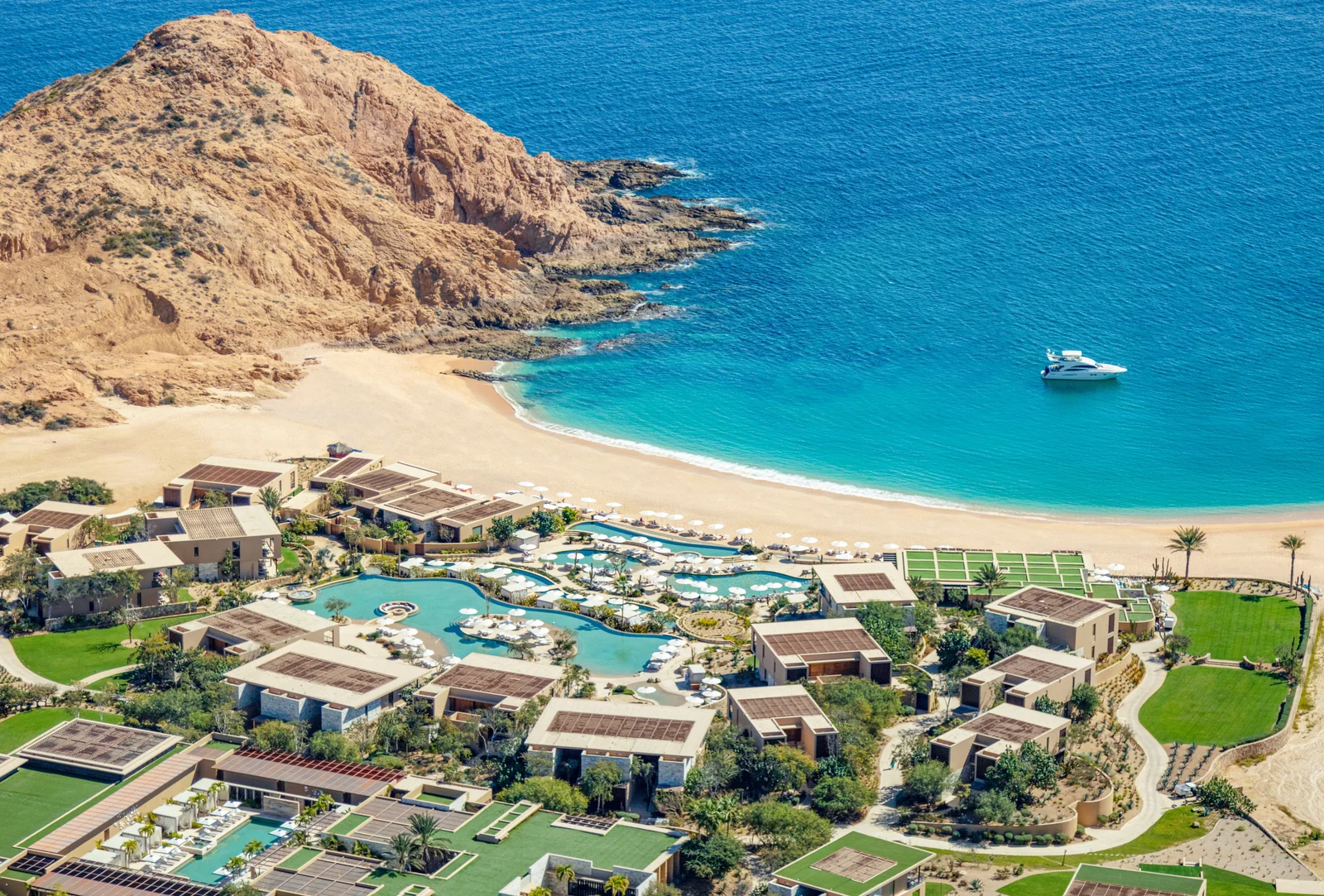
Quick answer: Los Cabos in 2026 is Mexico’s premium Pacific corridor for US buyers, $350K+ entry on investor-grade 1BR condos, net STR yields near 3-4% on branded inventory (not Riviera Maya’s 4-5%), fideicomiso ownership, and unmatched west-coast flight access. Sub-market selection between Cabo San Lucas, San José del Cabo, and the Corridor matters more than the “Cabo” brand on a listing.
Where the Sea of Cortez meets desert mountains, Los Cabos absorbed decades of California and Texas capital. Unlike Quintana Roo’s volume STR machine, Cabos skews toward luxury owner-users who rent selectively and buyers who accept lower net cash flow for USD asset quality and lifestyle optionality.
This hub covers market structure, sub-market economics, yield math, legal mechanics, infrastructure, risks, and buyer profiles, with links to area deep dives and comparisons against Riviera Maya and Puerto Vallarta.
Why Los Cabos sits in a different tier than Riviera Maya
Los Cabos is not Playa del Carmen with cacti. The two markets draw different buyers through different airports on different coasts, and that produces genuinely different investments: entry from $350,000 against $250,000, net yields of 3-4% against 4.4%, and a Pacific hurricane profile rather than an Atlantic one. Los Cabos compensates with dollar-price stability, deeper US west-coast flight connectivity and an owner-use case that Quintana Roo’s volume rental markets do not match. Buying one on the criteria that favour the other is the mistake this guide exists to prevent.
| Factor | Los Cabos signal | Riviera Maya contrast |
|---|---|---|
| Primary buyer origin | US west coast, Texas | US east/midwest, Canada |
| Flight hub | Los Cabos International (SJD) | Cancún (CUN), Tulum (FEL) |
| Price entry (1BR) | $350K+ | $200K-350K Playa |
| Net yield (prime) | ~3-4% | 4-5% Playa Centro |
| Hurricane exposure | Lower (Pacific side) | Higher Quintana Roo |
| STR competition | Luxury, experience-led | Volume, walkable grids |
| Appreciation driver | USD premium, scarcity | Tourism growth, supply waves |
Playa del Carmen remains the net-yield anchor in Mexico for STR operators who prioritise cash flow. Los Cabos wins when your thesis blends owner-use weeks, USD asset preservation, and guest profiles willing to pay $300-600/night for desert-coastal experience.

Sub-market map: three zones, one airport
One airport, three markets that behave nothing alike. Cabo San Lucas is marina and nightlife at $380,000-600,000 and 3-4% net; San José del Cabo is a walkable historic centro at $350,000-500,000 and the highest net in the municipality at 3.5-4.5%; the Corridor between them is resort product at $450,000-plus and the lowest net of the three. Thirty kilometres of Transpeninsular Highway separates the ends, and a comparable drawn from the wrong end of it will misprice a purchase by 15%.
| Zone | Character | 1BR price band | Net yield signal | Investor fit | from Cabo San Lucas at the southern tip to San José del Cabo inland, connected by the Transpeninsular Highway and the resort-lined Corridor between them.
| Zone | Character | 1BR price band | Net yield signal | Investor fit |
|---|---|---|---|---|
| Cabo San Lucas | Marina, nightlife, Medano | $380K-600K | 3-4% | STR + entertainment tourism |
| San José del Cabo | Historic centro, arts, dining | $350K-500K | 3.5-4.5% | Walkable STR, residential calm |
| Cabo Corridor | Resort towers, golf, beach clubs | $450K-900K+ | 2.5-3.8% | Luxury, branded, lower net |
Cabo San Lucas
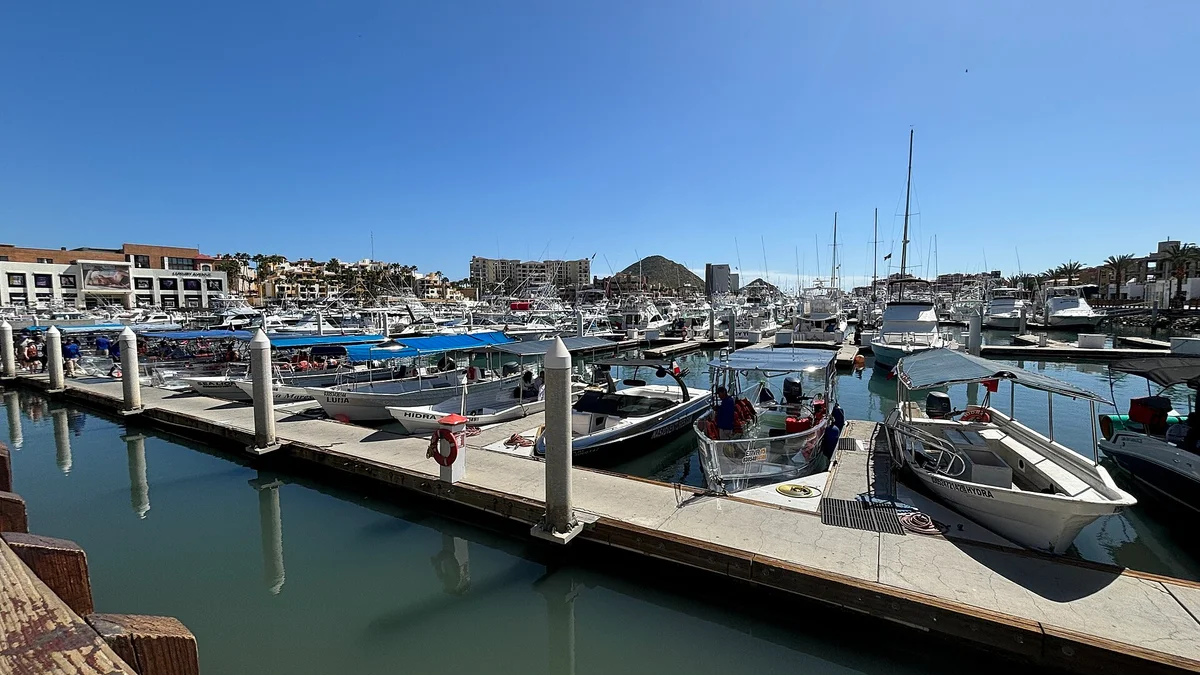
The iconic arch, marina sport-fishing fleet, and Medano Beach hotel row drive tourism volume. STR demand peaks around events, fishing seasons, and US holiday windows. Noise and party-adjacent blocks can boost ADR or hurt reviews depending on guest target.
Walkability is patchy outside Medano, car or taxi dependency affects guest satisfaction scores on some listings.
San José del Cabo
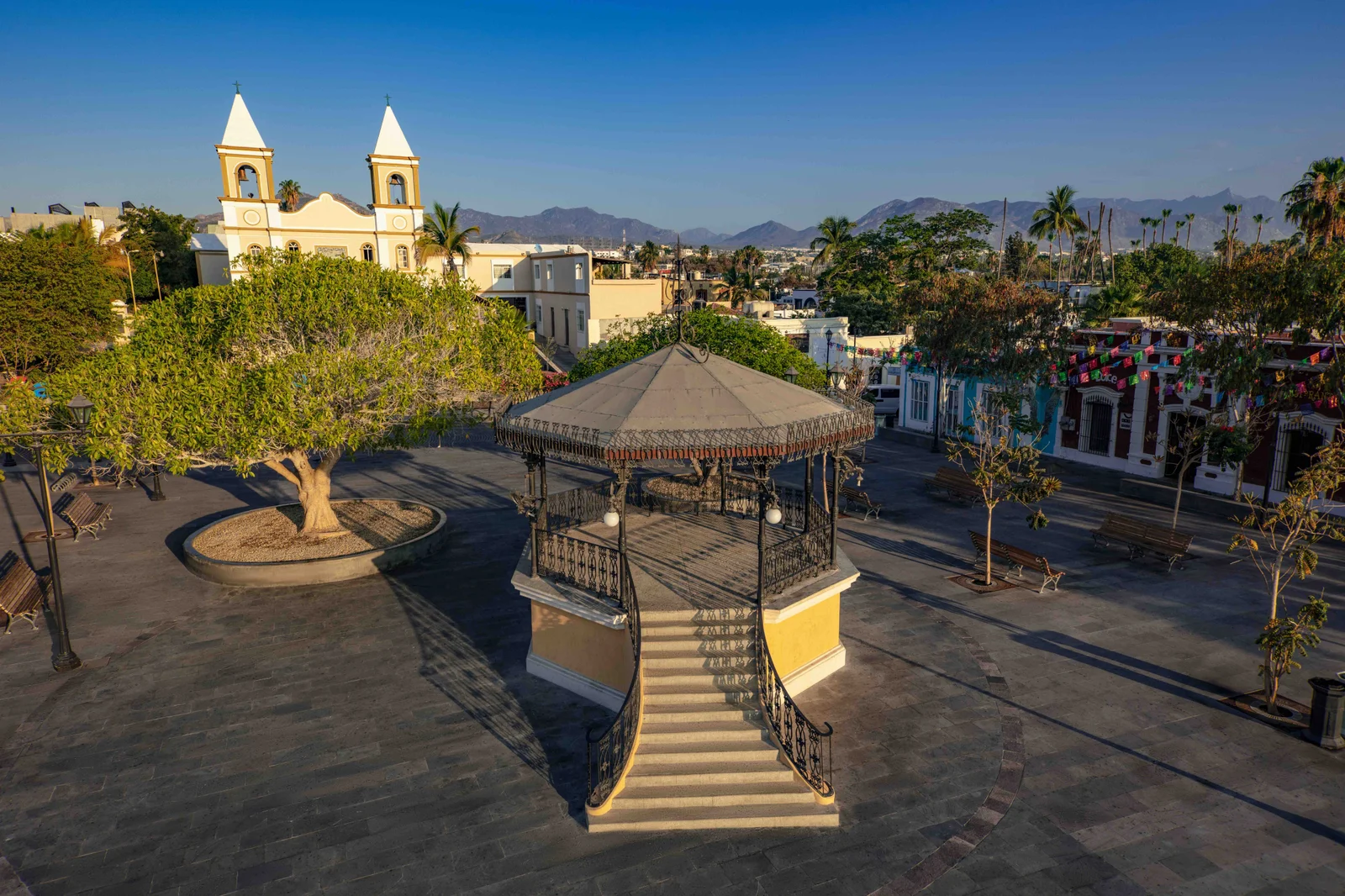
Gallery district, farm-to-table restaurants, and a more residential rhythm than Cabo San Lucas. Centro-adjacent condos attract couples and culinary tourists willing to pay for walkable evenings without nightclub proximity.
Net yields can edge slightly above Corridor branded stacks when HOA remains disciplined and occupancy holds through shoulder seasons.
Cabo Corridor (Tourist Corridor)
Punta Ballena, Palmilla, and master-planned resort zones between the two cities. Ultra-luxury villas and branded residences dominate. HOA stacks run $800-1,200+/month; management expects white-glove service levels.
Cash yield is rarely the primary metric here, buyer profiles include second-home owners renting 12-20 weeks annually to offset carrying costs.
Tourism and demand drivers
Los Cabos International Airport (SJD) handled record passenger volumes through 2024-2025, with direct routes from Los Angeles, San Francisco, Dallas, Houston, Phoenix, and seasonal Canadian cities. That connectivity underpins ADR power in winter high season (November-April).
Demand segments investors should model separately:
| Segment | Stay pattern | ADR sensitivity | Notes |
|---|---|---|---|
| US second-home owner | 8-16 weeks personal use | N/A for those weeks | Common buyer profile |
| Sport fishing / marina | 3-7 nights | High event windows | Cabo San Lucas weighted |
| Golf / resort | 5-10 nights | Premium shoulder | Corridor weighted |
| Culinary / arts | 4-8 nights | Mid-premium | San José weighted |
| Remote-work extended | 14-30 nights | Moderate | Growing post-2020 |
Unlike Playa del Carmen’s dense walkable grid, Cabos STR success often depends on view, pool quality, and property management polish as much as location pin on a map.
Price context and 2026 negotiation window
After strong appreciation 2020-2023 along Baja Sur’s coast, 2024-2026 brought a more balanced resale environment. Generic corridor towers show longer days-on-market than beach-proximate San José inventory with proven rental history.
Indicative 1BR bands (mid-2026, USD):
| Product type | Price range | DOM signal |
|---|---|---|
| San José centro walkable | $350K-480K | Moderate |
| Cabo San Lucas marina-adjacent | $400K-650K | Moderate |
| Corridor branded 1BR | $500K-750K | Variable |
| New pre-construction phase | Developer list | Payment-plan driven |
Always underwrite on all-in cost (purchase plus 5-10% closing). A $400K unit with $35K closing carries different net yield than spreadsheet-on-price-only.
Gross against net in Los Cabos
Broker decks quote gross yield; your bank account receives net, and the gap is wider here than in Quintana Roo because both sides of the deduction run higher. Full-service Cabos management takes 25-30%, luxury regime HOA runs $400-1,200 a month, and the trust, predial and insurance sit on top. A 6.5% gross quote on a Corridor unit routinely arrives as 3% net once those four lines are subtracted from an all-in basis rather than from the purchase price.
Typical deductions: your bank account receives net, and in this market the gap is wider than in Quintana Roo because HOA levels and management rates both run higher. Typical deductions:
Typical deductions:
- STR management 25-30% of gross (full-service Cabos operators)
- HOA / regime $400-1,200/month on luxury stacks
- Predial property tax (modest but real)
- Fideicomiso annual $500-800
- Vacancy and turnover costs
- Utilities, water and electricity run higher in desert climate than Yucatán humidity zones
| Sub-market (1BR indicative) | Gross yield | Net yield |
|---|---|---|
| San José centro walkable | 5.8-6.2% | 3.8-4.2% |
| Cabo San Lucas Medano zone | 6.0-6.5% | 3.5-4.0% |
| Corridor branded | 5.5-6.0% | 2.8-3.5% |
Example on $450K San José 1BR (all-in $472K):
| Line item | USD/year |
|---|---|
| Gross rent (68% occ, $185 ADR avg) | $28,800 |
| Management (28%) | −$8,064 |
| HOA ($650/mo) | −$7,800 |
| Predial + trust + misc | −$1,600 |
| NOI | ~$11,336 |
| Net yield | ~2.4% on $472K |
Raise occupancy to 75% with proven listing history and net approaches 3.8%. Corridor luxury at $950/month HOA often lands under 3.5% unless ADR positioning is exceptional.
Ownership: the fideicomiso in Baja California Sur
The entire municipality sits inside the restricted zone, so every foreign purchase runs through a fideicomiso, a 50-year renewable bank trust costing $2,500-4,000 to constitute and $500-800 a year. The bank holds bare legal title and can do nothing with it; as beneficiary you occupy, let, improve, sell and bequeath exactly as an owner would. There is no direct-title alternative anywhere in Los Cabos, and no structure that avoids the annual fee for a residential buyer.
| Item | Indicative cost | a 50-year renewable bank trust. The bank holds legal title; you are beneficiary with rights to occupy, lease, improve, sell, and inherit.
| Item | Indicative cost |
|---|---|
| Trust setup | $2,500-4,000 |
| Annual fee | $500-800 |
| Renewal at 50 years | Process fee applies |
Baja California Sur transfer tax (ISAI) and notario fees follow state schedules, budget 5-10% all-in at closing. Independent attorney review ($1,500-5,000) is not optional for first-time buyers.
Buyer profiles: who Cabos fits
Los Cabos fits five buyer types: California and Arizona second-home owners leveraging sub-3-hour flights, Texas STR investors targeting high-season winter demand, retiree snowbirds drawn to mature expat services and healthcare proximity, portfolio diversifiers seeking a non-Florida US beach asset with a different cycle, and pre-construction buyers entering new Corridor phases at launch pricing. Net yields run lower than Riviera Maya, Cabos is a wealth-preservation market, not a cash-flow-first play.
| Profile | Thesis | Cabos edge | Model carefully |
|---|---|---|---|
| California second-home | Use + partial rent | Short flights, USD pricing | HOA on luxury stacks |
| Texas STR investor | Winter high season | Direct Dallas/Houston routes | Net yield vs RM |
| Retiree snowbird | Warmth + healthcare | Mature expat services | Car dependency |
| Diversifier | Non-Florida US beach | Different cycle, Pacific | Lower net than Playa |
| Pre-con construction | Launch pricing | New phases on Corridor | Delivery + water rights |
If you need 4.5%+ net with minimal owner-use weeks, Playa del Carmen or Tulum selective zones may outperform Cabos on spreadsheet, at different risk profiles.
STR rules and HOA: the yield gate
Ownership and the right to let nightly are separate permissions, and the second one is granted by the building rather than the state. A legally owned condo that cannot short-term rent yields zero operationally.
Checklist before offer:
- Written HOA confirmation STR is permitted
- Municipal / state lodging registration path understood
- Management company licensed and referenced locally
- Insurance covers commercial guest use
- No active neighbour litigation on STR in building
HOA special assessments for desalination, pool resurfacing, and elevator upgrades hit Cabos towers regularly, request 24-month financials and meeting minutes.
Short-term rental context for Quintana Roo (contrast): Short-Term Rental Rules Riviera Maya, Baja rules differ; verify locally.
Infrastructure and long-term tailwinds
Two forces pull in opposite directions here: flight connectivity keeps improving while desert water supply keeps constraining what can be built and operated. Airport expansion at SJD continues adding gates and routes, core to ADR power.
Water and utilities remain structural constraints in desert Baja. Buildings with proven well + municipal backup outperform new phases advertising pools without supply certainty.
Road connectivity on the Transpeninsular links San José, Corridor resorts, and Cabo San Lucas, traffic peaks around holiday weekends affect guest experience in Cabo San Lucas marina zone.
Healthcare depth improved with private hospital options, relevant for retiree buyers comparing against Puerto Vallarta.
No single rail project defines Cabos the way Tren Maya defines Quintana Roo, flight connectivity IS the infrastructure story.
HOA escalation
Luxury regime fees compound silently. A $600/month HOA rising to $900 over three years erases 80+ basis points of net yield.
Water and climate
Desert coastal climate stresses landscaping and pool maintenance costs. Budget higher capex reserve than humid Yucatán buildings.
Pre-construction phases
New Corridor towers market payment plans and projected yields. Verify builder track record, trust account structure, and occupancy permit path before deposit.
Ejido adjacency
“Bargain” land inland from the Transpeninsular may be ejido communal property, not private freehold. Classic foreign-buyer failure mode nationwide, including Baja.
Resale liquidity
Corridor ultra-luxury can sit longer than San José walkable product if pricing overshoots comp set. Price for the next buyer’s rental pro forma, not your emotional view premium.
Los Cabos vs Puerto Vallarta vs Riviera Maya
Los Cabos offers the highest entry ticket (USD 350,000+) with the lowest net yield (3-4%) but the strongest USD price stability and lower hurricane exposure on the Pacific side. Puerto Vallarta balances lifestyle and yield at USD 300,000-450,000 with net 3.5-5%. Playa del Carmen leads net returns (4-5%) at the lowest entry but sits in the Atlantic hurricane corridor. Tulum is the widest-spread market in terms of risk and return.
| Market | Entry (1BR) | Net yield | Flight origin bias | Hurricane |
|---|---|---|---|---|
| Los Cabos | $350K+ | 3-4% | US west, Texas | Lower |
| Puerto Vallarta | $300K-450K | 3.5-5% | US west, midwest | Moderate |
| Playa del Carmen | $200K-350K | 4-5% | US east, Canada | Higher |
| Tulum selective | $150K-285K | 2.6-5.8% | Global lifestyle | Higher |
Acquisition process step-by-step
The order matters more than the speed, and the two steps that actually protect a Los Cabos buyer both happen before an offer exists: choosing which of the three sub-markets you are underwriting, and retaining counsel who is not the seller’s. Everything after that, written HOA rental permission, a net yield model on all-in cost, the trust permit, the notario closing, is sequential and takes 45 to 90 days.
-
Define sub-market thesis: Cabo San Lucas vs San José vs Corridor the two steps that protect a Los Cabos buyer both happen before an offer exists.
-
Define sub-market thesis: Cabo San Lucas vs San José vs Corridor
-
Engage independent attorney: not seller’s notario only
-
Shortlist STR-allowed buildings: written HOA confirmation
-
Model net yield on all-in cost with conservative occupancy
-
Offer with conditions: clear title, no liens, permit path
-
Fideicomiso setup through authorised bank
-
Closing via notario: 5-10% additional budget
-
Management onboarding before first guest night
Tax and exit: ISR on sale
Mexico taxes capital gains on property sales (ISR). Foreign sellers need CFDI-documented cost basis from closing, losing paperwork is expensive at exit.
Hold-period planning matters: Cabos buyers often blend 10+ years owner-use with partial rental rather than pure flip timelines.
2026 market outlook
Supply on prime beach-access parcels stays constrained here in a way Quintana Roo’s tower waves are not, so the softness in Los Cabos is concentrated in generic resale rather than spread across the market: Q1 2026 volume fell 29.7% year on year while developer list pricing on new phases held. That gives buyers real leverage on units without a rental track record and almost none on new inventory. Net yields are unlikely to move much either way, ADR growth and HOA discipline will decide individual outcomes more than any market-wide appreciation narrative.
Buyer leverage exists on resale units compared to Quintana Roo’s tower waves. New inventory concentrates on Corridor phases and San José infill.
Buyer leverage exists on resale units in generic towers without rental track record. Developer list pricing on new phases remains firmer.
Net yields are unlikely to jump dramatically, ADR growth and disciplined HOA matter more than market-wide appreciation narratives.
For national context including interior markets: Mexico Property Investment Guide.
Decision framework: buy Cabos if…
Los Cabos is the right answer to a narrow brief and an expensive answer to a broad one. It works when SJD flight connectivity matches your origin, when owner-use weeks matter as much as yield, and when 3-4% net on premium inventory is acceptable because the asset is doing more than producing cash. If what you actually want is the highest net yield available in Mexico, this market will cost you roughly a point and a half a year to own for reasons that have nothing to do with the building.
-
You value SJD flight connectivity from US west coast and an expensive answer to a broad one. It fits when the following are true, and not otherwise:
-
You value SJD flight connectivity from US west coast
-
Owner-use weeks matter as much as net yield
-
You accept 3-4% net on premium inventory
-
You can verify STR-allowed HOA in writing
-
You have independent legal counsel budgeted
Look elsewhere if:
- You need 4.5%+ net with minimal oversight → consider Playa del Carmen
- You want lowest entry ticket → RM fringe or interior markets
- You cannot tolerate HOA $800+/month → avoid Corridor branded
- You expect 8% net from broker deck gross figures → recalculate net first
Seasonal occupancy calendar for underwriting
Cabos revenue is concentrated in five months and the annual average hides it. Base-case occupancy in walkable San José product runs 68-72% across the year against the 85% that appears in broker decks, and the Corridor concentrates even harder into winter while the desert summer underperforms badly. Model month by month: the two or three months where a property does not cover its own HOA are the ones that determine how large a reserve you need.
| Month | Occupancy signal | ADR signal | Notes | Prudent investors model month-by-month rather than applying peak-week ADR year-round.
| Month | Occupancy signal | ADR signal | Notes |
|---|---|---|---|
| January | High | Premium | US holiday carryover |
| February | High | Premium | Whale season marketing |
| March | High | Premium | Spring break volatility in CSL |
| April | Moderate-high | Strong | Shoulder begins late month |
| May | Moderate | Moderate | Heat rising |
| June | Moderate | Moderate | Summer family |
| July | Moderate | Moderate | US summer travel |
| August | Moderate-low | Soft | Heat peak |
| September | Low | Soft | Shoulder low |
| October | Moderate | Moderate | Recovery |
| November | High | Strong | Winter start |
| December | High | Premium | Holiday peak |
Base-case annual occupancy near 68-72% in San José walkable product beats applying 85% from broker decks. Corridor luxury may show higher winter concentration, summer can drop sharply without aggressive discounting.
Cross-reference east-coast seasonality in Riviera Maya Property Investment Guide, Quintana Roo patterns differ slightly with hurricane-season psychology.
Property types: condo, townhome, villa
Los Cabos investor-grade property spans four tiers: 1BR condos at USD 350,000-550,000 with the strongest STR fit and established management, 2BR condos at USD 450,000-750,000 for family STR, townhomes at USD 500,000-900,000 with selective rental appeal, and villas at USD 800,000-3M+ requiring premium management for luxury weekly rentals. First-time Cabos investors should start with a 1BR condo for manageable carrying costs and clearer comp sets.
| Type | Entry band | STR fit | Management | Liquidity |
|---|---|---|---|---|
| 1BR condo | $350K-550K | Strong | Full-service available | Moderate-high |
| 2BR condo | $450K-750K | Family STR | Same | Moderate |
| Townhome | $500K-900K | Selective | Variable | Moderate |
| Villa | $800K-3M+ | Luxury weekly | Premium mgmt required | Lower |
First-time Cabos investors typically start with 1BR condo in San José or Medano-adjacent zones, manageable carrying costs, clearer comp sets, and established management contracts.
Villa thesis requires capital for furnishing, pool maintenance, and gardener retention in desert climate. Net yield math rarely beats well-run 1BR on percentage basis, villa buyers often prioritise owner-use and prestige over cash-on-cash.
Financing and capital stack
Most Cabos closings among foreign buyers remain USD cash or US-based HELOC draws. Mexican bank mortgages for non-residents exist through select institutions but timelines run longer than US processes and down-payment expectations often start near 30-40% where available.
Non-Resident Mortgage Mexico covers bank-specific paths, treat as exceptional, not default.
All-in yield must include cost of capital. A 4% net yield with 8% HELOC borrowing is negative carry unless appreciation or owner-use value closes the gap, model honestly.
Insurance, climate, and capex reserves
Pacific Baja takes fewer direct hurricane hits than Quintana Roo, which lowers the frequency and not the cover you need, wind, arroyo flooding and dry-season fire are all live exposures here. Budget 1-2% of value a year for insurance, routine maintenance and reserve combined, which is above a humid Yucatán building because desert landscaping, pool water and salt-air corrosion all cost more to keep running.
Budget 1-2% of property value annually than Quintana Roo. Insurance still matters for wind, flood in arroyo-adjacent sites, and fire risk in dry seasons.
Budget 1-2% of property value annually combined for insurance, routine maintenance, and reserve, higher than humid Yucatán buildings for landscaping and pool evaporation losses.
Buildings marketing infinity pools without verified water contracts create guest-review and operational risk, verify during physical inspection.
Worked scenario: a walkable San José 1BR
A $415,000 purchase becomes $448,000 all-in after $33,000 of closing costs, and at 72% occupancy with a $195 nightly rate, 27% management and $540 a month of HOA it produces a net yield in the low fours. The line that moves it most is the HOA: every $100 a month added takes roughly a quarter of a point off the result, which is why the fee schedule matters more than the asking price in this market.
Assumptions: 72% occupancy
Assumptions: 72% occupancy, $195 average nightly, 27% management, $540/month HOA
| Step | Calculation | USD |
|---|---|---|
| Rented nights | 365 × 72% | 263 |
| Gross rent | 263 × $195 | $51,285 |
| Management | 27% | −$13,847 |
| HOA annual | $540 × 12 | −$6,480 |
| Taxes + trust + misc | n/a | −$1,650 |
| NOI | n/a | $29,308 |
| Net yield | NOI ÷ all-in | ~6.5% |
That gross-heavy outcome still nets ~6.5% only if ADR and occupancy prove, conservative stress at 65% occupancy and $175 ADR drops net near 3.9%, aligning with our colonia tables.
Always stress-test downward before offer.
Los Cabos in national portfolio context
Los Cabos rarely works as somebody’s only Mexican holding if yield is the objective, because 3-4% net does not carry a portfolio on its own. It works as a sleeve: a Playa del Carmen or Cancún position generating cash flow, a Cabos property providing dollar-price stability and the weeks you actually want to be there, and optionally an inland market like Mérida where direct title removes the trust cost entirely.
-
Playa del Carmen anchor for net cash flow Common portfolios combine:
-
Playa del Carmen anchor for net cash flow, Playa del Carmen area
-
Los Cabos sleeve for USD premium and owner-use
-
Interior (Mérida) optional diversify, resident long-let thesis
Developer landscape and pre-construction discipline
The developer field here runs from Baja brands with decades of delivery behind them to Corridor entrants selling luxury phases off-plan on the strength of a rendering. The discipline is identical regardless: an independent escrow or trust account before any deposit, verified construction and environmental permits for that specific parcel, and a documented delivery record on prior projects. A premium price point does not reduce the diligence; it raises what is at stake if the diligence is skipped.
Before any pre-construction deposit: with multi-decade delivery history to newer Corridor entrants marketing luxury phases off-plan.
Before any pre-construction deposit:
| Check | Why |
|---|---|
| Trust account or escrow structure | Protects against developer default |
| Permits filed and visible | Unpermitted projects stall at handover |
| Water rights documentation | Desert constraint, non-negotiable |
| Comparable delivered project walk-through | Marketing renders ≠ finished quality |
| Payment schedule tied to milestones | Avoid 80% upfront schemes |
National pre-con risks overlap RM, Mexico Real Estate Scams Avoid. Tulum’s 2024-2026 oversupply lesson applies to any coast: delivery without demand equals resale pain.
Resale buyers in Cabos often prefer completed inventory with rental track record, pre-con discount must compensate time, risk, and inability to earn during construction.
What changes when an operator switches coasts
Managers who run units on both coasts describe the same two differences. Playa guests walk to the beach, groceries and dinner, which produces fewer support tickets and heavy ADR competition between near-identical tower units. Cabos guests ask about rental cars, pool hours and water pressure, which means higher-touch management, and because units differentiate on view and service rather than floor plan, the ADR spread between good and mediocre listings is far wider here.
Playa: Guest walks to beach, groceries, nightlife, lower guest support tickets.
Playa: Guest walks to beach, groceries, nightlife, lower guest support tickets.
Cabos: Guest questions about rental car, pool hours, water pressure, higher touch management.
Playa: Competition among identical tower units, ADR pressure.
Cabos: Differentiation on view and service, wider ADR spread.
Yield chasers from Playa may initially dislike Cabos net, owner-use buyers from California often accept lower net for SJD lifestyle.
Tulum is not operational peer to either, jungle grid and supply wave dynamics differ entirely.
Indicative data mid-2026. Los Cabos sub-market performance varies by building, HOA health, and rental execution. Verify building-specific economics before purchase. Mexico Invest Editorial provides research, not investment advice or property management.
Areas and project reviews
Los Cabos behaves as four distinct markets strung along thirty kilometres of highway, and the differences between them are larger than the shared Cabo label suggests. Cabo San Lucas is the marina and nightlife end, with the deepest short-stay demand and the highest amenity load in its HOA budgets. San José del Cabo trades on its colonial centro, the art district and a calmer buyer profile, generally at a lower price per square metre for comparable finish. The Corridor between them holds the branded and resort-club inventory where the flag agreement matters as much as the deed. The East Cape is the frontier: lower entry, thinner services, and title histories that need real work.
Frequently Asked Questions
Los Cabos suits US buyers seeking premium coastal assets with deep flight connectivity from California, Texas, and the Pacific Northwest. Net STR yields on branded 1BR corridor inventory often land near 3-4% after HOA and management, lower than Playa del Carmen but with stronger USD buyer depth and price stability in prime zones. It is a selection market: Corridor luxury versus San José walkable grids carry different economics.
Yes. Los Cabos sits entirely inside Mexico's restricted zone along the Sea of Cortez. Foreigners hold residential title via fideicomiso bank trusts with full use, rent, sell, improve, and inherit rights. Setup runs roughly $2,500-4,000 with annual fees near $500-800. Ejido communal land is not a shortcut, independent legal counsel is standard.
Gross vacation-rental yields of 5-7% appear in marketing for well-positioned 1BR units. Net yields after 25-30% management, HOA $400-1,200/month, taxes, and vacancy commonly compress to roughly 3-4% on branded corridor product. Appreciation and owner-use value often matter as much as cash yield for Cabos buyers.
Cabo San Lucas offers marina tourism, nightlife, and Medano Beach STR demand, higher ADR volatility. San José del Cabo delivers arts-district walkability, restaurant depth, and a slightly more residential guest profile. The Corridor between them targets luxury buyers with resort HOA stacks. Match sub-market to guest thesis, not airport proximity alone.
Riviera Maya (Playa del Carmen, Tulum) typically offers higher net STR yields near 4-5% in liquid colonias but with Quintana Roo hurricane exposure and Tulum oversupply risk. Los Cabos trades lower net yield for premium USD pricing, west-coast flight patterns, and desert-coastal lifestyle. See our dedicated comparison guide for head-to-head tables.
Investor-grade 1BR condos in San José or Cabo San Lucas commonly start near $350,000-550,000 USD in 2026. Corridor branded towers exceed $500,000 for beach-proximate product. Closing costs add 5-10% including Baja California Sur transfer tax, notario, registry, and fideicomiso setup.
HOA fee escalation on luxury stacks, STR restrictions in residential regimes, water and utility costs in desert climate, and pre-construction delivery risk on new phases. Secondary risks include overpaying for view without rental demand proof and trusting seller-side legal counsel. Always verify HOA STR bylaws in writing before offer.
Most foreign buyers use USD cash or US home-equity lines. Mexican bank financing for non-residents exists but is bank-specific, slower, and often requires larger down payments. Budget all-in acquisition at purchase price plus 5-10% closing, yields calculated on price-only overstate returns.


Get a vetted Mexico shortlist
US and Canadian buyers use this to skip the developer sales deck: tell us the budget and the market, and we come back with 3 to 5 options and the net yield maths behind each one.
Want options matched to your budget and risk profile?
Three questions, one screen. We reply within one business day.
Get a vetted Mexico shortlist