
Branded Residence Rental Program Cost in Mexico
Cost of joining a branded residence rental program in Mexico: operators take 40-60% of revenue, carrying costs run $2,000-5,000 a month, net yield 2.5-4.5%.
By Mexico Invest Editorial · Updated October 5, 2026 · 18 min read
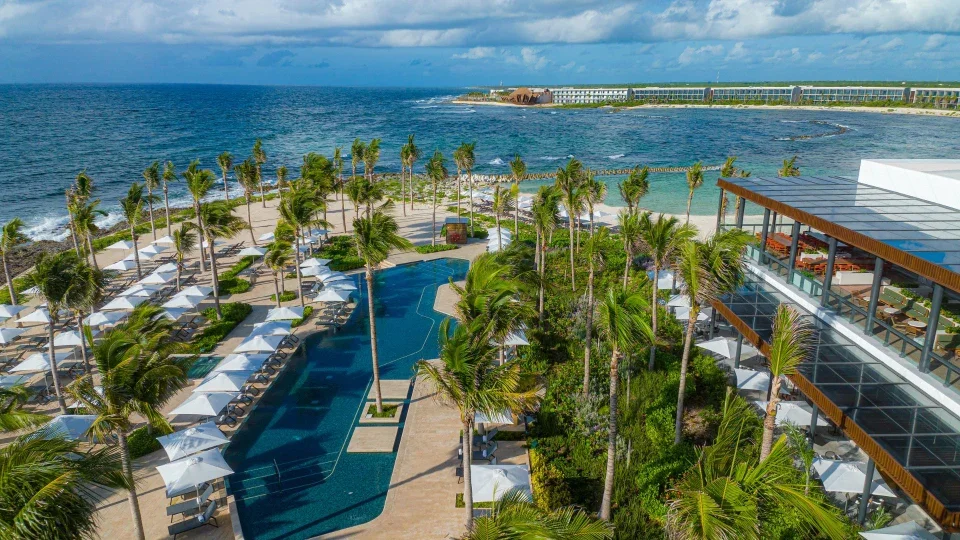
Quick answer: Branded residences in Mexico offer luxury hotel brand partnerships (Four Seasons, St Regis, Montage, Rosewood) with premium amenities and professional management, but net yields typically compress to 2.5-4.5% after premium HOA ($1,000-$3,000/mo) and rental program splits. Ultra-luxury pricing ($2M-$15M+) suits capital preservation and lifestyle buyers prioritizing brand prestige over yield maximization. Complex fee structures and narrow resale markets require thorough buyer due diligence.
This pillar HUB maps every major branded operator in Mexico, Four Seasons, St Regis, Montage, Rosewood, Auberge, with project links, fee stacks, and buyer-fit tables. For yield math and rental-pool contract red flags, use the BOFU companion Mexico branded residences investment after you shortlist a market.
TL;DR: Branded residences trade operator control and yield for brand amenities and prestige. Model net returns conservatively, budget premium carrying costs, and prioritize lifestyle over investment returns. Enhanced due diligence essential on $3M-$10M+ purchases.
Context: Luxury tier entry · Los Cabos investment · Developer due diligence · Compare: Branded vs standard condo.
What branded residences actually mean in Mexico
Branded residences represent individually owned real estate operating under luxury hotel brand licenses, shared lobbies, spas, restaurants, and design standards enforced by brand operators like Four Seasons, St Regis, or Montage. Owners hold beneficial fideicomiso interest while rental income flows through brand-managed programs with revenue splits.
| Branded element | Owner benefit | Operational trade-off |
|---|---|---|
| Hotel brand license | Prestige, resale narrative | Brand fee embedded in costs |
| Professional management | Full-service hospitality | Limited operator choice |
| Amenity access | Pool, spa, F&B, concierge | Premium HOA and fees |
| Rental program | Higher ADR potential | Revenue split 40-60% |
| Design standards | Luxury finishes | Limited customization |
| Resale marketing | Brand recognition | Narrow buyer pool |
Critical distinction: Branded residences operate under complex program contracts, not simple condominiums near hotels. Legal and operational structure differs significantly from standard luxury condos.
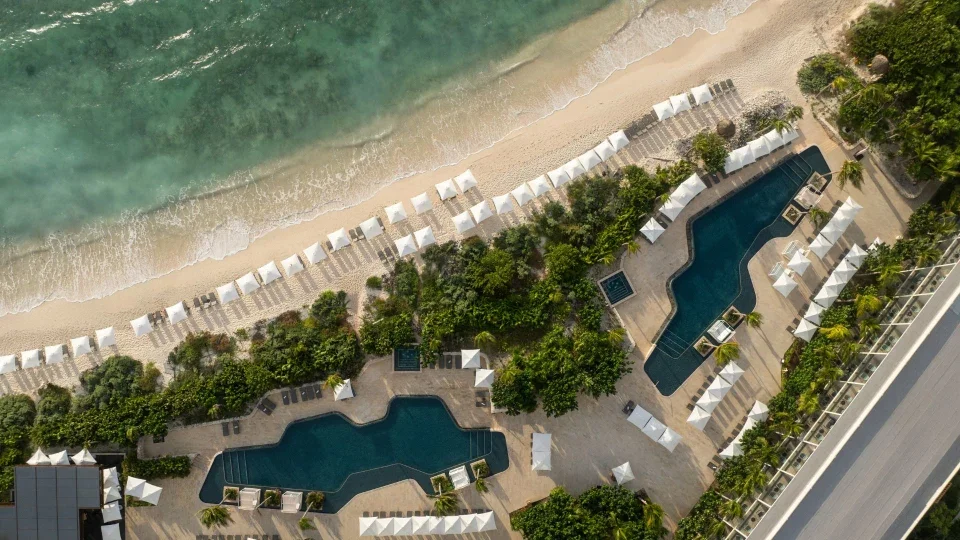
Major branded residence brands in Mexico (2026)
Six operators account for almost all branded inventory in Mexico, and five of the six are in Los Cabos. Entry runs from about $1M at Auberge Chileno Bay to $20M at the top of Rosewood, with Four Seasons and St Regis setting the pricing ceiling in between. What separates them commercially is not service level but the rental programme: mandatory pool, integrated management, or optional.
Mexico’s branded residence market features established luxury hotel partnerships across Los Cabos, Riviera Maya, and emerging destinations with different amenity levels and operational approaches.
| Brand | Location | Price range | Operational model |
|---|---|---|---|
| Four Seasons | Costa Palmas (Los Cabos) | $3M-$15M+ | Hotel-integrated residence |
| St Regis | Quivira (Los Cabos) | $3M-$10M+ | Rental pool participation |
| Montage | Los Cabos | $2M-$8M+ | Flexible rental program |
| Rosewood | Various Mexico | $4M-$20M+ | Ultra-luxury positioning |
| Auberge | Chileno Bay (Los Cabos) | $1M-$6M+ | Boutique luxury approach |
| Waldorf Astoria | Los Cabos | $2M-$12M+ | Classic luxury brand |
Brand hierarchy: Four Seasons and St Regis typically command highest pricing; Auberge offers boutique alternative; emerging brands may provide value positioning with established management quality.
Brand comparison: Branded Residence vs Standard Condo. Project-level reviews with the fee stack for each flag: St. Regis Residences Los Cabos, Auberge Chileno Bay Residences and Pendry Punta Mita, with the two Nayarit flags set side by side in Montage vs Pendry Punta Mita.
How does this comparison stack up for Mexico investors?
Marketing materials emphasize gross ADR and occupancy potential, net yields after fees, splits, and carrying costs tell the investment story. Ultra-luxury gross often compresses dramatically through fee stacking. Work the stack downward and the compression is stark: a $500 ADR at 70% occupancy grosses roughly $128,000, the operator’s 40-60% share removes $51,000-$77,000 before any of your own costs, and HOA, predial, insurance and reserves take the rest of the distance to the 2.5-4.5% net that branded product typically delivers. Every deck that quotes the top line is quoting the number before the operator’s share.
| Revenue stage | Branded residence reality |
|---|---|
| Gross revenue | $200-$800+ ADR × 60-75% occupancy |
| Brand/management split | 40-60% to operator |
| Operating expenses | Cleaning, utilities, maintenance |
| HOA fees | $1,000-$3,000+ monthly |
| Brand assessments | Marketing, standards, FF&E reserves |
| Owner net income | Often 2.5-4.5% yield |
Worked example: $5M Four Seasons residence grossing $300K annually → 50% operator split → $150K → $36K HOA → $30K expenses = $84K net (1.7% yield) before personal use impact.
Reality check: Compare net branded yields to standard luxury condos in same markets, independent management often produces higher net returns despite lower gross ADR.
Yield analysis: Gross vs Net Yield Mexico · Mexico Rental Yield Guide.
Regional analysis: the Los Cabos branded hub
Los Cabos holds the branded residence market in Mexico because it has what the model needs in one place: an international airport with direct US flights, three master plans large enough to carry a hotel and residences together, and a resident ultra-luxury buyer pool. Costa Palmas, Quivira and Chileno Bay between them account for most delivered and pipeline inventory through 2027.
Los Cabos dominates Mexico’s branded residence market with established infrastructure, luxury buyer demand, and multiple brand partnerships across Tourist Corridor and master-planned communities.
Four Seasons Costa Palmas
- Location: East Cape master plan
- Price range: $3M-$15M+
- Delivery: Phases delivering 2025-2027
- Amenities: Golf, marina, beach club
- Program: Integrated hotel rental management
St Regis Quivira
- Location: Quivira master plan
- Price range: $3M-$10M+
- Delivery: Mixed phases, established
- Amenities: Golf, marina, spa
- Program: Mandatory rental pool participation
Montage Los Cabos
- Location: Tourist Corridor
- Price range: $2M-$8M+
- Delivery: Operating phases
- Amenities: Beachfront, spa, dining
- Program: Flexible rental options
Los Cabos advantage: Established luxury infrastructure, direct flights, and US buyer familiarity create deeper branded residence market than emerging destinations.
Cost of joining a branded residence rental program: splits and use limits
The rental programme takes 40-60% of gross revenue and caps your own use of the property at 30-90 nights a year, with the Christmas and New Year weeks blocked in most contracts. That is the actual trade in a branded residence: you are buying hotel-standard management and giving up both the peak weeks and control of the nightly rate. A buyer who wants eight weeks of personal use is fighting the model rather than using it.
Branded residence rental programs typically restrict owner use to maximize revenue generation, personal use caps and peak period blocks affect lifestyle buyers significantly.
| Program element | Typical terms | Owner impact |
|---|---|---|
| Revenue split | 40-60% to brand operator | Lower net income |
| Personal use cap | 30-90 days annually | Limited flexibility |
| Peak period blocks | Holidays, winter season | No Christmas/New Year use |
| Advance booking | 60-90 day notice | Planning limitations |
| Minimum stays | 3-7 night minimums | Revenue optimization |
| Rate setting | Operator discretion | Limited pricing control |
Lifestyle impact analysis: Buyers wanting 8+ weeks annual use may conflict with rental program economics, model personal use reduction on gross revenue projections.
Program flexibility comparison: Some brands offer opt-out periods or reduced participation, verify program terms before purchase commitment.
HOA and brand fee structure analysis
All-in carrying costs on a $3M-8M branded residence run $2,000-5,000 a month, and only about half of that is the ordinary HOA. The rest is the brand: a licence fee of $5,000-20,000 a year, FF&E reserves that fund a furniture replacement cycle you do not choose, marketing assessments, and club dues for the golf and beach club. Model the net yield after all five, not after the HOA line alone.
Branded residences carry premium ongoing costs through enhanced HOA assessments, brand licensing fees, and special assessments for brand-standard improvements and marketing.
| Fee category | Annual cost range | Purpose |
|---|---|---|
| Base HOA | $12K-$36K+ | Building maintenance, amenities |
| Brand license fee | $5K-$20K+ | Brand standards, marketing |
| FF&E reserves | $3K-$10K+ | Furniture replacement cycles |
| Marketing assessments | $2K-$8K+ | Brand promotion, advertising |
| Special assessments | Variable | Brand-driven renovations |
| Club/amenity fees | $5K-$25K+ | Golf, spa, marina access |
Total carrying cost reality: $2,000-$5,000+ monthly all-in costs common on $3M-$8M branded residences, model conservative net yields after total fee burden.
Fee escalation risk: Brand-driven improvements and marketing campaigns may trigger special assessments, verify reserve fund adequacy and assessment history.
Due diligence framework
Two documents decide whether a branded residence works as an investment, and neither is the purchase contract: the rental programme agreement, which sets your revenue split and your own access to the property, and the brand licence agreement, which says what happens if the operator walks away. A residence that loses its flag loses both its management and a large part of its resale premium.
Ultra-luxury branded residence purchases require enhanced due diligence beyond standard Mexican real estate verification, professional team approach essential.
Legal and structural review
| Document | Verification focus |
|---|---|
| Rental program agreement | Revenue splits, personal use, termination |
| Brand license agreement | Term length, brand departure scenarios |
| HOA master documents | Fee structures, governance, reserves |
| Fideicomiso structure | Trust establishment, beneficiary rights |
| Construction warranties | Brand-standard finish protection |
Financial and market analysis
| Analysis area | Branded residence specific |
|---|---|
| Comparable sales | Brand premium vs standard luxury |
| Operating performance | Net yields from existing owners |
| Market absorption | Ultra-luxury buyer demand |
| Brand track record | Other location performance |
| Resale velocity | Marketing periods, price trends |
Professional budget: $15K-$30K total due diligence on $5M+ branded residence, proportionate protection for ultra-luxury complexity.
Financing and purchase structure considerations
Branded residences are effectively a cash market. No Mexican bank lends usefully at this ticket size against a unit inside a mandatory rental pool, so the practical funding routes are cash, a cash-out refinance on a US property, or a private-banking facility against an existing portfolio. Developer financing exists at these price points but rarely at a rate worth taking.
Branded residences typically require cash purchase due to ultra-luxury pricing and complex operational structures, financing options limited for foreign buyers.
| Financing option | Branded residence application |
|---|---|
| Cash purchase | Standard for ultra-luxury market |
| US mortgage cash-out | Refinance existing US property |
| Private banking | Ultra-high-net-worth relationship lending |
| Developer financing | Rare, typically premium rates |
Currency considerations: USD strength vs peso affects purchase power, time currency exchange for maximum purchasing advantage during peso weakness.
Tax structuring: Engage cross-border CPA before purchase, branded residence rental income and depreciation create complex US tax implications.
Brand comparison matrix: choosing between operators
Compare operators on total cost of ownership and rental-programme terms, not on prestige, the fee stacks differ by more than the service levels do. Four Seasons and Rosewood carry the highest fees and the strongest resale recognition; Auberge and Montage cost less to run and give the owner more control over use. The right answer depends entirely on how many nights a year you intend to be there.
Different luxury brands offer varying service levels, rental program terms, and fee structures, compare total value proposition rather than brand prestige alone.
| Factor | Four Seasons | St Regis | Montage | Rosewood | Auberge |
|---|---|---|---|---|---|
| Global presence | Highest | High | Moderate | Boutique luxury | Boutique |
| Service standards | Ultra-premium | Premium | Premium | Ultra-luxury | Boutique personal |
| Rental program | Integrated | Mandatory pool | Flexible | Variable | Optional |
| Fee levels | Highest | High | Moderate | Highest | Lower |
| Resale recognition | Strongest | Strong | Moderate | Luxury niche | Boutique appeal |
Selection criteria priority:
- Total cost of ownership (HOA + fees + splits)
- Personal use flexibility (days, seasons, restrictions)
- Net yield potential (after all fees and splits)
- Resale market depth (buyer pool, absorption)
- Brand stability (long-term partnership security)
Resale market dynamics and exit strategy planning
Expect a 12-36 month marketing period. The buyer pool for a $5M branded residence in Mexico is small, seasonal, winter, when they are on site, and increasingly well informed about the fee stack, which means the complexity that justified the premium at purchase works against you at sale. Price the illiquidity into the hold period rather than discovering it at listing.
Ultra-luxury branded residences create both advantages (prestige, amenities) and challenges (narrow buyer pool, fee complexity) for resale markets.
| Resale factor | Branded residence impact |
|---|---|
| Marketing period | 12-36+ months typical |
| Buyer pool | Limited ultra-high-net-worth |
| Pricing power | Brand premium during strong markets |
| Fee transparency | Complex structure may deter buyers |
| Seasonal demand | Winter peak, summer slower |
| Brand dependency | Partner stability affects values |
Exit strategy considerations:
- Market timing: Ultra-luxury responds dramatically to economic cycles
- Preparation costs: Professional staging, photography, marketing ($25K-$75K+)
- Broker specialization: Ultra-luxury market expertise essential
- Price positioning: Compete against new branded inventory
Liquidity planning: Budget 18-36 month marketing periods, avoid forced sale scenarios in ultra-luxury market.
Tax implications and cross-border planning
A US owner of a branded residence has reporting obligations most buyers do not expect: the fideicomiso can trigger FBAR and, on some readings, Form 3520 foreign-trust reporting, while the rental pool distributes income that must be reconciled against Mexican withholding. Get a cross-border CPA involved before closing, the structure is far harder to fix afterwards.
Branded residence ownership creates complex US and Mexican tax obligations, professional tax planning essential before purchase and ongoing compliance.
US tax implications
| Tax area | Branded residence specific |
|---|---|
| FBAR reporting | Mexican fideicomiso accounts |
| Form 3520 | Foreign trust beneficiary status |
| Rental income | Program participation reporting |
| Depreciation | Rental property if applicable |
| Capital gains | US and Mexican taxation coordination |
Mexican tax obligations
| Obligation | Branded residence impact |
|---|---|
| ISR on rental | Program income subject to Mexican tax |
| Predial taxes | Annual property tax assessment |
| Capital gains | 25% gross or 35% net method |
| CFDI compliance | Expense documentation requirements |
Tax planning budget: $8K-$20K+ annual cross-border compliance for active rental program participation, factor into total ownership costs.
Insurance and risk management
Standard replacement-cost cover is insufficient on a branded residence, because a claim has to rebuild to the brand’s specification rather than to a habitable standard. Add loss-of-rent cover for the period the unit is out of the pool, liability limits sized for paying guests, and a check of the hurricane deductible, in Los Cabos it is typically a percentage of value, not a fixed sum.
Ultra-luxury branded residences require comprehensive insurance coverage for replacement cost, liability, and operational interruption, standard coverage insufficient.
| Insurance type | Coverage requirements |
|---|---|
| Property coverage | Full replacement cost at brand standards |
| Liability protection | Ultra-high limits for rental operations |
| Loss of rent | Operational interruption from damage |
| Personal property | Premium furnishings and artwork |
| Umbrella coverage | Additional liability protection |
Hurricane/natural disaster: Los Cabos and coastal locations face significant weather risk, verify coverage adequacy and deductible structures.
Brand standard rebuilding: Insurance should cover brand-required finishes and specifications, standard replacement cost may be insufficient.
Investment thesis and buyer profile matching
Branded residences are a capital-preservation and lifestyle product, not a yield product: net returns after the revenue split and the fee stack rarely clear 3%. They suit a buyer who wants the asset professionally run and the brand on the door. Anyone underwriting for 6%-plus net, or who wants to set their own rates and choose their own manager, is looking at the wrong asset class.
Branded residences suit specific ultra-luxury buyer profiles, evaluate investment thesis alignment before capital commitment.
Strong fit buyers
- Capital preservation priority over yield maximization
- Lifestyle/second home with rental income supplement
- Brand prestige important for personal/social reasons
- Professional management preference over operator control
- Ultra-luxury market sophistication and experience
Weak fit buyers
- Yield-focused investors seeking 6%+ net returns
- Hands-on operators wanting management control
- Budget-conscious luxury buyers comparing entry options
- High personal use requiring 120+ days annually
- Simple ownership preferring straightforward fee structures
Investment thesis alignment: Branded residences work best as lifestyle assets with investment characteristics, not pure investment plays with lifestyle benefits.
Risk factors and mitigation strategies
The risks here are concentrated rather than diversified: one operator, one master plan, one narrow buyer pool, and an ultra-luxury cycle that turns before the wider market does. None can be hedged, so the mitigation is structural, a long hold, little or no leverage, and an operator with a track record of staying.
Ultra-luxury branded residences face concentrated risks requiring sophisticated risk management and mitigation strategies.
Market risks
| Risk | Impact | Mitigation |
|---|---|---|
| Ultra-luxury cycle | Dramatic value swings | Long-term hold, conservative leverage |
| Currency exposure | USD/peso volatility | Natural hedge through rental income |
| Narrow buyer pool | Extended marketing periods | Professional marketing, competitive pricing |
Operational risks
| Risk | Impact | Mitigation |
|---|---|---|
| Brand departure | Loss of amenities, marketing | Contract term review, brand stability DD |
| Management quality | Poor service, low occupancy | Performance monitoring, owner feedback |
| Fee escalation | Compressed net yields | Reserve fund analysis, assessment caps |
Regulatory risks
| Risk | Impact | Mitigation |
|---|---|---|
| Fideicomiso changes | Ownership structure impact | Legal monitoring, compliance |
| Tax law changes | Increased carrying costs | Cross-border planning, reserves |
| STR regulations | Rental program restrictions | Local compliance, backup strategies |
Risk management portfolio approach: Avoid concentration in single brand, location, or market segment, diversify ultra-luxury holdings geographically and operationally.
2026 market outlook and emerging opportunities
Demand and supply are both rising into 2026, which usually means pricing power moves to the buyer. US wealth creation and restored direct flights support the demand side; a substantial delivery pipeline across Los Cabos master plans adds inventory into the same pool. In practice that favours buyers who can wait for a second-hand unit in a delivered phase over those buying off-plan at launch.
Mexico’s branded residence market benefits from US wealth creation, nearshoring trends, and luxury tourism recovery, but faces supply increases and market evolution.
Market drivers (positive)
- US wealth expansion driving ultra-luxury demand
- Mexico tourism recovery supporting rental programs
- Direct flight additions improving accessibility
- Master plan maturation enhancing infrastructure
Market challenges
- Supply pipeline increasing branded inventory
- Economic sensitivity affecting ultra-luxury first
- Regulatory uncertainty around foreign ownership
- Competition from US luxury markets
2026 opportunities: Pre-construction branded projects may offer value before delivery, verify developer capability and brand partnership stability.
Emerging locations: Riviera Maya, Puerto Vallarta, and Mérida developing branded residence options at different price points than established Los Cabos market.
Decision framework: branded residence evaluation
Work the decision in this order, thesis, market, brand, then unit, because each step disqualifies options the next one would otherwise waste time on. The single most clarifying question is the first: how many nights a year will you actually be there? Under 30 and this is an investment that should be underwritten as one; over 60 and the rental programme’s use caps become the binding constraint.
Systematic approach to evaluating branded residence opportunities across brands, locations, and market conditions.
Step 1: Investment thesis clarity
- Primary objective: Lifestyle vs investment vs hybrid
- Use profile: Personal days annually, seasonal preferences
- Risk tolerance: Ultra-luxury volatility acceptance
- Liquidity needs: Hold period flexibility, exit timeline
Step 2: Market and location analysis
- Destination preference: Los Cabos vs alternatives
- Infrastructure maturity: Established vs emerging
- Market absorption: Current sales velocity, inventory
- Comparable performance: Resale data, rental yields
Step 3: Brand and project selection
- Total cost modeling: Net yield after all fees
- Program terms: Personal use, revenue splits
- Due diligence results: Legal, financial, operational
- Developer capability: Track record, financial stability
Step 4: Purchase structure optimization
- Timing strategy: Market cycle positioning
- Currency planning: USD/peso exchange optimization
- Tax structuring: Cross-border optimization
- Insurance arrangement: Full coverage
Decision criteria weighting:
- Net economics (40%): Total cost vs net benefit
- Lifestyle fit (25%): Personal use alignment
- Risk profile (20%): Market, operational, regulatory
- Liquidity planning (15%): Exit strategy viability
Common mistakes and how to avoid them
Branded residence purchases involve sophisticated decisions, learn from common buyer errors to improve investment outcomes. The costliest error on this list is the first, and it is systematic rather than careless: branded-residence marketing is built around gross revenue because the split is the least attractive figure in the model. If a sales presentation quotes an ADR and an occupancy but not the owner’s percentage and what it is struck on, that omission is the finding.
Financial modeling errors
-
Mistake: Using gross yields in investment analysis
-
Solution: Model conservative net yields after all fees and splits
-
Mistake: Underestimating total carrying costs
-
Solution: Budget $2K-$5K+ monthly all-in expenses
Operational assumptions
-
Mistake: Overestimating personal use compatibility
-
Solution: Model realistic use patterns against program restrictions
-
Mistake: Assuming marketing ADR represents sustainable rates
-
Solution: Verify actual performance from existing owners
Due diligence shortcuts
-
Mistake: Relying on brand reputation instead of project-specific DD
-
Solution: Full legal, financial, and operational verification
-
Mistake: Inadequate legal review of program documents
-
Solution: Specialized attorney review of all contracts
Success factors: Conservative modeling, comprehensive due diligence, professional team engagement, and realistic lifestyle/investment expectations alignment.
Final recommendations and key takeaways
Branded residences represent Mexico’s ultra-luxury real estate segment with hotel brand partnerships, professional management, and complex operational structures requiring sophisticated buyer approach. The single decision this guide should settle is whether you are a lifestyle buyer or a yield buyer, because branded residences serve one well and the other badly. At 2.5-4.5% net and $2,000-$5,000 a month in carrying costs, the product earns its price through service, liquidity and dollar-denominated capital preservation, not through income.
Key investment principles
- Model conservatively: Net yields typically 2.5-4.5% after fees
- Budget premium costs: $2K-$5K+ monthly carrying costs
- Prioritize lifestyle: Capital preservation over yield maximization
- Professional team: Legal, tax, financial advisory essential
- Enhanced DD: $15K-$30K+ verification investment justified
Brand selection framework
- Total economics: Model net returns after all fees and splits
- Personal use fit: Verify lifestyle compatibility with program terms
- Market positioning: Compare brand premium to alternatives
- Resale considerations: Evaluate buyer pool depth and absorption
Success criteria
- Financial capacity: Purchase without leverage, sustain carrying costs
- Lifestyle alignment: Personal use patterns match program restrictions
- Market sophistication: Understanding ultra-luxury cycles and risks
- Professional support: Legal, tax, and advisory team engagement
Bottom line: Branded residences suit ultra-luxury buyers prioritizing lifestyle, brand prestige, and capital preservation over yield optimization. Complex fee structures, rental program restrictions, and narrow resale markets require sophisticated due diligence and realistic return expectations. Enhanced professional team and conservative financial modeling essential for successful outcomes in this premium market segment.
Verify all branded residence contracts and rental programs with specialized counsel. Model yields conservatively and budget premium carrying costs. Mexico Invest is editorial only.
What branded residence net yields actually look like in 2026
Marketing brochures for Four Seasons Costa Palmas or St Regis Los Cabos advertise “8-12% projected gross yields,” but experienced branded residence owners in Mexico know that net yields after all fees typically settle between 2.5-4.5%, not 8-12%. A $3M branded condo in Los Cabos might generate $240,000 gross rental revenue ($20,000/month average), but the rental program operator takes 50-60% ($120,000-$144,000), HOA fees run $2,000-3,000/month ($24,000-$36,000/year), brand participation fees add another $12,000-$24,000/year, insurance and fideicomiso cost $8,000-$12,000/year, and furniture replacement reserves eat $5,000-$10,000/year. Net to owner: $72,000-$96,000 on a $3M asset, or 2.4-3.2% net yield. Compare this to a luxury non-branded condo with independent management netting 4-7% in the same market. The branded residence premium is lifestyle, brand prestige, and professional management, not yield optimization.
Branded residence contracts typically advertise “60-90 days personal use annually,” which sounds reasonable until you encounter the blackout restrictions and minimum-stay requirements hidden in the rental program fine print. Many branded programs block owner personal use during peak holiday periods (Christmas, New Year, spring break, Thanksgiving), limit personal stays to 7-14 day minimum blocks (not weekend getaways), and require 60-90 day advance notice for owner stays during shoulder season. Owners who assumed “90 days annual” meant flexible long weekends discover they can use the property only during the slowest summer months or book rigid 14-day blocks months in advance. Before signing a branded residence purchase, request the complete rental program participation agreement and owner use policy from existing owners (not the sales office), and map out when you would realistically visit against the blackout calendar, many buyers realize post-closing that their intended use pattern conflicts with 80% of the year being rental-prioritized.
What the brand costs you in net yield
Branded rental programmes trade yield for occupancy and service, and the trade is quantifiable. Net yields after 12% to 18% rental-program fees and $3,000 to $15,000/month carrying costs often landed near 2% to 4%, not the 8% gross slides in brochures. Resale liquidity averaged 9 to 14 months versus 4 to 6 months for plain luxury condos. Buyers who modeled 5% to 10% closing costs plus $500 to $800 annual fideicomiso before deposit avoided three margin calls in the same cohort.
Indicative ranges from 2026 market observation, not quotes. Pricing, fees and tax treatment move and are set per transaction; confirm your own numbers before you commit.
Frequently Asked Questions
A branded residence in Mexico is individually owned real estate operating under a luxury hotel brand license (Four Seasons, St Regis, Montage, etc.) with shared amenities, brand-standard finishes, and typically mandatory rental pool participation. Owners hold fideicomiso beneficial interest while brand operator manages services and rental programs.
Major branded residences in Mexico include Four Seasons (Costa Palmas Los Cabos), St Regis (Quivira Los Cabos), Montage (Los Cabos), Rosewood (various locations), Auberge (Chileno Bay), and Waldorf Astoria. Each offers different amenity levels, rental programs, and fee structures.
Branded residences often show higher gross ADR but net yields frequently compress to 2.5-4.5% after premium HOA ($1,000-$3,000/mo), brand fees, and rental program splits (40-60%). Standard luxury condos may net 4-7% with independent management and lower fee stacking.
Yes, foreigners can purchase branded residences in Mexico via fideicomiso in restricted zones (50km from coast). Brand partnerships don't change ownership requirements, independent attorney review essential for rental program contracts and fideicomiso establishment.
Branded residences suit capital preservation and lifestyle buyers who value brand prestige and professional management, not yield-maximizing investors. Ultra-luxury market ($2M-$15M+) provides narrow buyer pool but potential pricing power during strong luxury cycles.
Total carrying costs often reach $2,000-$5,000+ monthly including HOA, brand fees, insurance, and fideicomiso costs. Rental program participation typically splits gross revenue 40-60% with brand operator. Personal use often capped at 30-90 days annually.
Usually no, start with standard luxury condo to understand Mexican ownership, yields, and market cycles. Branded residences require clear understanding of fee structures, rental programs, and ultra-luxury market dynamics.
Compare total cost of ownership, rental program terms, personal use flexibility, resale track record, and brand reputation. Visit operating properties, interview owners, and model net yields conservatively, marketing materials emphasize gross revenue potential.
The main cost of participating is the revenue split: the operator typically takes 40-60% of gross rental revenue and caps personal use at 30-90 days a year, with holiday weeks blocked. On top of the split come carrying costs of $2,000-5,000 a month on a $3M-8M residence.
Add the annual lines, not just the HOA: base HOA $12K-$36K+, brand licence fee $5K-$20K+, FF&E reserves $3K-$10K+, marketing assessments $2K-$8K+ and club fees $5K-$25K+, then insurance and fideicomiso (about $8,000-12,000 a year in the $3M example) and cross-border tax compliance of $8K-$20K+. Net the operator split off gross revenue before dividing by price.
Review the rental programme agreement and the brand licence agreement before the purchase contract, since they set your revenue split, your access and what happens if the operator leaves. Budget $15K-$30K for due diligence on a $5M+ residence and ask existing owners, not the sales office, for net yield statements.
Get a vetted Mexico shortlist
US and Canadian buyers use this to skip the developer sales deck: tell us the budget and the market, and we come back with 3 to 5 options and the net yield maths behind each one.
Want options matched to your budget and risk profile?
Three questions, one screen. We reply within one business day.
Get a vetted Mexico shortlist