
Non-Resident Mortgage Mexico: Financing Options for
Mexico mortgages for non-residents, bank requirements, USD vs MXN loans, LTV, fideicomiso compatibility, and financing alternatives in 2026.
By Mexico Invest Editorial · Updated July 9, 2026 · 18 min read
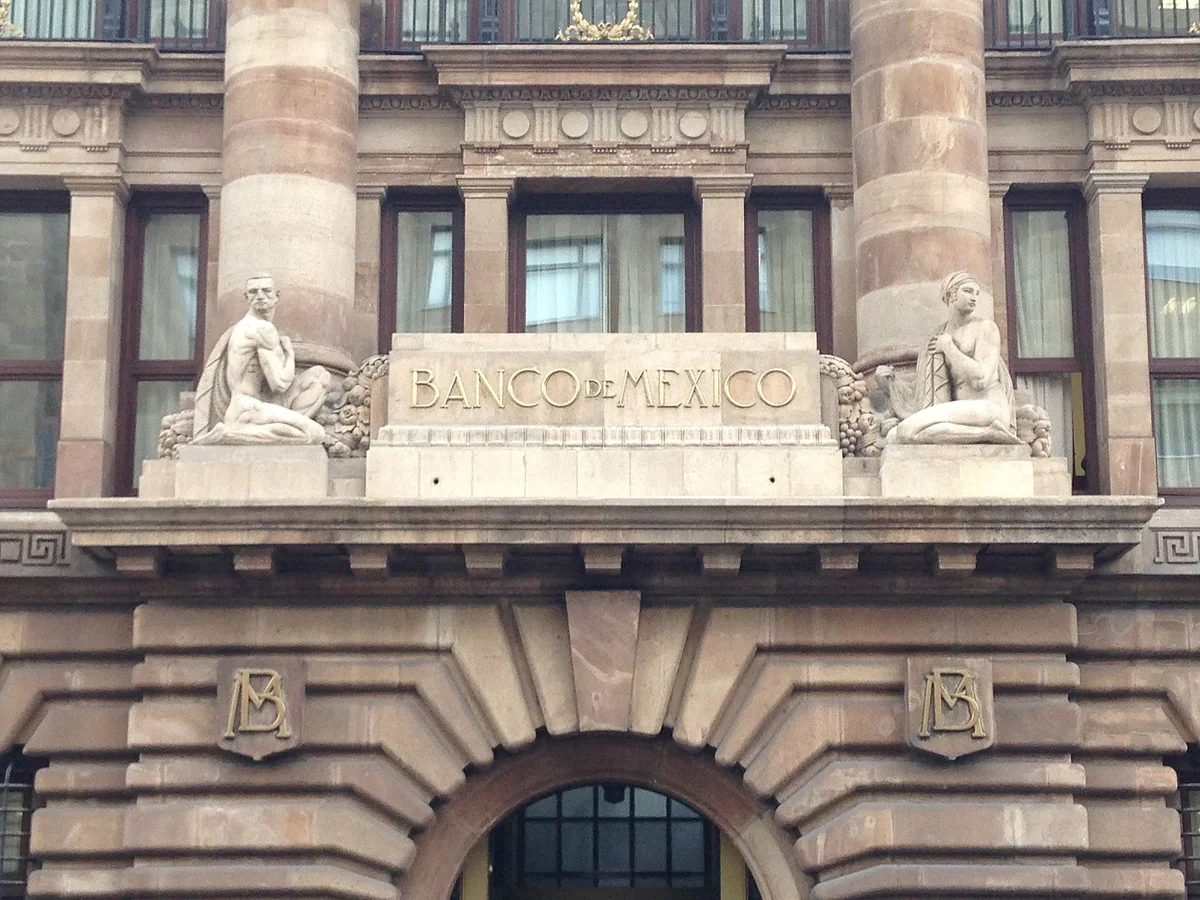
Quick answer: Non-residents can obtain Mexico property financing in select cases, typically 30-40% down on completed condos in liquid markets like Playa del Carmen, but many foreign buyers use cash or home-country leverage because bank programs are limited and documentation-heavy. Fideicomiso is compatible with some bank liens; pre-construction uses developer plans, not traditional mortgages.
Cash dominated Riviera Maya foreign purchases for a decade. Rising prices and portfolio diversification push more buyers to explore Mexican bank programs, cross-border lenders, and US leverage alternatives. This guide explains who qualifies, what properties banks accept, how fideicomiso interacts with liens, and when cash still wins.
If the ownership mechanics are new to you, start with can foreigners buy property in Mexico and Fideicomiso Mexico Explained before pricing debt; the market these loan programs operate in is described in the Riviera Maya Property Investment Guide.
Mexico mortgage market reality for foreigners
Most foreign buyers in Mexico pay cash, and that is a response to the market rather than a preference. Mexican retail mortgage lending is built for residents earning pesos. Foreign-buyer programs exist as niche products, not entitlement. Banks that participate:
- Lend on completed units in recognised condominiums
- Cap loan-to-value below US norms
- Require substantial liquid reserves
- Exclude ejido, raw land, and some pre-construction
- Coordinate with fideicomiso banks they trust
Expect: longer underwriting than US conforming loans, more manual review, and occasional mid-process declines if title or HOA documents fail bank standards.

Who clears underwriting
US and Canadian W-2 earners with documented income and tax returns have the best shot at Mexican bank mortgage approval. Self-employed borrowers face extra scrutiny and higher down-payment requirements. Retirees with pension income qualify on a case-by-case basis. Corporate entities rarely succeed without personal guarantees. First-time Mexico buyers are evaluated on property DD quality more than borrower history.
| Profile | Bank appetite (indicative) | Notes |
|---|---|---|
| US/Canada W-2 earners | Moderate | Documented income, tax returns |
| Self-employed | Lower | Extra scrutiny, higher down payment |
| Retirees with pensions | Case-by-case | Stable income streams help |
| Corporate shells | Limited | Personal guarantee often required |
| First-time Mexico buyer | Neutral | Clean DD matters more than history |
Credit history can pull from US bureaus for Americans; a Mexican buró file alone is thin for most non-residents.
Usually financeable
- Completed condo in registered condominium
- Private escritura eligible for fideicomiso
- Colonia with bank appraisal comparables
- HOA financially stable on paper
Playa del Carmen Centro and Gonzalo Guerrero resale towers tend to fit the template; verify per building.
Which towers those colonias actually contain, and their HOA landscape, is on the Playa del Carmen area page.
Usually difficult or excluded
- Pre-construction (developer plan instead)
- Ejido or land without private escritura
- Single-family homes in restricted zone (fewer programs)
- Commercial or mixed-use
- Tulum frontier with thin appraisal comps
- Buildings with HOA litigation or STR bans (collateral risk)
Down payment and LTV expectations
A foreign borrower in Mexico puts down roughly twice what the same borrower would at home, and that gap is the defining feature of the product rather than an opening position. Indicative ranges on a completed Quintana Roo condo:
Loan-to-value on non-resident Mexican lending sits well below what US borrowers expect, which changes the cash requirement more than the rate does. Expect 50% to 65% LTV, so a $310,000 purchase needs $108,500 to $155,000 of equity before the 5% to 10% closing stack of $15,500 to $31,000 and any furnishing. A buyer who can raise $170,000 for a deposit can buy outright at a smaller ticket instead, and avoid an 11.45% peso obligation against dollar income entirely, on a property whose net yield is 4.4%.
| Parameter | Typical range |
|---|---|
| Down payment | 30-40% |
| LTV | 60-70% max |
| Term | 10-15 years (varies) |
| Currency | MXN or USD program |
Developer “20% down” marketing on pre-construction is not bank LTV, it is a payment schedule toward delivery with developer default risk.
All-in purchase costs add 5-10% beyond price, budget cash for closing, not only down payment: Cost of Buying Property Mexico.
Interest rates and currency mismatch
A peso loan against dollar income is a currency bet layered on a property bet, and it moves against you exactly when the peso strengthens. Three exposures come with an MXN facility: The scale of the bet is the point: Mexican peso mortgages to non-residents price around 11% against US 30-year fixed rates in the 6-7% range, so you are paying roughly 400-500 basis points more for the privilege of taking currency risk as well. That is why most foreign buyers in Mexico pay cash and, if they want leverage, raise it at home.
- Payment amount changes if peso strengthens
- Reference rate adjustments on variable products
- FX conversion costs on each payment
USD-denominated Mexico property loans reduce mismatch but carry their own rate environment and limited lender pool.
Underwriting rule: stress-test payments at higher rate and weaker peso scenarios.
Fideicomiso and mortgage registration
A mortgage on coastal property means two banks in one transaction, and they have to be introduced to each other early. Foreign coastal ownership runs through a fideicomiso where you are the beneficiary and the lender is not the trustee. Mortgage registration places hipoteca on the property interest within trust structure.
Coordination required between:
- Lending bank
- Fideicomiso bank (trustee)
- Buyer’s attorney
- Notario at closing
Some fideicomiso banks have preferred lender lists. Starting loan application before confirming trust bank compatibility creates delays.
How the trust holds title, and why the trustee bank has a say in your lien, is unpacked in Fideicomiso Mexico Explained.
Application process overview
Mexican mortgage approval runs on the property as much as on the borrower, so the file moves in a fixed order and stalls wherever the documentation is thinnest. The sequence on a resale condo: Expect 60-120 days from pre-qualification to funding, roughly double a US timeline, and expect the delay to land at step three or four rather than at underwriting. The bank’s approved valuator and the attorney’s libertad de gravamen are the two external dependencies you cannot accelerate with paperwork.
- Pre-qualification: income, residency, down payment source
- Property identified: address, price, HOA docs
- Title review: attorney confirms clean libertad de gravamen
- Appraisal: bank-approved valuator
- Formal application: document package
- Conditional approval: lien structure on fideicomiso
- Closing: notario coordinates disbursement and registration
Timeline: 6-10 weeks after property selection in the files we have seen, not same-day pre-approval culture as US online lenders.
Due diligence parallels cash purchase: Due Diligence Mexico Real Estate.
Documentation package (prepare early)
The single biggest cause of a delayed Mexican mortgage is a document pack assembled after the application rather than before it. Have all of this ready on day one: Assemble all of it before you speak to a lender, and assume every foreign-issued document will need apostille and certified Spanish translation, a step that adds one to three weeks on its own and is the most common reason a file that looked complete sits idle.
- Passport and visa status proof
- Two years tax returns (US/Canada)
- Recent pay stubs or pension statements
- Six months bank statements, source of down payment
- Employment letter or business financials
- Credit authorization for US report
- Property: escritura draft, HOA financials, regime excerpt
Missing CFDI or unclear seller corporate structure on property side can stall approval, property DD is part of credit DD.
Developer financing vs bank mortgage
Bank mortgages and developer payment plans are fundamentally different products. Bank mortgages are regulated, give you title at closing (on resale), and carry standard foreclosure risk. Developer plans operate under contract law, deliver title only upon project completion, and expose you to developer insolvency. Interest on developer plans is embedded in the unit price more often than it is stated separately.
| Feature | Bank mortgage | Developer payment plan |
|---|---|---|
| Regulation | Bank oversight | Contract law only |
| Title at closing | Immediate on resale | Upon delivery |
| Default risk | Foreclosure process | Developer insolvency |
| Interest | Market rate | Often embedded in price |
| Assignment | Standard | Restricted |
Pre-construction in Tulum and north Playa markets installment plans, read default clauses and delivery penalties. Not a substitute for understanding bank mortgage eligibility on completed units.
US and cross-border alternatives
Most financed Mexican purchases by US buyers are not financed in Mexico at all. Borrowing at home and paying cash in Mexico avoids the LTV cap, the currency mismatch and the lien-registration coordination in one move, at the cost of putting home-country collateral behind a foreign asset:
Home equity line (HELOC)
Borrow against US primary residence at US rates; buy Mexico cash. Pros: familiar underwriting, USD income match. Cons: personal residence collateral, not Mexico property collateral.
Securities-backed lines
Portfolio loans for liquid investors, rate and margin call risk.
US banks with Mexico desk (limited)
Some international desks coordinate, availability changes; ask US private banker.
Cash-out refinance
US property refi funding Mexico purchase, same collateral mismatch as HELOC.
Tax and reporting: US owners report foreign accounts and property per IRS rules, consult cross-border CPA; outside scope of this guide but not optional.
Seller financing (rare)
Owner carry turns up occasionally on resale and is only as good as its paperwork, because an unregistered private loan gives the seller no remedy and the buyer no certainty. Three things make it real:
- Attorney-drafted pagaré and mortgage contract
- Registration of seller lien
- Clear default and foreclosure path
- Seller free of existing hipoteca or subordination agreed
Rare in hot markets; more common in distressed or slow-sale units. Extra fraud risk if seller title is messy.
STR investor leverage math
Leverage only helps when the property’s net yield exceeds the borrowing cost, and in Mexico it rarely does: a Playa one-bedroom producing about $13,500 of net operating income carries $8,000-14,000 of annual debt service at current non-resident rates. At the top of that range the property funds the bank and nothing else.
Using debt on an income property requires net cash flow after debt service, not gross yield marketing.
Indicative Playa 1BR (see yield guide):
| Item | Annual USD |
|---|---|
| Net operating income | ~$13,500 |
| Debt service (illustrative) | −$8,000 to −$14,000 |
| Cash flow after debt | Highly sensitive to rate/LTV |
At 4.5% net yield on $320K, leverage at aggressive LTV can turn positive cash flow negative in low-occupancy years.
The unleveraged yield bands behind this arithmetic are in the Mexico Rental Yield Guide, and the regulatory side of the occupancy assumption is in Short-Term Rental Rules Riviera Maya.
When cash purchase still wins
Below about $250,000 the loan setup costs consume the benefit, and on pre-construction no Mexican bank will lend at all. Add the cases where the appraisal is thin, where speed wins the deal, or where net yield sits under your after-tax cost of borrowing, and cash or home-country equity is the better answer for most non-resident buyers.
Cash or home-country leverage beats a Mexican bank mortgage when:
- Purchase under $250K, transaction costs of loan setup weigh heavy
- Pre-construction, bank won’t lend anyway
- Tulum selective / appraisal-thin product
- Buyer values speed and simplicity
- Net STR yield below after-tax borrowing cost
- Seller discount for cash close (negotiate)
What red flags should pause this Mexico purchase?
A lender’s reasons for declining are free diligence: ejido exposure, HOA delinquency above threshold, litigation on the regime, or a seller who does not match the registry owner. If a bank will not lend against the building, ask what it saw before deciding to buy it with cash instead.
Lenders decline or stall when:
- Ejido screening fails
- HOA delinquency over bank threshold
- Active litigation on regime
- Seller not matching registry owner
- STR illegal per bylaws, for income-property underwriting
- Hurricane damage unrepaired on collateral
Same issues should stop cash buyers, banks sometimes catch what brokers skip.
Closing with a mortgage
Notario coordinates:
- Buyer fideicomiso establishment or assumption
- Seller lien release if resale had hipoteca
- New hipoteca registration for buyer lender
- Disbursement timing, lender funds to notario trust
- CFDI on purchase for future ISR
Budget notario and registry fees inside closing cost guide.
Insurance and lender requirements
Banks can require:
- Property insurance naming lender
- Life insurance on borrower (product-dependent)
- Flood/wind coverage in hurricane zone
STR use must be disclosed: a standard residential policy does not reliably cover commercial lodging activity.
Refinancing and resale with existing lien
Selling before loan maturity requires:
- Buyer pays off hipoteca at closing, or
- Buyer assumes loan if contract permits (uncommon for foreigners)
Check prepayment penalties and fideicomiso transfer fees early if you plan 3-5 year hold.
Decision framework
Your financing path depends on four factors: income documentation strength, property type, down-payment capacity, and whether this is your first Mexico purchase. US W-2 earners with 35% down on a Playa resale condo should explore Mexican bank options alongside a US HELOC comparison. First-time buyers are better served closing with cash and adding leverage on a second property once they understand the market.
| Your situation | Likely path |
|---|---|
| US W-2, Playa resale condo, 35% down | Explore Mexican bank + compare US HELOC |
| Tulum pre-construction | Developer plan or cash stages |
| STR investor, 4% net yield | Conservative leverage or cash |
| Portfolio buyer, multiple units | Mix of cash and cross-border lines |
| First Mexico purchase | Cash + full DD, add leverage later |
Mexican banks vs cross-border lenders: comparison
Mexican banks collateralize the Mexico property itself, underwrite using a local appraisal, and require fideicomiso coordination, but lending is MXN-denominated in most programs and slower. Cross-border or US-based leverage uses your US assets as collateral, allows a clean cash close in Mexico, and processes faster through existing bank relationships, but STR income from Mexico is rarely counted in US-side underwriting.
| Factor | Mexican bank | Cross-border / US leverage |
|---|---|---|
| Collateral location | Mexico property | Often US assets |
| Currency match | MXN common | USD common |
| Underwriting familiarity | Mexico appraisal | US income docs |
| Speed | Slower | Faster if existing relationship |
| STR income credit | Rarely counted | N/A |
| Fideicomiso coordination | Required | N/A, cash close |
There is no universal winner, run all-in cost over intended hold period.
Credit history gaps for non-residents
No Mexican credit file means the lender prices the uncertainty rather than declining it: a larger deposit, a shorter amortisation, and six to twelve months of payments held in reserve. Americans can import a US credit report to soften this; the self-employed should expect manual underwriting and prepare two years of returns plus an accountant’s letter.
Most foreign buyers lack Mexican credit bureau depth. Lenders compensate with:
- Larger down payment
- Shorter amortisation
- Additional liquid reserves (6-12 months payments)
- US credit report imports for Americans
Self-employed borrowers should prepare two years of tax returns and accountant letter, expect manual underwriting.
Tax and reporting considerations (high level)
Financing adds US reporting on top of the ownership reporting a Mexican property already triggers: FBAR and FATCA on Mexican accounts, Schedule E treatment of the rental income, and interest deductibility that depends on how the purchase is structured. Do not optimise LTV for a tax benefit without a cross-border CPA confirming the benefit exists.
US persons financing Mexico property face:
- FBAR/FATCA reporting on Mexican accounts
- Schedule E or appropriate treatment of rental income
- Interest deductibility rules depending on structure
- Estate planning with foreign situs asset
Mortgage interest deductibility against STR income depends on US tax posture, consult cross-border CPA before optimising LTV for tax benefit alone.
Pre-approval before property hunt
Unlike US markets, Mexican bank pre-approval is less portable. Still worth:
- Confirming foreign-buyer program existence
- Understanding down payment seasoning rules
- Learning excluded property types
- Identifying fideicomiso bank coordination requirements
Avoid property-specific deposits before understanding whether any lender will finance that building.
Hold period and exit with leverage
Selling with a hipoteca outstanding is routine, the loan is repaid from the proceeds at closing, but two things erode a leveraged return on a short hold: a prepayment penalty you agreed to years earlier, and closing costs that were already high on the way in. Under three years, cash beats debt on the same property in nearly every file we have modelled.
Selling with outstanding hipoteca:
- The loan is repaid at closing from purchase proceeds
- Prepayment penalties are common, read the loan contract early
- Short hold (under 3 years) with high closing costs erodes leveraged returns
If the exit strategy is a quick flip, the loan’s setup friction alone can erase the point of borrowing.
Currency hedging considerations
Borrowing pesos against dollar income is a currency position whether you intended one or not: a 10% peso move changes your payment burden by 10% with no change in the property. There is no clean retail hedge, so the practical choice is to run that 10% scenario before you pick the loan currency and see whether it still works.
MXN loan with USD income creates implicit FX bet. Some borrowers maintain peso reserves during peso weakness to prepay chunks, contract permitting. Others choose USD loan programs despite higher rate to eliminate mismatch.
No perfect hedge exists at retail level, model 10% peso move impact on payment burden before choosing currency.
Joint ownership and financing
A joint purchase with a loan creates four separate agreements that all have to point the same way: the trust beneficiary structure, the guarantee split on the mortgage, the exit terms if one party wants out, and life insurance naming the right beneficiary. Draft them together before applying, a cross-border dispute between co-owners is expensive in two legal systems at once.
Couples or partners buying together should align:
- Beneficiary structure on fideicomiso
- Personal guarantee split on loan
- Exit clause if one partner wants out
- Life insurance beneficiary matching loan
Disputes among foreign co-owners with cross-border assets are expensive, attorney-drafted co-ownership agreement before application, not after first disagreement.
Developer “0% financing” marketing
Installment plans advertising zero interest embed the finance cost in the unit price. Compare cash price if offered versus financed price, the spread is the true rate.
Separate from regulated bank mortgage, treat as developer credit risk.
Financing terms change by lender and borrower profile. This is educational content, not a loan offer. Verify rates, LTV, and eligibility directly with licensed lenders and cross-border advisors.
Frequently Asked Questions
Some Mexican banks and cross-border lenders offer financing to qualified foreigners, primarily on completed condos in established markets. Approval is case-by-case, income documentation, down payment, and property eligibility matter. Many foreign buyers still purchase cash or finance via US/home-country leverage because Mexican mortgage access is narrower than US norms.
Indicative ranges for bank programs accepting foreigners run 30-40% down on completed residential condos in Quintana Roo, higher than typical US primary-residence loans. Developer payment plans during construction differ and are not mortgages. Verify current lender requirements; nothing here is an offer of credit.
Yes in principle, the bank registers its lien against the property held in fideicomiso trust. Not every bank lends against trust-held coastal property. Your attorney and lender must coordinate trust structure before application. Pre-approval without fideicomiso compatibility wastes time.
MXN-denominated loans often use variable rates tied to Mexican reference rates. USD-denominated programs exist for qualified borrowers, less currency mismatch for US earners but limited availability. Compare all-in cost including FX if income is USD and loan is MXN.
Banks prefer liquid, completed inventory with clear HOA and registry history. Playa del Carmen's mature condo stock often fits templates better than frontier Tulum pre-construction. Pre-construction typically requires developer financing, not bank mortgages.
Typical packages include passport, proof of income (tax returns, employment), bank statements, credit references, property appraisal, title review, and fideicomiso draft. Requirements vary by lender, expect more documentation than a domestic Mexican applicant.
Cash purchase, US HELOC on primary residence, securities-backed lending, developer installment plans during construction, or seller financing (rare, attorney-heavy). Each carries different risk, developer plans are not bank-regulated mortgages.
Leverage amplifies both yield and vacancy risk. STR net yields of 4-5% in Playa may not exceed after-tax borrowing cost depending on structure. Underwrite net cash flow after debt service, not gross yield on purchase price alone.




Get a vetted Mexico shortlist
US and Canadian buyers use this to skip the developer sales deck: tell us the budget and the market, and we come back with 3 to 5 options and the net yield maths behind each one.
Want options matched to your budget and risk profile?
Three questions, one screen. We reply within one business day.
Get a vetted Mexico shortlist