
Quintana Roo Hurricane Insurance: Flood Coverage 2026
Hurricane wind vs flood coverage for Quintana Roo condos in 2026. Policy endorsements, HOA master policies, premiums, and buyer checklist.
By Mexico Invest Editorial · Updated July 9, 2026 · 14 min read
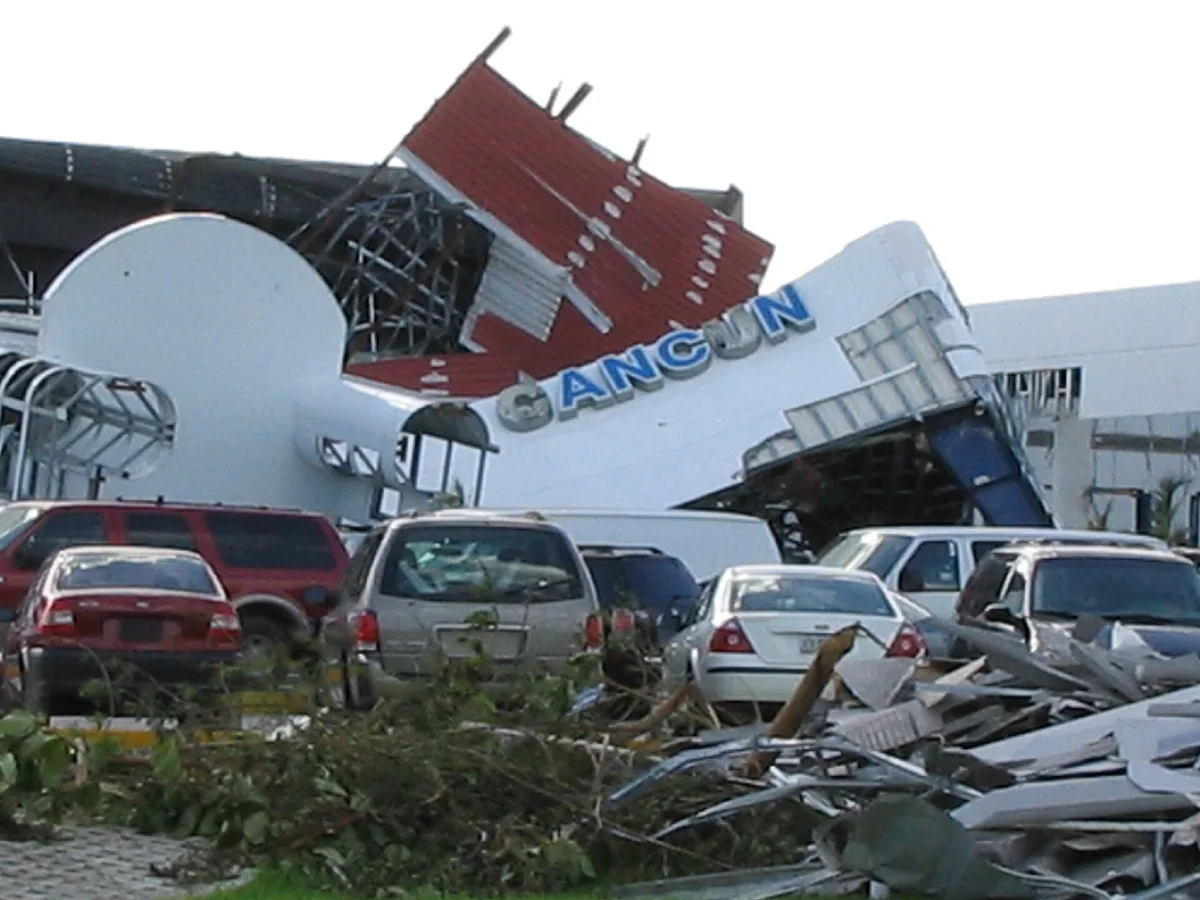
Quick answer: Quintana Roo hurricane policies often cover wind but exclude flood unless you buy an inundacion endorsement. Ground-floor and low-lying Playa and Tulum units face the highest premiums and special-assessment risk. Verify HOA master policy scope, get unit-level flood coverage in writing, and budget $400 to $1,200 USD indicative annual premium on a $250,000 condo before closing.
Foreign buyers research hurricane wind because it makes headlines. Flood from saturated karst geology and overwhelmed drainage causes recurring claims in Playa del Carmen, Cancún, and Tulum, often on days without a named storm. This guide covers insurance products and buyer checklist for hurricane and flood peril in Quintana Roo. Geology and zone risk assessment lives in Flood Risk Riviera Maya.
Pacific comparison: Hurricane Insurance BCS. General foreign-owner coverage: Mexico Property Insurance for Foreigners.
What hurricane insurance covers in Quintana Roo (and what it skips)
Wind is usually covered and flood usually is not. Mexican property policies price perils separately, so a policy that says “hurricane” frequently pays for the roof and not for the water that came through the door, inundación is a separate endorsement you have to buy. That single gap is the most common uninsured loss on the Quintana Roo coast.
Mexican property policies (polizas de danos) typically separate perils:
| Peril | Often included? | Owner action |
|---|---|---|
| Hurricane wind | Frequently yes | Confirm named-storm deductible |
| Flood / inundacion | Often excluded | Buy endorsement |
| Storm surge | Often excluded | Same endorsement bucket |
| Earth movement / sinkhole | Rare | Karst-specific review |
| Business interruption (STR) | Optional | Separate rider |
A policy that says “cubre huracanes” may still exclude water entering from ground level after heavy rain. That gap destroyed budgets in 2022-2025 rainy seasons across Solidaridad interior colonias.
Where the HOA master policy stops and yours starts
The HOA policy covers structure and common elements; yours covers everything inside your door plus your liability to guests. The dangerous seam is flood: if the master policy excludes flood repairs to the lobby and lift pits, the building funds them by special assessment, so a flood you thought was the HOA’s problem arrives as a bill addressed to you.
Condominium regimes carry a master policy on structure and common elements. Unit owners carry interior and contents coverage, the Mexico analog to US HO-6.
| Layer | Typical coverage | Flood gap |
|---|---|---|
| HOA master | Structure, roof, elevators, lobby | May exclude flood repairs → special assessment |
| Owner policy | Interior, contents, liability | Must add inundacion endorsement |
| STR rider | Business personal property | Confirm guest damage sublimits |
Request three documents at due diligence: HOA insurance declarations (last 12 months), any special assessment history from storm events, and a sample unit owner quote from a CNSF-licensed broker.
HOA fee context: HOA Fees Mexico Condo. Due diligence: Due Diligence Mexico Real Estate.
Indicative premiums by building type (2026)
Expect $900-2,400 a year for wind and flood on a typical Quintana Roo condo, with the range driven by floor level and block drainage rather than by price. A high-rise unit above the tenth floor sits at the bottom of that band; a ground-floor unit on a poorly drained Centro street sits above the top of it, if a carrier will write it at all.
Deductibles matter more than premiums in this market and the table above prices only the premium. A 3% per-event deductible on a $300,000 unit is $9,000 of your own money before coverage responds, and most realistic hurricane claims on a modern Playa condo, windows, terrace doors, roof membrane, water ingress, land between $5,000 and $30,000. A meaningful share of claims therefore fall entirely inside the deductible. Read the percentage, convert it to dollars against your own sum insured, and hold that amount as an uninsured retention.
Premiums vary by carrier appetite, use as underwriting bands, not quotes.
| Profile | Indicative annual USD (wind + flood) | Notes |
|---|---|---|
| High-rise beachfront 10F+ | $900-1,800 | Lower flood frequency |
| Mid-rise walkable Centro | $1,100-2,400 | Drainage varies by block |
| Ground-floor Playa interior | $1,500-3,000 | Highest flood band |
| Tulum jungle low-lying | $1,400-2,800 | Cenote proximity |
| Cancún hotel zone branded | $1,200-2,200 | Master policy may bundle |
Deductibles often run 2% to 5% of insured value per hurricane event, on a $300,000 unit, 3% equals $9,000 cash before coverage triggers.
How to buy flood coverage as a foreign owner
- Engage CNSF-licensed broker: not only the seller’s contact. FONDEN aid is discretionary, slow and capped, and it does not reimburse lost bookings, so an owner relying on it is uninsured in every commercially meaningful sense.
- Inspect property in July-September if possible: observe drainage.
- Request bilingual quote with peril list explicitly showing inundacion.
- Match insured value to replacement cost, not purchase price nostalgia.
- Coordinate with fideicomiso bank: some require proof of insurance annually.
- Store policy PDF in exit folder for resale diligence.
Flood is a separate peril from wind in Mexican policies and the distinction is where owners discover they were uninsured. A named-storm endorsement covers wind damage; inundación covers rising water, and a ground-floor Playa interior unit at $1,500 to $3,000 a year is exposed to the second far more than the first. Ask for the peril list in Spanish, confirm inundación appears explicitly, and inspect the block’s drainage in July to September when the rain is actually falling. On a ground-floor unit the two endorsements together commonly run $1,500 to $3,000 a year, which is 30 to 60 basis points of a 4.4% net yield.
Brokers familiar with expat owners often use GNP, AXA, or international Lloyd’s programs for harder risks. FONDEN government disaster aid is not a substitute for private flood coverage.
Pros and cons of skipping flood endorsement
The asymmetry settles this faster than the table does. Skipping the endorsement saves a few hundred dollars a year; a single flood event then produces the repair cost, a possible special assessment for common-area damage the master policy excluded, and a season of halted rental income with no business interruption cover behind it.
| Pros of skipping | Cons of skipping |
|---|---|
| Lower annual premium | Special assessment after one event |
| Simpler closing paperwork | STR income halt with no business interruption |
| Seller may not ask | Resale buyer discount 3-8% |
What red flags should pause this Mexico purchase?
Five answers that should end the insurance conversation and restart the diligence one. “The HOA covers everything” without a declarations page and a ground-floor unit listed with no flood quote are the two that appear most, both are cheap to disprove and expensive to accept.
- Developer promises “hurricane-proof” construction without policy sample
- Seller says “HOA covers everything” without declarations page
- Ground-floor unit with no flood quote attached to listing
- Policy binder only in Spanish with no peril translation
- STR operator with no contents or business interruption coverage
Buyer scenarios
Scenario A: Walkable Playa 1BR investor: Budget wind plus flood before net yield. A $1,000/year insurance stack on $8,000 net rent equals 12.5% of net, material line item. That 12.5% figure is the point: insurance is not a rounding error on a Riviera Maya rental, it is a material line that has to be quoted before the offer rather than estimated afterwards.
Scenario B: Tulum jungle villa: Engineer letter on drainage plus subsidence exclusion review. Premium band upper quartile.
Scenario C: High-rise beachfront lifestyle buyer: Lower flood frequency but confirm elevator and parking flood history in HOA minutes.
STR operators: align guest emergency plan with Short-Term Rental Rules Riviera Maya and Airbnb Investment Mexico Guide.
Wind deductibles vs flood deductibles (read both)
The two deductibles work differently and can both apply to the same storm. Named-hurricane wind typically carries a percentage deductible of 2-5% of insured value, triggered only when the storm passes within a defined radius. Flooding from an unnamed tropical wave falls outside that trigger entirely and runs on a separate endorsement with its own flat deductible.
Hurricane policies may apply percentage deductibles only when a named storm enters a defined radius. Flood events from unnamed tropical waves may trigger a separate flat deductible or be excluded entirely.
| Event type | Typical trigger | Deductible style |
|---|---|---|
| Named hurricane wind | Storm within 100 km | 2-5% of insured value |
| Torrential rain flood | No named storm | Separate endorsement |
| Storm surge | Coastal exposure | Often excluded without rider |
| HOA common area | Master policy | Special assessment risk |
Ask your broker: “If Playa receives 180 mm rain in 24 hours without a named hurricane, am I covered?”
Filing a claim after a flood or hurricane event
Five steps, and the clock on the second one is short: most policies require notification within 24-72 hours, and a late notice is a valid reason to deny an otherwise good claim. Document before you clean, mitigate and keep the receipts, and do not start a major rebuild until the adjuster has been unless the emergency forces it.
- Document immediately: photos, video, water line marks, date/time.
- Notify insurer within policy window: often 24-72 hours.
- Mitigate damage: pump water, dry walls; keep receipts.
- Notify HOA: common area damage may parallel your unit claim.
- Do not begin major rebuild until adjuster visits unless emergency.
- Translate adjuster report: understand excluded vs covered lines.
- Track special assessments if HOA master policy gap exists.
Claims denied for “gradual seepage” are common on ground-floor units, pre-season documentation helps dispute weak denials.
STR business interruption (optional rider)
The repair is insured; the four months of lost bookings usually are not. On a property earning $30,000 a year, a post-storm closure costs more than most physical damage, and only a loss-of-rents rider covers it. Ask about guest relocation and cancellation penalties in the same conversation, those fall on the owner by default.
Standard property policies may not cover lost rental income during repairs. STR owners should ask about:
| Coverage | Question |
|---|---|
| Loss of rents | Weeks of repair downtime |
| Guest relocation | Cancelled booking penalties |
| Deep clean after event | Mold remediation |
If unavailable, maintain 3 months gross rent cash reserve for hurricane season, especially September trough occupancy already weak per STR Occupancy by Month.
Carrier and broker selection in Quintana Roo
Three channels, and the trade is always between contract clarity and adjuster access. A Mexican CNSF-registered broker gives you the local adjuster network that decides how a claim actually resolves; an expat-focused broker gives you English contracts at a higher fee; a US international programme gives you familiar terms and may exclude the colonia you bought in.
| Channel | Pros | Cons |
|---|---|---|
| Mexican CNSF broker | Local adjuster network | Language barrier |
| Expat-focused broker | English contracts | Higher fee |
| US international program | Familiar terms | May exclude some colonias |
| Developer bundled policy | Closing convenience | May not include flood |
Never buy a policy you cannot read, pay for translation of peril list.
Worked example: a ground-floor flood claim (illustrative)
Numbers make the deductible argument better than any explanation of policy wording. Take a ground-floor unit in Playa del Carmen with USD 80,000 of insured interior value, carrying a flood endorsement with a flat USD 2,500 deductible. A storm pushes water through the terrace doors and the adjuster writes the damage at USD 18,000, drywall, flooring, kitchen cabinetry, the lower half of the furniture. The insurer pays USD 15,500 and the owner covers the USD 2,500 plus whatever upgrades they choose to fold into the repair. That part works as designed. The part that hurts is the six weeks the unit spends off the rental calendar: roughly USD 4,200 of gross bookings, which a standard Mexican homeowner policy does not reimburse unless loss-of-rents was bought as a separate rider.
| Item | Amount USD |
|---|---|
| Insured interior value | $80,000 |
| Flood endorsement deductible | $2,500 flat |
| Damage estimate | $18,000 |
| Insurer payment | $15,500 |
| Owner out-of-pocket | $2,500 + upgrades |
| Lost STR 6 weeks | $4,200 gross (often uninsured) |
One uninsured lost-rent season can exceed a decade of flood endorsement premium.
High-rise vs low-rise insurance underwriting
Mexican underwriters do not price a Quintana Roo building by its address; they price it by its height, its envelope and its lowest occupied floor. A beachfront tower above fifteen floors takes its wind risk in the glazing and its water risk in the subterranean parking, which is why brokers push garage coverage on those files specifically. A mid-rise between five and eight floors loses balcony furniture to wind and takes water through pool-deck drainage that the HOA is supposed to maintain, so the assessment history matters more than the policy. Three-storey walk-ups price cheaper because there is less to break above, and flood worse because stairwells channel street water inward.
| Building | Wind exposure | Flood exposure | Typical broker note |
|---|---|---|---|
| Beachfront tower 15F+ | Façade glazing | Parking level surge | Confirm garage coverage |
| Mid-rise 5-8F | Balcony furniture | Pool deck drainage | HOA special assessment history |
| Walk-up 3F | Roof membrane | Stairwell flooding | Lower premium, higher ingress |
| Ground-floor retail mix | Signage | Street-level pooling | Avoid for absentee STR |
Engineering reports matter for towers built 2005-2015 with aging waterproofing.
Resale value and insurance disclosure
Insurance history has become part of Quintana Roo resale diligence, which means the file you keep as an owner is an asset at sale. Buyers now ask for the active policy with its peril list, three years of claims, the HOA master excerpt and, on ground-floor units, a current flood quote. Assemble it as you go rather than at listing.
Buyers increasingly request:
- Active policy PDF with peril list
- Three-year claim history
- HOA master policy excerpt
- Flood quote for ground-floor units
Sellers without documentation discount 3-8% in Playa walkable inventory, insurance readiness is a liquidity tool.
Review Flood Risk Riviera Maya before buying ground-floor or cenote-adjacent units, insurance cannot fix chronic drainage design flaws.
How to read a Mexican policy declarations page
Four Spanish fields on the carátula tell you whether you are covered. Riesgos cubiertos must name the perils rather than say “all risk”; inundación or fenómenos hidrometeorológicos must appear explicitly, because an absent line item means excluded; and the deducible and suma asegurada tell you what a claim will actually pay. Read those four yourself, translated or not.
Most foreign owners rely on a broker or property manager to translate Spanish policy documents. Before signing, verify these fields on the carátula (declarations page):
| Field (Spanish) | What to confirm | Red flag |
|---|---|---|
| Riesgos cubiertos | Named hurricane, wind, hail listed | Generic “all risk” without peril list |
| Inundación / fenómenos hidrometeorológicos | Explicitly included or excluded | Absent line item = usually excluded |
| Suma asegurada | Matches replacement cost, not purchase price | Under-insured by 30%+ |
| Deducible | Percent vs flat MXN amount | 2% of sum insured on $400k = $8k out-of-pocket |
| Coaseguro | Co-insurance penalty if under-insured | Hidden 20% owner share on claims |
| Exclusiones | Wear, gradual seepage, unoccupied 60+ days | STR vacancy clauses |
Ask the broker for a side-by-side English summary, not a verbal promise. Keep PDFs in cloud storage accessible to your US CPA and fideicomiso bank if they request proof annually.
STR owners should confirm whether business use or short-term rental voids residential policy language. Some carriers accept STR with disclosure; others require commercial endorsement at higher premium.
If HOA carries master policy, request certificate of insurance naming your unit or confirming walls-in coverage. Gap between master and unit policy is where post-hurricane disputes land in Solidaridad condominiums.
The hurricane-season calendar
Insurance work is seasonal here: the policy has to be active before June, the drains and pumps have to be tested in July and August, and September is when both the storms and the guest communication problems arrive. Pre-season photographs are the single cheapest thing on this list and the most useful in a claim.
| Month | Action |
|---|---|
| June | Confirm policy active before hurricane season |
| July-Aug | Clear drains, test pumps, photo pre-season condition |
| September | Peak vigilance, guest communication templates |
| October | Review deductible cash reserve |
| November | File any claims promptly, surcharges accrue |
Claim documentation and working with the adjuster
Adjusters settle faster and higher for owners who can show a pre-storm baseline and a timestamped record of the damage before cleanup began. The first six hours matter most: photograph the water line with a date stamp and email the images to yourself, because the evidence disappears the moment you start pumping.
Mexican hurricane and flood claims require immediate documentation discipline. Adjusters favor owners with pre-storm baseline photos and organized post-event evidence over verbal claims without time-stamped proof.
48-hour claim documentation protocol:
| Hour | Action | Why it matters | Tools needed |
|---|---|---|---|
| 0-6 | Photo/video water level marks, date/time stamp | Establishes severity before cleanup | Smartphone, email to yourself for timestamp |
| 6-12 | Pump water if safe, keep damaged items visible | Mitigation obligation, but preserve evidence | Wet-dry vac, don’t discard furniture yet |
| 12-24 | Notify insurer via formal channel (email + phone) | Trigger claim window, some policies require 24h notice | Policy number, unit address, brief narrative |
| 24-48 | Document all damaged items with serial numbers | Contents claim detail | Receipts if available, photos of labels |
| 48-72 | Obtain HOA administrator letter on common damage | Parallel claim for special assessment defense | Formal request to administrator in Spanish |
What kills claims faster than exclusions:
- “We cleaned up before photos”, adjuster suspects minor damage exaggerated
- “I can’t find my policy number”, delays by 7-14 days while broker searches
- No pre-storm condition photos, adjuster assumes prior wear
- Rebuilt drywall before adjuster visit, insurer denies “inability to inspect”
Smart owners maintain cloud folder (Google Photos, iCloud) with annual pre-hurricane season photos: HVAC units, appliance serial plates, wall/ceiling condition, furniture layout. Cost: zero. Claim speed-up: 3-6 weeks faster settlement.
Adjuster site visit tips:
- Be present or authorize manager with clear instructions
- Do not verbally inflate damages; stick to documented items
- If adjuster speaks only Spanish, hire translator, do not guess
- Request copy of adjuster report before leaving
- Ask explicitly: “Is this covered or excluded and why?”
Cross-border complication: US owners often assume adjuster process matches State Farm familiarity. Mexican adjusters work for insurer, not neutral third party. Consider hiring public adjuster (ajustador público) if claim over $25,000 USD, fee typically 5-10% of settlement but accelerates complex disputes.
HOA special assessment history (the critical review)
Condominiums with master policies excluding flood or carrying high deductibles pass hurricane repair costs to unit owners via special assessments. One undisclosed assessment history can erase three years of rental yield. Five years of assessment history and the current reserve balance answer this before purchase; after purchase you inherit whatever the building decided.
What to request from HOA administrator before offer:
| Document | Lookback period | Red flag threshold |
|---|---|---|
| Special assessment history | 5 years minimum | 2+ flood assessments = chronic drainage issue |
| Master policy declarations page | Current + prior 2 renewals | Flood exclusion or deductible over 5% of building value |
| Reserve fund balance | Current | Under 20% of annual budget = assessment likely next storm |
| Pending or threatened assessments | Open items | Any flood-related item in assembly minutes |
Typical special assessment triggers post-storm:
| Building damage | Master policy status | Owner assessment range per unit (indicative) |
|---|---|---|
| Lobby flooding, elevator damage | Covered with $50K deductible | $2,000-$5,000 per unit in 40-unit building |
| Parking level surge, vehicles damaged | Flood excluded | $8,000-$15,000 per unit |
| Roof membrane failure, multiple units | Wind covered, but age exclusion | $3,000-$10,000 per unit |
| Structural column saltwater exposure | Covered but betterment clause | $5,000-$12,000 per unit for upgrade |
Ground-floor units in buildings with weak master policies face double hit: own unit flood damage (if no endorsement) plus pro-rata share of common area assessment.
Negotiation leverage: Sellers in buildings with 2+ prior flood assessments should discount 5-8% or provide escrow hold-back for next assessment. Buyers accepting full price on assessment-prone buildings overpay relative to clean-history comparables.
Request assembly minutes in Spanish with translation, search for: “cuota extraordinaria,” “evaluación especial,” “inundación,” “huracán,” “fondo de reserva insuficiente.”
Carrier market evolution post-2024 Atlantic season
2024 Atlantic hurricane season plus 2022-2023 intense rainfall events shifted Quintana Roo carrier appetite. Some international programs exited market, others raised premiums 30-50%, and deductibles increased. The practical consequence for a buyer today is that a quote obtained two years ago is worthless as a guide, and that some buildings are now harder to place than others regardless of the owner.
Market segments 2026:
| Carrier type | Appetite for Quintana Roo flood | Premium trend | Policy language |
|---|---|---|---|
| Domestic Mexican CNSF carriers (GNP, AXA) | Selective, ground-floor harder | Stable to +15% YoY | Spanish policy with peril exclusions |
| Lloyd’s syndicates via brokers | Available for quality buildings | +25-40% vs 2021 | English-friendly but expensive |
| US surplus lines | Rare, non-admitted in Mexico | Limited availability | May not satisfy fideicomiso bank |
| Parametric / index programs | Emerging, experimental | Flat premium, payout based on storm metrics not damage | Complex for individual owners |
What changed for foreign buyers:
- Pre-2022: Flood endorsement often $300-600 annual, minimal underwriting
- 2024-2026: Flood $600-1,500 annual, elevation survey, drainage inspection, prior claim history mandatory
Buildings completed 2015-2025 with no claim history get better rates than older stock with multiple events. New construction in 2026 may qualify for discounts if elevated design and modern drainage systems documented.
Broker shopping strategy:
- Obtain 3 quotes from independent CNSF brokers
- Request English peril summary side-by-side with Spanish declarations
- Compare deductible structures: flat MXN vs percentage of sum insured
- Verify carrier rating (AM Best B+ minimum for foreign buyers comfort)
- Confirm broker holds active CNSF license (search registry online)
Avoid captive agents from developer closing table who represent one carrier only. Independent brokers access multiple markets and negotiate harder.
Seasonal premium adjustments and payment timing
Some Quintana Roo policies allow monthly payment plans, but annual lump sum at policy inception (typically May-June before hurricane season) often secures 5-10% discount and avoids mid-season cancellation if payment missed. Bind before June regardless of the discount: carriers restrict new business once a named storm forms, and a policy arranged in August may simply be unavailable.
Payment timing optimization:
| Payment structure | Total annual cost | Pros | Cons |
|---|---|---|---|
| Annual lump May | $1,200 baseline | Discount, no missed payment risk | Large cash outflow |
| Semi-annual (May + Nov) | $1,260 (+5%) | Spread cost | Risk of November non-renewal if May claim filed |
| Monthly auto-debit | $1,320 (+10%) | Cash flow friendly | Cancel risk if card expires, foreign transaction fees |
| Quarterly | $1,290 (+7.5%) | Balance | Administrative burden |
STR owners should align insurance payment with highest revenue quarter (December-February) to avoid dipping into peak-season gross for June insurance lump sum. Budget insurance in pro forma as separate line, not buried in “miscellaneous.”
Mid-season policy changes (dangerous): Switching carriers in August after rate shopping may leave gap if old policy cancels before new binds. Maintain continuous coverage, even if overpaying, rather than risk 3-week gap during peak storm window.
Fideicomiso banks increasingly request proof of insurance at annual trust fee payment. Missing proof can trigger bank requirement letters and delays. Store insurance PDF in same folder as trust docs, update annually.
Compare tax treatment: Hurricane insurance premiums are generally deductible against rental income on Mexican RFC filings and US Schedule E. Coordinate with contador and US CPA to maximize deductions. Flood endorsement specifically may qualify for enhanced deductions in high-risk zones depending on current tax code.
Premiums and peril wording vary by carrier and date. Obtain licensed quotes for your unit before purchase. Mexico Invest is editorial education only.
Frequently Asked Questions
Many Mexican policies cover named hurricane wind damage but exclude flood from rainfall or storm surge unless a separate inundacion endorsement is purchased. Read the declarations page in Spanish with translation, do not assume US-style wind and flood bundles apply.
Indicative annual premiums for flood endorsements on a $250,000 condo often run $400 to $1,200 USD depending on elevation, carrier, and deductible. High-rise beachfront towers may pay less per dollar insured than low-lying interior units.
Sometimes partially for common areas, rarely for full interior unit flood without owner endorsement. Request the HOA policy declarations and ask specifically about inundacion and hurricane surge.
Not always legally required at closing for cash buyers, but fideicomiso banks and savvy buyers increasingly expect active property insurance. STR operators should carry coverage before first guest.
Official season runs June 1 through November 30, with peak activity often August through October. Flood losses can occur from unnamed tropical storms and intense rainfall outside named hurricanes.
Pacific BCS faces different storm tracks and carrier appetite. Compare Hurricane Insurance BCS separately, do not copy Cabos policy terms to Riviera Maya.
Professional managers include emergency protocols in house manuals. Insurance and guest safety are separate, coverage protects owner balance sheet, not marketing claims.
Visit during rainy season, review drainage, obtain flood quote before offer, and model special assessment risk if HOA master policy excludes flood.
Get a vetted Mexico shortlist
US and Canadian buyers use this to skip the developer sales deck: tell us the budget and the market, and we come back with 3 to 5 options and the net yield maths behind each one.
Want options matched to your budget and risk profile?
Three questions, one screen. We reply within one business day.
Get a vetted Mexico shortlist