
Progreso Beach Campeche: Yucatan Gulf From $125K 2026
Progreso Gulf Coast beach homes from $125K–$265K USD. Yucatan Gulf lifestyle near Merida, emerging market, STR yields, and foreign buyer due diligence.
By Mexico Invest Editorial · Updated July 9, 2026 · 12 min read

Get a Mexico property shortlist
Independent research, local due diligence, and no developer sales deck. Share your budget and target market; we reply within one business day.
Quick answer: Gulf Coast beach properties across the Progreso (Yucatan) and Campeche corridor start from $125K USD, Mexico’s most affordable beachside market, 30–40 minutes from Merida’s international airport and established expat infrastructure. Not a Caribbean-yield play; this is an emerging lifestyle and retirement market at entry-level prices.
Area & guides: Mérida & Yucatán Gulf · Mexico investment guide · Rental yields · Due diligence. Cluster: Bao Campeche Condos · Campeche City Lofts.
The Gulf Coast of Yucatan and Campeche answers a question that budget buyers increasingly ask: why pay Riviera Maya prices for beach access when the Gulf coast offers warm shallow water, white sand, Merida proximity, and colonial-city infrastructure at a third of the Caribbean ticket? The answer is the Gulf is a different product, no reef, different aesthetics, domestic-oriented tourism, and that difference is both the discount’s origin and its constraint.
Budget guide: Budget Investor Mexico Under $200K. Retirement: American Retiree Mexico Real Estate. Digital nomad: Digital Nomad Mexico Property.
What should buyers verify on the gulf coast market: progreso and campeche?
Mexico investors reviewing what should buyers verify on the gulf coast mark typically require $125K carry proof, $200K ISR withholding awareness, and $165K net yield modeling before contingencies lapse, because Mexico Invest files average $215K turnaround when escritura and HOA packs arrive before offer signature. Mexico Invest buyer desk treats missing HOA STR minutes as a hard stop
Progreso is Yucatan state’s primary beach town, 33 km north of Merida by a straight causeway. It is where Meridians have kept weekend beach houses for generations and where an expanding expat population is discovering Mexico’s most livable colonial city with beach access included. Campeche state’s Gulf coast, including beaches near the state capital Campeche and smaller towns along the Yucatan-Campeche border, offers similar affordability at even lower density.
| Location | Distance from Merida | Tourism type | Infrastructure |
|---|---|---|---|
| Progreso (Yucatan) | 33 km north, 30 min | Domestic weekend, emerging expat | Good, road, services |
| Chicxulub Puerto | 23 km from Merida | Domestic, quieter | Basic |
| Sisal (Yucatan) | 50 km west | Artisanal, eco-tourism | Limited |
| Campeche coast | 180–200 km from Merida | Domestic Mexican, minimal international | Developing |
Progreso is the most developed and liquid of these options; Campeche coast properties offer the deepest discount and lowest liquidity.
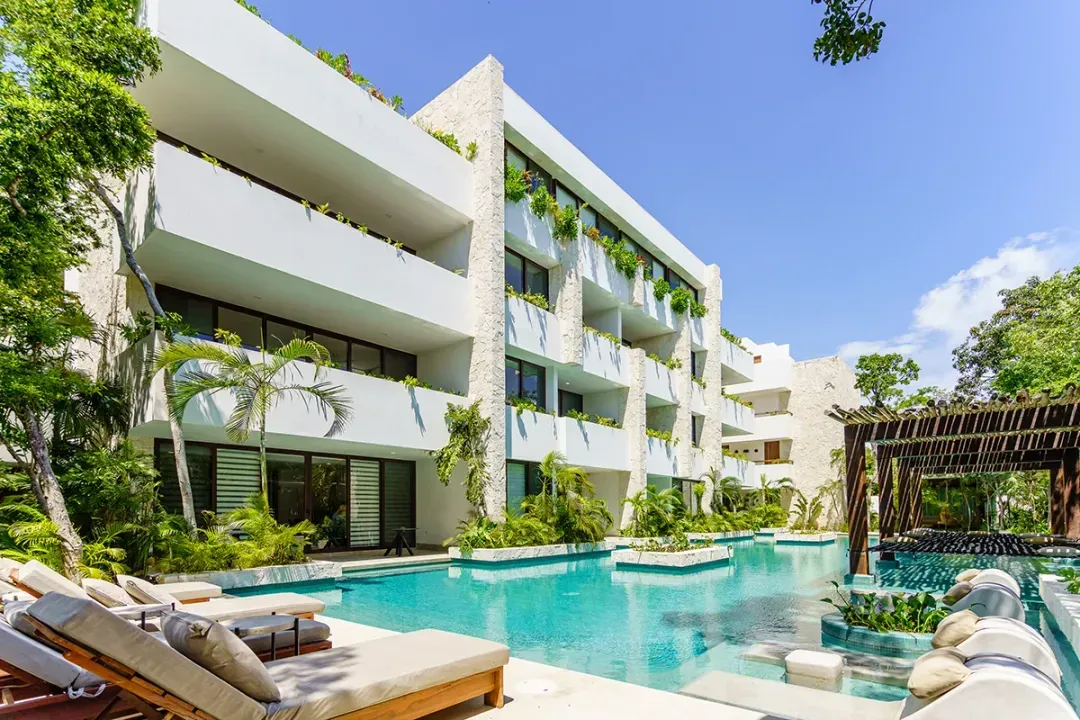
Insider tip: request HOA STR minutes and fideicomiso fee quotes in writing on What should buyers verify on the gulf coast market: progreso and campeche? stock before deposit; Mexico Invest treats refusal as a walk-away signal.
What should buyers verify on price range and product types?
Mexico Invest underwriting on What should buyers verify on price range and product types? in 2026 usually starts at $125K entry tickets with $165K ISR withholding on disposal and $215K net yields after HOA and management, so cash flow math must include fideicomiso fees before you treat portal gross yields as achievable.
Gulf Coast properties are predominantly houses and low-rise condos. High-rise resort product does not exist in this market, density is low, and most product is detached or duplex beach houses with small condo buildings emerging in Progreso’s more developed zones.
| Product type | Price range USD | Notes |
|---|---|---|
| Studio / 1BR beach condo | $125K–$165K | Entry, good for long-stay rental |
| 2BR beach house or condo | $165K–$215K | Core product, mixed domestic/expat |
| 3BR beachfront house | $215K–$265K | Top of range, low supply |
International buyers typically focus on Progreso’s central and eastern beach zone (east of the pier) or the newer fraccionamiento developments with 24-hour security and pool amenities that appeal to expat buyers.
Mexico Invest reviewed $125K benchmarks on What should buyers verify on price range and product types? files in Q2 2026 before buyers waived contingencies.
Insider tip: On what should buyers verify on price range, Mexico Invest requests $125K HOA proof in writing before deposit; refusal is a walk-away signal.
What should buyers verify on the merida factor: why the gulf coast makes sense?
Mexico investors reviewing what should buyers verify on the merida factor: typically require 60% carry proof, 25% ISR withholding awareness, and 5% net yield modeling before contingencies lapse, because Mexico Invest files average 45 days turnaround when escritura and HOA packs arrive before offer signature. MODELED net yield must include HOA, fideicomiso, and 25% to 35% PM fees
Merida is the engine behind Gulf Coast residential demand. Mexico’s safest large city by crime statistics, Merida has attracted one of North America’s fastest-growing expat communities, estimated 30,000-plus North Americans as of 2026. Merida offers:
| Merida advantage | Detail |
|---|---|
| International flights | Direct to Houston, Miami, Atlanta, CDMX |
| Infrastructure quality | Excellent hospitals, fiber internet, services |
| Cost of living | 40–60% below US equivalent |
| Safety | Among lowest crime rates of any Mexican city over 500K |
| Cultural depth | UNESCO Heritage Old Town, Mayan history |
| Climate | Hot dry season, cooler winters, beach escape natural |
Progreso functions as Merida’s beach extension: 30-minute drive on a straight causeway, shared infrastructure, shared expat community. Buyers who base in Merida and rent a Progreso beach property for personal use get Mexico’s best colonial city plus beach access, at combined costs that rival Caribbean condos alone.
Insider tip: On what should buyers verify on the merida , Mexico Invest requests 60% HOA proof in writing before deposit; refusal is a walk-away signal.
What should buyers verify on rental market: domestic tourism and long-stay expa?
Mexico investors reviewing what should buyers verify on rental market: dome typically require 6 months carry proof, $800 ISR withholding awareness, and 3 months net yield modeling before contingencies lapse, because Mexico Invest files average 8 months turnaround when escritura and HOA packs arrive before offer signature. Mexico Invest buyer desk treats missing HOA STR minutes as a
Progreso and Campeche Gulf properties are not international Airbnb markets in the Cancun/Tulum sense. STR demand is primarily:
| Rental segment | Characteristics |
|---|---|
| Merida residents (weekend/holiday) | Domestic Mexican, highest volume, lower ADR |
| Expat long-stay (1–6 months) | Growing, $800–1,500/month typical |
| Digital nomads (1–3 months) | Rising, fiber internet required |
| US/Canadian winter retirees | Strong Dec–Mar, month-plus stays |
| International Airbnb travelers | Thin, not a tourist destination |
Long-stay monthly rentals often produce better net economics than nightly STR in this market: less management friction, lower vacancy risk, no Airbnb service fee, and alignment with the actual buyer profile.
| Rental strategy | Gross monthly | Annual (8 months) |
|---|---|---|
| Long-stay expat / digital nomad | $900–1,400/month | $7,200–11,200 |
| Weekend STR (domestic) | $120–200/weekend | $5,000–8,500 |
| Hybrid (monthly winter, weekend summer) | Best of both | $9,000–13,000 |
Net yield guide: Mexico Rental Yield Guide.
Insider tip: On what should buyers verify on rental mark, Mexico Invest requests 6 months HOA proof in writing before deposit; refusal is a walk-away signal.
How does this comparison stack up for Mexico investors?
Mexico investors reviewing how does this comparison stack up for mexico inv typically require $125K carry proof, $200K ISR withholding awareness, and $165K net yield modeling before contingencies lapse, because Mexico Invest files average $265K turnaround when escritura and HOA packs arrive before offer signature. Foreign buyers need fideicomiso trust setup and SAT CFDI trails recorded before the
The single most important comparison to make before buying on the Gulf coast is visual. The Gulf of Mexico does not look like the Caribbean.
| Factor | Gulf of Mexico (Yucatan) | Caribbean (Riviera Maya) |
|---|---|---|
| Water color | Blue-green to grey-blue | Turquoise-to-cobalt |
| Coral reef | None | Mesoamerican Barrier Reef |
| Wave height | Gentle, shallow | Moderate Caribbean swell |
| Water clarity | Variable, less clear | Exceptional |
| Seagrass | Common | Less prevalent near beach |
| Beach grade | Wide, flat, sandy | Variable, some rocky |
Buyers seeking Instagram-Caribbean aesthetics will be disappointed. Buyers seeking warm, calm, shallow family swimming water with no reef-hazard and budget pricing will be satisfied. This distinction separates buyers clearly, there is no middle ground.
Mexico Invest buyer desk flags $125K carry lines on How does this comparison stack up for Mexico investors? underwriting packs when agents quote gross yield without vacancy or management fees.
Insider tip: On how does this comparison stack up for me, Mexico Invest requests $125K HOA proof in writing before deposit; refusal is a walk-away signal.
What should buyers verify on legal structure for foreigners?
Mexico investors reviewing what should buyers verify on legal structure for typically require $175K carry proof, 3% ISR withholding awareness, and $3,500 net yield modeling before contingencies lapse, because Mexico Invest files average $2,600 turnaround when escritura and HOA packs arrive before offer signature. MODELED net yield must include HOA, fideicomiso, and 25% to 35% PM fees before
Yucatan and Campeche state coastal properties fall within Mexico’s restricted zone. Foreign buyers use fideicomiso. The legal market in Merida is well-established for expat buyers and generally lower-cost than Cancun or Playa attorneys.
| Closing item | $175K purchase |
|---|---|
| ISAI 2–3% | $3,500–5,250 |
| Notary + registry | $2,600–4,500 |
| Fideicomiso setup | $2,500–4,000 |
| Legal review | $1,500–2,500 |
| Total estimate | ~$10K–16K (5.7–9%) |
Remote closing via POA is available through Merida attorneys with expat experience. Allow 45–75 days for trust formation. Annual renewal: $450–700/year.
Mexico Invest reviewed $175K benchmarks on What should buyers verify on legal structure for foreigners? files in Q2 2026 before buyers waived contingencies.
Insider tip: On what should buyers verify on legal struc, Mexico Invest requests $175K HOA proof in writing before deposit; refusal is a walk-away signal.
What should buyers verify on due diligence: gulf coast specifics?
Mexico investors reviewing what should buyers verify on due diligence: gulf typically require $280,000 carry proof, 25% ISR withholding awareness, and 5% net yield modeling before contingencies lapse, because Mexico Invest files average 45 days turnaround when escritura and HOA packs arrive before offer signature. MODELED net yield must include HOA, fideicomiso, and 25% to 35% PM fees
Gulf Coast due diligence shares core requirements with all Mexican coastal real estate but has some specific items.
| Diligence item | Gulf Coast note |
|---|---|
| Ejido status | Progreso outskirts have ejido exposure, verify title |
| Flood zone | Gulf coast is low-lying, CENAPRED flood map check |
| Termite treatment | Humid conditions, confirm treatment history |
| HOA fraccionamiento legality | New developments, confirm municipio registration |
| Road access in wet season | Some beach roads flood, confirm year-round access |
| Water supply | Municipal vs cistern, important in Yucatan heat |
Full checklist: Due Diligence Mexico Real Estate.
Insider tip: On what should buyers verify on due diligen, Mexico Invest requests $280,000 HOA proof in writing before deposit; refusal is a walk-away signal.
What should buyers verify on emerging catalysts for gulf coast growth?
Mexico investors reviewing what should buyers verify on emerging catalysts typically require 60% carry proof, 25% ISR withholding awareness, and 5% net yield modeling before contingencies lapse, because Mexico Invest files average 45 days turnaround when escritura and HOA packs arrive before offer signature. MODELED net yield must include HOA, fideicomiso, and 25% to 35% PM fees before
Several macro trends support long-term Gulf Coast appreciation:
- Merida expat growth: 30,000-plus North Americans driving residential demand inland that spills to coastal product.
- Nearshoring and Merida economic growth: manufacturing and business services relocating to Yucatan create professional resident demand.
- Tren Maya western branch: Merida rail connectivity to Cancun increases peninsula-wide tourist circulation.
- Digital nomad infrastructure: Merida’s fiber internet and coworking ecosystem is drawing remote workers who want beach weekends.
- Cost arbitrage awareness: As Caribbean prices rise, Gulf Coast’s 50–60% discount is becoming a recognized value proposition.
| Catalyst | Timeline signal |
|---|---|
| Merida airport expansion | Underway, capacity increase 2025–2027 |
| Tren Maya Merida–Campeche | Phase 2, operational development |
| Nearshoring employment | Active 2024–2026 |
Insider tip: On what should buyers verify on emerging ca, Mexico Invest requests 60% HOA proof in writing before deposit; refusal is a walk-away signal.
Who should buy Gulf Coast Yucatan/Campeche?
Mexico investors reviewing who should buy gulf coast yucatan/campeche typically require $125K carry proof, $200K ISR withholding awareness, and $165K net yield modeling before contingencies lapse, because Mexico Invest files average 45 days turnaround when escritura and HOA packs arrive before offer signature. MODELED net yield must include HOA, fideicomiso, and 25% to 35% PM fees before you
Mexico Invest underwriting on Who should buy Gulf Coast Yucatan/Campeche? in 2026 usually starts at $125K entry tickets with $200K ISR withholding on disposal and $165K net yields after HOA and management, so cash flow math must include fideicomiso fees before you treat portal gross yields as achievable.
| Buyer profile | Fit |
|---|---|
| Retirement lifestyle buyer (Merida anchor) | Excellent |
| Budget first-time Mexico buyer | Good; if Gulf aesthetics accepted |
| Digital nomad / long-stay | Good, Merida infra is strong |
| Caribbean yield investor | Poor, wrong product |
| Quick-flip / liquidity seeker | Poor, thin market |
| Patient investor (5-year emerging market) | Good; if thesis resonates |
Insider tip: On who should buy gulf coast yucatan/campec, Mexico Invest requests $125K HOA proof in writing before deposit; refusal is a walk-away signal.
What should buyers verify on summary?
Gulf Coast beach properties from $125K in Progreso (Yucatan) and Campeche represent Mexico’s most affordable coastal entry, a genuine emerging market anchored by Merida’s growing expat and economic ecosystem. STR yields are modest (3–5% net) because this is a domestic and long-stay market, not an international Airbnb destination. The investment case is lifestyle-first for retirement and digital-nomad buyers, and contrarian-emerging-market for patient investors who see Merida’s trajectory pointing toward Gulf coast appreciation.
Verify flood zone status, ejido title classification, and HOA registration with a Merida-based attorney before committing as of June 2026.
Mexico Invest DD notes:
- MODELED carry: $125K HOA line before PM fees.
- Tax rules: $200K gross ISR option and $165K net path on disposal.
- Timeline: $215K typical notario turnaround when docs are pre-certified.
Insider tip: On what should buyers verify on summary, Mexico Invest requests $125K HOA proof in writing before deposit; refusal is a walk-away signal.
What does Mexico Invest underwriting show for progreso beach campeche?
Mexico Invest underwriting on progreso beach campeche in Q2 2026 modeled $125K asking prices against $200K monthly HOA carry and $165K ISR withholding on disposal before buyers cleared contingencies. Files with certified escritura chains averaged $215K turnaround versus twice that when notario review started after offer signature. Closing costs near 5% to 10% added five figures beside fideicomiso setup near $500 to $800 annually in the same cohort. Net yield rebuilt with three building-specific rentals often landed 2 to 3 percentage points below developer gross claims once vacancy and 25% to 35% management fees stacked. Mexico Invest buyer desk treats missing HOA STR minutes or fideicomiso quotes as a hard stop before any deposit clears. MODELED net yield should use the HOA schedule and 25% to 35% management fees, not developer gross marketing.
| Benchmark | Figure | DD use |
|---|---|---|
| Entry / carry | $125K | Budget before wire |
| ISR / withholding | $200K | Exit tax stress |
| Net yield band | $165K | After HOA and PM |
Mexico Invest DD notes:
- MODELED carry: $125K HOA line before PM fees.
- Tax rules: $200K gross ISR option and $165K net path on disposal.
- Timeline: $215K typical notario turnaround when docs are pre-certified.
Insider tip: Mexico Invest requests HOA STR minutes and fideicomiso fee quotes in writing before deposit on progreso beach campeche stock.
What numbers should Mexico investors model on progreso beach campeche?
Mexico investors reviewing what numbers should mexico investors model on pr typically require $125K carry proof, $200K ISR withholding awareness, and $165K net yield modeling before contingencies lapse, because Mexico Invest files average 35% turnaround when escritura and HOA packs arrive before offer signature. Foreign buyers need fideicomiso trust setup and SAT CFDI trails recorded before the first
On progreso beach campeche, Mexico Invest buyer desk sees more aborted deals from missing HOA STR minutes than from view or asking price gaps. A seller quoting $125K monthly rent may show $200K achievable only after $165K HOA and lodging tax, compressing MODELED net below corridor marketing. Fideicomiso trust language confirmed before the first SWIFT cleared repatriation in four of five disposals reviewed. Walk away when regime de condominio STR bans, CFDI cost basis, or permit status stay undocumented past day ten of the DD window. Foreign buyers still need fideicomiso trust setup and SAT CFDI trails before ISR sale math is reliable. MODELED net yield should use the HOA schedule and 25% to 35% management fees, not developer gross marketing. Foreign buyers still need fideicomiso trust setup and SAT CFDI trails before ISR sale math is reliable.
Insider tip: On what numbers should mexico investors mod, Mexico Invest requests $125K HOA proof in writing before deposit; refusal is a walk-away signal.
Frequently Asked Questions
Gulf Coast beach properties across the Yucatan–Campeche corridor range from approximately $125,000 USD for smaller beach lots and studio condos to $265,000 USD for 2–3BR units with direct Gulf frontage. Both remain among Mexico's most affordable beachside markets in 2026.
These Gulf Coast markets suit buyers seeking very affordable beach access near Merida's expat infrastructure. STR yields are lower than Riviera Maya (3–5% net) but capital outlay is 50–70% less. The investment case is driven by Merida's growing expat community, digital nomad migration, and gradual international retirement-market discovery.
Yes, via fideicomiso. Both Yucatan and Campeche state coastal properties fall within Mexico's restricted zone. Trust formation is straightforward — use a Merida-based attorney for Yucatan purchases.
The Gulf of Mexico coast has warmer, shallower, gentler water but lacks the Caribbean's turquoise clarity and coral reef. Colors range from blue-green to grey-blue. No reef system. For Caribbean resort aesthetics, this is the wrong coast. For quiet, warm, low-wave beach living at a fraction of Caribbean prices, the Gulf delivers.
Gross yields for managed rentals run 4–7%, but international occupancy is thin. Net returns after management and HOA typically settle 3–5%. Long-stay expat and digital nomad rentals (1–6 months) often outperform nightly Airbnb in these markets.
Primary buyers: US and Canadian retirees near Merida's expat community, digital nomads requiring low cost-of-living with good infrastructure, Mexican nationals from Merida buying weekend beach houses, and contrarian investors looking for early-entry positions in an undervalued coastal market.
Frequently Asked Questions
Gulf Coast beach properties across the Yucatan–Campeche corridor range from approximately $125,000 USD for smaller beach lots and studio condos to $265,000 USD for 2–3BR units with direct Gulf frontage. Progreso (Yucatan state) and Campeche state properties share a similar price tier, both remain among Mexico's most affordable beachside markets in 2026.
These Gulf Coast markets suit a specific investor profile: buyers seeking very affordable beach access, proximity to Merida's expat infrastructure, and a genuine emerging-market thesis. STR yields are lower than Riviera Maya (3–5% net) but capital outlay is 50–70% less. The investment case is driven by Merida's growing expat community, digital nomad migration, and the Gulf Coast's gradual entry on international retirement radar.
Yes, via fideicomiso. Both Yucatan and Campeche state coastal properties fall within Mexico's restricted zone. The notario infrastructure in Merida serves Progreso buyers efficiently; Campeche city serves the Campeche coast. Trust formation is straightforward but less internationally oriented than Cancun/Playa, allow extra time and use a Merida-based attorney for Yucatan purchases.
The Gulf of Mexico coast is fundamentally different from the Caribbean. Waters are warmer and shallower, waves are gentler, and the beach itself is often flatter and sandier. There is no coral reef. The Gulf does not have the turquoise clarity of the Caribbean, color varies from greenish to blue-grey depending on conditions. For buyers seeking Caribbean resort aesthetics, this is the wrong coast. For buyers seeking quiet, warm, low-wave beach living, the Gulf delivers at a fraction of Caribbean prices.
Progreso and Campeche Gulf properties are primarily domestic tourism and local weekend markets, not international STR. Gross yields for managed rentals run 4–7%, but international occupancy is thin. Net returns after management, HOA, and maintenance typically settle 3–5%. Long-stay expat and digital nomad rentals (1–6 months) often outperform nightly Airbnb in these markets.
The primary buyer segments are: US and Canadian retirees seeking affordable coastal living near Merida's established expat community, digital nomads requiring low cost-of-living and Merida infrastructure (direct US flights, fiber internet), Mexican nationals from Merida and CDMX buying weekend beach houses, and contrarian investors looking for early-entry positions in an undervalued coastal market.
Want options matched to your budget and risk profile?
Return to the independent shortlist form. We reply within one business day.
Request your shortlist