
Polanco Real Estate: Luxury Mexico City Investor Guide
Polanco for foreign buyers: $4,500-7,500 per sqm, direct title, no fideicomiso, corporate tenants, and why its seismic zone beats Roma and Condesa.
By Mexico Invest Editorial · Updated August 23, 2026 · 14 min read
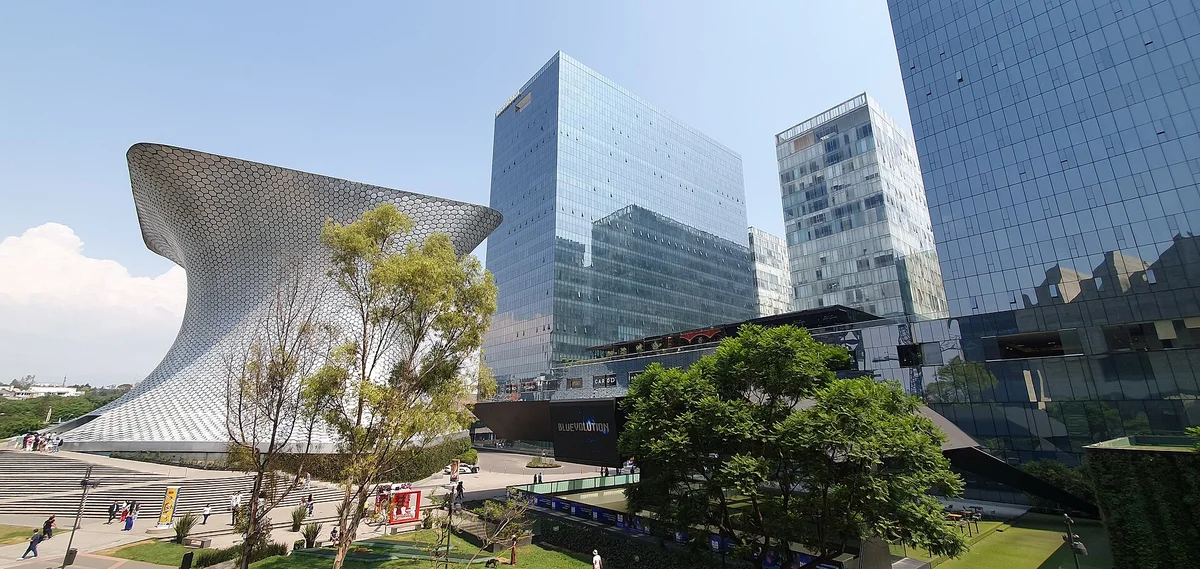
Quick answer: Polanco is Mexico City’s luxury core at $4,500-7,500 per square metre, bought with direct fee-simple title and no fideicomiso. It yields less than Roma Norte, around 3.5-4.2% net, and compensates with a corporate tenant base, firmer seismic ground and the deepest luxury resale market in the country.
Polanco is where Mexico’s domestic wealth actually lives, which makes it a fundamentally different proposition from the coastal markets foreign capital usually reaches first. Demand comes from embassies, corporate assignees and Mexican professionals rather than from tourism, and that changes the vacancy profile, the lease length and the resale pool. Read Roma Norte and Condesa alongside this page, the two markets sit 4 km apart and behave nothing alike.
Hub: can foreigners buy property in Mexico. Related: luxury Mexico property above $500K and Mexico property taxes explained.
Why does Polanco price above every other Mexico City colonia?
Classic Polanco trades at $4,500-7,500 USD per square metre in 2026, roughly 55% above Roma Norte and more than double Roma Sur. Scarcity explains most of it: the colonia covers barely 4 square kilometres, is fully built out, and foreign buyers compete there with domestic wealth that has no interest in selling.
The premium is not uniform across the district. Polanco divides into five sections, and price tracks proximity to Presidente Masaryk and to Parque Lincoln more reliably than it tracks finish level or building age.
| Sub-zone | USD per sqm | 90 sqm 2BR | Character |
|---|---|---|---|
| Masaryk corridor | $6,000-7,500 | $540K-675K | Luxury retail, embassies |
| Polanco Reforma | $5,200-6,800 | $468K-612K | Parque Lincoln, low-rise |
| Polanco Chapultepec | $4,800-6,200 | $432K-558K | Museum-adjacent, quieter |
| Nuevo Polanco (Granada) | $3,200-4,600 | $288K-414K | New high-rise, current code |
Scarcity in classic Polanco is structural and permanent, which is the reason the premium persists through soft markets. The colonia covers barely 4 square kilometres between Chapultepec and Ejército Nacional, was fully built out decades ago, and its land is held substantially by Mexican families and institutions with no liquidity pressure to sell. New supply therefore arrives only through demolition and replacement, which the licencia de construcción process makes slow and expensive at roughly 18-30 months per project. Against that, Roma Norte and Condesa absorbed 2017 losses and rebuilt, adding stock at current code.
Nuevo Polanco is the arbitrage most foreign buyers miss. The former Granada industrial belt north of Ejército Nacional redeveloped from roughly 2010 onward into towers built under modern code, and it prices about 30% below classic Polanco per square metre while sharing the same postal identity, the same Soumaya and Jumex cultural anchors, and much of the same tenant pool.
How does the seismic profile differ from Roma and Condesa?
Mexico City’s building code divides the valley into three seismic zones by soil behaviour, and Polanco sits largely in Zone II transition ground rather than the Zone III lakebed clay beneath Roma and Condesa. For foreign buyers in this market the amplification is materially lower, an advantage worth 30-45% on earthquake premiums that costs nothing at all to acquire.
Soil classification transfers directly into insurance pricing and resale liquidity, which is where the Zone II advantage becomes a number rather than a comfort. Mexican insurers price earthquake cover on soil zone and construction era together, and a Zone II Polanco building of post-2004 vintage typically insures at 30-45% below an equivalent Zone III structure of the same age and value. Resale behaves similarly: buyers who lived through September 2017 ask about soil before they ask about finish, and a Zone III address now carries a discount that did not exist in 2015.
Firmer ground reduces the risk but does not remove the diligence. Two qualifications matter, and both are checkable in under 10 business days. Nuevo Polanco’s northern edge approaches softer ground than classic Polanco, so the zone advantage weakens as you move toward the old lakebed. And Polanco carries a large stock of 1960s and 1970s buildings whose engineering predates every modern code revision, sitting on better soil but built to worse standards.
| Construction era | Governing code | Polanco relevance |
|---|---|---|
| Pre-1957 | No modern seismic code | Rare here; mostly low-rise houses |
| 1957-1985 | Early code, weakly enforced | Common in Polanco Reforma; verify individually |
| 1987-2004 | Post-1985 code | Much of the mid-rise apartment stock |
| 2004-2017 | NTC 2004 | Early Nuevo Polanco towers |
| Post-2017 | NTC 2017/2020 | Newest Granada high-rise |
Ask for the constancia de seguridad estructural, the certificate Mexico City requires for defined building classes on a 5-year renewal cycle, and confirm the licencia de construcción year rather than trusting the listing. An independent structural engineer costs MXN 15,000-35,000 and represents under 1% of a $450,000 purchase, which is the cheapest insurance available on this page.
Rental economics: a worked example
Take the unit foreign buyers most often shortlist, a 90 square metre two-bedroom in Polanco Chapultepec, priced at $5,000 per square metre for $450,000, with closing at 6.5% bringing the all-in basis to $479,250. Let to a corporate tenant it commands roughly MXN 55,000 a month. Converted at the Banxico reference rate that is $36,264 a year, and which is 7.6% gross before a single operating cost comes out.
| Line | Annual USD |
|---|---|
| Gross rent, MXN 55,000/month | $36,264 |
| Building maintenance, MXN 9,500/month | −$6,264 |
| Predial (Mexico City) | −$1,400 |
| Landlord insurance | −$900 |
| Management at 8% | −$2,901 |
| Vacancy reserve, six weeks | −$4,184 |
| Repairs reserve at 5% | −$1,813 |
| Net operating income | $18,802 |
That NOI is 3.9% net on the $479,250 all-in basis, and the gap between 7.6% gross and 3.9% net is the entire Polanco story. Two lines drive it. Maintenance in a full-service Polanco building runs MXN 7,000-14,000 a month for concierge, security, valet and amenity upkeep, against MXN 2,500-3,500 in a comparable Roma Norte walk-up. And void periods run longer because the tenant pool, while reliable, is narrower and moves on corporate timetables rather than continuously.
Where the Polanco model differs from a Roma Norte annual tenancy, line by line:
- Maintenance MXN 7,000-14,000 a month against MXN 2,500-3,500 for concierge, security and valet
- Void of six weeks rather than four, because corporate moves follow assignment cycles
- Lease length 12-24 months rather than 12, reducing turnover cost per year held
- Furnishing capex of $18,000-30,000 that unlocks a 20-30% rent premium
Where Polanco wins is on the lines that do not appear in a single year’s arithmetic. Corporate and embassy tenants sign 12 to 24-month leases, arrears are rare, and the resale market is the deepest luxury pool in Mexico, which matters more on exit than 60 basis points of annual yield.
Who rents in Polanco, and why that changes the model
The Polanco tenant base is corporate rather than touristic, and for foreign buyers that single fact reshapes every assumption formed on the coast. Embassy staff, multinational assignees and senior Mexican professionals sign 12 to 24-month leases at MXN 45,000-90,000 a month, and relocation packages frequently pay the rent directly to the landlord rather than through the tenant.
Filing is a single annual ISR return against an RFC, and predial on a $450,000 Polanco apartment runs MXN 14,000-26,000 a year. Three consequences follow, and each cuts against instincts formed in Playa del Carmen or Tulum:
- Demand tracks corporate relocation budgets, not flight arrivals or hurricane season, so occupancy is smoother but responds to economic cycles with a lag
- Furnished lets command a real premium of 20-30% because assignees arrive without possessions, and furnishing costs $18,000-30,000 for a 90 sqm unit
- Short-term nightly letting is largely irrelevant here; Polanco buildings restrict it heavily in their reglamento de condominio and the tenant economics never favour it
For foreign buyers this is the most predictable rental market in Mexico, and also the one least responsive to active management. An owner who wants to increase returns through operational skill will find little to work with; an owner who wants income that arrives without attention will find the opposite.
Pros and cons for investors
Polanco’s advantages and disadvantages derive from one source: this market is domestic luxury rather than foreign investment. That is why net yield lands at 3.5-4.2% while a Roma Norte annual tenancy reaches 4.5%, and equally why Polanco resale liquidity is the deepest in Mexico. Foreign buyers trade roughly 60 basis points of income for an exit that clears.
| Advantages | Disadvantages |
|---|---|
| Direct fee-simple title, no trust, no annual fee | Highest entry price in Mexico City, $4,500-7,500 per sqm |
| Zone II transition ground, lower seismic amplification | ISAI reaches roughly 4.5% at these price points |
| Corporate and embassy tenants on 12-24 month leases | Net yield 3.5-4.2%, below Roma Norte |
| Deepest luxury resale pool in Mexico | Maintenance MXN 7,000-14,000 a month in full-service stock |
| Fully built out, structurally supply-constrained | Six-week void periods are normal, not exceptional |
| Peso rent from a stable domestic tenant base | Peso rent against a dollar purchase creates currency mismatch |
Three of those lines are worth a number rather than a phrase:
- ISAI at Polanco prices reaches roughly 4.5%, against 2-3% in Quintana Roo
- Avoided fideicomiso costs are worth $2,700-5,000 at closing plus $500-800 a year
- A six-week void on MXN 55,000 rent costs about $4,184 annually, or 87 basis points of net yield
The currency mismatch deserves emphasis at this ticket. A $450,000 purchase funded in dollars against MXN 55,000 of monthly rent means a 10% peso depreciation costs roughly $3,600 a year of dollar income with no change in the underlying asset. Read the currency risk guide before treating Polanco rent as a dollar stream.
Who should buy in Polanco?
Polanco suits three buyer scenarios and requires a different entry price for each: roughly $288,000-414,000 for a Nuevo Polanco two-bedroom bought on yield-per-dollar reasoning, $450,000-560,000 for classic Polanco held for capital preservation, and $600,000 or more for Masaryk-corridor stock that foreign buyers acquire principally as a store of value rather than as an income asset.
Matching profile to product, at a glance:
- Yield-per-dollar buyer → Nuevo Polanco Granada tower, $288,000-414,000, current-code construction, roughly 4.2% net
- Capital-preservation buyer → classic Polanco Chapultepec or Reforma, $450,000-560,000, roughly 3.9% net
- Store-of-value buyer → Masaryk corridor, $600,000+, lowest yield, strongest liquidity on exit
Each profile files the same single annual ISR return against an RFC, and each pays predial of MXN 14,000-26,000 a year; the difference is entirely in the escritura price and the exit.
The active operator should look at Roma Norte instead. Polanco rewards patience and penalises effort: the tenant pool is fixed, the letting rules are restrictive, and there is no nightly-rate upside to unlock through better management.
What red flags should pause a Polanco purchase?
Six patterns recur at this price point, and three exist only because full-service luxury stock carries obligations ordinary condominiums do not. The asymmetry facing foreign buyers is stark: an independent structural and financial review costs MXN 15,000-35,000, while a single missed special assessment in a building of this class runs an order of magnitude above that.
Treat each of the six as a red flag that pauses the transaction rather than one that reprices it, and resolve it before the notario is instructed. Three of them sit in documents the seller controls and will produce only if asked in writing.
- A 1960s or 1970s building with no constancia de seguridad estructural on file
- Maintenance quoted as a monthly figure without the reserve fund balance behind it
- A special assessment already voted at assembly but not yet billed to owners
- Reglamento de condominio prohibiting furnished or corporate letting when the pitch assumes it
- Predial arrears of MXN 14,000-26,000 a year, which attach to the property rather than to the seller
- Rent quoted in dollars, signalling a listing aimed at foreigners rather than the real corporate tenant market
What should you verify before committing?
Eight documents decide a Polanco purchase, and the reserve fund requires more attention than foreign buyers usually give it. A full-service building with a thin reserve converts predictable maintenance into unpredictable special assessments, and at this price point those can reach MXN 200,000 per unit, roughly $11,000, in a single year.
- Confirm the construction year against the licencia de construcción held by the Miguel Hidalgo alcaldía, since Polanco marketing routinely dates a building from its last lobby refurbishment.
- Obtain the constancia de seguridad estructural and confirm its renewal date.
- Commission an independent structural engineer, MXN 15,000-35,000.
- Request the reserve fund balance and three years of assembly minutes.
- Ask specifically whether any special assessment has been voted but not billed.
- Read the reglamento de condominio for furnished-let and corporate-tenancy rules.
- Pull the full escritura chain with a certificado de libertad de gravamen, and read the régimen de condominio that governs a building of this class.
- Require a constancia de no adeudo for predial. Polanco cadastral values are among the highest in the country, so arrears accumulate faster here than anywhere else on this site.
Title defects are comparatively rare in Miguel Hidalgo and largely fixable. A full-service building with a depleted reserve is neither, and it is the defect this checklist is ordered to catch.
Frequently Asked Questions
Classic Polanco trades at $4,500-7,500 USD per sqm in 2026, so a 90 sqm two-bedroom costs roughly $405,000-675,000. Nuevo Polanco, the redeveloped Granada belt, runs $3,200-4,600 per sqm and offers newer construction at about 30% less.
No. Polanco lies outside the 50 km coastal and 100 km border restricted zone, so foreign buyers take direct fee-simple title, avoiding roughly $2,700-5,000 of trust setup and $500-800 a year against a coastal purchase.
Generally yes. Much of Polanco sits on Zone II transition ground rather than the Zone III lakebed clay under Roma and Condesa, so amplification is lower. Construction era still decides individual building performance, and Polanco holds substantial 1960s-1970s stock.
Roughly 5.5-6.5% gross and 3.5-4.2% net on corporate tenancies. A $450,000 two-bedroom at MXN 55,000 a month grosses $36,264 and nets about $18,802 after maintenance of MXN 9,500 a month, predial, insurance, management and a six-week void.
Corporate assignees, embassy staff and senior Mexican professionals on 12 to 24-month leases at MXN 45,000-90,000 a month, frequently paid through relocation packages. Demand tracks corporate budgets rather than tourism, so vacancy behaves differently across a cycle.
Classic Polanco holds value better with a deeper resale pool; Nuevo Polanco offers current-code construction and roughly 30% more square metres per dollar. Capital preservation favours classic Polanco, yield-per-dollar favours Nuevo Polanco if the reserve fund and letting rules check out.
Budget 6-7%: ISAI reaching roughly 4.5% at these prices, notario near 1.5%, registry about 0.5%, legal review about 1%. On a $450,000 apartment that is roughly $29,000, with no fideicomiso line.

Get a vetted Mexico shortlist
US and Canadian buyers use this to skip the developer sales deck: tell us the budget and the market, and we come back with 3 to 5 options and the net yield maths behind each one.
Want options matched to your budget and risk profile?
Three questions, one screen. We reply within one business day.
Get a vetted Mexico shortlist