
Roma Norte and Condesa Real Estate: Investor Guide
Roma Norte and Condesa for foreign buyers: direct title, no fideicomiso, $3,200-5,200 per sqm, 7% gross on long lets, plus the seismic checks that decide it.
By Mexico Invest Editorial · Updated August 23, 2026 · 14 min read
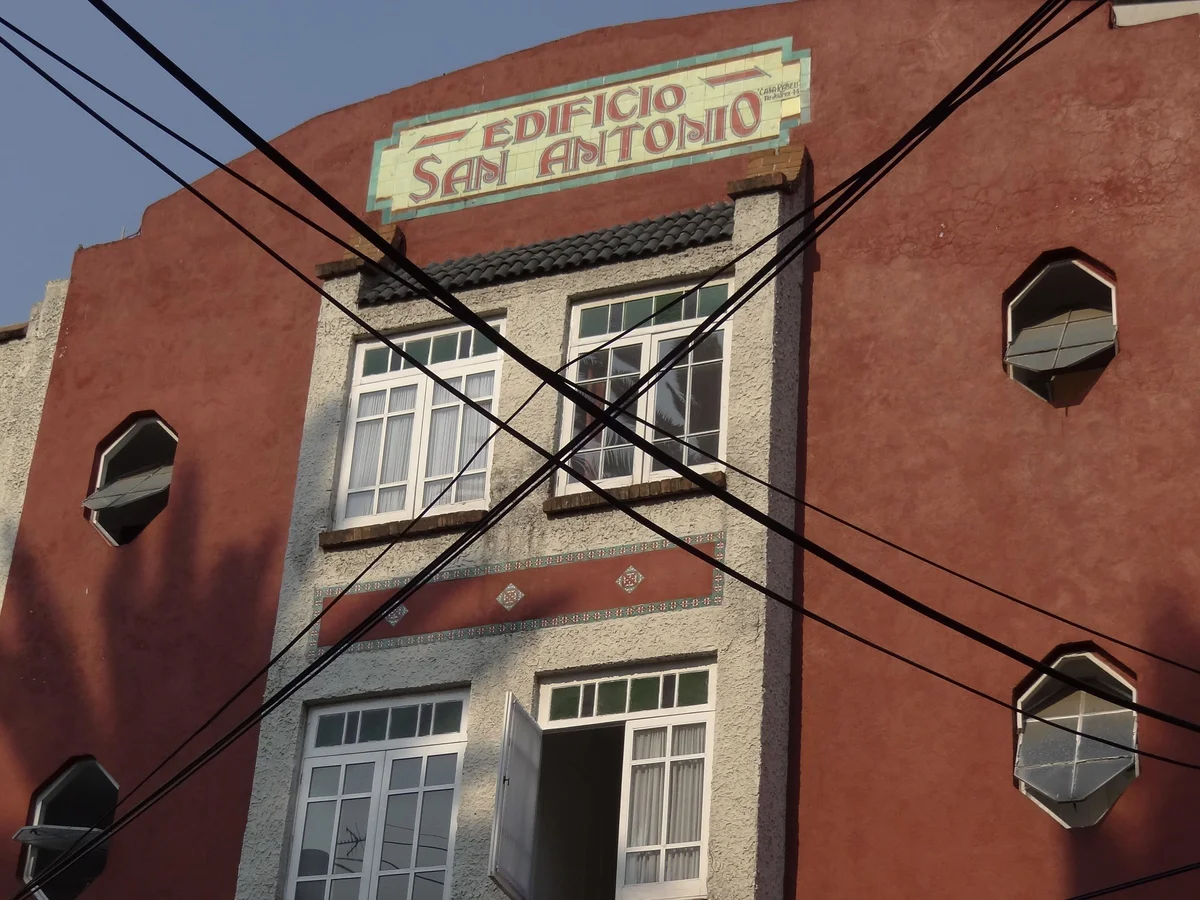
Quick answer: Roma Norte and Condesa are the only major Mexican markets where a foreigner takes direct fee-simple title with no fideicomiso, at $3,200-5,200 per square metre, producing about 7% gross and 4.5% net on long-term lets. The decisive diligence item is not title or tax but the building’s seismic era, because both neighbourhoods sit on Zone III lakebed clay.
Most foreign capital entering Mexico stops at the coast, which is why these two colonias are consistently under-analysed relative to their size. They sit inside a metropolitan area of roughly 22 million people, carry the deepest long-term tenant pool in the country, and are governed by an ownership regime that coastal buyers spend thousands of dollars working around. Before you compare them with a beach purchase, read the restricted zone explained, the geography is the whole reason the economics differ.
Why does Mexico City ownership work differently from the coast?
Article 27 restricts direct foreign ownership only within 50 km of a coastline and 100 km of an international border, and Mexico City sits roughly 300 km from either ocean. Roma Norte and Condesa therefore require no fideicomiso, no SRE permit and no annual trust fee, sparing foreign buyers about $2,700-5,000 of setup at closing.
The practical consequence is a shorter, cheaper transaction. A coastal buyer applies to the Secretaría de Relaciones Exteriores for a permit, pays the MXN 21,650 federal duty, selects a trust bank, and carries an annual fee for the next fifty years. A Roma Norte buyer signs an escritura in their own name at a notaría and is finished.
| Cost line | Roma Norte / Condesa | Playa del Carmen equivalent |
|---|---|---|
| SRE permit (federal duty) | Not applicable | $1,200-1,700 |
| Trust establishment | Not applicable | $500-1,500 |
| Trust legal drafting | Not applicable | $500-800 |
| Annual trust fee, per year | Not applicable | $500-800 |
| Acquisition tax (ISAI) | 3-4.5% progressive | 2-3% |
| Ten-year trust carry | $0 | $5,000-8,000 |
The acquisition tax runs higher in Mexico City than in Quintana Roo, so the saving is not total. On a $223,000 purchase the CDMX ISAI advantage is negative by roughly $2,500, while the trust stack these colonias never pay would have cost $2,700-5,000 at closing and a further $5,000-8,000 across a ten-year hold. Direct title also simplifies inheritance, which a substitute beneficiary clause handles adequately but not identically.
What do the two colonias actually cost?
Roma Norte trades at $3,200-4,800 USD per square metre in 2026 and Condesa ranges from $3,400 to $5,200, while Roma Sur costs about 20-25% less at $2,600-3,600. Pricing in this market tracks building era and street rather than finish level, which is the opposite of how coastal inventory is valued and the reason two apparently similar units differ by 40%.
| Colonia | USD per sqm | 62 sqm 1BR | 90 sqm 2BR | Character |
|---|---|---|---|---|
| Condesa | $3,400-5,200 | $211K-322K | $306K-468K | Park frontage, art deco |
| Roma Norte | $3,200-4,800 | $198K-298K | $288K-432K | Restaurants, galleries, co-working |
| Juárez | $2,800-4,000 | $174K-248K | $252K-360K | Transitional, Reforma-adjacent |
| Roma Sur | $2,600-3,600 | $161K-223K | $234K-324K | Quieter, value entry |
Pricing in both colonias is set by scarcity of a specific building type rather than by square metres alone. Roma Norte and Condesa were largely built out between 1920 and 1940, which caps the supply of original art deco and Porfirian stock permanently, and the 2017 losses reduced it further. New construction on infill sites clears at $4,500-5,800 per square metre because it carries current-code engineering, while unreinforced 1960s slab buildings on the same street trade 30-40% below the colonia average and are difficult to finance or resell. Building era does most of the work, but three further attributes decide where a unit lands inside its band:
- Original 1920s-1930s detail, parquet, mouldings, iron balconies, carries a 10-15% premium because it cannot be reproduced
- A working lift adds roughly 8-12% and widens the tenant pool; a fourth-floor walk-up loses it
- A structurally certified building commands a premium that has widened every year since 2017, currently 15-25% over uncertified stock of the same era
The escritura and the licencia de construcción settle the third point between them, and the next section explains why that premium is rational rather than sentimental.
The seismic question, and why it outranks everything else
Mexico City’s building code classifies ground by seismic behaviour, and Roma and Condesa sit almost entirely in Zone III, the soft Lake Texcoco clay that amplifies wave motion rather than damping it. For foreign buyers this classification requires an engineering answer before a price is agreed, and the review costs MXN 15,000-35,000, which is under 1% of a $223,000 apartment.
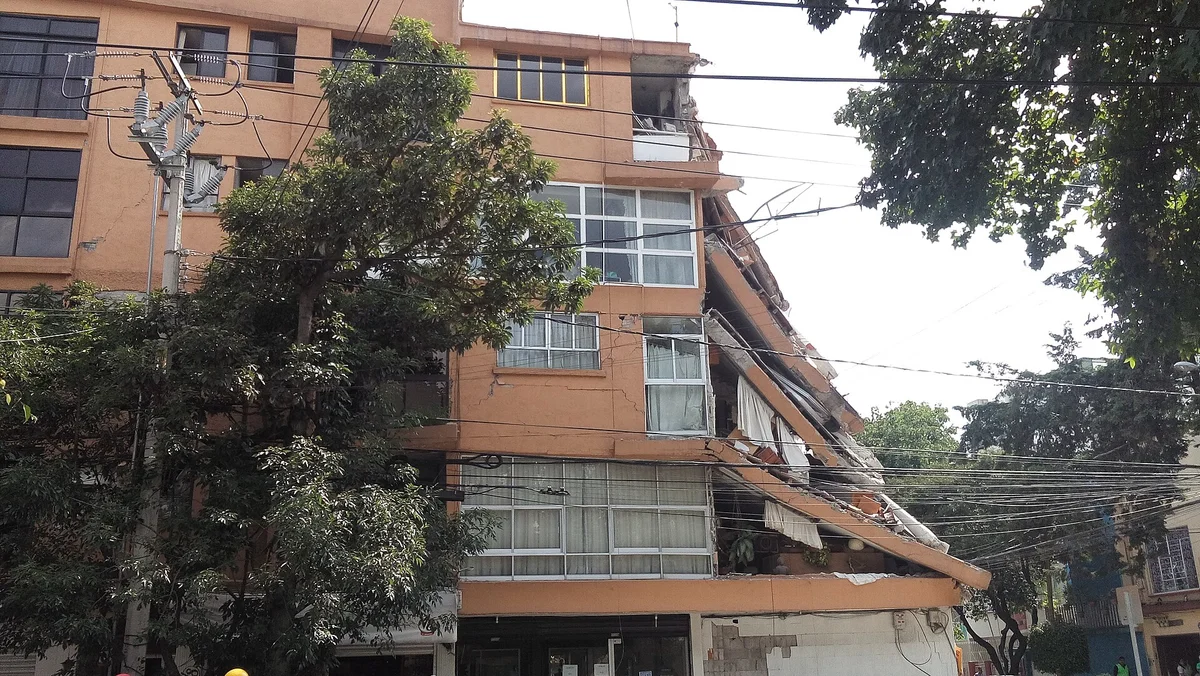
The amplification is not theoretical. The September 1985 earthquake concentrated its destruction in exactly this soil band, and the M7.1 event of 19 September 2017 brought down buildings across Roma, Condesa and Del Valle while leaving firmer-ground colonias a few kilometres west largely intact. Construction era is what separates one outcome from the other.
| Construction era | Governing code | Risk posture |
|---|---|---|
| Pre-1957 | No modern seismic code | Varies wildly; some perform well, some fail |
| 1957-1985 | Early code, widely under-enforced | Highest concentration of 2017 failures |
| 1987-2004 | Post-1985 code | Materially better, pre-modern detailing |
| 2004-2017 | NTC 2004 | Good, verify soil study on file |
| Post-2017 | NTC 2017/2020 | Current standard, strongest stock |
What the era table means on an actual street is easiest to see in the housing stock itself. Porfirian and art deco buildings of the 1920s-40s are low, heavy and often surprisingly stiff; the mid-century apartment slabs thrown up between the 1950s and 1985 are where the worst 2017 outcomes clustered; and anything permitted under the NTC codes after 2004 was engineered for this exact clay. Two facades on the same block can look equally charming and sit forty years apart in code terms, which is why era beats aesthetics in every serious offer here.
The paper trail that proves a building’s era and its structural history is a city-wide process rather than a Roma peculiarity, and the Mexico City buying guide walks the full document sequence: the constancia, the permit-year check, the post-2017 assessment, the DRO file. What is specific to these colonias is the pricing consequence: a certified pre-1985 building trades at a visible discount to its post-2004 neighbour, and that spread has widened every year since 2017. The engineering review that settles where a given building sits costs MXN 15,000-35,000 and reads as a bargain against either mispricing direction. Our earthquake risk guide covers the national picture; Zone III is its sharpest case.
Rental economics: a worked example
Run the numbers on the archetypal Roma Norte purchase: 62 square metres, one bedroom, $3,600 per square metre, $223,000 asking. Closing at 6.5% lifts the all-in basis to $237,500, and an unfurnished tenancy at MXN 26,000 a month converts to $17,148 a year at the Banxico reference rate, 7.2% gross before the operating lines below, 4.5% net after them.
| Line | Annual USD |
|---|---|
| Gross rent, MXN 26,000/month | $17,148 |
| Building maintenance, MXN 2,800/month | −$1,846 |
| Predial (Mexico City) | −$550 |
| Landlord insurance | −$450 |
| Management at 8% | −$1,372 |
| Vacancy reserve, one month | −$1,429 |
| Repairs reserve at 5% | −$857 |
| Net operating income | $10,644 |
What makes that 4.5% unusual is how little operation stands behind it. The tenant pays the utilities, the building handles the fabric, and the owner’s involvement reduces to an annual ISR filing and the occasional renewal negotiation. Roma Norte’s particular advantage inside the city is rent depth: the restaurant, gallery and co-working economy keeps a queue of solvent tenants at the MXN 24,000-28,000 level, so the one-month vacancy reserve in the table is genuinely conservative for a well-kept unit near Álvaro Obregón.
Condesa runs the same model with slightly different inputs: rents 5-8% higher near the parks, purchase prices 5-10% higher still, so net compresses toward 4.2-4.3% while resale strength improves. The rental yield guide holds the full comparison machinery against coastal models.
Predial deserves a note of its own. Mexico City assesses property tax on cadastral value at rates that leave most Roma and Condesa apartments paying between MXN 6,000 and MXN 20,000 a year, a fraction of what an equivalent US or Canadian property carries, and low enough that it rarely changes a decision.
What changed for short-term letting?
Roma and Condesa are where Mexico City’s short-term rental politics actually happen: the 2024 night-cap reform and its hosting registry were driven by rent pressure in precisely these streets, and enforcement attention starts here. Foreign buyers underwriting nightly income should treat the current night count as a moving target and check it with the Cuauhtémoc borough the same week an offer goes in, the city buying guide tracks the rule itself.
Inside a specific building, the binding document is usually not the city’s at all. Condominium bylaws across these colonias have been voting in sub-30-day bans since well before the reform, and a bylaw reaches you as an owner directly, whatever the registry says. The economics push the same way: a furnished 30-day-plus let to the remote-worker demand these streets generate earns MXN 32,000-45,000 monthly with no registry exposure, and once platform fees, cleaning and empty nights are netted off a nightly calendar, the difference mostly evaporates.
| Letting model | Typical monthly revenue | Regulatory exposure |
|---|---|---|
| Nightly, under 30 days | MXN 38,000-55,000 gross | City night cap, hosting padrón, building reglamento |
| Furnished 1-6 months | MXN 32,000-45,000 | Outside the short-stay rule; RFC and SAT filing apply |
| Unfurnished annual | MXN 24,000-30,000 | Lowest; standard lease and predial only |
One listing pattern deserves an automatic pause: nightly revenue projections offered without the building’s reglamento attached. The document takes 2-3 days to pull and settles the whole question, so its absence from a pitch is rarely an oversight. For most owners here, the medium-term furnished position is where the argument ends, outside the short-stay rule, matched to actual local demand, netting above the annual lease.
Pros and cons for investors
Weighing these two colonias specifically, rather than Mexico City generally, sharpens both columns. What Roma and Condesa add to the city’s baseline case is rent depth and walkable-district scarcity; what they add to its risk case is the softest soil in the valley and a front-row seat at the gentrification debate.
| Case for Roma-Condesa | Case against |
|---|---|
| The city’s deepest rental queue: restaurant and co-working economy feeds tenants at MXN 24,000-45,000 | Almost the whole district sits on Zone III clay |
| Pre-war building stock that cannot be replicated or expanded | The same stock includes the city’s riskiest mid-century slabs |
| 7.2% gross on the archetypal one-bedroom, top of the capital’s range | Entry $3,200-5,200 per sqm, well above Juárez or Roma Sur |
| Walkability that holds tenants through renewals | Weekend noise around the nightlife spines |
| Condesa park frontage defends value in soft markets | Rent-pressure politics target these exact streets |
| Every unit re-lets to residents if tourism turns | A peso income stream against a dollar purchase price |
The last row is the one coastal instincts misread, and the currency risk guide prices it: the peso strengthening helps a dollar-earning beach condo’s owner and squeezes this one, and the reverse in a weak-peso year. Over a decade the swings largely wash; over any single year they can move reported returns by a point either way.
Who should buy in Roma Norte or Condesa?
Three kinds of buyer keep succeeding in these two colonias, and the honest sorting variable is entry price: Roma Sur yield units from roughly $175,000, the archetypal Roma Norte one-bedroom near $223,000, and Condesa park frontage from $306,000 upward, bought to hold value rather than to maximise income.
The yield-focused diversifier. A buyer holding coastal Mexican property who wants uncorrelated income adds a Roma Sur or Juárez one-bedroom at $175,000-225,000, lets it unfurnished on annual tenancies, and accepts 4.5% net with almost no operational burden. Filing is a single annual ISR return with an RFC, and predial runs MXN 6,000-20,000 a year. This is the strongest fit on the page.
The remote worker turning resident. Someone already spending months a year in Condesa buys rather than rents, occupies part of the year, and runs 30-day-plus furnished lets in between. Direct title makes this materially simpler than the coastal equivalent, and the residency question is covered in the temporary resident visa guide.
The capital-preservation buyer. A purchaser prioritising a defensible asset over yield takes a structurally certified Condesa building on Parque México, accepts roughly 4% net, and holds on the reasoning that park-frontage stock in a supply-constrained colonia is the last thing to fall in a soft market.
| Buyer | Product | Expected net |
|---|---|---|
| Yield-focused diversifier | Roma Sur 1BR, $175,000-225,000, annual tenancy | 4.5% |
| Remote worker turning resident | Condesa or Roma Norte 1BR, part-year use | varies with own use |
| Capital-preservation buyer | Condesa park frontage, certified, $306,000+ | about 4% |
Whoever came here to run a nightly calendar is reading the wrong page: between the night cap, the bylaws and a tenant pool that wants leases, these streets fight that model at every step, while the identical capital on the Riviera Maya meets none of the resistance.
What red flags should pause a Roma or Condesa purchase?
Six patterns recur often enough in Roma and Condesa to be worth naming, and half of them exist only because of Zone III. Every one of them is cheaper to find than to fix. An independent structural engineer charges MXN 15,000-35,000 to look, and the least expensive of these defects costs several multiples of that to remedy once the escritura is signed.
- No constancia de seguridad estructural, or a seller who treats the request as unusual
- A building visibly repaired after 2017 with no DRO documentation of the work
- A listing describing 1970s construction as “classic” without naming the year
- Reglamento de condominio that bans stays under 30 days when the pitch assumes nightly income
- Missing predial receipts, because the city collects old balances from whoever holds the deed next
- Asking rents denominated in dollars, a tell that the listing was priced for buyers abroad instead of the tenants who actually pay here
What should you verify before committing?
The full city-wide diligence sequence, escritura chain, gravamen certificate, predial and water clearances, the whole document order, lives in the Mexico City buying guide and applies here unchanged. What Roma and Condesa add is a colonia-specific layer that catches what the generic list cannot:
- Date the building from the alcaldía’s own permit records, because in these two colonias the listing year is very often the renovation year, and the 1957-1985 window is exactly the one being papered over.
- Walk the block at 23:00 on a Friday if the unit fronts Álvaro Obregón, Tamaulipas or Michoacán: noise is the top tenant-churn driver on the nightlife spines and no document discloses it.
- Ask the administrator how many units in the building currently run short lets, since a bylaw fight in progress lands on the next owner.
- Compare the asking rent against the street’s live listings in pesos; Roma Norte pricing is transparent enough that a seller’s projection above the visible market is a statement about the seller.
- Check the reserve fund against the building’s age: a pre-war walk-up with a thin reserve is one facade repair away from a special assessment.
None of these five appears on a national checklist, and every one of them has ended a deal in these colonias.
Frequently Asked Questions
No. Mexico City lies outside the 50 km coastal and 100 km border restricted zone, so a foreign national takes direct fee-simple title with no bank trust, no SRE permit and no annual trust fee, saving roughly $2,500-4,000 at closing and $500-800 a year against a coastal purchase.
Roma Norte runs $3,200-4,800 USD per sqm in 2026 and Condesa $3,400-5,200, with Roma Sur about 20-25% cheaper. A 62 sqm one-bedroom in Roma Norte costs roughly $198,000-298,000; a 90 sqm two-bedroom in Condesa roughly $306,000-468,000.
About 7.2% gross and 4.5% net on an all-in basis for unfurnished long-term letting. A $223,000 Roma Norte one-bedroom at MXN 26,000 a month grosses $17,148 and nets about $10,644 after maintenance, predial, insurance, management, vacancy and repairs.
It is a reason to buy selectively. Both colonias sit on Zone III lakebed clay, which amplifies seismic waves, the reason 1985 and September 2017 concentrated damage here. Construction era decides the outcome, so obtain the constancia de seguridad estructural and commission an independent structural engineer before committing.
Short-term letting is legal but restricted. Mexico City approved a 2024 reform capping hosting at roughly half the year with a registry requirement, since contested and revised, so confirm the current rule with the borough. Many buildings separately prohibit stays under 30 days in their own reglamento.
Roma Norte turns higher gross yield and deeper tenant demand from its restaurant and co-working economy. Condesa carries a 5-10% price premium for park frontage and defends value better in a soft market. Cash flow favours Roma Norte; capital preservation favours Condesa.
Budget 6-7% of price: ISAI at roughly 3-4.5% progressive, notario fees near 1.5%, registry and certificates about 0.5%, and legal review about 1%. On a $223,000 apartment that is roughly $14,500, for an all-in basis near $237,500, with no fideicomiso line.
Get a vetted Mexico shortlist
US and Canadian buyers use this to skip the developer sales deck: tell us the budget and the market, and we come back with 3 to 5 options and the net yield maths behind each one.
Want options matched to your budget and risk profile?
Three questions, one screen. We reply within one business day.
Get a vetted Mexico shortlist