
Playa del Carmen vs Tulum: Where to Invest in 2026
Playa del Carmen vs Tulum investment comparison, yields, liquidity, oversupply, HOA, STR, and which Riviera Maya city fits your thesis.
By Mexico Invest Editorial · Updated July 10, 2026 · 13 min read
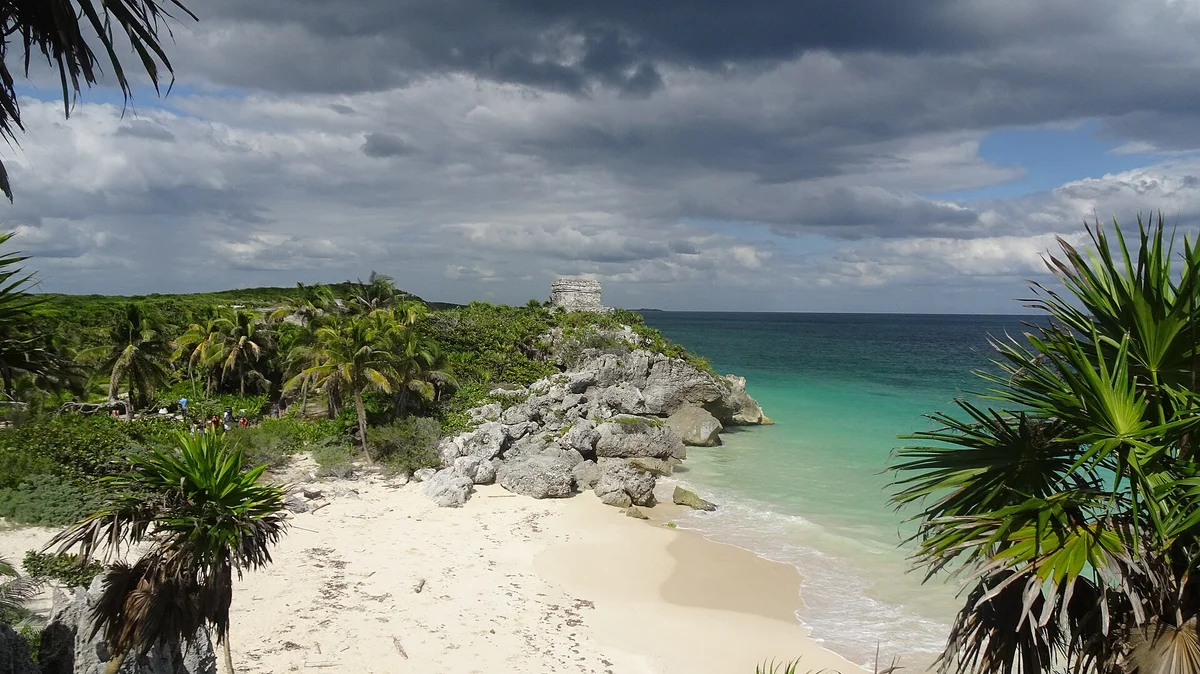
Quick answer: Playa del Carmen wins for net yield stability, resale liquidity, and first-time buyers. Tulum wins for selective value and lifestyle branding, with Region 15 oversupply risk in 2026. Distance: ~65 km; investment profiles differ sharply.
Same state, same foreign-buyer legal stack, different operational reality. Playa is walkable and liquid; Tulum is branded and bifurcated.
Head-To-head table
Playa del Carmen leads on STR liquidity with net yields of 4.3-5.2% and the deepest management ecosystem in Riviera Maya. Tulum offers selective value in Aldea Zama but carries Region 15 oversupply risk with median DOM near 74 days. Playa Centro at $250K-350K provides walkable operations while Tulum spans $150K-285K with wider yield dispersion.
| Factor | Playa del Carmen | Tulum |
|---|---|---|
| 1BR price band | $200K-350K | $150K-285K |
| Net yield (prime) | 4.3-5.2% | 2.6-5.8% spread |
| Resale liquidity | Strong | Variable |
| DOM signal 2026 | Moderate | 74+ days R15 |
| Walkability | High Centro | Car often needed |
| Management supply | Mature | Growing |
| Oversupply risk | Moderate towers | High R15 |
| Airport | Cancún 50 min | Tulum FEL + CUN |
| First-time buyer | Recommended | Selective only |
Yield deep dive
Playa Centro delivers 4.4% net yield while Gonzalo Guerrero reaches 4.5%, both outpacing Tulum Region 15 at 2.6% net due to HOA burden and oversupply. Aldea Zama achieves 3.4% net positioning between Playa stability and Region 15 weakness. These figures reflect 25-30% management fees and actual HOA costs per colonia.
Spread within Tulum exceeds the spread between the two cities, which is the finding buyers most often miss. Aldea Zama at 3.4% and Region 15 at 2.6% differ by 80 basis points on similar entry prices, while Playa’s two colonias sit within 10 basis points of each other at 4.4% and 4.5%. Choosing Playa over Tulum is therefore a lower-variance decision than choosing correctly inside Tulum. On a $300,000 purchase the gap between Gonzalo Guerrero and Region 15 is $5,700 a year, or $57,000 across a decade.
| Colonia | Gross | Net |
|---|---|---|
| Playa Centro | 6.6% | 4.4% |
| Gonzalo Guerrero | 6.8% | 4.5% |
| Aldea Zama | 6.5% | 3.4% |
| Region 15 | 6.0% | 2.6% |
Playa advantages
Playa del Carmen offers operational superiority through mature infrastructure and established systems that reduce investor friction and execution risk compared to Tulum’s developing market dynamics. Concretely: 4.3-5.2% net against Tulum’s 2.6-3.4%, dozens of competing managers rather than a handful, and a resale market that clears in months rather than at 74-plus days on market. Playa wins on every operational metric that exists.
Manager depth is the advantage that compounds and it rarely appears in a comparison table. Playa’s Centro and Gonzalo Guerrero colonias support dozens of established short-term-rental operators, so a poor manager can be replaced in weeks and fees stay competitive at 20% to 25%. Tulum’s newer zones have fewer, and they charge 25% to 35% for the same service. Across a ten-year hold on a $21,000 gross, that fee difference alone is roughly $16,000, more than the fideicomiso costs over the entire period, setup and annual fees included. Manager quality also compounds through review scores, which decide search ranking and therefore occupancy for years afterwards.
- Deepest STR guest pool in RM
- Competitive property managers
- Tren Maya station
- Resale buyers year-round
- Established HOA ecosystems (still verify each)
Tulum advantages
Tulum leverages global wellness branding and lifestyle positioning to command premium ADR in select niches, offering potential upside for investors who can navigate oversupply risks and execute selective positioning strategies. And the honest qualifier: that premium is available in Aldea Zama and selected beach-zone niches, not in Tulum generally. The market average includes Region 15 at 2.6% net, which is what most Tulum inventory actually is.
- Global brand premium on ADR niches
- Lower entry ticket in fringe
- Airport opening long-term tailwind
- Master plans (Aldea Zama) with infrastructure
- Lifestyle buyer demand for new product
What risks should buyers plan for before they commit?
Region 15 oversupply with 74+ day DOM signals and HOA costs of $400-900 monthly create yield compression that can drive net returns below 3% on many units, while permit enforcement and ejido proximity compound execution challenges in 2026.
- Region 15 tower glut
- HOA $400-900 crushing net
- Permit enforcement
- Ejido proximity on “cheap” land
- Thinner resale if thesis fails
Playa risks 2026
Playa faces generic tower competition and aging building special assessments that can impact net yields, though these risks remain more predictable and manageable than Tulum’s oversupply volatility due to established management markets and operational precedent.
- Generic tower competition
- Hurricane season vacancy
- STR municipal tightening
- Aging building special assessments
Buyer persona match
STR operators and first-time Mexico buyers should default to Playa for net yield stability and resale liquidity, while lifestyle investors with local DD capacity can pursue selective Tulum opportunities in Aldea Zama or beach zones, avoiding Region 15 oversupply entirely.
| You are… | Pick |
|---|---|
| STR operator, remote | Playa |
| First Mexico buy | Playa |
| Value hunter with local DD | Tulum selective |
| Eco-luxury lifestyle | Tulum beach/AZ |
| Need exit liquidity 3-5 yr | Playa |
| Long hold, personal use heavy | Either, DD |
Same legal process
Both: fideicomiso, 5-10% closing, independent attorney.
Buy as Foreigner · Due Diligence
Portfolio approach
Barbell: Playa Centro for cash-flow core + one selective Tulum unit with verified HOA, not two Region 15 towers.
Distance and connectivity: same trip, different op
Despite 65 km separation, Playa and Tulum serve different operational needs, Playa offers walkable tourism density while Tulum requires car dependency, affecting guest logistics and STR management complexity even with shared Tren Maya connectivity. Sixty-five kilometres is an hour of highway, which is enough to make these separate markets with separate guests: Playa fills from Cancún day-trippers and walkable tourism, Tulum from destination travellers who booked it specifically and arrived by car.
| Factor | Playa | Tulum |
|---|---|---|
| Distance between | n/a | ~65 km / 1 hr drive |
| Cancún airport | ~50 min | ~90 min via CUN |
| Tulum airport (FEL) | N/A | Growing intl routes |
| Tren Maya | Station in Playa | Station in Tulum |
| Walkability score | High Centro | Low car-dependent |
Operators managing both cities report lower turn costs in walkable Playa, guests arrive without rental car markup disputes.
Inventory and supply dynamics 2026
Playa maintains balanced inventory with established resale markets and buyer negotiation leverage on generic towers, while Tulum faces post-2022 oversupply concentrated in Region 15 where median 1BR prices hit $285K with extended 74+ day DOM signaling buyer advantage but yield compression.
Playa: Mature stock, resale and new phases balanced. Generic tower competition real but buyer pool deep.
Tulum: Post-2022 build wave, Region 15 inventory overhang. Median 1BR $285K with 74+ DOM.
| Signal | Playa | Tulum |
|---|---|---|
| New tower concentration | Moderate | High R15 |
| Buyer negotiation leverage | Resale selective | Stronger R15 |
| Developer launch pricing | Firm | Firm lifestyle |
Guest profile and ADR positioning
Playa attracts volume tourism from Cancún extensions and bachelor parties while Tulum commands premium ADR from wellness and eco-luxury guests, though identical R15 studio units cannot differentiate and compete primarily on price rather than brand positioning.
| Guest type | Playa fit | Tulum fit |
|---|---|---|
| Cancún extension tourist | Strong | Moderate |
| Wellness / eco luxury | Moderate | Strong |
| Digital nomad monthly | Both | Tulum brand |
| Family beach week | Both | Playacar/Playa |
| Bachelor / nightlife | Playa Centro | Weaker Tulum |
Tulum commands premium ADR in eco-luxury niches; if your unit delivers the brand promise. Generic R15 studio does not.
Management ecosystem maturity
Playa offers competitive management density with deep labour pools and established vendor networks, while Tulum shows growing but variable service quality with tighter resource availability, making first-time remote owners benefit from Playa’s operator competition and lower mistake costs.
| Playa | Tulum | |
|---|---|---|
| Manager count | Many | Growing |
| Cleaning labour pool | Deep | Tighter |
| Maintenance vendors | Competitive | Variable |
| Permit familiarity | Higher | Evolving |
First-time remote owners benefit from Playa’s operator density, mistakes are cheaper when managers compete.
Property Management Riviera Maya Cost.
Resale liquidity comparison
Playa Centro maintains 60-90 day DOM with continuous foreign buyer pools, while Tulum Region 15 extends to 74-120+ days with higher price reduction frequency, creating exit timing advantages for Playa investors who may need liquidity within 3-5 year hold periods.
| Metric | Playa Centro | Tulum R15 |
|---|---|---|
| Typical DOM | 60-90 days | 74-120+ days |
| Foreign buyer pool | Continuous | Cyclical |
| Price reduction frequency | Moderate | Higher R15 |
If exit within 3-5 years is possible, Playa reduces tail risk.
HOA cost dispersion
HOA costs create significant net yield variance with Playa Centro ranging $150-450 monthly while Tulum Region 15 spans $300-700, where identical gross yields produce 75+ basis point net differences on $300K units, making HOA verification critical before yield modeling.
| Zone | HOA monthly band |
|---|---|
| Playa Centro | $150-450 |
| Playa Playacar | $350-900 |
| Tulum Aldea Zama | $250-550 |
| Tulum Region 15 | $300-700 |
| Tulum beach premium | $500-900+ |
Identical gross with $200 more HOA → ~75 bps net loss on $300K.
Worked dual-market capital allocation
Some corridor investors stop treating this as a choice and split the capital. The allocation below pairs a Playa position for cash flow and resale liquidity with a smaller, selectively chosen Aldea Zama position for upside, which decorrelates less than a two-coast split would, because both sit under the same municipality risk and the same hurricane season, but considerably more than two units in one tower.
$500K total, two strategies:
Strategy A, Playa only One Centro 1BR $310K + closing. Net ~4.4%. Single manager relationship.
Strategy B, Barbell Playa $280K core + Tulum AZ $195K option. Weighted net ~4.0% with higher variance.
Strategy A suits first purchase. Strategy B suits experienced owners with local DD team.
Environmental and permit risk delta
Tulum carries higher cenote/setback and environmental enforcement exposure. Playa carries more aging building capex risk.
Neither is risk-free, DD focus differs:
- Tulum: permits, water table, ghost projects
- Playa: special assessments, elevator systems
Decision flowchart
First-time buyers should default to Playa for operational simplicity, while experienced investors can pursue Tulum selectively with local DD teams, as net yield requirements above 4% strongly favor Playa Centro over Region 15 oversupply zones.
First Mexico purchase? → Playa
Need 4%+ net year 2? → Playa Centro
Eco-luxury brand unit with DD team? → Tulum selective
Budget under $200K? → Scrutinise Tulum, not automatic yes
Exit under 5 years? → Playa
Same closing stack reminder
Both cities: fideicomiso, 5-10% closing, independent attorney, CFDI basis.
can foreigners buy property in Mexico. Riviera Maya Guide.
Price per square metre reality check
Tulum Region 15 often charges premium per square metre for inferior walkability, with units at $4,750-6,300 per m² compared to Playa Centro’s $4,400-5,600 range, requiring price-per-metre adjustment when comparing seemingly cheaper Tulum sticker prices that deliver less operational value.
| City | Typical 1BR m² | Price | $/m² |
|---|---|---|---|
| Playa Centro | 55-70 | $310K | $4,400-5,600 |
| Tulum R15 | 45-60 | $285K | $4,750-6,300 |
| Tulum AZ | 50-65 | $275K | $4,200-5,500 |
Tulum R15 often charges premium per m² for inferior walkability, adjust comps accordingly.
12-month investor timeline comparison
Playa operators achieve faster stabilization reaching 68% occupancy by month 4 with net yields above 4%, while Tulum operators face slower car-dependent ramp-up with wider net yield dispersion of 2.5-4%, affecting IRR calculations where time-to-target matters for cash flow projections.
| Month | Playa operator | Tulum operator |
|---|---|---|
| 1 | Close, manager live | Close, manager live |
| 2-4 | Ramp occupancy 60→68% | Ramp slower car-dependent |
| 5-12 | Stabilise net 4%+ | Net 2.5-4% dispersion |
| Year 2 | Resale option open | Resale harder R15 |
Time-to-target-net matters for IRR, Playa typically faster operational stabilisation.
FAQ alignment: still unsure?
Only budget $180K?, Neither city is automatic; Puerto Morelos or Mérida may fit better than Tulum R15.
Want eco-brand property?, Tulum beach/AZ if DD strong.
Need 4% net confirmed year 1?, Playa Centro with operating history.
Buying two units?, Playa core first, Tulum second, not reverse.
Climate and guest seasonality contrast
Both markets face identical Atlantic hurricane exposure but Tulum jungle fringe locations generate more heat and mosquito complaints in guest reviews, affecting repeat bookings while Playa’s urban density provides better shoulder-season marketing resilience with walkable alternatives to beach access.
| Factor | Playa | Tulum |
|---|---|---|
| Beach access | Immediate Centro | Variable by zone |
| Jungle heat/humidity | Moderate urban | Higher fringe |
| Hurricane exposure | Atlantic | Atlantic |
| Shoulder marketing | Easier walkable | Car tours |
Guest reviews mention heat and mosquitoes more in Tulum fringe, affects repeat bookings.
Developer concentration risk
Tulum Region 15 shows very high developer concentration creating delivery risk and pricing coordination, while Playa Centro resale inventory reduces single-developer dependency, making Tulum city performance contingent on specific builder execution rather than market fundamentals alone.
| City | Developer share new supply |
|---|---|
| Tulum R15 | Very high |
| Playa north | Moderate |
| Playa Centro resale | Low new |
Tulum city bet = developer delivery bet. Playa Centro resale = operating bet.
How does this comparison stack up for Mexico investors?
Playa Centro balances yield and appreciation while Tulum Region 15 delivers low net returns with uncertain appreciation, making total return investors prioritize Playa’s stability over Tulum speculation unless accepting significantly higher execution risk for potential upside in premium zones.
| Rank | Yield (net) | Appreciation speculative |
|---|---|---|
| 1 Playa Centro | High | Moderate |
| 2 Tulum AZ | Mid | Moderate-high |
| 3 Tulum R15 | Low | Uncertain |
Total return investors weight columns differently, name priority.
Family buyer segment
Families with children often prefer Playacar or Playa Centro over Tulum car-dependent grids, different pool than STR investor but affects resale liquidity when you exit to lifestyle buyer.
Professional services density
Playa offers competitive attorney, inspector, and contractor markets that reduce execution risk for remote owners, while Tulum’s variable service density creates higher due diligence complexity and potential delays in legal, inspection, and maintenance coordination for foreign investors.
| Service | Playa | Tulum |
|---|---|---|
| English attorneys | Many | Growing |
| Inspectors | Many | Fewer |
| Accountants STR | Many | Moderate |
| Contractors | Competitive | Variable |
Service density reduces execution risk, measurable advantage Playa.
One-week recon trip itinerary (investors)
Playa days 1-3: Walk Centro, Gonzalo Guerrero, meet manager, inspect 2 units.
Tulum days 4-5: Compare AZ vs R15, drive infrastructure reality.
Decision day 6: Spreadsheet net yields with field notes.
Day 7: Fly out, attorney begins offer on chosen market.
Water and utility reliability score
Playa Centro maintains generally stable municipal water and widespread fiber internet while Tulum fringe areas face variable utility infrastructure with more frequent outages, creating guest satisfaction and review score differentials that affect long-term ADR sustainability and occupancy rates.
| Playa | Tulum | |
|---|---|---|
| Municipal water | Generally stable Centro | Variable fringe |
| Power outages | Occasional | More frequent fringe |
| Internet fiber | Widespread Centro | AZ better than R15 |
Utility downtime → bad reviews → occupancy drag, factor Tulum fringe penalty.
Review score correlation with net yield
Buildings with 4.7+ STR rating sustain ADR premium 8-12%.
Identical floor plan low reviews, occupancy collapse, verify building reputation not just unit photos.
Hybrid ownership: rent Playa, vacation Tulum
Some owners STR Playa for cash flow and keep Tulum for personal weeks only, valid lifestyle portfolio.
Do not STR both without management bandwidth, two cities two managers minimum.
Final recommendation matrix
Net yield priority strongly favors Playa Centro while lifestyle branding suits selective Tulum beach and Aldea Zama zones, with first-time buyers defaulting to Playa’s operational simplicity unless accepting higher execution complexity for Tulum’s brand premium in proven developments only.
| Priority | Choose |
|---|---|
| Net yield #1 | Playa Centro |
| Lowest ticket #1 | Tulum R15 (risk) |
| Resale #1 | Playa |
| Brand lifestyle #1 | Tulum beach/AZ |
| First buy #1 | Playa |
One-line investor summary
Playa: net stability, liquidity, walkability, first-buyer default.
Tulum: selective value, brand ADR, supply risk, DD-heavy.
Same legal stack, different operations.
Distance does not equal similarity
65 km apart, different buyer pool, HOA norms, walk scores, and resale DOM. Choose city first, then colonia, then building.
Investor votes by committee (family buyers)
Couples and family groups buying together disagree along a predictable line: one party is underwriting yield and the other is choosing a place they want to be. That is a Playa-versus-Tulum disagreement almost every time, and it does not resolve by finding better numbers. Decide first which of the two the purchase is for, and let that settle the market.
When partners disagree:
- Yield priority → Playa vote wins
- Wellness brand priority → Tulum beach/AZ
- Grandchildren beach safety → Playa Playacar or Centro
- Lowest sticker → Neither automatic, run DD
Document decision criteria before touring, prevents emotional purchase.
Indicative 2026. Mexico Invest editorial.
Playa against Tulum on yield, liquidity and risk
Paired against each other on the same maths, the two markets separate cleanly. Playa $280,000 to $380,000 condos showed 5% to 7% net yields with 4 to 6 month resale liquidity. Tulum $320,000 to $450,000 stock carried higher PM fees and 6 to 9 month liquidity but stronger appreciation narratives. Hurricane and flood overlays cost $150 to $400 more per year in Tulum jungle zones than central Playa grids.
Indicative ranges from 2026 market observation, not quotes. Pricing, fees and tax treatment move and are set per transaction; confirm your own numbers before you commit.
Country-level price context for both sits on homes for sale in Mexico.
Frequently Asked Questions
Playa del Carmen is the default for STR investors prioritising net yield stability and resale liquidity, indicative net 4.3-5.2% in prime colonias. Tulum suits selective buyers who accept Region 15 oversupply risk for potential upside in Aldea Zama or beach zones.
Tulum marketing often shows equal or higher gross yields. Playa frequently wins on net after HOA and occupancy stability. Region 15 Tulum can net under 3% while Playa Centro holds near 4.4%.
Tulum entry can start near $150K-200K in fringe zones; Playa Centro investor 1BR more commonly $250K-350K. Cheaper Tulum often means supply risk and thinner resale.
Both appreciated strongly 2020-2023. 2026 Tulum shows bifurcation, oversupplied pockets flat while premium holds. Playa's mature market may offer steadier relative performance with less boom-bust in fringe zones.
Playa has deeper management market and walkable guest experience. Tulum can command premium ADR in eco-luxury niches but faces more identical-unit competition in new towers.
Playa del Carmen, more professionals, clearer colonia map, easier resale if thesis wrong.
Roughly 65 km, about one hour by car. Tren Maya connects both. Different markets despite proximity.
Some investors anchor cash flow in Playa and hold selective Tulum for optionality, diversify colonia, not just city brand.


Get a vetted Mexico shortlist
US and Canadian buyers use this to skip the developer sales deck: tell us the budget and the market, and we come back with 3 to 5 options and the net yield maths behind each one.
Want options matched to your budget and risk profile?
Three questions, one screen. We reply within one business day.
Get a vetted Mexico shortlist