
Guadalajara Real Estate: Houses for Sale
Houses for sale in Guadalajara by district, indicative price bands, direct title with no bank trust, and the tech and healthcare tenant base behind rents.
By Mexico Invest Editorial · Updated September 7, 2026 · 16 min read
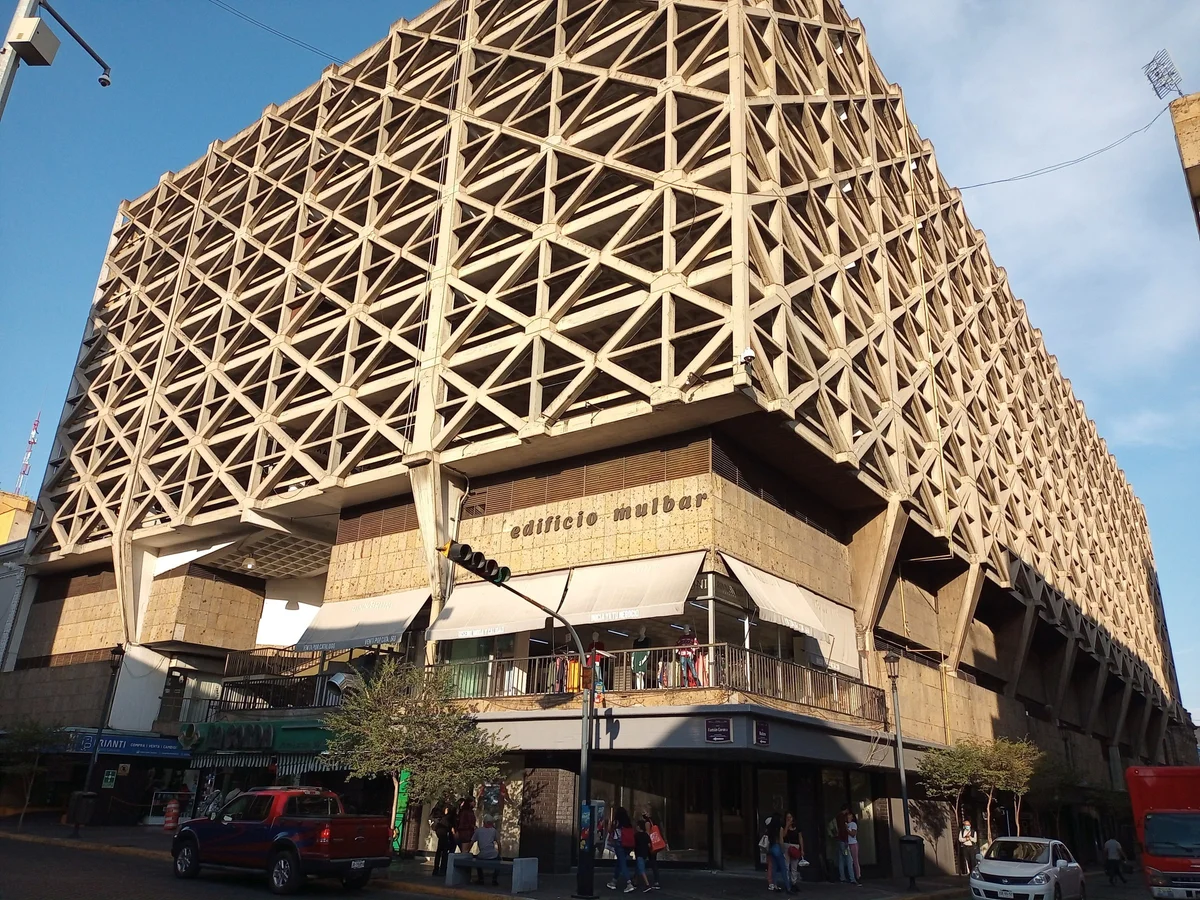
Quick answer: Guadalajara is Mexico second city and an inland market outside the restricted zone, so foreign buyers take direct title with no fideicomiso and no annual trustee fee. Indicative asking bands run about $110,000 to $220,000 in the established colonias, $180,000 to $400,000 in Providencia, Chapalita and Americana, and higher in Zapopan gated developments.
Guadalajara is the market foreign buyers drive through on the way to Puerto Vallarta, which is a mistake the arithmetic does not support. Two hours inland, the same capital buys roughly twice the square metres, takes direct title instead of a bank trust, and lets to software engineers and graduate students rather than to tourists. Read Lake Chapala alongside this page: the two markets sit 45 minutes apart and attract entirely different buyers.
Hub: can foreigners buy property in Mexico. Compare: Mexico City and Queretaro.
Districts and indicative prices
The metropolitan area runs across Guadalajara proper, Zapopan, Tlaquepaque and Tonala, and the foreign-relevant stock concentrates in a handful of colonias. Prices here are asking levels recorded on public listings in September 2026.
| District | Indicative band | Character | Rental tenant |
|---|---|---|---|
| Americana and Lafayette | $180,000 to $380,000 | Walkable, bars, early 20th century | Young professionals |
| Providencia | $200,000 to $420,000 | Established, leafy, well served | Families, executives |
| Chapalita | $170,000 to $340,000 | Residential, mid century, gardens | Families |
| Zapopan gated | $220,000 to $500,000 | Newer, security, amenities | Corporate relocations |
| Centro and Tlaquepaque | $110,000 to $250,000 | Historic, mixed condition | Students, artisans |
| Outer colonias | $80,000 to $180,000 | Local residential | Local families |
The tenant base is a technology sector often described as Mexico’s Silicon Valley, alongside a large private healthcare cluster and several universities. That produces professional tenants on twelve-month leases and rents set in pesos, which is a different asset from a nightly rental on a beach and should be modelled as one.
Insider tip: ask whether the building has its own water storage and a backup pump. The metropolitan supply is under seasonal pressure, and in Guadalajara the buildings that never notice a shortage are the ones that invested in storage, which rarely appears in a listing.
Why does Guadalajara sit outside the restricted zone?
Guadalajara lies roughly 250 km inland from the Pacific, comfortably outside the 50 km coastal band and the 100 km border band where Article 27 restricts direct foreign ownership. Title here is taken by foreign buyers exactly as Mexican nationals take it, which removes the fideicomiso, the SRE permit and about $2,700-5,000 of setup cost.
The contrast with Puerto Vallarta, in the same state and two hours away by road, is the sharpest illustration in Mexico of what the restricted zone actually costs. Both are Jalisco, both close before a Jalisco notario, both apply the same state transfer tax. One requires an SRE permit carrying a MXN 21,650 federal duty, a trust bank, a fifty-year instrument and $500-800 every year thereafter; the other requires none of it. Over a ten-year hold the avoided cost runs $7,700-13,000, which on a $190,000 Guadalajara apartment is roughly 4-7% of the purchase price and enough to move a net yield by 40 basis points.
| Requirement | Guadalajara | Puerto Vallarta |
|---|---|---|
| SRE permit and federal duty | Not required | MXN 21,650 |
| Bank trust establishment | Not required | $500-1,500 |
| Annual trust fee | None | $500-800 per year |
| Title held by | You, directly | Trust bank, you as beneficiary |
| Typical closing time | 30-50 days | 45-90 days |
What does property cost across the metro area?
Prices range from $1,200 per square metre in parts of Centro to $4,000 in Zapopan’s Puerta de Hierro corridor, a spread of more than three times inside one metropolitan area. Pricing in this market tracks perceived security and school access more than it tracks architecture, which is the single most important thing a foreign buyer needs to internalise before comparing listings.
| Zone | USD per sqm | 90 sqm 2BR | Tenant base |
|---|---|---|---|
| Puerta de Hierro (Zapopan) | $2,500-4,000 | $225K-360K | Corporate executives, families |
| Providencia | $2,000-3,200 | $180K-288K | Professionals, established families |
| Colonia Americana / Lafayette | $1,800-2,800 | $162K-252K | Remote workers, creatives |
| Chapalita | $1,600-2,400 | $144K-216K | Families, academics |
| Centro Historico | $1,200-1,800 | $108K-162K | Students, value entry |
What separates two similar apartments in the same colonia is rarely the apartment. Three attributes carry most of the spread:
- Gated access with a funded security contract adds 10-15% in this market and widens the tenant pool materially
- Walking distance to a university campus supports 10-month academic tenancies at a rent premium of 8-12% per square metre
- Art nouveau or early-modernist detail in Americana carries a scarcity premium that new construction cannot reproduce
One caution on the numbers above: asking prices in Guadalajara diverge sharply from the values the paperwork uses. The notario calculates ISAI from the avaluo, while Zapopan and Guadalajara each assess predial from their own cadastral rolls, which are updated on different cycles. A buyer comparing two apparently identical apartments across the municipal boundary is often comparing two different tax bases.
Who actually rents in Guadalajara?
Three tenant pools dominate this market and they overlap surprisingly little, which is why any single yield figure for the city misleads foreign buyers. Technology employees at Intel, IBM, Oracle and Flex sign 12 to 24-month leases at MXN 18,000-32,000; students from UdeG, ITESO and Tec fill smaller units on 10-month cycles at MXN 6,000-12,000; and remote workers take furnished one-to-six-month lets in Americana.
| Tenant pool | Typical monthly rent | Lease length | Where |
|---|---|---|---|
| Technology professional | MXN 18,000-32,000 | 12-24 months | Zapopan, Providencia |
| Corporate executive | MXN 30,000-55,000 | 12-24 months | Puerta de Hierro |
| Remote worker, furnished | MXN 20,000-30,000 | 1-6 months | Americana, Lafayette |
| University student | MXN 6,000-12,000 | 10 months | Centro, Chapalita |
Concentration risk is genuinely lower here than in any single-industry Mexican market, and that is worth pricing. A Tulum apartment depends on one demand source, tourism, which collapsed by roughly 70% in 2020 and takes an annual September trough of 35-45% vacancy. A Guadalajara unit can be re-let to a technology professional at MXN 18,000-32,000, a graduate student at MXN 6,000-12,000, or a remote worker at MXN 20,000-30,000, and those three pools respond to unrelated forces. Compare the single-source exposure in our Mexico rental yield guide before assuming diversification is priced in.
Tenant composition explains why Guadalajara behaves unlike either a coastal market or Mexico City. Technology employment here is concentrated in electronics manufacturing and software services that have operated in Jalisco since the 1990s, which produces a tenant with a multi-year horizon rather than a seasonal one. Student demand is structurally reliable but pays roughly a third of professional rent and vacates every June, so a unit underwritten on student tenancies needs a 10-month revenue assumption rather than 12. The remote-worker pool is the newest and the most volatile: it arrived quickly after 2020, it concentrates in a handful of streets, and it is the pool most exposed to any future short-stay restriction.
Rental economics: a worked example
Price the entry position most foreign buyers take, a 90 square metre two-bedroom in Colonia Americana, at $2,111 per square metre and it comes to $190,000, with closing at 6% taking the all-in basis to $201,400. Unfurnished on an annual lease it earns roughly MXN 21,000 a month, or $13,846 a year converted at the Banxico reference rate, and which is 6.9% gross before operating costs.
| Line | Annual USD |
|---|---|
| Gross rent, MXN 21,000/month | $13,846 |
| Building maintenance, MXN 2,000/month | −$1,319 |
| Predial (Guadalajara) | −$420 |
| Landlord insurance | −$380 |
| Management at 7% | −$969 |
| Vacancy reserve, three weeks | −$798 |
| Repairs reserve at 4% | −$554 |
| Net operating income | $9,406 |
That NOI is 4.7% net on the $201,400 all-in basis, and rises toward 5.5% on a furnished medium-term let at MXN 26,000-30,000 where the tenant covers utilities. Where this market beats a coastal equivalent, line by line:
- No 5% lodging tax, which Quintana Roo and several coastal states charge on accommodation
- Management at 7% rather than 25-35%, because an annual tenancy needs no guest operation
- No furnishing capex of $15,000-30,000 on the unfurnished model, and no year-two refresh
- Void of two to three weeks rather than the 35-45% of nights a nightly calendar leaves empty
- Predial near $420 a year against $550-1,400 in Mexico City
Colonia Americana: the yield play and its risk
Colonia Americana is the strongest yield location in Guadalajara and carries the most concentrated policy risk, a combination foreign buyers should understand before treating it as a default. Time Out named it the coolest neighbourhood in the world in 2022, accelerating an influx already underway and pushing furnished rents up roughly 40-60% across three years.
The pattern that followed is the same one Mexico City’s Roma Norte produced two years earlier, and it is worth naming precisely because the second occurrence is predictable in a way the first was not. Rapid foreign and domestic in-migration into a supply-constrained colonia raises rents faster than local wages, displacement becomes a political subject, and short-stay letting becomes the visible target regardless of whether it is the actual cause. Guadalajara has not yet legislated a night cap of the kind Mexico City approved in 2024, but the discussion is live, and any foreign buyer underwriting Americana on nightly income is underwriting a policy assumption rather than a market one.
| Letting model | Monthly revenue | Restriction exposure |
|---|---|---|
| Nightly, under 30 days | MXN 28,000-42,000 gross | Live policy risk; no cap yet legislated |
| Furnished 1-6 months | MXN 20,000-30,000 | Outside any plausible short-stay rule |
| Unfurnished annual | MXN 18,000-24,000 | Lowest; standard lease and predial only |
The defensible position in Americana is a furnished medium-term let of one to six months at MXN 20,000-30,000. It sits outside any plausible short-stay restriction, serves the remote-worker demand the colonia actually generates, and produces a net yield close to nightly letting once platform fees, cleaning and vacancy come out.
Pros and cons for investors
Guadalajara’s ledger is written by its economy: a technology and university city that tourism barely touches. That is why annual tenancies net 4.5-5.5% with no lodging tax and no season, and equally why the resale pool is domestic and the security picture varies street by street.
| Advantages | Disadvantages |
|---|---|
| Direct fee-simple title, no trust, no annual fee | Resale pool is domestic; exit depends on peso mortgage rates |
| Entry $1,200-4,000 per sqm, 40-55% below Mexico City | Security varies sharply by colonia, not by city |
| 4.5-5.5% net on annual tenancies, no lodging tax | Water supply depends on Lake Chapala levels |
| Three independent tenant pools reduce concentration | Air quality deteriorates through the spring dry season |
| Mexico’s largest technology employer cluster | Student tenancies produce 10-month, not 12-month, revenue |
| No hurricane exposure, no seasonality | Americana carries live short-stay policy risk |
Two of those lines are worth a number rather than a phrase: avoided fideicomiso costs are worth $2,700-5,000 at closing plus $500-800 a year against Puerto Vallarta, and a student-tenancy unit produces 10 months of rent rather than 12, cutting effective gross by roughly 17%.
The security point deserves precision rather than euphemism. Jalisco’s state-level statistics are worse than Queretaro’s and better than several northern states, but the metro-area figure is close to meaningless for a buyer: Puerta de Hierro, Providencia and Chapalita operate very differently from parts of the eastern municipalities, and the difference is measured in kilometres. Any foreign buyer should read at colonia level, visit at night, and treat a city-level statistic as marketing rather than data.
Who should buy in Guadalajara?
Guadalajara offers foreign buyers three distinct positions, separated by tenant type as much as by budget: roughly $108,000-162,000 for a Centro or Chapalita student-tenancy unit, $162,000-252,000 for an Americana or Providencia apartment on professional or medium-term lets, and $225,000-360,000 for Puerta de Hierro stock bought for corporate tenancy and capital preservation.
- Yield-focused diversifier → Americana or Providencia 2BR, $162,000-252,000, 4.7-5.5% net
- Student-housing operator → Centro or Chapalita, $108,000-162,000, 10-month cycles, highest gross
- Corporate-tenancy buyer → Puerta de Hierro, $225,000-360,000, gated, executive tenant base
Each profile files one annual ISR return against an RFC and pays predial near $420 a year. The nightly-rental operator should be cautious here. Guadalajara’s tourism base is thin next to Quintana Roo or Puerto Vallarta, and Americana, the only colonia with genuine nightly demand, is where restriction risk is concentrated.
What red flags should pause a Guadalajara purchase?
Six patterns account for most foreign-buyer losses in Guadalajara, and two of them are Jalisco problems rather than Mexican ones. Each is far cheaper to discover than to inherit: an independent legal and colonia review runs MXN 18,000-35,000, against remediation costs that foreign buyers in this market routinely find start well above it.
- A city-level security statistic offered in place of a colonia-level read
- Nightly-rate projections for Colonia Americana with no reference to restriction risk
- A gated development marketed on security with no funded guard contract or reserve
- Ejido land history on the metro fringe without documented conversion to dominio pleno
- Predial arrears near $420 a year, which attach to the property rather than the seller
- Rent quoted in dollars, signalling a listing aimed at foreigners rather than the real tenant market
What should you verify before committing?
Eight checks settle a Guadalajara purchase, and unusually the first is not a document at all. The colonia read comes first because a correct title on a street the target tenant will not live on is the one defect here that no price reduction repairs, and establishing it requires a visit rather than a file.
- Read security at colonia and street level, and visit after dark before offering.
- Confirm which tenant pool the unit actually serves, and price rents for that pool only.
- Pull the escritura chain and a certificado de libertad de gravamen from the Jalisco Registro Publico de la Propiedad, checking for any pending succession.
- Verify no ejido origin on fringe developments, or documented dominio pleno conversion.
- Read the reglamento de condominio for letting rules and the reserve fund position.
- Confirm water supply arrangements and any history of rationing in the colonia.
- Request a constancia de no adeudo for predial from whichever municipality holds the property, since Guadalajara and Zapopan administer and bill separately.
- Price comparable rents in pesos from live listings, not from the seller.
Priced out, the checklist above comes to this: MXN 4,000-9,000 and 3-5 business days for the escritura and libertad de gravamen search, MXN 18,000-35,000 for independent legal review, and MXN 12,000-25,000 for a structural inspection on pre-1985 Americana stock. Total diligence lands near 1.5-2.5% of a $190,000 purchase, against closing costs of 6% and a 4.7% net yield that the wrong colonia can halve.
Title work in Jalisco is straightforward and largely fixable. A unit in the wrong colonia for its intended tenant is neither, which is why this checklist opens with a walk rather than a document request.
The inland ownership advantage is set out in the restricted zone explained, the monthly numbers in cost of living in Mexico, and the purchase costs in the closing cost breakdown.
Frequently Asked Questions
Yes. The metro area sits roughly 250 km inland from the Pacific, outside the restricted zone, so foreign buyers take direct fee-simple title with no SRE permit, no trust bank and no annual fee, saving about $2,700-5,000 at closing and $500-800 a year versus Puerto Vallarta.
From $1,200 per sqm in Centro to $4,000 in Puerta de Hierro. Colonia Americana runs $1,800-2,800 and Providencia $2,000-3,200, so a 90 sqm two-bedroom costs roughly $162,000-288,000, about 40-55% below equivalent Mexico City stock.
Roughly 6-8% gross and 4.5-5.5% net. A $190,000 Americana two-bedroom at MXN 21,000 a month grosses $13,846 and nets about $9,406 after maintenance, predial of $420, insurance, 7% management, a three-week void and repairs.
Technology professionals at Intel, IBM, Oracle and Flex on 12-24 month leases; university students from UdeG, ITESO and Tec on 10-month cycles at MXN 6,000-12,000; and remote workers in Colonia Americana on furnished one-to-six-month lets at MXN 20,000-30,000.
It is the strongest yield location and carries the most policy risk. Time Out named it the world's coolest neighbourhood in 2022, pushing furnished rents up 40-60% in three years and drawing gentrification backlash. Furnished medium-term letting is the defensible model rather than nightly.
Security varies by colonia rather than across the metro, so read at street level. Water depends on Lake Chapala levels. Air quality deteriorates in the spring dry season. And the resale pool is domestic, so exit depends on Mexican mortgage conditions.
Guadalajara is the yield and infrastructure play with tech and student tenants at 4.5-5.5% net. Lake Chapala is the retirement play with the largest US and Canadian retiree concentration in Mexico, lower yields, and a substantially foreign resale pool.


Get a vetted Mexico shortlist
US and Canadian buyers use this to skip the developer sales deck: tell us the budget and the market, and we come back with 3 to 5 options and the net yield maths behind each one.
Want options matched to your budget and risk profile?
Three questions, one screen. We reply within one business day.
Get a vetted Mexico shortlist