
Valle de Bravo Real Estate: Foreign Buyer Guide 2026
Valle de Bravo property for foreign buyers: direct title, $1,400-3,600 per sqm, CONAGUA federal shoreline rules and the weekend-only occupancy math.
By Mexico Invest Editorial · Updated August 23, 2026 · 14 min read
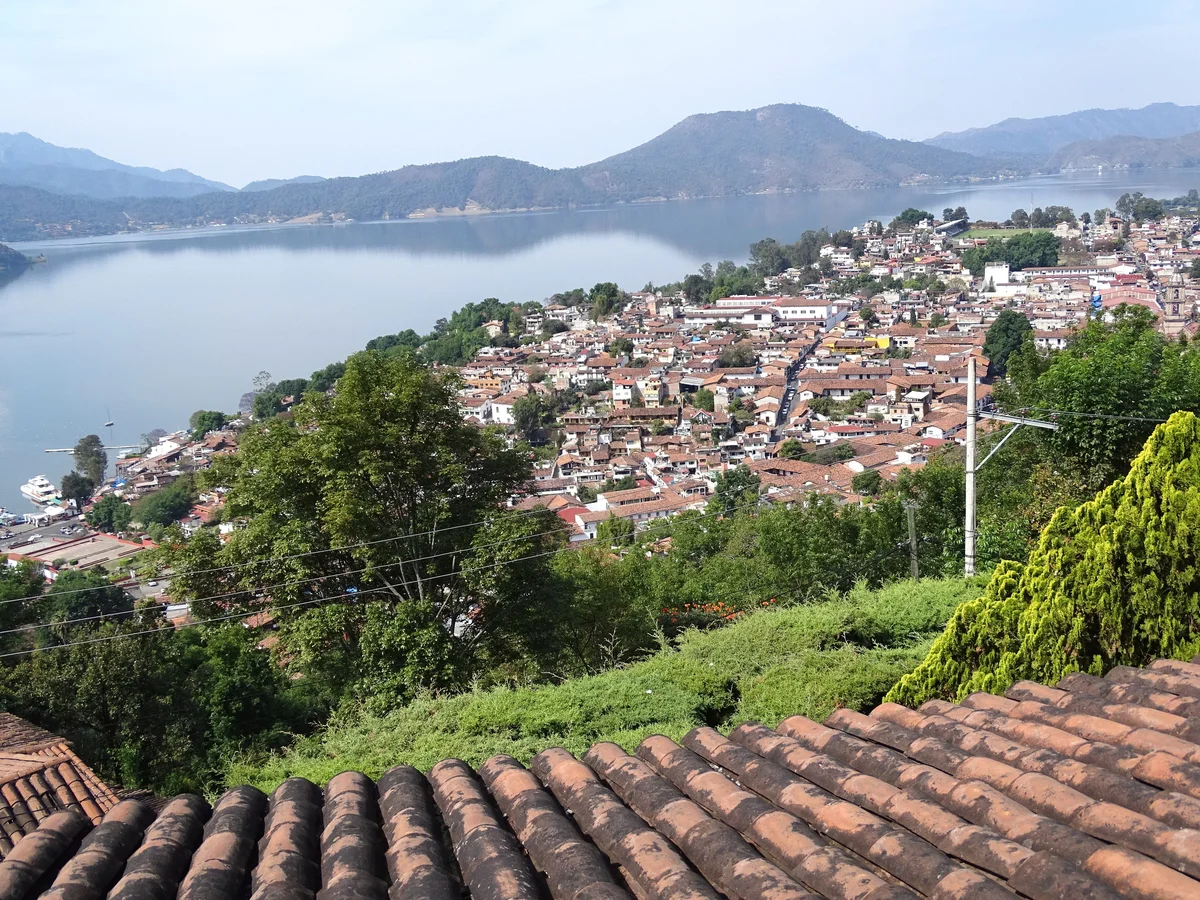
Quick answer: Valle de Bravo gives foreign buyers direct fee-simple title with no fideicomiso at $1,400-3,600 per square metre, but the letting model is weekend-only at roughly 26% annual occupancy. Two items decide a purchase and neither appears in listings: CONAGUA’s federal strip along the shoreline, and whether the land ever left ejido status.
Valle de Bravo is Mexico City’s weekend valve, and it has been priced as one for four decades. Pine slopes, a large reservoir, world-class paragliding off El Peñón and a Pueblo Mágico centre draw capital that has nothing to do with rental arithmetic. For a foreign buyer the town rewards clear eyes about what the escritura actually conveys. Read the Mexico City foreign buyer guide for the demand engine that feeds this market.
Why does no fideicomiso apply in Valle de Bravo?
Valle de Bravo is a reservoir town in the State of Mexico, roughly 145 km southwest of the capital and about 160 km inland from the Pacific, which places it outside the 50 km coastal band that Article 27 restricts. Foreign buyers therefore take direct fee-simple title before a notario publico, and no trust bank is required.
The saving is real but modest, and it changes the shape of the closing statement rather than its size. A coastal purchase carries an SRE permit at MXN 21,650, bank set-up of roughly $1,500-2,500 and an annual trust fee of $500-800 that runs for the entire hold. None of those three lines exists here.
| Closing line | Valle de Bravo | Restricted-zone coast |
|---|---|---|
| SRE permit | Not required | MXN 21,650 |
| Trust bank set-up | Not required | $1,500-2,500 |
| Annual trust fee | Not required | $500-800 every year of the hold |
| ISAI acquisition tax | About 2% (State of Mexico) | 2-3% depending on state |
| Notario, registry, appraisal | 2.5-4% | 2.5-4% |
| Total all-in | 5-7% | 7-9% |
What replaces the trust lines is a heavier diligence burden on land origin and shoreline rights, which costs less in fees and considerably more in legal hours. Three practical differences follow for a foreign buyer working from abroad:
- The purchase closes as an ordinary escritura between the parties, so no bank instruction letters sit on the critical path and a 30-45 day closing is realistic.
- The exit is equally direct: a foreign seller here transfers to the next owner rather than unwinding a fideicomiso, and ISR on the gain is computed exactly as it would be for a Mexican vendor.
- Direct title removes none of the ordinary work. A certificado de libertad de gravamen, a boundary survey and a full registry chain all still apply, and in this town that checklist carries more weight than it does on the coast.
See the restricted zone rules for where the line actually falls.
What does property cost in Valle de Bravo?
Built area in Valle de Bravo costs $1,400-3,600 USD per square metre in 2026, and the spread between zones is wider than in almost any comparable Mexican market. Avándaro commands a premium for golf access and lake views, while this market prices villages ten minutes further out at a third of that level.
| Zone | USD per sqm built | Typical house price | Character |
|---|---|---|---|
| Avándaro (golf, lake views) | $2,400-3,600 | $650,000-1,800,000 | Gated estates, mature gardens, the prestige address |
| La Peña and lake-view slopes | $2,200-3,400 | $520,000-1,200,000 | Steep lots, dramatic views, difficult access |
| Centro (Pueblo Mágico core) | $1,700-2,600 | $290,000-620,000 | Walkable, tile roofs, tight lots, weekend noise |
| Santa María Ahuacatlán | $1,500-2,300 | $260,000-480,000 | Residential, quieter, five minutes from centre |
| Los Álamos and San Gaspar | $1,400-2,000 | $220,000-400,000 | Newer subdivisions, no view premium |
| Colorines and outer reservoir | $900-1,600 | $130,000-290,000 | Cheapest entry, thinnest resale, verify land origin |
Land trades separately and often irrationally. Serviced lots inside Avándaro run $180-380 per square metre, while unserviced hillside parcels twenty minutes out are offered at $60-140. The gap looks like an arbitrage and rarely is, because a cheap parcel here is usually missing at least one of four things:
- A CFE connection, where extending the nearest line across private land costs $6,000-30,000 and needs easements the seller may not hold.
- A paved, year-round approach, which matters in a town that receives most of its rain in four months.
- A registered water source: a municipal connection, or a well with its own CONAGUA title, not a neighbour’s informal agreement.
- A clean chain of title back to a first private escritura, which is the item that most often turns out to be missing.
A red flag on any raw-land listing here is a price that only makes sense before servicing. Treat servicing as a line of $40,000-90,000 rather than a detail, and confirm the licencia de construcción pathway with the municipality before, not after, signing anything.
Pricing here also moves on the calendar rather than on interest rates. Listings tighten in the weeks before Semana Santa and the December holidays, when owners see the town full and hold out, and soften through the September rains when nobody is looking at houses in fog.
The Cutzamala problem: who actually owns the shoreline
The reservoir is a national water body rather than a private lake. Built by CFE in 1947, it now forms part of the Sistema Cutzamala, which supplies roughly 20% of the drinking water reaching the Valle de México, and that status is why foreign buyers find federal rules attached to every metre of frontage here.
| What you are buying | Who controls it | Instrument |
|---|---|---|
| Land above the maximum ordinary water line | The owner | Escritura, registered |
| The 10 m federal strip below that line | CONAGUA | Federal zone, no private title exists |
| A dock, jetty or boathouse in the strip | CONAGUA | Time-limited concession, assignable only with authorisation |
| The water and its level | CONAGUA as system operator | Ley de Aguas Nacionales |
| Mooring and navigation | Federal and municipal rules | Permits, not property |
| The view across the water | Nobody | Priced in, protected by nothing |
Two consequences follow, and neither is disclosed in a normal listing. First, the Ley de Aguas Nacionales reserves a federal zone measured ten metres horizontally from the line of maximum ordinary water, and private title stops at that boundary. Docks, boathouses and the tiled platforms that appear in every waterfront photograph sit inside that strip under a CONAGUA concession granted for a defined term.
A concession is an administrative permission, not a property right. Terms typically run 5 to 30 years, renewal is discretionary, and assignment requires CONAGUA’s written authorisation rather than a clause in the sale contract. Buyers regularly discover after closing that the dock they paid a premium for sits under a concession that lapsed years ago or still names a previous owner. Since a usable dock is worth $40,000-120,000 of asking price on a house in this band, pricing one as though it were part of the freehold is the most expensive single error available here.
Second, the water level is a policy variable rather than a constant. During the 2024 drought the Cutzamala system fell to roughly 26-30% of capacity, and the Valle de Bravo shoreline retreated far enough to strand private docks metres above the waterline and expose mudflats where owners had priced permanent frontage. Levels recovered across the following rainy seasons, but the episode is the clearest evidence available that a lake-view premium here carries hydrological risk that no title search, no notario and no appraisal will surface. Ask any seller for photographs of the same shoreline taken in May 2024.
Before paying any premium for water access, work through a three-item checklist and get each answer in writing:
- The concession number, its holder of record, its expiry date and CONAGUA’s written position on assignment to a new owner.
- The surveyed position of the 10 m federal strip relative to the property boundary shown on the escritura, at a survey cost of $600-1,500.
- Whether any built structure sits inside that strip without a concession, which is an enforcement exposure the buyer inherits and which takes 6-18 months to regularise where it can be regularised at all.
Does ejido land still affect purchases here?
Ejido and comunal origin is the largest title risk foreign buyers face around the reservoir, concentrated in the hills and villages rather than in the urban core. A parcel of social property becomes privately sellable only after the ejidal assembly grants dominio pleno and the conversion is recorded at the Registro Agrario Nacional and the state public registry.
The mechanics matter because the failure mode is total. A purchase of land still held under ejido or comunal regime is void against the agrarian community regardless of what was signed, how much was paid, or whether a notario appeared at some stage of the process. Compensation is not the remedy; the community recovers the land, and a foreign buyer with no standing in the agrarian courts recovers nothing.
Valle de Bravo has four decades of weekend-house construction pushing outward from the town into exactly the land classes where this applies, and the discount pattern is consistent. A hillside parcel offered 30-50% below neighbouring asking prices is the clearest red flag in the municipality: the chain of title never completed, and the vendor is not merely motivated. Exposure is not uniform, and it maps closely onto distance from the centre:
- Centro, Avándaro and the established gated developments: private title generally runs back 40 years or more, and the residual risk is boundary error rather than origin.
- Santa María Ahuacatlán, San Gaspar and the village ring: mixed, with parcels regularised across a 30 year span, so the RAN certificate has to be produced rather than assumed. Allow 4-8 weeks to obtain it.
- Hillside and lakeside parcels outside any registered subdivision: the highest exposure in the municipality, and where almost every foreign-buyer loss here has occurred.
- Any listing marketed as a terreno with no cadastral key: treat as unpurchasable until the key exists and the municipality confirms it.
The ejido land risk guide sets out the full verification sequence.
| Document | What it proves | Where it lives |
|---|---|---|
| Acta de asamblea granting dominio pleno | The community released the parcel | Ejido records, certified copy |
| RAN cancellation certificate | Agrarian registry closed the file | Registro Agrario Nacional |
| First private escritura | The parcel entered private title | State public registry |
| Certificado de libertad de gravamen | No liens, no pending litigation | State public registry, dated within 30 days |
| Current predial receipts | Municipal cadastre recognises the owner | Valle de Bravo municipality |
| Boundary survey by a licensed surveyor | Physical extent matches the registry | Commissioned by the buyer |
Inside the town centre and the established gated developments this question is usually settled and the registry chain is clean back several decades. The further a listing sits from the centre, the more the answer has to be proven rather than assumed.
How does weekend-only demand change the rental maths?
Valle de Bravo lets on 85-110 nights a year, or near 26% annual occupancy, because demand in this market drives two hours from a single city, arrives Friday evening and leaves Sunday afternoon. A compliant Playa del Carmen one-bedroom weights out at 73% across the year, which is nearly three times the utilisation.
Take a 180 square metre three-bedroom house in Santa María Ahuacatlán at $1,900 per square metre, or $342,000, with closing at 6.5% taking the all-in basis to $364,000. Full-service weekend letting at a $310 average nightly rate across 95 let nights grosses $29,450, which is 8.1% gross on that basis and looks like one of the stronger numbers in Mexican residential. The net line is where the model reveals itself, because a house with a garden, a pool and a caretaker carries fixed costs that do not scale down to 95 nights of use.
| Annual line | USD |
|---|---|
| Gross: 95 let nights at $310 | 29,450 |
| Platform and management at 22% | -6,479 |
| Caretaker and gardener (MXN 8,000/month) | -5,275 |
| Utilities and internet, year-round | -1,320 |
| Predial and municipal charges | -620 |
| Pool, garden and building maintenance | -2,100 |
| Liability and contents insurance | -780 |
| Linens, consumables, deep cleans | -1,450 |
| Net | 11,426 |
Net of $11,426 on a $364,000 basis is 3.1%. Now run the same house on an annual unfurnished lease to a permanent resident at MXN 26,000 a month, which is $17,140 a year at the Banxico reference rate, or 4.7% gross. After 8% management, predial, maintenance and insurance the net is roughly $12,970, or 3.6%. The long lease grosses forty percent less and nets more, because the tenant absorbs utilities, occupies the house continuously and removes the caretaker line entirely. That inversion is specific to weekend markets and it is the single most useful fact in this guide.
Three practical consequences follow for anyone underwriting here:
- Model the year from the actual calendar of 52 weekends, five or six puentes and the Semana Santa and December peaks, never from an annual average occupancy figure.
- Register with SAT for RFC and CFDI before the first booking, because platform withholding on an unregistered non-resident landlord runs at the top rate and is not recoverable without a filing history.
- Treat the caretaker as a structural cost of the asset class rather than an option, because an unattended house in a pine forest at 1,830 m deteriorates faster than the rent it earns.
The rental yield guide shows how the same monthly modelling applies across markets.
Pros and cons for investors
Valle de Bravo trades on lifestyle scarcity rather than yield, and an honest ledger reflects that. This market has produced durable capital appreciation over multi-decade holds while delivering net returns of about 3.1%, which is a coherent proposition for one kind of buyer and a poor one for another.
| Strengths | Weaknesses |
|---|---|
| Direct fee-simple title, no fideicomiso, no annual trust fee | Net yields near 3.1% despite 8.1% gross headline |
| Genuinely scarce lakeside supply two hours from a 22-million-person metro | Occupancy near 26% against 73% on the Riviera Maya |
| Deep domestic buyer pool that does not depend on foreign sentiment | Shoreline rights sit with CONAGUA, not with the escritura |
| Pueblo Mágico status and a mature amenity base since the late 1950s | Ejido and comunal exposure on outlying parcels |
| Peso-denominated demand insulated from US travel cycles | Thin foreign resale pool; marketing periods of 8-18 months |
| Strong holiday-peak pricing power at Semana Santa and December | Fixed staffing costs that do not scale with let nights |
The ledger tips one way or the other on three questions, and they are worth answering before viewing anything:
- Will the house be used personally at least 30 nights a year, or is this a pure cash-return position?
- Is the holding period ten years or longer, which is the horizon on which land scarcity has historically paid here?
- Can the buyer fund a caretaker, predial and maintenance of roughly $9,000 a year through a soft letting season without selling?
Who should buy in Valle de Bravo?
Valle de Bravo suits the buyer whose primary return is use rather than cash flow, and at 3.1% net the arithmetic is unambiguous about which scenarios work. Three buyer scenarios account for most sound purchases foreign buyers make here, and a fourth, common one is consistently disappointed by the numbers rather than by the town.
| Buyer scenario | Horizon | Expected outcome | Verdict |
|---|---|---|---|
| Owner-user with CDMX ties, 40-60 nights of own use | 10 years+ | Carry largely offset, deep domestic resale bid | Works |
| Long-horizon holder buying capped lakeside supply | 10-20 years | About 3.1% net plus land scarcity | Works |
| Family buying to consolidate a multi-generation weekend habit | Indefinite | Use value dominates; yield is incidental | Works |
| Pure yield investor with no personal use | Any | 3.1% net against 5-7% available elsewhere | Look elsewhere |
The owner-user with CDMX ties is the natural buyer. Someone working or living in Mexico City who will use the house 40-60 nights a year and let it opportunistically the rest of the time captures the amenity, offsets part of the carry and holds an asset with a deep domestic bid. A $364,000 house used forty nights and let sixty produces roughly $7,000-8,000 of net income against a carry near $9,000, which means the weekend habit costs almost nothing in cash terms while the predial and ISR position stays straightforward.
The long-horizon appreciation buyer works too. Lakeside supply is physically capped, the Pueblo Mágico core cannot expand, and demand is fed by a metropolitan area of more than 22 million people whose upper income tier has treated this town as its weekend address since the golf club opened in the late 1950s. A ten-year hold underwritten on 3.1% net plus land scarcity is a defensible position, provided the buyer has verified the origin of the land rather than assumed it.
The pure yield investor should look elsewhere. An investor who needs cash return and has no personal use for the house is paying a lifestyle premium to earn 3.1% net, which Querétaro and Mexico City both beat on a comparable direct-title basis with far better liquidity. Compare against San Miguel de Allende if the draw is a colonial weekend town rather than water. The direct competitor for the same capital weekend buyer, without the lake and at a lower entry, is Cuernavaca.
What red flags should stop a Valle de Bravo purchase?
Certain listing patterns in this market signal a defect rather than an opportunity, and each of the five below has cost foreign buyers money in the past decade. A red flag here is not a reason to walk immediately; it is a reason to stop paying for anything until the specific question is answered in writing.
- “Private dock included.” No dock is private. Ask for the CONAGUA concession number, its expiry and its holder of record before the price includes anything below the ten-metre federal line.
- A hillside parcel 30-50% below neighbouring asking prices. Assume ejido or comunal origin with incomplete dominio pleno until the RAN cancellation certificate and first private escritura are both in hand.
- Photographs taken only in the rainy season. Request images of the same shoreline from mid-2024, when the Cutzamala system was near 26-30% of capacity, before paying a water-frontage premium.
- Occupancy projections above 40%. The town lets on weekends and holidays. A seller modelling 50% or 60% annual occupancy is describing a different market.
- Construction with no licencia de construcción on file. Extensions and casitas built without municipal permits are common here and become the buyer’s regularisation problem, typically costing $8,000-25,000 to resolve.
What should you verify before signing?
Verification in Valle de Bravo requires proof of land origin and water rights rather than the tax and trust questions that dominate coastal purchases. Foreign buyers should work through the following checklist with a Mexican real estate attorney independent of the seller and the agency, and budget $3,000-6,000 and three to four weeks for the exercise.
- Certificado de libertad de gravamen dated within 30 days of closing, ordered directly and not accepted second-hand.
- Unbroken registry chain to the first private escritura, with the RAN cancellation certificate wherever the parcel has agrarian origin.
- CONAGUA concession status for every structure inside the 10 m federal strip, in the current owner’s name and unexpired.
- Surveyed boundaries by a licensed surveyor at $600-1,500, reconciled against the registry description and the cadastral record.
- Predial receipts covering the last 5 years, plus written municipal confirmation of no arrears.
- Licencia de construcción and occupancy documents for every built element, including additions made after the original permit.
- CFE account history and a written water source: municipal connection, a well with its own CONAGUA title, or a delivery contract.
- HOA or condominium regime documents, the current fee schedule and minutes of the last 2 assemblies where applicable.
- Seller RFC and tax position, so the notario calculates the ISR withholding correctly at closing rather than after it.
Do not accept an agency’s assurance on any of the nine. The due diligence guide sets out how each item is obtained and what a clean answer looks like.
Frequently Asked Questions
Yes. Valle de Bravo lies in the State of Mexico about 145 km southwest of the capital and roughly 160 km inland from the Pacific, which places it outside the 50 km coastal band Article 27 restricts. Foreign buyers take direct fee-simple title before a notario publico with no SRE permit and no trust bank, saving about $2,700-5,000 at closing and $500-800 in every year of the hold compared with a coastal purchase.
Built area runs $1,400-3,600 USD per square metre in 2026 depending on zone. Avandaro, with golf access and lake views, sits at $2,400-3,600, the Pueblo Magico centre at $1,700-2,600, and outer villages such as Colorines at $900-1,600. A 180 sqm house in Santa Maria Ahuacatlan therefore costs roughly $270,000-414,000 before closing costs of 5-7%.
No, not the water's edge. The reservoir is a national water body inside the Cutzamala system, and the Ley de Aguas Nacionales reserves a federal strip measured ten metres horizontally from the maximum ordinary water line. Docks, boathouses and jetties inside that strip exist under a CONAGUA concession, not under the escritura, and a concession is time-limited and not automatically transferable with the sale.
Roughly 8% gross and 3% net on weekend short-term letting, or about 4.7% gross and 3.6% net on an annual lease. Weekend demand concentrates into 85-110 let nights a year, near 26% annual occupancy, against the 73% a compliant Playa del Carmen one-bedroom weights out at. Fixed staffing costs do not scale down with those nights, which is why the gross premium disappears in the net line.
Yes, in the hills and villages around the reservoir rather than in the consolidated urban core. Substantial land around the lake originated as ejido or comunal holdings, and a parcel only becomes privately sellable after the assembly grants dominio pleno and the change is recorded at the Registro Agrario Nacional and the state public registry. A parcel offered 30-50% below neighbouring asking prices is usually cheap for exactly this reason.
About 145 km by road, which is roughly two hours off-peak from Santa Fe or Interlomas via Toluca and the MEX-134. Friday afternoon departures routinely take three to four hours, and Sunday returns are similar. That drive-time asymmetry, not distance, is what confines the rental market to weekends and public holidays.
Yes, visibly and directly. The reservoir fell to roughly 26-30% of capacity in mid-2024, stranding private docks metres above the waterline and exposing shoreline that buyers had priced as permanent water frontage. Levels recovered through the following rainy seasons, but the episode established that a lake-view premium in Valle de Bravo carries hydrological risk that no title search discloses.
Get a vetted Mexico shortlist
US and Canadian buyers use this to skip the developer sales deck: tell us the budget and the market, and we come back with 3 to 5 options and the net yield maths behind each one.
Want options matched to your budget and risk profile?
Three questions, one screen. We reply within one business day.
Get a vetted Mexico shortlist