
Mexico Golf Course Property: Fees and Yields 2026
Golf course property in Mexico, premiums, membership fees, net yields, HOA dynamics, seasonal demand, and Cabos vs PV vs Riviera Maya due diligence.
By Mexico Invest Editorial · Updated July 9, 2026 · 18 min read
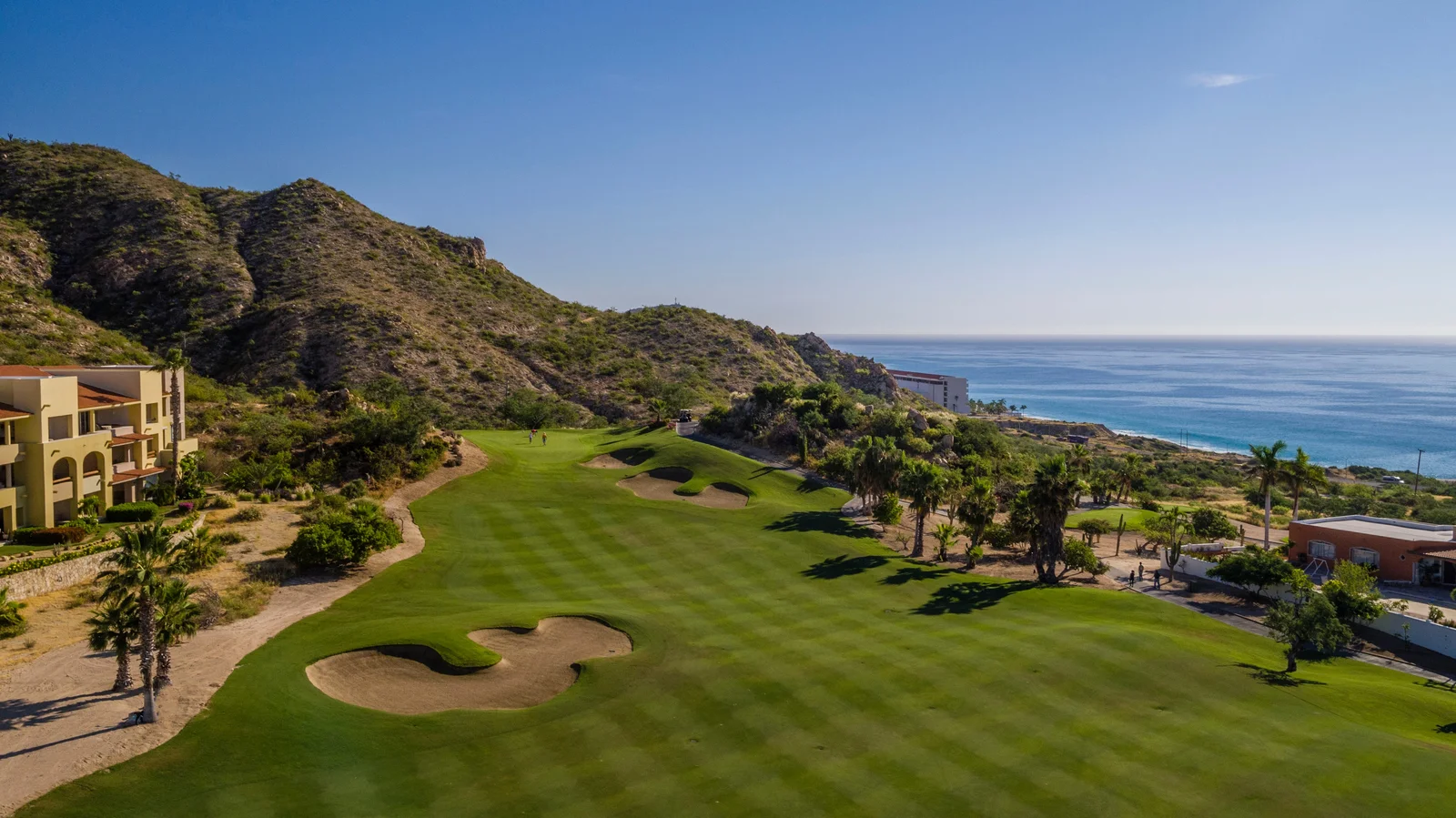
Quick answer: Golf course property in Mexico trades yield for lifestyle, expect 15-40% purchase premiums, $600-$2,500+ monthly HOA plus separate club fees, and net returns near 2.5-4.5% on prime Cabos and Punta Mita inventory after management splits. Course financial health, membership transfer rules, and seasonal tourism patterns matter more than the fairway view on a sales brochure.
This bottom-of-funnel guide is for investors already committed to Mexico’s coastal luxury segment, not a first purchase tutorial. Anchor ownership mechanics in the Mexico Property Investment Guide, compare villa versus condo economics in the Mexico Villa Investment Guide, and run legal and HOA verification through Due Diligence Mexico Real Estate before any golf-community reservation deposit.
TL;DR: Golf property is a lifestyle-weighted USD asset with operator-like carrying costs, model net yields after membership and HOA, stress-test course closure risk, and buy the market (Cabos, PV, Riviera Maya) that matches your personal-use calendar and exit buyer pool.
Who should buy golf course property in Mexico?
Golf course property in Mexico fits buyers who will use the asset 6-16 weeks annually, accept compressed net rental yields in exchange for amenity access, and can underwrite master-planned community risk over a 7-10 year hold. Typical profiles include west-coast US retirees with active handicaps, buyers parking USD in Quivira or Punta Mita with selective STR, and second-home buyers who value club dining and security over maximising ADR. Pure yield investors targeting 5%+ net after fees are usually better served by walkable Playa del Carmen grids or standard Cabo San Lucas condos without golf carry.
| Investor profile | Golf community fit | Consider non-golf instead |
|---|---|---|
| Active golfer, 8+ weeks use | Strong | If budget under $800K |
| Yield maximiser | Weak | Playa Centro 1BR managed |
| Family legacy second home | Strong | If kids will not use club |
| Remote STR-only owner | Selective | Turnkey without club dues |
| First Mexico purchase | Weak | Learn fideicomiso on simpler stock |
| Pre-construction speculator | Selective | Only with escrow + developer DD |
Luxury tier context: Tier Luxury Mexico. Product format: Condo vs Villa Mexico Investment.
How much do golf properties cost versus non-golf comparables?
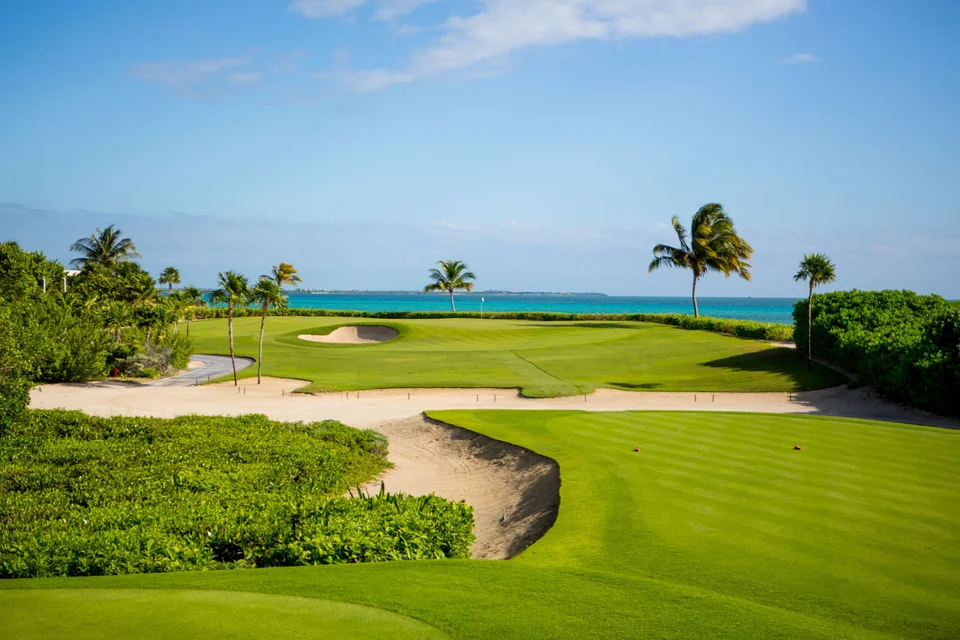
Golf-front and fairway-adjacent homes in Mexico’s core resort markets sell at a structural premium because the buyer purchases irrigated desert or coastal land, pump infrastructure, club F&B, and a narrow resale narrative, not because the drywall is thicker. In Los Cabos Quivira and Chileno-adjacent corridors, a golf-community 3BR villa may list $1.8M-$5M+ where a non-golf luxury villa one colonia away starts $1.2M-$3.5M. Punta Mita and Nuevo Vallarta show similar spreads at slightly lower ultra-luxury ceilings than East Cape Cabos.
| Property type | Non-golf luxury (indicative) | Golf-community premium (indicative) | Premium band |
|---|---|---|---|
| Cabos 2BR condo | $550K-$1.2M | $750K-$1.8M | 15-35% |
| Cabos 3BR villa | $1.2M-$2.8M | $1.8M-$4.5M | 20-40% |
| Punta Mita 2BR | $800K-$1.6M | $1M-$2.2M | 18-35% |
| Nuevo Vallarta 2BR | $350K-$650K | $420K-$850K | 12-28% |
| Riviera Maya golf-adjacent | $400K-$900K | $480K-$1.1M | 10-25% |
The membership and access fees on top of ownership
Golf membership economics in Mexico resort communities split into three layers: HOA assessments that may include social club access, mandatory or optional golf club initiation and dues, and per-round cart or guest fees. Unlike many U.S. private clubs, Mexican resort communities often sell real estate first and membership second, creating surprise carry for buyers who assumed “golf community” meant unlimited play.
| Fee layer | Typical range (indicative) | Transfers on resale? |
|---|---|---|
| HOA (golf community) | $600-$2,500+/mo | Yes, buyer inherits |
| Social / limited club | $3K-$15K init + $150-$400/mo | Often yes, verify |
| Full golf membership | $10K-$50K+ init + $300-$800+/mo | Sometimes no, repurchase |
| Cart / guest fees | $25-$80/round | N/A |
| Capital assessments (irrigation) | $5K-$25K periodic | Buyer may inherit balance |
Quivira, Punta Mita, and established Nuevo Vallarta master plans each run different club structures, some bundle a limited membership with HOA on certain phases; others treat golf as a separate operating company with its own balance sheet. Request the club’s audited financials and membership roster trend (growing vs declining) as part of offer diligence.
Lifestyle value versus investment returns: where is the tradeoff?
Golf course property in Mexico rarely wins on spreadsheet yield alone. It wins when the owner assigns explicit dollar value to personal use weeks, club access, and community security, then treats net rental as partial offset, not primary return. A Quivira fairway villa might generate $120K-$180K gross STR in a strong Cabos year while carrying $48K-$72K in combined HOA, club, management, insurance, and tax before the owner blocks six peak weeks for personal golf trips.
| Return component | Lifestyle-weighted buyer | Yield-first buyer |
|---|---|---|
| Personal use (8 weeks) | High value, core thesis | Opportunity cost on gross |
| Net cash yield target | 2.5-4.5% acceptable | 5%+ required |
| Appreciation reliance | Moderate, brand + scarcity | Lower, cash flow focus |
| Resale buyer pool | Golf + luxury HNW | Broader STR investor pool |
| Hold period | 7-12 years typical | 3-5 years |
Worked example, same annual gross, different product (illustrative Cabos math):
| Line item | Golf-front villa $2.4M | Non-golf luxury villa $1.7M |
|---|---|---|
| Gross STR revenue | $156,000 | $132,000 |
| Management (28%) | −$43,680 | −$36,960 |
| HOA + club + insurance | −$54,000 | −$28,800 |
| Owner net before tax | $58,320 (2.4%) | $66,240 (3.9%) |
| Owner personal-use weeks | 8 blocked peak | 4 flexible |
The golf asset underperforms on net yield while costing $700K more at entry, rational only if those eight owner weeks plus daily club access exceed $700K in perceived value over the hold, or if you underwrite superior appreciation on scarcer fairway frontage (verify with 10-year resale comps, not developer slides).
How healthy is the golf course itself: and why does it matter to your deed?
Your condo or villa deed does not include an ownership stake in the golf course operating company by default. If the course bleeds cash on water pumping, labor, and equipment in a desert climate, the operator may defer maintenance, reduce play quality, or sell/rezone land, directly hitting your view corridor, membership value, and resale price. Course health is property diligence, not a side conversation for the listing agent.
| Due diligence item | What to request | Red flag |
|---|---|---|
| Course operating entity | 3-year P&L, auditor if available | Chronic losses, deferred capex |
| Water rights / wells | Permits, pumping costs, allocation | Restricted hours, salt intrusion |
| Membership trend | Active count vs 2019 baseline | Declining roster, discounting |
| Master-plan covenant | Land use if course closes | Silent on redevelopment |
| Irrigation capex plan | Next 5-year pump / turf budget | Special assessment pending |
| Operator identity | Third-party pro vs developer subsidiary | Developer cross-subsidising from HOA |
Red flag: A sales team that cannot produce club financials or membership transfer documents within five business days, treat as unresolved risk, not admin delay.
HOA dynamics inside a golf master plan
Golf community HOAs in Mexico function as parallel governments: architectural control, landscape on shared open space, security gates, beach or club access, and sometimes mandatory rental-management tiers. Assessment politics concentrate among full-time residents and developer-held units still paying subsidised dues, a recipe for special assessments when irrigation pumps fail or a phase delivers late.
| HOA dynamic | Investor impact | Mitigation |
|---|---|---|
| Developer-controlled board (early phases) | Low dues now, spikes later | Read phase-delivery schedule |
| Mandatory rental program | Less control, stable ops | Compare net vs independent STR |
| Personal-use caps | Blocks owner peak weeks | Calendar in bylaws |
| Guest registration fees | Adds STR friction | Model $50-$150/booking |
| Reserve fund underfunding | Special assessments | 3-year reserve study |
| Architectural refresh cycles | Forced exterior spend | Budget $15K-$40K/decade villas |
Golf HOAs often run 2-3x standard luxury condo HOA in the same city because fairways, pumps, and clubhouse common areas sit on the same budget. A $900/month non-golf Cabos HOA counterpart in Quivira may run $1,400-$2,200 before club dues.
Puerto Vallarta and Punta Mita patterns: Puerto Vallarta Property Investment Guide. Riviera Maya contrast: Riviera Maya Property Investment Guide.
Does rental demand from golf tourists justify the premium?
Rental demand in Mexican golf communities is broader than handicap holders. Cabos and Banderas Bay STR guests book for security, views, pools, and proximity to marina or beach clubs, golf is a bonus amenity that supports 10-25% ADR premium on well-marketed listings, not a separate tenant universe. Tournament weeks (select PGA and amateur events in Baja and Pacifico) create spike pricing, but occupy a small fraction of the calendar.
| Demand segment | Share of bookings (indicative) | ADR impact |
|---|---|---|
| General luxury vacation | 55-70% | Baseline |
| Family multi-gen resort | 15-25% | +10-15% for club access |
| Active golf groups | 10-20% | +15-30% peak weeks |
| Corporate retreat | 5-10% | +20-40% short spikes |
Seasonal pattern, high-level monthly occupancy shape for Cabos golf-community STR (not every building):
| Month | Occupancy signal | Golf-specific note |
|---|---|---|
| Jan-Mar | Peak | Snowbird + tournament season |
| Apr-May | Strong | Shoulder, lower heat |
| Jun-Aug | Moderate | Heat; some course tee-time limits |
| Sep-Oct | Soft | Hurricane watch Pacific |
| Nov-Dec | Building | Holiday ramp |
Marketing listings with “golf optional” often outperforms “golf required”, non-golf luxury renters self-select out of mandatory membership narratives. Property management: Property Management Riviera Maya Cost (fee structures apply coast-wide).
Which locations dominate Mexico golf property: Cabos, PV, or Riviera Maya?
Mexico’s golf real estate concentrates in three corridors, and they are not variations on a theme, the entry prices differ by a factor of five and the yields move in the opposite direction to the prestige. Los Cabos runs from $750,000 to $5 million-plus at 2.5-4% net, selling desert-coastal golf to dollar-denominated high-net-worth buyers around Quivira, Cabo del Sol and the Chileno corridor. Puerto Vallarta and Punta Mita enter at $420,000 with 3-4.5% net, serving retirees and family golf across the Pacífico, Bahía and Vista Vallarta courses. The Riviera Maya is the value end. Club depth and exit liquidity vary as sharply as the pricing.
| Market | Signature courses / communities | Entry (investor villa/condo) | Net yield (indicative) | Best for |
|---|---|---|---|---|
| Los Cabos | Quivira, Cabo del Sol, Chileno adjacency | $750K-$5M+ | 2.5-4% | USD HNW, desert-coastal golf |
| Puerto Vallarta / Punta Mita | Pacifico, Bahia, Vista Vallarta corridor | $420K-$2.5M | 3-4.5% | Retirees, family golf, Pacific views |
| Riviera Maya | Playa Mujeres, select Cancún corridor | $480K-$1.5M | 3.5-5% | Lower entry, thinner golf depth |
Los Cabos remains the deepest golf-property market for foreign buyers, Quivira’s multi-course master plan, St. Regis and branded adjacency, and desert irrigation infrastructure set the national benchmark for premiums. Net yields compress, but USD resale liquidity in fairway-front tiers has decade-long track record.
Puerto Vallarta and Punta Mita trade lower ultra-luxury entry than East Cape while offering world-ranked Pacifico and Bahia courses. Retiree owner-occupiers mix with STR investors, HOA politics can favour quiet residential use over aggressive rental; verify STR bylaws before offer.
Riviera Maya golf inventory is limited versus condo volume in Playa and Tulum. Golf-adjacent product near Cancún airport benefits from east-coast flight patterns but competes with non-golf beachfront for the same STR guest. Golf premium here is the weakest of the three corridors unless the unit also carries beach or marina frontage.
Seasonality and golf cash flow
Golf tourism in Mexico tracks snowbird and holiday calendars more than a year-round Midwest municipal-course rhythm. Cabos peaks November through April when U.S. and Canadian golfers escape winter; Pacific coast summer brings heat that reduces afternoon tee traffic and can trigger irrigation restrictions. Quintana Roo golf-adjacent product follows Cancún’s broader pattern, strong winter, softer September-October hurricane season.
Investors should model occupancy at 55-65% annual on golf-community STR unless the building provides audited operating history above that, sales decks quoting 80%+ often assume no owner-use blocks and ignore summer softness.
| Season | Cabos / PV golf STR | Owner-use conflict |
|---|---|---|
| Nov-Apr peak | Highest ADR, tee-time scarcity | Owners want same weeks |
| May-Jun shoulder | Moderate rates | Good personal-use window |
| Jul-Aug heat | Lower occupancy, discounts | Course may restrict times |
| Sep-Oct storm watch | Soft bookings, flexible cancel | Insurance review |
| Holiday weeks | Premium pricing, 7-night mins | Family use vs revenue |
Portfolio rule: If personal-use peaks overlap STR peaks (January-March), underwrite net yield with eight owner-blocked weeks removed from gross, not footnoted as “adjustable.”
The risks worth pricing in
Course closure is the existential tail risk for golf-front real estate. When an operator fails or sells fairway land for housing phases, front-row owners face view destruction, membership wipeout, and buyer pool collapse. Mexico has fewer public case studies than Arizona or Florida, but master-plan documents nationwide have been amended when developers prioritise parcel sales over turf.
| Risk | Potential impact | Diligence action |
|---|---|---|
| Course closure | 20-40% value hit on front row | Covenant + land-use review |
| Partial fairway build-out | Construction noise, view loss | Master-plan amendment history |
| Membership non-transfer | Buyer repays $10K-$50K+ | Resale disclosure in contract |
| HOA special assessment | $10K-$50K lump or phased | Reserve audit |
| STR ban vote | Yield → zero operational | Bylaws in Spanish reviewed |
| Developer bankruptcy (pre-con) | Total loss without escrow | Escrow + milestone verification |
Pre-construction golf-community phases add developer delivery risk on top, fairways marketed on renderings may deliver years after housing, leaving early owners adjacent to dormant land. Pre-con checklist: Pre-Construction Mexico Risks.
Golf premium against the comparables
The golf premium is real and it is not always worth paying. A golf-community unit and a standard luxury condominium at the same ticket differ in carrying cost, in what the HOA funds, in who buys from you at exit, and in whether the amenity you are subsidising is one you will actually use. The table below is deliberately built as a set of yes-or-no questions rather than as a comparison, because the honest answer depends on your own play frequency and yield requirement rather than on the properties. Two dozen rounds a year locally is roughly where the arithmetic turns.
| Question | If “yes” → lean golf | If “no” → lean standard luxury |
|---|---|---|
| Will you play 24+ rounds/year locally? | Yes | |
| Is net yield above 4.5% required? | Yes | |
| Hold period under 5 years? | Yes | |
| Need broadest resale buyer pool? | Yes | |
| Family uses club pool/dining without golf? | Yes | |
| Comfortable with club + HOA dual boards? | Yes | |
| Verified course financials provided? | Yes | Stop if no |
Three rules for 2026 golf-property buyers:
- Underwrite net after HOA + club + management: not gross ADR from the gallery.
- Treat fairway frontage as irreversible view risk: one-row-back often beats front row on risk-adjusted return.
- Match corridor to exit pool: Cabos for USD HNW golf buyers, PV for retiree golf families, Riviera Maya only when golf is secondary to beach STR thesis.
When standard luxury delivers higher net with fewer governance layers, buy standard. When club life, personal use, and fairway scarcity define the thesis, golf community product can fit, with course financials, membership transfer rules, and seasonal occupancy modelled honestly.
Verify all HOA, club, and master-plan contracts with counsel specialising in BCS and Jalisco luxury closings. Mexico Invest is editorial only, not legal, tax, or investment advice.
Frequently Asked Questions
Golf course property in Mexico suits lifestyle-first buyers who accept 15-40% location premiums and net yields often near 2.5-4.5% after membership, HOA, and management, not yield-maximising investors targeting 5%+ net on standard condos. Los Cabos Quivira, Punta Mita, and select Nuevo Vallarta master plans dominate. Underwrite course financial health and membership transfer rules before any deposit.
Golf-front and fairway-adjacent homes in Los Cabos and Punta Mita typically sell at 15-40% above comparable non-golf luxury inventory in the same corridor, higher for ocean-plus-golf double frontage. Riviera Maya golf product is thinner; premiums are more course-specific. The premium buys access and amenity narrative, not automatically higher net rental yield.
Indicative ranges: social or limited memberships $3,000-$15,000 initiation plus $150-$400 monthly; full golf memberships $10,000-$50,000+ initiation plus $300-$800+ monthly depending on course tier and transferability. Some communities bundle basic access in HOA; full unlimited play often requires separate club contracts. Verify whether membership transfers with resale or must be repurchased.
Yes, most STR demand in Cabos and Banderas Bay golf communities comes from general luxury vacationers, not dedicated golf groups. Golf amenities support ADR premiums of 10-25% in peak season when marketed correctly, but occupancy still tracks broader tourism calendars. Do not assume 52-week golf-tournament demand unless the unit sits on a known tournament corridor.
Course closure or partial redevelopment is a material tail risk, fairway views become construction zones, membership value evaporates, and resale discounts of 20-40% have occurred on distressed U.S. golf communities; Mexico has fewer precedents but the mechanism is identical. Review master-plan covenants, water rights, course operating entity financials, and whether HOA owns or leases course land before closing.
Los Cabos leads on golf depth, Quivira, Cabo del Sol, Chileno Bay adjacency, with USD premium pricing and lower net yields. Puerto Vallarta and Punta Mita offer Pacifico and Bahia courses with strong retiree and family golf tourism. Riviera Maya has selective golf inventory near Cancún and Playa Mujeres but thinner HNW golf buyer depth than Baja. Match market to personal use and exit liquidity.
Budget HOA $600-$2,500+ monthly on golf-community condos and villas, often including landscape, security, and partial amenity access, but not always full golf play. Separate club dues, cart fees, capital assessments for irrigation or pump upgrades, and fideicomiso fees stack on top. Total carrying costs of $2,500-$6,000+ monthly on $1.5M-$4M golf-front units are common before debt service.
Fairway-front rows command the highest premiums and privacy tradeoffs, errant balls, maintenance noise, early cart traffic. One-row-back units often deliver 80-90% of the lifestyle benefit at 15-25% lower entry with better resale liquidity to non-golf buyers. For pure investment, second-row or golf-community adjacency without frontage frequently wins on net yield math.

Get a vetted Mexico shortlist
US and Canadian buyers use this to skip the developer sales deck: tell us the budget and the market, and we come back with 3 to 5 options and the net yield maths behind each one.
Want options matched to your budget and risk profile?
Three questions, one screen. We reply within one business day.
Get a vetted Mexico shortlist