
Puerto Escondido Real Estate: Homes for Sale
Homes for sale in Puerto Escondido by neighbourhood, indicative price bands, the surf economy, and what fast growth has done to services and title.
By Mexico Invest Editorial · Updated September 7, 2026 · 15 min read
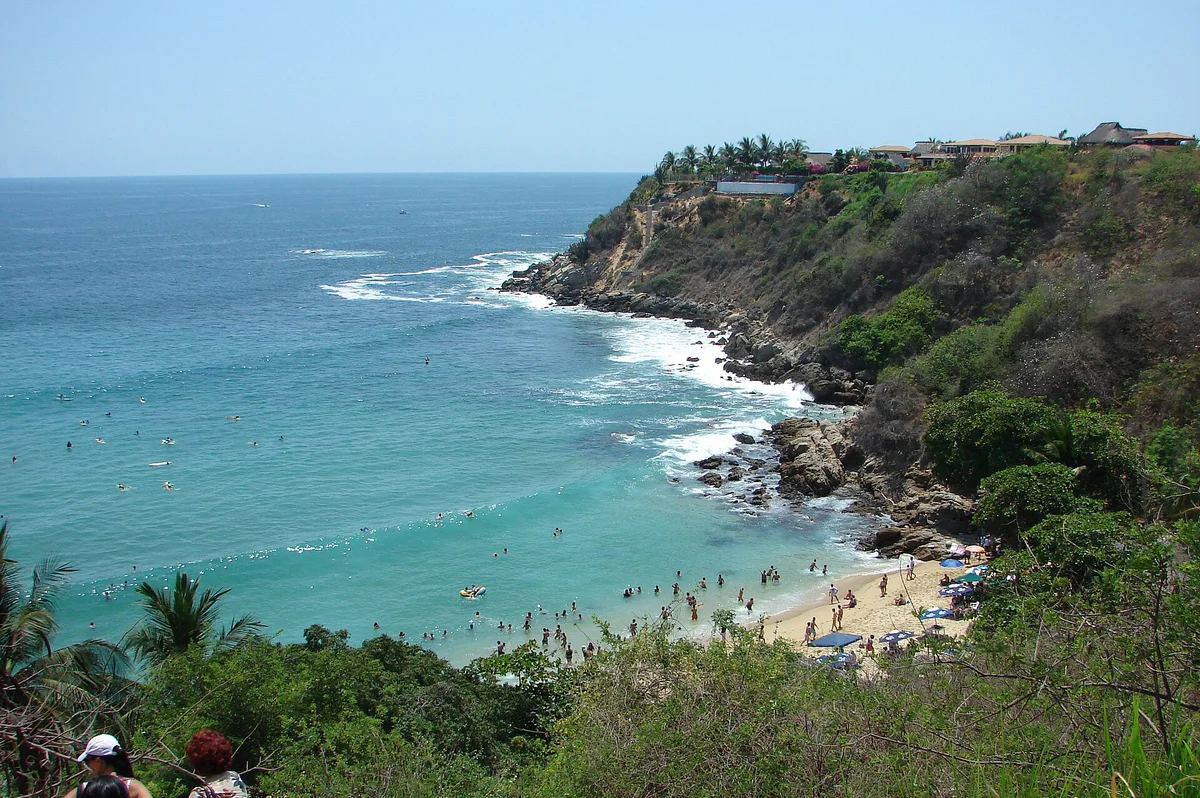
Quick answer: Puerto Escondido is a surf town on the Oaxacan Pacific that has grown faster than its infrastructure since the airport expanded and the highway from Oaxaca City shortened the drive. Indicative asking bands run about $130,000 to $280,000 in La Punta and Rinconada, $280,000 to $600,000 with an ocean view, and higher for the hillside houses above Zicatela. Foreign buyers hold through a fideicomiso.
Puerto Escondido built global surf culture before Mexico resort towers reached every Pacific bay, Zicatela barrel, La Punta cafés, nomad WiFi marketing. Investors arrive seeking yield at sub-$250K tickets unavailable in Los Cabos, accepting Oaxaca execution risk.
Neighbourhoods and indicative prices
The town is a string of separate beaches and barrios rather than a single centre, and each has its own character and price. The figures below are September 2026 asking levels from public listings.
| Neighbourhood | Indicative band | Character | Note |
|---|---|---|---|
| La Punta | $150,000 to $350,000 | Surf, young, sand streets, busy | Fastest price movement |
| Zicatela | $180,000 to $400,000 | The famous break, restaurants | Powerful surf, not a swimming beach |
| Rinconada | $130,000 to $300,000 | Residential, walkable, services | Popular with longer-stay foreigners |
| Bacocho | $150,000 to $350,000 | Established, quieter, larger plots | Further from the surf |
| Hillside above Zicatela | $300,000 to $700,000 | Ocean views, gated | Access road grade |
| Outskirts and lots | $60,000 to $180,000 | Growth frontier | Highest title risk |
Two things deserve care here. The town’s water network did not grow at the pace the town did, so many properties rely on cisterns and delivered water, and the reliability varies by barrio and by season. And the growth frontier on the edges of town is exactly where ejido land meets private development, which makes the registry check on any outlying lot the difference between an asset and a dispute.
Insider tip: ask how the property handled water in the driest month of the last two years, in litres delivered rather than in adjectives. A house with a large cistern and a reliable delivery relationship is a different proposition from one that ran dry, and that history is known locally even when it is not disclosed.
Market snapshot 2026
Puerto Escondido leads this table on marketed gross and trails it on liquidity, which is the trade a buyer is actually making. A 7% to 9% marketed gross becomes 3.8% to 5% net, broadly in line with Mazatlán and Puerto Vallarta, while resale runs 100 to 160 days against 80 to 120 in PV. Entry from $150,000 is the genuine advantage. The surf and nomad guest base is also the narrowest of the three, which is what lengthens the exit.
| Metric | Puerto Escondido | Mazatlán | Puerto Vallarta |
|---|---|---|---|
| 1BR entry | $150K-280K | $180K-280K | $280K-450K |
| Gross STR | 7-9% marketed | 6-7% | 6-7% |
| Net STR | 3.8-5% | 3.8-4.5% | 3.5-5% |
| Guest profile | Surf / nomad | Snowbird / cruise | Retiree / STR |
| DOM resale | 100-160 days | 90-130 days | 80-120 days |
| US flight ease | Moderate | Good West | Good |
Broker indicative, verify listings.
Why investors consider Puerto Escondido
Four things bring investors to the Oaxaca coast, and the first is simply arithmetic: legal coastal product under $250,000 still exists here, which is no longer true in most of the Riviera Maya. Add a globally recognised surf brand at Zicatela, digital-nomad monthly stays that cut turnover costs, and a Pacific alternative to corridor tower supply.
Drivers:
- Sub-$250K legal coastal product still exists
- Surf tourism moat: Zicatela global brand
- Digital nomad monthly stays: lower turnover
- Pacific alternative to crowded RM towers
Cautions:
- Ejido and communal land fraud history in Oaxaca coast
- Water and sewage infrastructure variable by colonia
- Smaller English manager pool
- Airport connectivity vs Mazatlán or PV
- State security headlines: colonia DD required
Zone map
La Punta and Zicatela split the market on noise and guest type rather than on price. La Punta at $160,000 to $290,000 is walkable, cafe-dense and biased toward short-term-rental tolerance; Zicatela at $140,000 to $260,000 is cheaper, busier and more seasonal, with surf demand concentrated November to March. Rinconada is residential and needs its rental rules verified building by building. The inland row is a different thesis entirely and carries none of the beach demand the rest of this page models.
| Zone | Profile | Entry | Note |
|---|---|---|---|
| La Punta | Nomad cafes, walkable | $160K-290K | STR-friendly bias |
| Zicatela | Surf beach, busy | $140K-260K | Noise, seasonality |
| Rinconada | Residential mix | $130K-220K | Verify STR rules |
| Bacocho / luxury fringe | Quieter | $200K-350K | Car needed |
| Inland / non-RZ | Direct title possible | Varies | Not beach thesis |
Seasonality and occupancy
The calendar has three distinct modes, and only one of them is nightly-rate business. November to March is swell season at peak rates; April and May shift to monthly nomad bookings at lower effective ADR but almost no turnover cost; June to August is the rainy trough where discounting is the only lever. Model the three separately.
Surf seasonality drives this calendar more sharply than tourism does elsewhere in Mexico. Zicatela’s swell season concentrates nightly demand between November and March, and the summer months are quiet enough that a nightly-only operator faces a genuine cash deficit against fixed costs. The monthly nomad segment is what fills that gap, at $1,800 to $2,400 a month, roughly half the effective nightly rate, but with near-zero turnover cost. Underwrite the blend, not the peak, and hold 3 months of fixed expenses, roughly $1,900 on this model, before the first booking.
| Season | Demand | ADR note |
|---|---|---|
| Nov-Mar swell | High | Peak surf |
| Apr-May | Shoulder | Nomad monthly |
| Jun-Aug rains | Trough | Discount stays |
| Sep-Oct | Low | Maintenance window |
Underwrite rainy season, properties that look fully booked in February may sit half-empty in July.
Yield example (la Punta 1br)
The model below runs a $210,000 all-in La Punta one-bedroom on a blended nightly and monthly calendar, which is how this market actually operates, nightly through the November-to-March swell season and monthly to remote workers through the shoulders. Modelling it as a pure nightly rental overstates both gross and turnover cost.
Blended calendar modelling is what makes Puerto Escondido work and it is unusual among Mexican coastal markets. Nightly rates hold through the November-to-March swell season while remote workers take monthly bookings at $1,800 to $2,400 through the shoulders, so the $18,900 gross comes from two different demand curves rather than one seasonal peak. That mix cuts cleaning frequency and vacancy gaps, which is why a $210,000 all-in unit nets $9,808, or 4.7%, here against 3.2% in the downside case at 55% occupancy, a 150 basis point swing on the same property.
| Line item | Annual USD |
|---|---|
| Purchase all-in | $210,000 |
| Gross STR + monthly | $18,900 |
| Management 28% | $5,292 |
| Utilities + maintenance | $3,800 |
| Net before tax | $9,808 (~4.7%) |
Downside case at 55% occupancy drops net toward 3.2%. Nomad monthly bookings at $1,800-2,400 reduce cleaning frequency, model mix not nightly-only.
Legal and ownership
Standard restricted-zone mechanics, fideicomiso at $2,500-4,000, ordinary closing stack, with one heavily weighted difference: Oaxaca has extensive communal landholding, so ejido exclusion in the title review is not a formality here. It is the check that most often ends a Puerto Escondido purchase.
| Step | Indicative | same restricted-zone mechanics as Pacific resort peers.
| Step | Indicative |
|---|---|
| Title review | Ejido exclusion mandatory |
| Fideicomiso | $2,500-$4,000 setup |
| Closing | 5-10% |
| Utilities DD | Water/septic on fringe |
Fideicomiso Mexico Explained · Due Diligence Mexico Real Estate · can foreigners buy property in Mexico.
How does this comparison stack up for Mexico investors?
Puerto Escondido enters lowest of the three Pacific markets below and caps out at roughly 5% net, which sounds competitive until you read the manager-depth and resale-pool rows underneath it. Management here is thin, a handful of operators, limited redundancy if one fails, and rates that reflect scarcity rather than competition. The resale pool is narrower still, because the surf and remote-worker niche that makes the town attractive also defines who will buy from you. Mazatlán and Puerto Vallarta cost more and give back liquidity, which on a five-year hold is usually the better trade.
| Factor | Puerto Escondido | Mazatlán | PV |
|---|---|---|---|
| Entry | Lowest | Mid | Highest |
| Niche | Surf/nomad | Cruise/snowbird | Retiree |
| Manager depth | Thin | Medium | Deep |
| Net yield ceiling | Up to 5% | 4.5% | 5% |
| Resale pool | Niche | Broader | Broadest |
STR and tax compliance
Oaxaca has no state lodging-tax regime as developed as Quintana Roo’s, but the federal obligations are identical: SAT reporting on platform income, and a 25% gross withholding unless you register an RFC and elect net taxation. Confirm the building’s own rental permission first; that is the only part no filing can fix.
Confirm HOA STR permission. Active operators need Mexican tax alignment, Non-Resident RFC Guide · US Taxes Mexico Rental Property.
Pros and cons
| Pros | Cons |
|---|---|
| Low Pacific entry | Title fraud risk |
| Surf/nomad ADR story | Rainy season trough |
| Monthly stay mix | Airport access |
| Less tower oversupply | Thin resale |
| Unique vs RM commodity | Oaxaca perception |
What red flags should pause this Mexico purchase?
Five signals, and the first is the one that recurs on this coast: communal land marketed in English to foreign buyers. Oaxaca’s ejido footprint is large and the paperwork trail is thinner than in Quintana Roo, so an independent notario is not optional here.
- Communal land with foreign-friendly English listing
- No water/septic inspection on new build
- Guaranteed developer yield
- Manager with zero foreign owner references
- Purchase without independent notario
Mexico Real Estate Scams to Avoid.
Buyer scenarios
Three ways in, and all three depend on the same variable: distance to the coworking and cafe cluster in La Punta. Units beyond about a kilometre convert nomad monthlies at a materially lower rate and sit on market longer. A surf-season operator, a hybrid owner-user and a Pacific ladder buyer all start from that same map.
Scenario A: Surf STR operator: La Punta walkable with nomad-month pricing, model rainy season explicitly.
Scenario B: Remote worker hybrid: Own 4 months, STR 8 months, verify HOA caps.
Scenario C: Pacific ladder: Start Puerto Escondido, exit to PV later, plan 5-year hold for liquidity.
La Punta colonia benefits from walkable cafe density, units more than 1 km from coworking cluster see longer DOM and lower monthly nomad conversion. Zicatela offers surf foot traffic but noise complaints hurt review scores for family-oriented listings.
Nomad monthly vs nightly STR mix
Puerto Escondido’s revenue calendar has a hole in it, July rains and the shoulder months around them, and the operators who survive it are the ones who built a monthly component before they needed it. The three rate models below serve different seasons and different guests: nightly surf bookings at $95-165 during the November-to-March swell window, weekly surf-camp rates through peak swell, and monthly nomad tenancies at $1,800-2,400 that fill April-May and September-October at low cleaning cost. Operators drawing 40%-plus of revenue from monthly stays weather the wet season materially better. Verify the HOA permits 30-day-plus tenants first.
| Booking type | ADR / rate | Turnover cost | Best season |
|---|---|---|---|
| Nightly surf | $95-165 | High cleaning | Nov-Mar |
| Weekly surf camp | $700-1,100 | Medium | Peak swell |
| Monthly nomad | $1,800-2,400 | Low | Apr-May, Sep-Oct |
Operators targeting 40%+ revenue from monthly stays weather July rains better than nightly-only competitors, verify HOA allows 30+ day tenants.
Water and infrastructure DD
Water is the binding constraint on the Oaxaca coast, not planning. Fringe parcels can depend on tanker delivery in dry weeks, septic arrangements vary by colonia, and storm outages are routine. Ask for twelve months of utility bills before offering, a property that cannot supply water or WiFi in March cannot host a nomad in March.
Oaxaca coast fringe parcels may rely on tanker water delivery in dry weeks, ask for 12-month utility bills before offer. Septic vs municipal sewage varies by colonia, failed drainage destroys review scores faster than decor upgrades.
Power outages during storms, backup inverter for WiFi router is nomad table stakes.
Airport and access reality
PXM serves limited US routes, most guests connect via Mexico City or Oaxaca City. Marketing “easy from Texas” still means 5-8 hour door-to-door for many US origins, adjust guest communication templates versus Mazatlán or PV.
Resale and exit
Plan 5+ year hold, buyer pool is surf/nomad niche, not general retiree volume. Document STR P&L and monthly booking mix for resale, buyers discount unverifiable owner-operated calendars. The buyer pool is the constraint: surfers and remote workers rather than retirees or institutions, which means fewer buyers and a longer marketing period than any coastal market on the Caribbean side. Documented operating history is what shortens it.
Who should avoid Puerto Escondido
Avoid if you need institutional manager depth, cannot tolerate July occupancy under 50% on nightly model, or will skip independent notario because broker “knows the seller.” Avoid ejido fringe regardless of discount. Add one more: anyone who has not seen the property in the rainy season. July occupancy below 50% on a nightly model is the base case here, not the stress case, and an owner who cannot fund eight quiet months is buying a forced sale.
Higher liquidity Pacific: Mazatlán or PV hubs linked above.
Oaxaca state security perception moves US buyer funnels, colonia-level reality in La Punta differs from headline generalizations. Visit mid-week in low season before trusting broker reassurance alone.
Compare EU second-home searches: some US buyers cross-shop Portugal Algarve, Mexico vs Portugal Property Investment frames yield vs lifestyle tradeoff.
Surf event calendars (competitions, festivals) create 10-14 day ADR spikes, operators with local event calendars outperform generic pricing algorithms.
Buyer scenario matrix
The pattern across the four profiles below is consistent: every workable one carries a five-year-plus horizon and a reason to be in Puerto Escondido beyond yield. This market rewards conviction, a surf thesis, a nomad-rental thesis, a genuine intention to live here, and punishes anyone treating it as a cheaper Tulum with the same operating assumptions.
| Profile | Fit | Hold horizon |
|---|---|---|
| Surf STR operator | Strong | 5+ years |
| Digital nomad landlord | Strong | 4-7 years |
| Retiree full-time | Moderate | Verify healthcare access |
| Institutional scale | Weak | No tower inventory |
La Punta colonia suits walkable surf lifestyle, Zicatela suits higher ADR surf camps with noise tolerance tradeoff. Brisas de Zicatela fringe lots need water truck budget line in pro forma.
Oaxaca City weekenders buy Puerto Escondido as second home, Spanish-language listing copy and local notario relationships accelerate resale versus English-only marketing.
Manager depth: count active STR managers with over 10 units under management in Puerto Escondido, under five serious operators means self-manage risk or accept 30%+ fee for boutique service.
Ejido screening: any seller offering 40%+ below colonia median without escritura explanation, walk away per Ejido Land Risks Mexico.
Pacific comparison table for allocators:
| Market | Entry 1BR | Manager depth | Airport |
|---|---|---|---|
| Puerto Escondido | $155K-275K | Thin | PXM limited |
| Mazatlán | $185K-295K | Moderate | MZT |
| Puerto Vallarta | $280K-420K | Deep | PVR |
Match thesis to operator capacity, not Instagram swell photos alone.
Closing cost reminder: fideicomiso setup plus notario fees add 5-10% on coastal Oaxaca purchases, same framework as Cost of Buying Property Mexico Pacific examples.
Brisas de Zicatela new supply in 2026 adds inventory, negotiate DOM over 90 days with documented STR history or walk.
What checklist should run before you sign?
One more operational reality before the checklist. Puerto Escondido has no institutional rental comps service, so pricing a unit means calling two or three active managers and asking for trailing occupancy on comparable listings by name. Owners who skip this step and price off Airbnb screenshots typically overestimate nightly income by 20 to 30 percent, because screenshots show asking rates, not booked rates net of discounts and fee-inclusive pricing.
- Ejido-free escritura
- Water and power capacity letter
- Visit during June rains
- Manager with Oaxaca coast references
- RFC + US CPA before first booking
- Hurricane/wind insurance quote
Surf event calendar monetisation
Three or four international surf events between November and February create predictable premium windows of five to ten nights each, genuinely rate-inelastic demand from competitors, crews and spectators who booked months ahead. Operators who set minimum stays and raise rates for those weeks capture them; operators running static pricing do not.
Puerto Escondido hosts multiple international surf competitions annually, November through February, creating predictable ADR spike windows that operators can monetize with advance booking premiums and minimum-stay rules.
Major events driving premium weeks:
- Zicatela Challenge (November): 7-10 days, professional surfers plus spectators
- Mexican Pipeline Pro (January-February): 5-7 days, international draws
- Puerto Fest cultural week (varies): local attendance spike
During competition weeks, compliant STR units in Zicatela and La Punta can command $180-250/night on 1BR product that runs $110-140 in shoulder weeks. Operators who list competition-specific packages (surf viewing + local guide) 90+ days ahead capture early bookings before Airbnb algorithm raises general market rates.
| Event monetization tactic | Impact on net yield |
|---|---|
| Minimum 5-7 nights during competition | Reduces turnover, lifts weekly revenue +25-40% |
| Package pricing (lodging + event tickets) | ADR premium +15-30% |
| Early booking discount 90d+ | Fill calendar before peak competition rush |
| Local surf school partnerships | Guest add-on revenue share |
Managers without surf event calendars integrated into pricing software typically miss 60-70% of these spikes, reactive pricing after event announcements leaves inventory underpriced. Ask prospective managers: “What is your surf event pricing protocol and how far in advance do you adjust rates?”
Cross-reference seasonality framework: STR Occupancy by Month Riviera Maya, adapt November-March peaks for Pacific surf calendar versus RM snowbird pattern.
Digital nomad visa and long-stay compliance
Mexico’s temporary resident visa pathway allows digital nomads to stay 1-4 years without Mexican tax residency if foreign income remains offshore, verify current rules with immigration counsel. Puerto Escondido attracts significant remote-worker volume targeting 1-3 month stays.
Operational advantages of monthly nomad bookings:
- Lower cleaning frequency: 1 turnover per month vs 8-12 nightly
- Stable occupancy floor during rainy season trough
- Less platform fee pressure: direct booking common for 30+ days
- Tenant-style utilities payment: guest covers electric spike vs owner absorbing
Pricing monthly stays: Indicative La Punta 1BR: $95-140 nightly becomes $1,800-2,400/month (25-30% monthly discount typical). Net yield impact: monthly at $2,000 with one turnover exceeds five nightly bookings at $110 each after cleaning and management fees compound.
| Booking duration | Gross monthly | Management % | Cleaning | Net to owner |
|---|---|---|---|---|
| 30 nightly bookings @ $110 | $3,300 | 28% = $924 | 3-4 turns × $35 = $120 | $2,256 |
| 1 monthly booking @ $2,000 | $2,000 | 28% = $560 | 1 turn × $35 = $35 | $1,405 |
| 2 bi-weekly @ $1,100 | $2,200 | 28% = $616 | 2 turns × $35 = $70 | $1,514 |
Optimal mix: target 40-50% of low-season months (June-October) as monthly nomad blocks, preserving November-March for higher ADR nightly surf bookings.
HOA monthly stay rules: Some buildings cap consecutive-night bookings under 90 days to avoid tenant-right triggers, read reglamento caps on 30-60 day stays before underwriting nomad revenue.
Cultural integration and the Spanish requirement
Puerto Escondido is less anglophone than the Riviera Maya, and foreign owner outcomes correlate with functional Spanish more here than in any market on the Caribbean side. A bilingual manager carries the first year; after that, dealing directly with cleaners, trades and eventually the HOA assembly is what separates owners who stay from owners who sell.
Puerto Escondido sits between tourist-English Zicatela strip and Spanish-only residential Rinconada neighborhoods. Foreign owner success correlates with functional Spanish for HOA meetings, utility disputes, and local contractor negotiations beyond initial purchase closing.
Integration timeline for English-primary buyers:
- Months 1-3: Bilingual property manager handles 90% of operations
- Months 4-12: Owner learns household Spanish for cleaner, maintenance, neighbor basics
- Year 2+: HOA assembly participation, local service provider relationships without manager mediation
La Punta and Zicatela coworking cafes operate bilingually during high season (November-April), revert to Spanish-primary during rainy months when Mexican domestic visitors dominate. Operators planning remote oversight without Spanish should budget higher manager fees (30-32% vs 25-28% bilingual) to cover language mediation.
| Language dependency | Self-manage viable | Manager fee band |
|---|---|---|
| Fluent Spanish | Yes | 18-25% |
| Functional household Spanish | With local support | 25-28% |
| English-only | No, manager essential | 30-35% |
Compare language barriers across markets: Mexico vs Spain Property Investment, both require Spanish for HOA/legal, Spain administrative burden higher for foreign buyers without EU citizenship.
Local notario relationships matter more in Oaxaca fringe markets than Quintana Roo resort zones, ejido screening and water rights verification require Spanish-fluent counsel with local Oaxaca coast transaction history. Referrals from US buyer forums often lead to Mexico City notarios unfamiliar with Puerto Escondido communal land nuances.
Resale strategy for surf-niche buyers
Puerto Escondido resale buyer pool is 70-80% surf/nomad niche, not general retiree or institutional investment volume. Positioning units for this exit pool requires different documentation than Playa Centro flip strategies. Practically that means marketing to the niche rather than around it: proximity to the break, the coworking cluster and the monthly-rate history are what a Puerto Escondido buyer prices, and generic beach-condo positioning underperforms in this market.
What surf-niche resale buyers prioritize:
- Documented surf-season STR P&L (November-March trailing 2-3 years)
- Monthly nomad booking mix proof (shows low-season resilience)
- Walkability score to La Punta coworking clusters within 1 km
- HOA STR permission in writing with assembly minutes confirming no pending restrictions
- Water/power infrastructure proof (dry-season utility bills, backup systems)
Avoid these resale killers:
- Unverified owner-reported occupancy calendars without platform export
- No Spanish maintenance records (suggests absentee neglect)
- Zicatela noise complaints in guest reviews (family buyers discount)
- Ejido-adjacent fringe parcels regardless of escritura claim
- Over-customization to owner’s surf aesthetic (reduces buyer pool)
Pricing exit: Comparable sales within 500m of listing matter more than city-wide median. Puerto Escondido lacks MLS depth, ask AMPI brokers for three recent foreign-to-foreign sales with public transaction dates, not just current listings. DOM over 120 days suggests 10-15% price adjustment needed.
Timing exit: List May-August when next-season surf buyers research, November listings compete with peak rental income opportunity cost. Buyers typically close September-November to capture first surf season, seller carrying costs through rainy season before optimal exit window.
Indicative mid-2026. Verify title and utilities before purchase. Mexico Invest is editorial education only.
Frequently Asked Questions
Puerto Escondido suits buyers seeking Pacific surf and nomad tourism at lower entry than Cabos or PV, indicative $150,000-280,000 on legal 1BR near La Punta or Zicatela with net STR yields near 3.8-5% on well-run units. Infrastructure and resale liquidity trail established resort corridors; legal title DD is critical.
Yes via fideicomiso for coastal restricted-zone parcels with clean private title. Oaxaca fringe markets attract ejido and communal land listings, independent notario review non-negotiable. Direct title may apply only outside restricted bands inland.
Gross STR marketing cites 7-9% on surf-season units; net after 25-30% management, maintenance, and low-season vacancy often lands 3.8-5%. Digital nomad long-stay bookings reduce turnover costs versus pure nightly STR.
Puerto Escondido offers surf/nomad niche and lower entry with thinner manager pool and airport connectivity (PXM or OAX plus drive). Mazatlán and PV offer deeper retiree and cruise-adjacent ecosystems with longer foreign-buyer track records.
Ejido title fraud, water and power infrastructure on fringe parcels, sargassum-less but rainy season softness, limited resale buyer pool, and security perception in Oaxaca state, verify colonia-level reality.
Walkable La Punta or Zicatela 1BR often lists $150,000-280,000 USD in 2026. Premium new surf-lodge-style product higher. Closing adds 5-10% with fideicomiso on coastal zones.
Strong surf-season and nomad demand where HOA permits STR, confirm reglamento and municipal rules with local counsel. Long-stay monthly bookings increasingly common.
Puerto Escondido Airport (PXM) has limited US direct routes, many buyers fly OAX or MEX and connect, or drive from Oaxaca City. Plan 3-6 hours from major US hubs depending on routing.





Get a vetted Mexico shortlist
US and Canadian buyers use this to skip the developer sales deck: tell us the budget and the market, and we come back with 3 to 5 options and the net yield maths behind each one.
Want options matched to your budget and risk profile?
Three questions, one screen. We reply within one business day.
Get a vetted Mexico shortlist