
Mazatlan Real Estate: Condos and Homes for Sale
Condos and homes for sale in Mazatlan by zone, indicative price bands for Centro Historico and the Golden Zone, and what the malecon economy supports.
By Mexico Invest Editorial · Updated September 7, 2026 · 15 min read
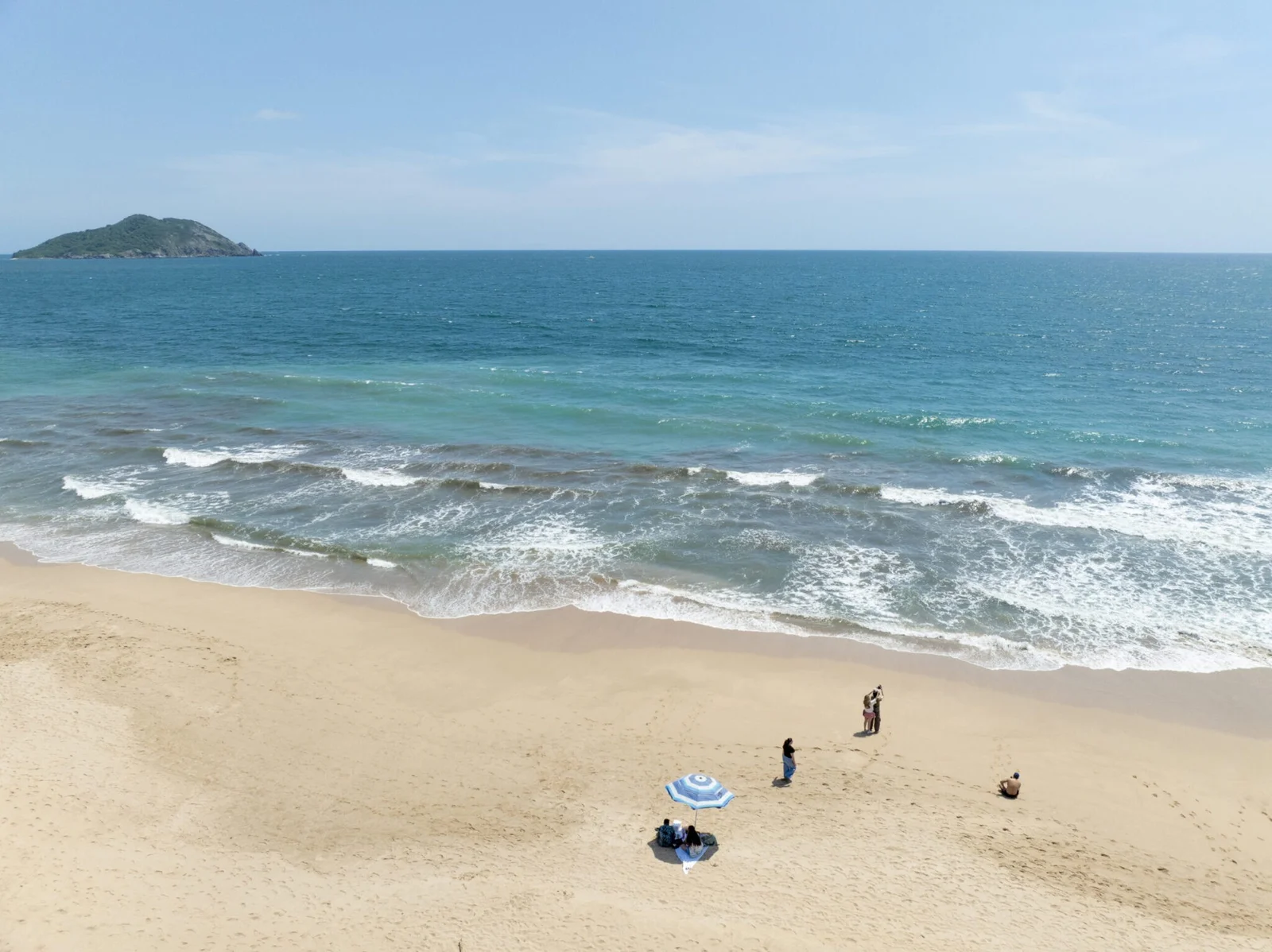
Quick answer: Mazatlan is a working Pacific port city with a restored colonial centre and one of the longest seafront promenades in the world, and it offers the cheapest beach-city housing in this corpus outside Baja. Indicative asking bands run about $110,000 to $220,000 in Centro Historico, $150,000 to $320,000 in the Golden Zone, and higher in the newer towers north along the coast. Foreign buyers hold through a fideicomiso.
Mazatlán predates Instagram Mexico hype, a working port city with Centro Histórico, Golden Zone beach strip, and decades of US West Coast snowbird traffic. For investors priced out of Los Cabos Corridor or seeking yield above Cabos net bands, Mazatlán enters the Pacific comparison set alongside Puerto Vallarta and emerging mainland coast markets.
Parent hub: Mexico Property Investment Guide. Pacific peer: Puerto Vallarta Property Investment Guide · surf/nomad peer: Puerto Escondido Oaxaca Property Investment. Compare: Los Cabos vs Puerto Vallarta · EU alternatives: Mexico vs Spain Property Investment.
Zones and indicative prices
The city runs north along the coast from the historic centre, and each stretch has a different age of building stock and a different buyer. Numbers below are asking levels seen on public listings during September 2026.
| Zone | Indicative band | Character | Note |
|---|---|---|---|
| Centro Historico | $110,000 to $280,000 | Restored colonials, theatre, plazas | Renovation cost is the variable |
| Olas Altas | $130,000 to $300,000 | Old malecon end, bohemian, walkable | Limited parking |
| Golden Zone | $150,000 to $320,000 | Older tourist strip, hotels, condos | Ageing buildings, check reserves |
| Cerritos and north | $180,000 to $400,000 | Newer towers, wider beaches | Further from the centre |
| Marina Mazatlan | $200,000 to $450,000 | Marina, golf, gated | HOA on top |
| Inland colonias | $70,000 to $150,000 | Local residential | Local tenants only |
Two local features shape ownership. The malecon runs roughly 21 km along the seafront and is the spine of daily life here, which is why walkability to it drives price more than beach frontage does. And the historic centre restoration is a genuine multi-decade project, so a Centro purchase is often a renovation project with a permit dimension rather than a finished house.
Insider tip: in Centro, ask whether the building sits inside the protected historic perimeter and what that means for the facade, the roof line and the windows. Buyers who plan a modern glass extension on a protected colonial discover the constraint after they own it, and the answer is available before they do.
Market snapshot 2026
Mazatlán occupies a mid-tier Pacific niche, lower entry than Cabos, less retiree depth than Puerto Vallarta, stronger domestic plus cruise tourism mix than either for certain seasons. Beachfront entry runs $200,000-600,000 against $350,000-plus in Los Cabos, on gross yields of 8-10% supported by Mexican domestic tourism that does not vanish when the dollar strengthens. That domestic base is the structural difference: Mazatlán is the one major Pacific market where a US recession does not empty the calendar.
| Metric | Mazatlán indicative | PV reference | Cabos reference |
|---|---|---|---|
| Walkable 1BR entry | $180K-280K | $280K-450K | $350K-600K+ |
| Gross STR yield | 6-7% | 6-7% | 5-6% |
| Net STR yield | 3.8-4.5% | 3.5-5% | 3-4% |
| HOA 1BR monthly | $120-350 | $200-600 | $300-900+ |
| Foreign buyer share | Moderate US West | High US/Canada | Premium US |
| Cruise tourism | Major port | Limited | Limited |
Data indicative from broker interviews and published corpus, verify building-specific.
Why investors look at Mazatlán
Three structural advantages attract yield-focused US buyers: Lower entry than any comparable Pacific beachfront, a domestic tourism base that runs year-round, and a restored Centro Histórico with UNESCO standing that gives the city a second demand driver beyond the beach. The offsetting weakness is a thinner foreign resale pool than Puerto Vallarta or Los Cabos.
Mazatlán’s case rests on entry price and domestic demand rather than on international tourism. Entry near $240,000 all-in sits well below Playa del Carmen’s $310,000 and Los Cabos’s $350,000 floor, and the guest base is heavily Mexican, road-trip visitors from Sinaloa, Durango and Monterrey, which insulates occupancy from US flight schedules but caps ADR at $110 to $125 rather than the $130 to $155 a Riviera Maya unit clears. Lower ticket, lower rate, and a calendar that inverts the Caribbean’s, a $240,000 all-in unit netting about 3.0% against Playa’s 4.4% on $326,000.
- Entry ticket: all-in $200K-300K walkable 1BR still exists where Cabos starts higher.
- Flight access: MZT connects US West snowbird corridors efficiently.
- Dual demand: domestic Mexican weekenders plus US winter renters reduce single-market dependency versus pure expat towns.
Three structural cautions:
- Manager ecosystem thinner than Playa: operator quality varies more.
- State perception: Sinaloa headlines require colonia-level DD, not avoidance of research.
- Summer softness: humidity and occupancy dip versus winter peak, model seasonality explicitly.
Colonia map for investors
Zona Dorada carries Mazatlán’s short-term-rental demand and Centro Histórico carries its character, and the two do not overlap much. The Golden Zone at $200,000 to $320,000 is where nightly guests want to be; Centro at $150,000 to $250,000 is cheaper and trades noise and parking problems for walkable culture. Marina towers at $250,000 to $400,000 vary sharply on whether the HOA permits nightly letting at all. Read the régimen de condominio in every case, because the zone does not decide it, the building does.
| Zone | Profile | Entry band | STR note |
|---|---|---|---|
| Centro Histórico | Walkable, culture, older stock | $150K-250K | Noise, parking DD |
| Golden Zone (Zona Dorada) | Beach strip, tourism core | $200K-320K | Highest STR demand |
| Marina Mazatlán | Newer towers, marina views | $250K-400K | Mixed HOA STR rules |
| Cerritos / North beach | Surf, expat fringe | $220K-380K | Car-dependent guests |
| Sabalo Country Club | Golf, residential | $280K-450K | Lower STR, LTR tilt |
Avoid purchasing on ejido-adjacent fringe without independent title counsel, national rule, not Mazatlán-specific.
Rental yield worked example (illustrative 1br)
Modelled nights rather than occupancy percentage is the honest way to read this Pacific market. The example runs 220 nights of availability at 70% occupancy and a $110 ADR, producing $16,800 of gross on a $240,000 all-in basis, about 7% gross and 3.0% net. Mazatlán’s peak inverts the Caribbean calendar, filling through the northern winter and emptying in the hurricane months, so an owner modelling 365 nights of availability will overstate revenue by roughly a third, or about $8,000 on this example. Peak here runs November to April and the hurricane months empty out, which inverts the Riviera Maya calendar entirely.
| Line item | Annual USD |
|---|---|
| Purchase all-in | $240,000 |
| Gross STR revenue | $16,800 (70% occ × $110 ADR × 220 nights modeled) |
| Management 28% | $4,704 |
| Cleaning 40 turns × $30 | $1,200 |
| HOA + utilities + insurance | $3,600 |
| Net before MX/US tax | $7,296 (~3.0% on purchase) |
Upside case with 78% occupancy and $125 ADR pushes net toward 4.2%. Downside summer trough can compress below 3%. Seasonal calendar: STR Occupancy by Month Riviera Maya methodology applies to Pacific seasonality with inverted peak months.
Legal and ownership stack
Mazatlán beach corridors fall inside Mexico’s restricted zone, foreign buyers use fideicomiso bank trusts identical to Riviera Maya mechanics. Setup runs $2,500-4,000 with $500-800 annually, and closing costs land in the usual 5-10% band. Nothing about Sinaloa changes the structure; what changes is that a larger share of local transactions settle in pesos, which puts the exchange rate into your closing arithmetic in a way a dollar-quoted Playa deal does not.
| Step | Indicative cost/time |
|---|---|
| Offer + DD | 2-4 weeks |
| Fideicomiso setup | $2,500-$4,000 |
| Closing stack | 5-10% of price |
| Annual trust fee | $500-800 |
| Predial property tax | Low vs US, varies |
STR compliance
Mazatlán STR operators must align: Sinaloa has no lodging-tax regime as developed as Quintana Roo’s, but the federal obligations are identical, SAT registration, platform reporting and a 25% gross withholding unless you register an RFC and elect net taxation. Municipal registration and the building’s own rental permission come first.
Sinaloa’s compliance stack is the same shape as Quintana Roo’s and lighter in practice. An owner needs an RFC to avoid the higher platform withholding band near 20% of gross, municipal lodging registration, and CFDI-compliant expense records for the eventual ISR calculation at sale. What differs is enforcement intensity: Mazatlán has not run the cross-checking campaigns Solidaridad and Tulum did through 2026, which lowers near-term risk without changing the underlying obligation or the $300 to $800 a year a contador costs to run it. Register the RFC before the first booking, because the election to be taxed on net rather than gross is not retroactive within the calendar year.
- HOA regime de condominio, written STR permission
- Municipal lodging rules, confirm current Sinaloa/Mazatlán requirements with local counsel
- SAT RFC and reporting if renting, Non-Resident RFC Guide
- US Schedule E reporting, US Taxes Mexico Rental Property
How does this comparison stack up for Mexico investors?
Against Mexico’s two established Pacific resort markets, Mazatlán trades on a straightforward proposition: it is a working city that happens to have a beach, rather than a resort that happens to have residents. That produces the lowest entry of the three and mid-to-high net yield potential, because you are not paying a prestige premium into the price. It also produces the shallowest retiree base and no brand recognition to defend resale value in a soft market. The hurricane line is a real distinction too, Pacific summer storms reach Mazatlán more often than they reach the Los Cabos tip.
| Factor | Mazatlán | Puerto Vallarta | Los Cabos |
|---|---|---|---|
| Entry | Lowest | Mid | Highest |
| Net yield potential | Mid-high | Mid | Often lower net |
| Retiree depth | Moderate | Deep | Premium |
| Hurricane exposure | Pacific summer storms | Moderate | Lower tip risk |
| Brand prestige | Working city | Established resort | Luxury global |
Infrastructure and connectivity
Mazatlán International Airport (MZT) anchors US access. Malecón revitalization and Centro Histórico UNESCO status support tourism branding. Fiber internet available in most investor towers, verify building infrastructure before closing. MZT carries direct routes from several US and Canadian cities but with thinner frequency than PVR or SJD, which limits spontaneous booking and concentrates arrivals into fewer days a week. Verify fibre at the unit rather than the building, and check whether the tower has backup power for the router.
Cruise port delivers short-stay demand, STR operators should model guest profile mix: cruise weekenders vs weekly snowbirds carry different ADR and turnover economics.
World Cup 2026 spillover primarily hits Quintana Roo, Mazatlán benefits indirectly through domestic tourism confidence, not stadium proximity. Macro: World Cup 2026 Mexico Property Impact.
Seasonal occupancy bands (indicative)
Mazatlán runs 75-85% from January to March on snowbird demand and drops to 45-58% through the humid June-to-August trough, a forty-point swing against an HOA bill that does not move. Domestic holiday travel lifts the November-December build and the Semana Santa week in a way that purely foreign markets do not see, which makes the annual average here less misleading than in Tulum but still worth decomposing month by month.
| Month | Occupancy band | ADR note |
|---|---|---|
| Jan-Mar | 75-85% | Snowbird peak |
| Apr-May | 60-72% | Shoulder |
| Jun-Aug | 45-58% | Humidity trough |
| Sep-Oct | 50-65% | Shoulder |
| Nov-Dec | 70-82% | Holiday build |
Underwrite Jun-Aug explicitly, a unit that looks stellar in February may cash-flow negative in July with same fixed HOA.
Pros and cons for US investors
| Pros | Cons |
|---|---|
| Lower Pacific entry | Thinner manager pool |
| Net yield above Cabos bands | Summer occupancy dip |
| US West flight patterns | State perception management |
| Domestic tourism floor | Salt-air maintenance |
| UNESCO Centro character | HOA STR bans in select towers |
What red flags should pause this Mexico purchase?
Five flags apply nationally and the Mazatlán version of each has a local accent. Ejido land marketed as foreign-safe is the deal-breaker everywhere; here it appears most often on beachfront parcels north of the Zona Dorada. A developer-guaranteed rental return is a financing arrangement dressed as a yield, wherever it is offered. Verbal HOA approval for short-term letting without the written reglamento is worth nothing in a dispute. A manager who cannot produce trailing-twelve figures for your building typology is quoting city averages. And a broker who handles everything is handling it for the seller.
- Ejido or communal land marketed as foreign-safe
- Guaranteed rental return from developer
- HOA verbal STR OK without written reglamento
- No trailing-12 from manager in your building typology
- Skipping independent notario because broker “handles everything”
Buyer scenarios
Scenario A: Yield buyer under $300K: Target Golden Zone or Centro walkable 1BR with confirmed STR HOA, model winter-heavy occupancy. The three scenarios below all assume all-in cost including closing and furnishing, and annual rather than peak occupancy, which in this market means blending an 80% winter against a sub-55% summer.
Scenario B: Snowbird plus rent: Buy for December-March use, STR remaining months, verify HOA minimum owner nights.
Scenario C: Pacific diversifier: Hold Mazatlán plus Playa RM, two managers, two tax stacks, two hurricane calendars, only if operational capacity exists. Most first-time buyers should master one market before stacking Sinaloa plus Quintana Roo exposure in the same portfolio year.
What checklist should run before you sign?
Mazatlán runs on a different climate and a different buyer base than the Caribbean coast, and two of the six steps below exist specifically because of that. Inspect the unit in August, when Pacific humidity peaks and the air-conditioning load is at its worst, a building that shows well in February can reveal mould behind the closets and undersized units in high summer. And run the net yield at both 65% and 75% occupancy rather than a single figure, because Mazatlán’s season is more sharply defined than Playa’s and the downside case is what the winter-only months actually produce. The remaining steps are the national baseline.
| Step | Action | Why it matters |
|---|---|---|
| 1 | Request HOA reglamento + 24 mo minutes | STR ban risk |
| 2 | Verify fideicomiso bank quote | Closing budget |
| 3 | Inspect unit in August humidity | Mold, A/C load |
| 4 | Interview 2 local managers | Fee and occupancy proof |
| 5 | Run net yield at 65% and 75% occ | Downside case |
| 6 | Confirm ejido-free title chain | National deal-breaker |
| 7 | Cross-border CPA on Schedule E | US reporting |
| 8 | Compare EU alternatives if cross-shopping | Mexico vs Spain |
Who should not buy in Mazatlán
A practical note on timing before the exclusions. Snowbird demand defines the calendar here: owners who list their unit for winter rental by August capture the October booking wave from returning Canadian and US West Coast guests. Buyers closing in spring carry the unit through the summer trough with little income, so budget five to six months of HOA and utilities before the first strong season pays back.
Skip Mazatlán if you require Los Cabos luxury branding for resale narrative, need maximum English retiree services on day one, or cannot tolerate summer occupancy troughs in underwriting. Skip if HOA STR ban risk is unacceptable, several residential towers prefer long-term Mexican tenants over nightly guests.
Mazatlán rewards buyers who visit in August for honest diligence, model winter-summer occupancy split, and hire Pacific-experienced managers with foreign owner references, not buyers chasing lowest sticker without STR legal confirmation.
Currency dynamics and transaction mechanics
Mazatlán deals often transact in pesos more frequently than USD-denominated Playa del Carmen pricing, affecting buyer budgeting and FX timing. A peso-denominated purchase means the price you agreed in January is not the price you pay in March, and on a $300,000 ticket a 5% currency move is $15,000. Fix the rate where you can, and record the contract-date rate for your accountant regardless.
Sellers list in both MXN and USD equivalents, but closing settles through Mexican notary in pesos converted at Banxico reference rate on wire day, not listing advertised rate. Buyers should monitor peso-dollar FX for 2-4 weeks before closing, 5% move can shift $240,000 USD purchase by $12,000.
Rental income from domestic Mexican guests settles in pesos, cross-border platforms like Airbnb offer USD payout but incur FX spreads and wire fees. STR managers typically quote fees in USD for foreign owner contracts but pay Mexican vendors and staff in pesos, creating internal currency mismatch that appears in monthly P&L line conversions.
| Currency factor | Impact | Buyer action |
|---|---|---|
| Purchase price FX | 3-6% potential swing closing window | Lock FX or time closing |
| Rental income MXN guests | 40-60% of Mazatlán STR | Model peso revenue lines |
| HOA fees | Usually billed in pesos monthly | Budget FX volatility |
| US tax reporting | Convert to USD at transaction dates | Cross-border CPA required |
Healthcare access for snowbirds and retirees
Mazatlán healthcare infrastructure serves domestic tourism and growing retiree base, with Sharp Mazatlán hospital network anchoring private care for US and Canadian patients. For a snowbird that is the deciding infrastructure question, and Mazatlán answers it better than most mid-tier Mexican markets, though not as fully as Puerto Vallarta or Guadalajara-adjacent Lake Chapala. Medicare does not travel, so private cover or self-pay applies here as everywhere in Mexico.
IMSS public clinics exist for Mexican residents, temporary visa holders can enroll with monthly contributions based on age, coverage adequate for routine care. Private hospitals like Sharp and Hospital de la Mujer offer English-speaking doctors, many trained in Mexico City or US border programs. Private insurance from IMG or GNP costs $120-280/month for mid-age buyers without major pre-existing conditions.
Medical evacuation to US is 2-3 hour flight to Phoenix or Los Angeles, simpler than Playa-to-Houston routes but still requiring separate travel insurance for serious procedures. Dental tourism draw exists, Mazatlán clinics serve US West patients seeking $800 crowns versus $1,500 US rates.
| Healthcare factor | Mazatlán | PV comparison |
|---|---|---|
| Private hospital depth | Adequate Sharp network | Deeper CMQ, San Javier |
| English-speaking docs | Common expat-facing | Very common |
| US proximity evacuation | 2-3 hours West | 3-4 hours Texas |
| Dental tourism | Established | Established |
| IMSS enrollment | Requires temporary visa | Same |
Snowbirds planning 4+ month winter seasons should verify prescription availability and specialist wait times before committing to colonia without car access to Sharp Mazatlán on Avenida del Mar.
Long-term rental alternative analysis
Not every Mazatlán condo fits STR underwriting, some buildings ban nightly guests or carry HOA STR surcharges eroding net yield. Long-term rental (LTR) to Mexican or expat tenants offers simpler compliance but lower gross.
Indicative LTR bands for walkable 1BR: $600-1,000/month to Mexican professionals or retirees, $800-1,400/month to US or Canadian snowbirds on 6-12 month leases. HOA and management costs remain, but turnover drops to 1-2 times annually versus 30-50 STR turns.
| Factor | STR path | LTR path |
|---|---|---|
| Gross annual | $14,000-18,000 (70-78% occ) | $9,600-16,800 (lease rate × 12) |
| Management fee | 25-30% | 8-12% or flat $100/mo |
| HOA/utilities | Same fixed cost | Same fixed cost |
| Compliance | SAT + ISH + HOA STR policy | Simpler lease contract |
| Net yield indicative | 3.8-4.5% | 2.5-4% |
| Vacancy risk | Nightly volatility | Tenant default / empty months |
LTR fits buyers who cannot secure HOA STR permission in writing, lack time for manager oversight, or prioritize operational simplicity over maximum yield. Some investors hybrid: STR November-April peak, then LTR May-October at reduced rate to cover fixed costs during trough.
Expat community and cultural integration
Mazatlán expat scene is smaller and more dispersed than Puerto Vallarta’s Zona Romántica or Playa’s Coco Beach, skewing older US West Coast retirees and part-time snowbirds rather than digital nomads. That matters commercially: your likely tenant is a two-to-four-week winter visitor rather than a month-long remote worker, which favours furnished comfort and parking over desks and fibre. It also means a thinner year-round expat services layer than Puerto Vallarta offers.
Centro Histórico hosts weekly English-language events and Teatro Ángela Peralta performances, but day-to-day life outside tourist season requires functional Spanish for government transactions, HOA meetings, and neighborhood integration. Golden Zone operates bilingually during winter peak, reverts to Spanish-primary in summer months.
Property managers and brokers serving foreign buyers typically offer bilingual contracts and closing coordination, but notario paperwork remains Spanish-language with sworn translation for foreign signatures.
| Integration factor | Mazatlán | PV comparison |
|---|---|---|
| English prevalence tourist zones | Moderate winter, low summer | High year-round |
| Expat club density | Moderate | Very high |
| Spanish requirement daily life | Helpful to essential | Helpful |
| Bilingual property services | Standard with AMPI brokers | Very standard |
Buyers without Spanish fluency should budget for bilingual property manager relationship and local counsel fluent in cross-border real estate, not rely on seller broker translating legal documents during closing. Cultural integration timeline typically 6-12 months versus 3-6 in more saturated PV expat zones.
Language context: broader in Mexico vs Spain Property Investment comparing Spanish-required markets.
Prices and yields indicative mid-2026. Verify building-specific data before purchase. Mexico Invest is editorial education only, not a broker, not tax or legal advice. Request independent notario and cross-border CPA review before wiring deposits.
Frequently Asked Questions
Mazatlán suits US buyers seeking Pacific coast entry below Los Cabos and Puerto Vallarta premiums, indicative $180,000-280,000 on walkable Centro and Golden Zone 1BR condos with net STR yields near 3.8-4.5% after fees. Success depends on building STR policy, colonia selection, and realistic security perception management with guests.
Yes via fideicomiso in coastal restricted zones covering Mazatlán beach corridors. Direct title applies only outside restricted bands. Same national foreign-buyer framework as Riviera Maya, independent notario review and ejido avoidance essential.
Gross STR marketing often cites 6-7% on Golden Zone and Centro 1BR units. Net after 25-30% management, HOA $120-350/month, taxes, and summer humidity-season vacancy typically lands near 3.8-4.5% on compliant buildings, below Playa Centro peaks but above many Cabos branded towers on net.
Mazatlán offers lower entry tickets and cruise-plus-domestic tourism mix. Puerto Vallarta delivers deeper retiree ecosystem and Nayarit/Jalisco brand depth. Los Cabos commands premium USD pricing with lower hurricane exposure on the southern Baja tip. See Pacific comparisons in our corridor guides.
HOA STR bans, summer occupancy softness versus winter snowbird peak, building maintenance in salt-air environment, and buyer perception of Sinaloa state security, verify colonia-level reality with local counsel and managers, not headlines alone.
Investor-grade 1BR in Centro Histórico or Golden Zone corridors often lists $180,000-280,000 USD in 2026. Newer tower product on Marina Mazatlán or Cerritos beach stretches toward $300,000-450,000. Closing adds 5-10% including fideicomiso setup.
Yes where HOA and municipal rules permit, cruise passengers, domestic Mexican tourists, and US West Coast snowbirds drive demand. Professional managers exist but ecosystem is thinner than Playa del Carmen. Confirm STR permission in writing before purchase.
Mazatlán International Airport (MZT) serves direct and one-stop routes from Phoenix, Dallas, Los Angeles, and seasonal hubs, typically 2-4 hour flight from US West. Connectivity supports STR turnover and owner visits.






Get a vetted Mexico shortlist
US and Canadian buyers use this to skip the developer sales deck: tell us the budget and the market, and we come back with 3 to 5 options and the net yield maths behind each one.
Want options matched to your budget and risk profile?
Three questions, one screen. We reply within one business day.
Get a vetted Mexico shortlist