
Entry-Level Mexico Property: Budget Guide from $150K
Where to buy Mexico property from $150K-250K, Tulum, Puerto Morelos, Mérida entry tickets, yield trade-offs, and risks for budget investors.
By Mexico Invest Editorial · Updated July 9, 2026 · 13 min read
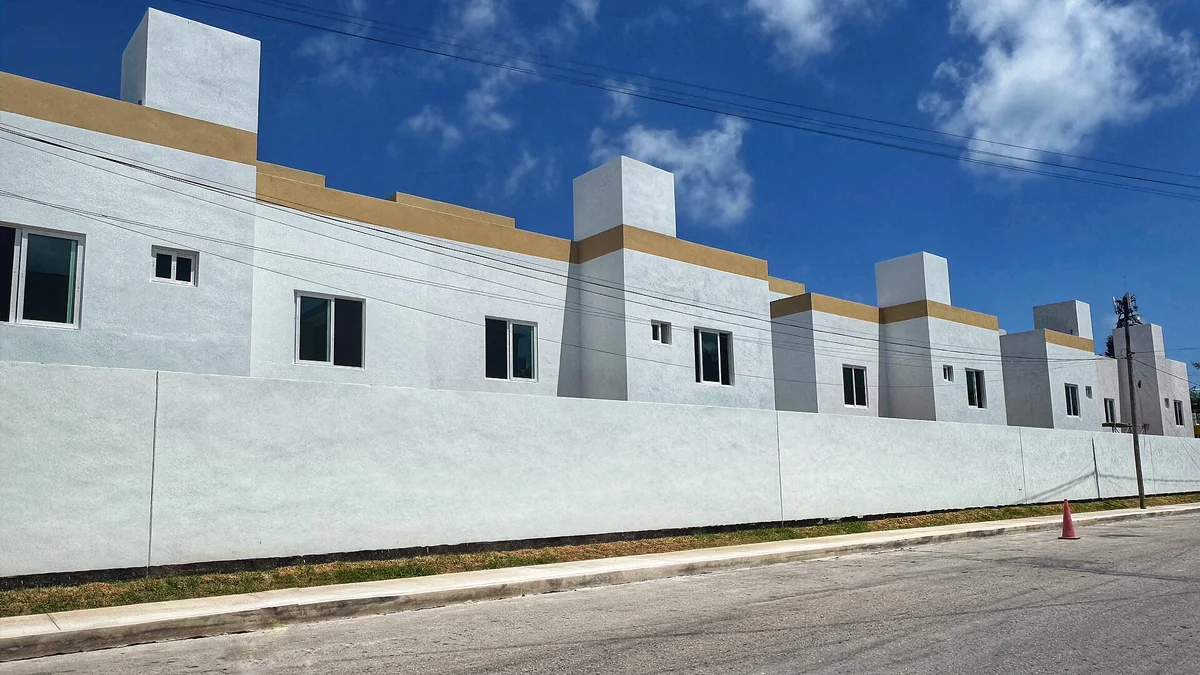
Quick answer: Entry-level Mexico beach condos start near $150K-200K in Puerto Morelos, Tulum fringe, and select RM towers, but 8-10% closing on small tickets and thin resale liquidity raise risk. Playa Centro at $250K+ often delivers better net stability per dollar of headache.
Budget investors discover Mexico on Zillow-equivalent apps, see a $165K Tulum studio, and ask why anyone buys $320K in Playa. The answer is usually liquidity, HOA health, and net yield after fees, not granite countertops.
Entry tiers defined
Mexican investor stock divides into four bands, and the boundaries are about liquidity rather than luxury. Below $150,000 you are buying fringe studios where closing costs approach 10% and the resale pool is thin. The $150,000-250,000 entry band buys a one-bedroom in secondary Riviera Maya or Puerto Vallarta. Core at $250,000-400,000 reaches Playa Centro-class product where net yields and resale depth both improve materially. Above $400,000 you are in Los Cabos, Playacar and beachfront, paying for the asset rather than the yield.
| Tier | Price band | Typical product |
|---|---|---|
| Sub-entry | under $150K | Studio, fringe, high risk |
| Entry | $150K-250K | 1BR, secondary RM / PV |
| Core | $250K-400K | Playa Centro class |
| Premium | $400K+ | Cabos, Playacar, beachfront |
This guide focuses $150K-250K.
Where entry tickets exist (2026)
| Market | Entry 1BR approx | Trade-off |
|---|---|---|
| Tulum Region 15 | $150K-220K | Oversupply, DOM |
| Puerto Morelos | $180K-240K | Thinner resale |
| North Playa towers | $200K-250K | HOA scrutiny |
| Mérida urban | ~$165K | No beach STR thesis |
| PV fringe | $200K+ | Hills vs walkability |
Math: small ticket, big closing %
$180K purchase + $14.5K closing = $194.5K all-in (8%)
Same stack on $300K = ~6.7%. Entry buyers feel closing pain harder, model it.
Yield at entry tier
| Example | Gross | Net indicative |
|---|---|---|
| Tulum R15 $185K | 6.2% | ~2.8% |
| Puerto Morelos $210K | 5.8% | ~3.8% |
| Playa Centro $295K | 6.6% | ~4.4% |
Extra $100K in Playa often buys 150+ bps net and resale depth.
When entry tier makes sense
- Long hold with personal use weeks
- Value-add renovation skill locally
- Diversification slot size capped
- You accept 90+ day resale timelines
When to stretch to core tier
- STR is primary income thesis
- First Mexico purchase
- Need US-lender-friendly resale comps
- Remote ownership, need manager density
What red flags should pause this Mexico purchase?
| Signal | Risk |
|---|---|
| 50%+ below colonia comps | Ejido / title |
| New tower, 80% unsold | Supply pressure |
| HOA over $450 on $180K unit | NOI crush |
| No STR in bylaws | Zero rental thesis |
| Developer-only financing | Delivery risk |
Mérida: entry but not beach
Direct title, retiree inflow, lower hurricane noise, different asset class. Net rent moderate; appreciation narrative stronger than STR.
Coastal entry ≠ Mérida entry. Pick thesis first.
Decision framework
Entry-tier buyers do not have one market, they have three, and the right one falls out of a single question about what the money is for. Answer that first and the rest of this guide narrows to one section:
Need 4%+ net STR year 2?     → Playa core $250K+
OK with 3% net + optionality? → PM / select Tulum
Retiree / resident long-let?  → Mérida
Chasing lowest sticker?       → Stop, run ejido DD
Sub-$150k: what exists and what traps
Inventory does exist under $150K, and almost all of it carries a structural reason for the price rather than a temporary one. Three categories account for most of what a foreign buyer will be shown:
- Studios in fringe Tulum towers
- Older units needing capex
- Non-beach interior lots marketed to foreigners
Trap rate rises, ejido proximity, unfinished infrastructure, HOAs that exceed rent share.
Rule: if sticker excites you more than DD report, pause.
Entry tier by buyer nationality
| Buyer | Common entry mistake |
|---|---|
| American | Zillow-comparison to US sunbelt |
| Canadian | FX on MXN fees ignored |
| European | Underestimating STR regulation |
| First-time foreign | Buying remotest cheapest |
Financing entry tier: the math gets worse
Leverage is least available exactly where buyers most want it. A $170K purchase with 40% down ($68K) plus $14K closing needs $82K in cash before a single month of carry, which is over half the ticket.
Mexican mortgage on small ticket; if available, still carries 30%+ down and higher rate. Leverage rarely rescues thin net yield.
Puerto Morelos entry case study
$195K 1BR, all-in $210K after 8% closing:
| Line | Annual |
|---|---|
| Gross STR (65% occ, $120 ADR) | ~$28,500 |
| Management 28% | −$7,980 |
| HOA $220/mo | −$2,640 |
| Other | −$1,400 |
| NOI | ~$16,480 |
| Net yield | ~7.8% aggressive |
Stress to 58% occupancy → ~5.5%, still viable if HOA stable. Thinner resale than Playa, accept longer exit.
Tulum region 15 entry case study
$168K studio, all-in $182K:
| Line | Annual |
|---|---|
| Gross | ~$11,200 |
| Mgmt + HOA $380/mo effective | −$6,800 |
| NOI | ~$4,400 |
| Net yield | ~2.4% |
Cheap sticker, poor net. Supply and HOA crush thesis.
Stretch budget analysis: $80k more for Playa
| Tulum R15 $168K | Playa Centro $248K | |
|---|---|---|
| All-in | ~$182K | ~$265K |
| Net yield | ~2.4% | ~4.4% |
| Resale DOM | 90+ days | 60-90 days |
| Manager choice | Limited | Deep |
Extra $83K all-in buys ~200 bps net and liquidity, often rational for first purchase.
Mérida entry: non-beach thesis
Mérida is widely marketed as outside the restricted zone, but its centre lies about 35 km from the Gulf and inside the 50 km band, so the same trust, annual fee and SRE permit apply as on the coast. At around $165K for an urban 1BR:
- Long-term rent 4-5% gross
- Retiree inflow appreciation narrative
- Lower STR tourism thesis
Not comparable to RM beach entry, pick lifestyle first.
Pre-construction entry traps
The cheapest headline prices in Mexico are almost always off-plan, and the discount is the price of carrying delivery risk for two years. Developers advertise $140,000 launch studios; what that actually buys is payments made before any escrow discipline, delivery at 24 months or later, an ISAI bill that lands at completion rather than at deposit, and an HOA figure nobody will confirm until the building opens. On an entry-tier ticket those four unknowns are proportionally larger than on a $400,000 purchase, because the fixed costs do not shrink with the price.
- Payments before escrow discipline
- Delivery 24+ months
- ISAI at completion not at deposit
- HOA unknown until delivery
Escrow Mexico Real Estate. Entry buyers should not learn on developer risk.
Upgrade path: when to sell entry and move core
An entry unit is a position, not a permanent holding, and four measurable signals say the position has stopped working: net yield under 3% for two consecutive years, resale days-on-market beyond 120, a special assessment above 5% of value, or a rental ban voted through the building. Any one of them is a reason to model the exit rather than wait for the market. The upgrade destination is usually core-tier Playa, where an extra $60,000-100,000 of capital buys both a higher net and a materially deeper buyer pool at sale.
- Net under 3% for two years
- Resale DOM over 120 days
- HOA special assessment over 5% of value
- STR banned in building
Roll into Playa Centro core with sale proceeds, not another fringe discount.
Entry tier DD shortcuts you cannot take
Due diligence costs roughly the same on a $150K studio as on a $600K villa, which tempts entry buyers to skip it, and the title risks it catches are indifferent to ticket size. Three checks are non-negotiable at any price:
- Libertad de gravamen
- Ejido screen
- HOA bylaws
- CFDI plan
Due Diligence Mexico. Small ticket does not mean small DD.
Decision scorecard
Score 1-5 each, buy entry only if total over 18:
| Factor | Weight |
|---|---|
| Net yield over 3.5% | ×3 |
| Resale liquidity | ×2 |
| HOA under 25% gross | ×2 |
| STR written allowed | ×3 |
| Ejido clean | ×5 (must be 5) |
Co-investing entry tier: splitting risk
Splitting an entry ticket halves the capital and roughly doubles the paperwork, because the trust has to name both parties and the exit needs both signatures. For two US buyers on a $170K Tulum studio:
- Both pass KYC on fideicomiso, joint beneficiaries
- Operating agreement needed for expense split
- Exit requires both signatures or POA
- Dispute cost exceeds savings vs solo Playa core
Partnership at entry tier multiplies friction, usually better to pool into one Playa unit.
How does this comparison stack up for Mexico investors?
Entry buyers often wire USD but pay HOA in MXN, FX drift affects carry:
| Scenario | Impact |
|---|---|
| USD income, MXN HOA rising | Carry up in USD terms |
| USD listing price | Cushion |
| Peso appreciation | MXN fees cheaper in USD |
Americans listing-focused, still model peso HOA growth stress +10%.
When entry tier is the right tool
Entry-tier property is a poor pure-yield instrument and a reasonable one in four specific situations, all of which involve the owner bringing something beyond capital: a local partner or family member on the ground, eight or more weeks of personal use offsetting the yield requirement, renovation skill that adds value the market has not priced, or a hold period of ten years-plus named in advance rather than discovered later. Absent all four, the same money in core-tier Playa returns more with less work.
- You have local partner (family, manager) on ground
- Personal use 8+ weeks offsets yield requirement
- Value-add renovation is your skill
- Hold period 10+ years named upfront
Entry fails when:
- Pure remote STR arbitrage is thesis
- First foreign purchase
- Need exit optionality under 5 years
Why leverage rarely rescues a thin net yield
At entry tier, borrowing compresses a return that was already tight, and the arithmetic is not close. Work a representative case: a $170K purchase with 35% down ($59.5K) + $13.6K closing = $73K cash. Loan on $110.5K at 9% interest → ~$10K annual debt service.
If NOI $4.5K, negative cash flow despite “cheap” sticker.
Entry tier + leverage = double compression. Cash or core tier usually rational.
Studio vs 1BR at entry tier
| Studio $140K | 1BR $185K | |
|---|---|---|
| ADR ceiling | Lower | Higher |
| Guest type | Couples only | Families |
| Resale pool | Thinner | Wider |
| HOA per sqm | Often higher | Moderate |
Studios look affordable, harder to operate and exit.
Seasonal personal use impact on entry yield
Personal use is not free, and on a small unit it is the single largest yield variable an owner controls. Eight weeks of own use leaves 44 rentable weeks, and which eight decides how much that costs:
- Lose peak weeks if personal use in winter
- Recalculate gross before buying for lifestyle + rent
Hybrid owners accept lower net, name weeks before purchase.
Building age at entry tier
1990s Playa buildings occasionally sub-$200K, capex risk:
- Elevator modernization voted
- Pool resurfacing
- Facade remediation
$140K price + $12K assessment = false entry tier.
Entry tier sourcing channels
| Channel | Risk |
|---|---|
| AMPI resale | Lower |
| Developer launch | Pre-construction risk |
| FSBO social media | Highest fraud |
| US MLS-style portals | Verify authority |
Never wire deposit on WhatsApp listing without attorney.
Upgrade financing path
Rolling an entry unit into core stock is a common plan and an expensive one, because the transaction costs land twice and the tax lands in two countries. Buyers who start entry and sell in year four should budget for all three:
- ISR on sale
- US capital gain
- Closing cost twice
Two transactions eat upgrade savings, sometimes better to wait and buy core once.
Rent-to-price ratio screening at entry
Most entry-tier listings can be eliminated before due diligence starts, using one ratio and two minutes: annual gross rent divided by all-in cost. Below 8% gross the property will not clear 3.5% net after 30% management and a real HOA, and paying an attorney to examine it is money spent proving what the arithmetic already said. Run the screen on the whole shortlist first, then spend the professional budget on the two or three that survive.
Annual gross rent / all-in cost > 8% gross → worth DD
Net after 30% mgmt and HOA > 3.5% → proceed
Under 3% net → pass unless personal use heavy
Entry tier rarely clears 4% net, accept thesis or move upmarket.
Who you will be selling to
Entry-tier buildings in Tulum Region 15 are frequently 80% or more foreign-owned, which means your exit depends entirely on the next foreign buyer arriving with the same thesis you had. The domestic buyer pool at these prices is thin because Mexican wages do not support dollar-denominated tourist-zone pricing, so there is no second market to fall back on when North American demand cools. That single fact explains most of the difference in resale speed between entry and core tier.
Tulum R15 entry buildings often 80%+ foreign owners, resale depends on next foreign buyer.
Domestic buyer pool thin, you’re selling to same demographic you bought from.
HOA As % of gross rent red line
If HOA exceeds 35% of realistic gross rent before management, mathematics broken.
Example: $850/mo HOA on $18K gross = 56%, impossible STR economics.
Entry tier and Mexican mortgage interaction
Banks rarely finance sub-$200K fringe, cash or large down payment only.
No leverage option increases cash-on-cash denominator, plan accordingly.
Summary: the entry-tier decision
Entry tier at $150,000-250,000 works for experienced holders with local support and a long horizon; it does not work as first-time remote short-term rental arbitrage, which is how most of it is sold. The recurring pattern is a buyer who saves $80,000 on the purchase and then loses more than that to a 2.8% net yield, a 120-day resale and a special assessment nobody modelled. The five-year total cost of ownership below shows why: core tier costs roughly $143,000 more to own over five years, and returns most of it through higher net rent and a faster, stronger sale.
The rule that settles almost every case: if net yield after an honest stress test cannot clear 3.5% on all-in cost, and personal use does not dominate the thesis, pass. Save the capital for core-tier Playa, or wait for a motivated resale that comes with an operating history; see how to calculate rental yield before any sub-$200,000 wire, and Playa del Carmen for the core-tier path.
One structural warning that applies whoever you buy from: developers market entry studios hardest to foreign first-timers, because commission motive aligns with clearing inventory rather than with your net yield. An independent AMPI-licensed resale agent in Playa Centro frequently serves a first-time buyer better than fringe launch pricing does.
Entry tier vs core tier: five-year TCO
| Cost | Entry $180K | Core $300K |
|---|---|---|
| All-in purchase | $194K | $321K |
| 5yr carry | $45K | $55K |
| Sale closing | $12K | $18K |
| 5yr TCO | ~$251K | ~$394K |
Core tier higher TCO, but resale proceeds and net rent often close gap for operators who need liquidity.
Entry-tier portfolio sequencing
Buyers who end up with a working Mexican portfolio almost never start with the cheapest ticket in the riskiest market. The sequence that works is: a $130,000-180,000 Playa studio first to build operating literacy where the management market is deep, then a second market, Mérida or Puerto Vallarta, to break Riviera Maya concentration, and only then value-add pre-construction, and only with escrow proof. Reversing that order is how entry-tier buyers acquire their operating literacy at the price of their first investment.
| Step | Typical ticket | Purpose |
|---|---|---|
| 1, Learn STR ops | $130K-$180K Playa studio | Operating literacy |
| 2, Diversify geo | Merida or Vallarta | Reduce RM concentration |
| 3, Value-add pre-con | Tulum only with escrow proof | Upside with controls |
What to verify next
Frequently Asked Questions
Yes. Entry-level 1BR condos exist near $150K-200K in Tulum fringe, Puerto Morelos, and some Playa-adjacent towers, with wide quality dispersion. Budget another 8-10% for closing on smaller tickets. Cheapest is not always investable.
Sub-$200K beach-access condos appear in Puerto Morelos, southern RM pockets, and select Tulum zones, often with thinner resale liquidity than Playa Centro. True 'cheap beach' frequently means compromise on location, HOA health, or STR legality.
Higher risk of ejido proximity, unfinished infrastructure, HOA stress, and oversupply. Discount price often signals discount liquidity, harder to sell than to buy. Run full due diligence; never skip because ticket is small.
Gross may show 6%+; net varies wildly. Region 15 Tulum budget units can net under 3% while Puerto Morelos may reach high 3%s. Underwrite colonia, not price point alone.
Only if you accept liquidity and execution risk. Many first-timers are better served in Playa Centro at $250K-300K with deeper management and resale markets, lower relative closing % too.
Mérida offers ~$165K urban condos on the same fideicomiso structure as the coast, since the city sits inside the 50 km band, different thesis: retiree appreciation and moderate rent, not beach STR. Separate market from RM coast.
Expect roughly $14K-16K (8%+), fideicomiso and legal fees are partially flat, hurting small purchases on percentage basis.
Ejido bargains, pre-construction without escrow, buildings with STR bans, HOAs above 35% of realistic gross rent, and markets with 70+ DOM and rising inventory.



Get a vetted Mexico shortlist
US and Canadian buyers use this to skip the developer sales deck: tell us the budget and the market, and we come back with 3 to 5 options and the net yield maths behind each one.
Want options matched to your budget and risk profile?
Three questions, one screen. We reply within one business day.
Get a vetted Mexico shortlist