
Cancun Real Estate: Homes and Condos for Sale
Homes and condos for sale in Cancun by zone, indicative price bands for Puerto Cancun, Huayacan and the Hotel Zone, and how foreigners take title.
By Mexico Invest Editorial · Updated September 7, 2026 · 16 min read
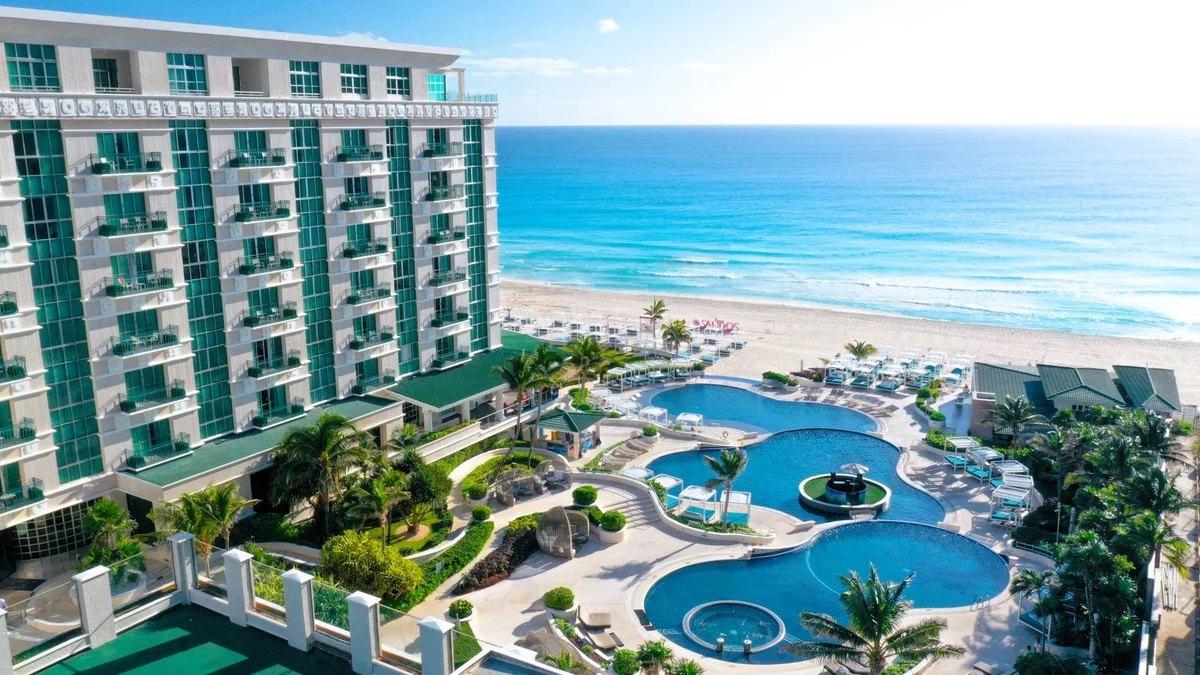
Quick answer: Cancun is the one Riviera market where portals hold the search results outright, so a buyer arriving here should expect listing sites rather than local knowledge. Indicative asking bands run about $130,000 to $250,000 in Huayacan and the residential south, $200,000 to $400,000 in Puerto Cancun, and higher in the Hotel Zone. Every purchase runs through a fideicomiso.
Twenty-five kilometres of lagoon and Caribbean frontage, direct flights from Dallas, Toronto, and Mexico City, and decades of resort infrastructure, Cancún is where the corridor starts economically even when your condo is in Playa or Tulum.
City snapshot
Cancún serves as Riviera Maya’s tourism gateway and demand engine with Mexico’s busiest international airport supporting corridor-wide visitor volume, while hotel zone condos offer institutional stability and mature regulation alongside competition from established all-inclusive resorts affecting STR pricing dynamics.
| Metric | Indicative 2026 |
|---|---|
| State | Quintana Roo |
| Airport | CUN, corridor primary hub |
| Role | Tourism gateway + hotel zone |
| 1BR price band | $250K+ (hotel zone) |
| Net yield signal | 3.5-4.5% |
| Ownership | Fideicomiso |
Zona Hotelera (Hotel Zone)
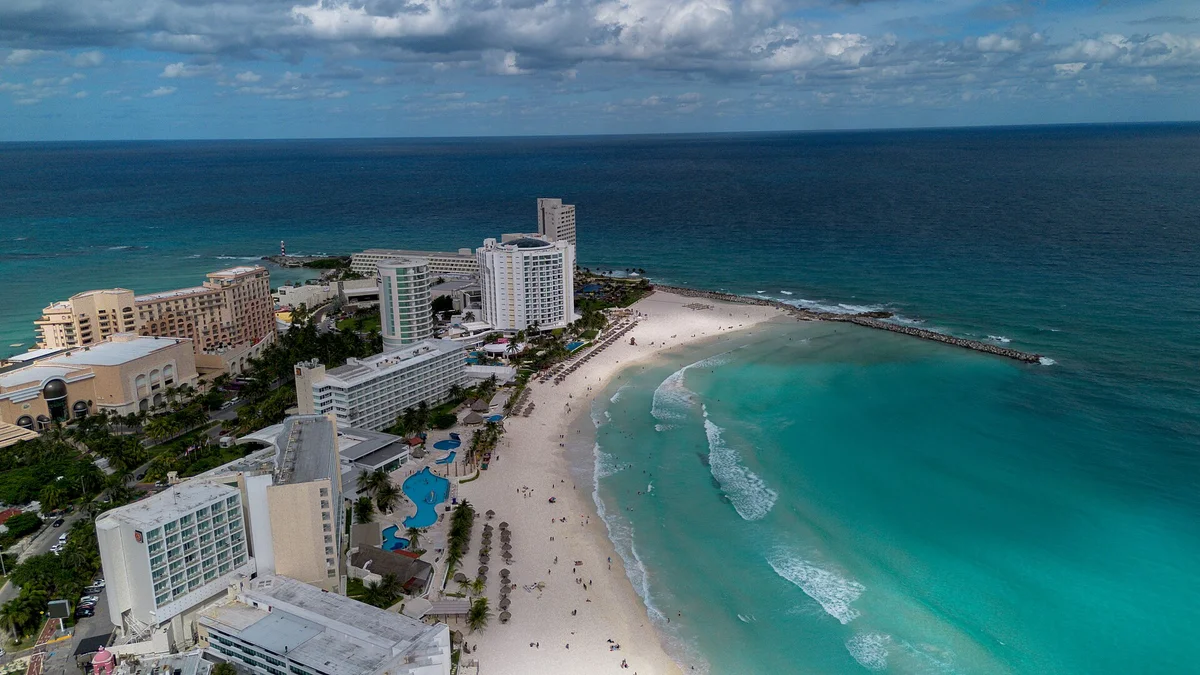
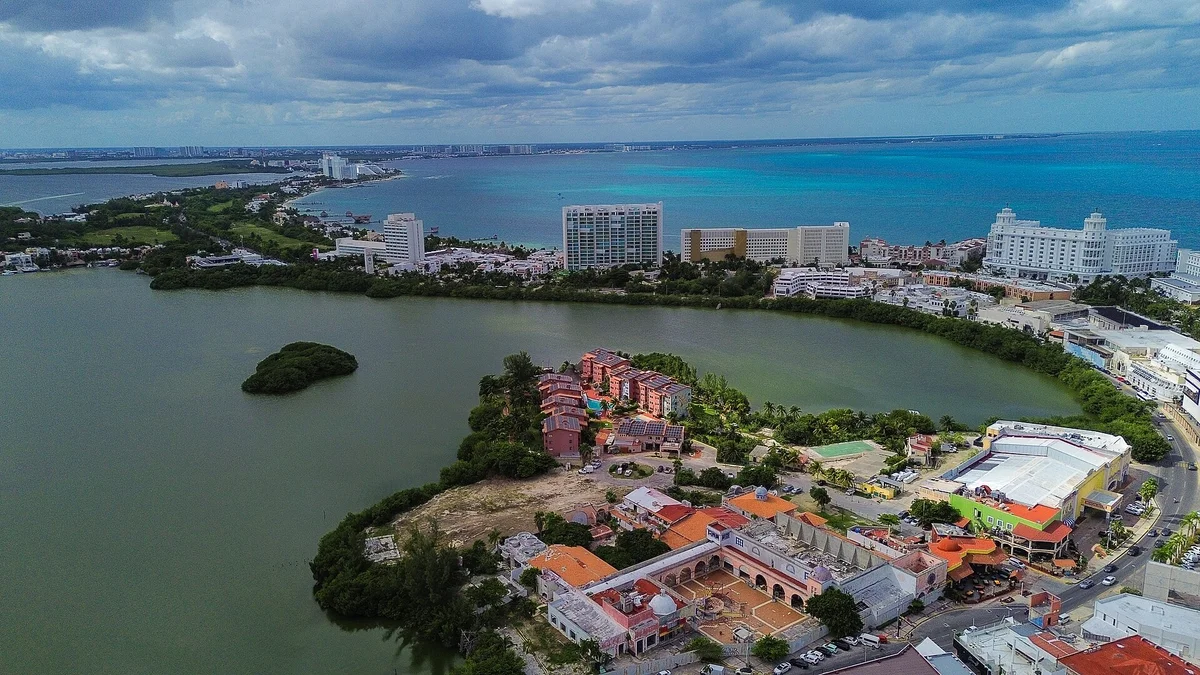
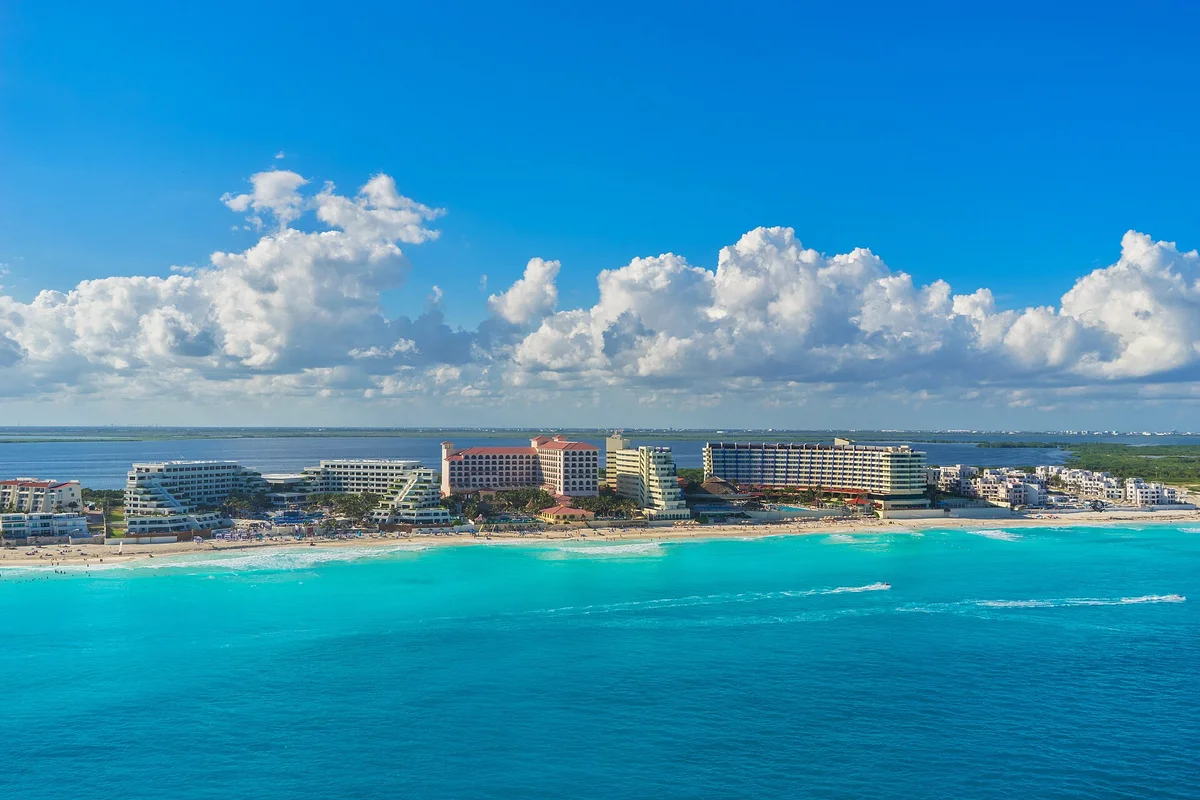
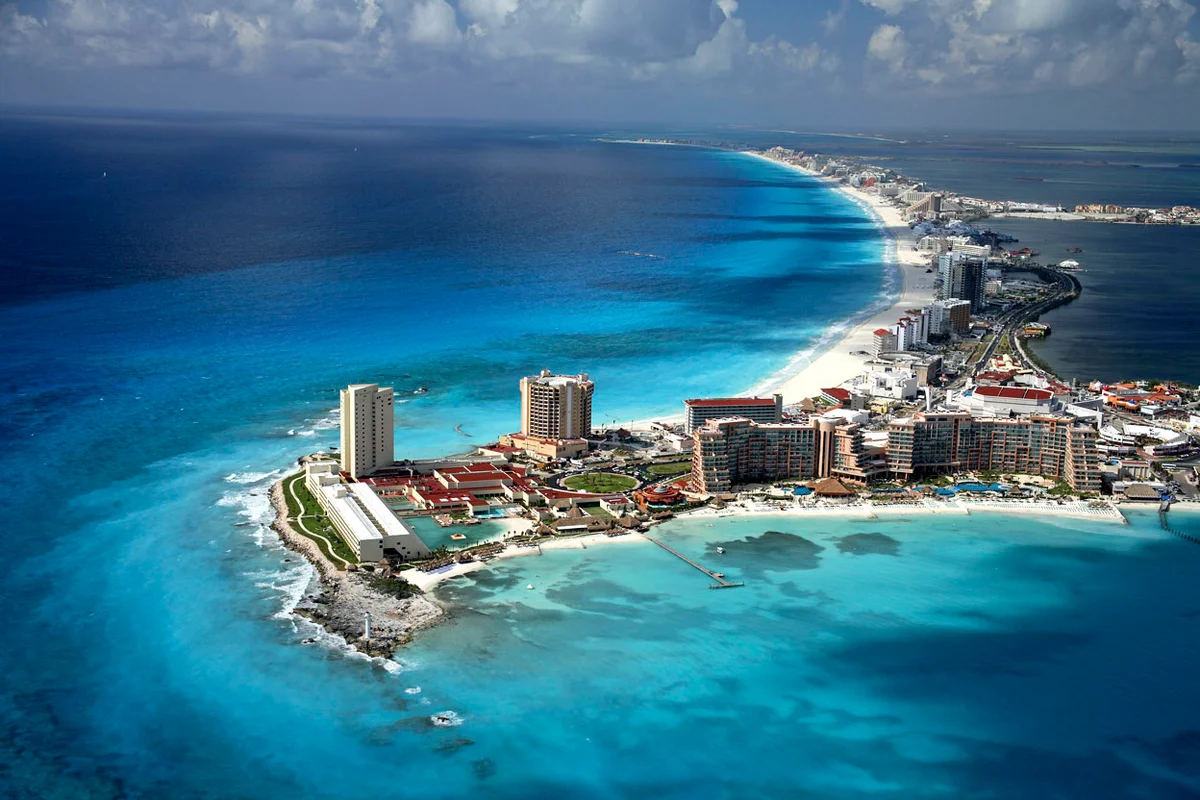
Barrier island strip between Nichupté Lagoon and Caribbean Sea. Condo towers alongside branded resorts.
- Strengths: beach frontage, tourism depth, resale liquidity in established towers
- Weaknesses: HOA complexity, hotel ADR competition, STR policy varies
- Investor fit: experienced STR operators, lifestyle + income blend
Puerto Cancún and marina corridor
Master-planned marina, golf, newer residential stacks.
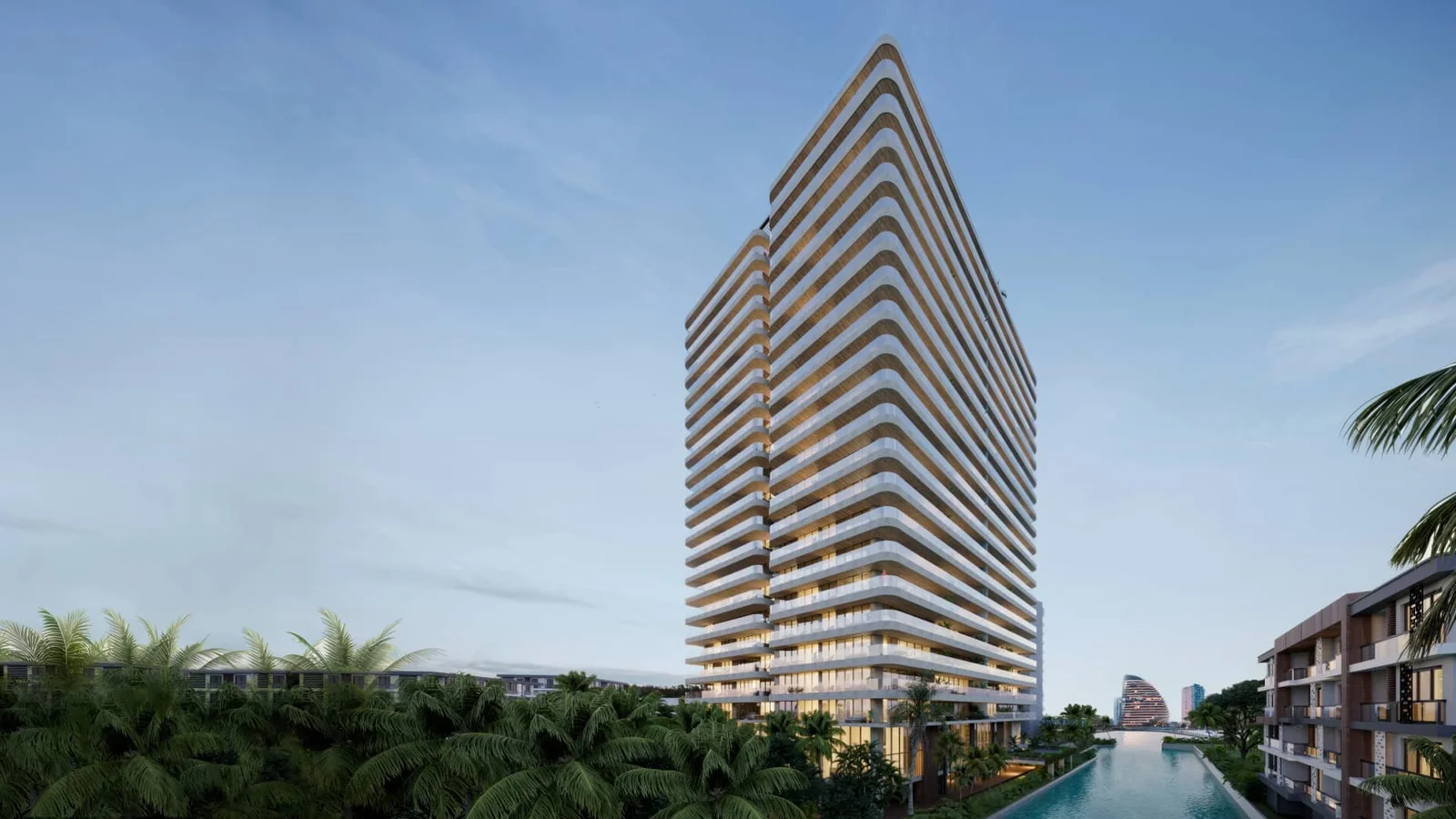
- Strengths: modern inventory, amenity packages, security
- Weaknesses: premium HOA, yield compression
- Investor fit: USD buyers seeking branded product
Mainland Cancún (urban)
Residential neighbourhoods away from beach strip, local workforce and domestic middle-class housing.
- Strengths: lower entry than hotel zone
- Weaknesses: not walk-to-beach STR product; different tenant profile
- Investor fit: long-term rent, not typical foreign STR thesis
Price and yield table (1br indicative)
Cancún hotel zone delivers 3.6-3.9% net yields with Puerto Cancún at 3.7% on higher entry basis, reflecting HOA costs of $250-600 monthly and mature market pricing where institutional tourism volume supports stable occupancy but limits ADR upside compared to frontier Riviera Maya markets.
Hotel competition is what compresses these numbers, and it is structural rather than cyclical. Cancún carries tens of thousands of hotel rooms in the same corridor your listing sits in, so a condo competes on price against an all-inclusive that bundles food and drink, which caps ADR regardless of how well the unit is finished. That is why the hotel zone nets 3.9% on a $290,000 basis while Playa’s Gonzalo Guerrero nets 4.5% on $320,000 with no comparable hotel density. Buy Cancún for occupancy stability and airport access, not for rate.
| Zone | Price approx | Gross | Net |
|---|---|---|---|
| Hotel zone mid-rise | $290K | 6.2% | 3.9% |
| Puerto Cancún | $340K | 6.0% | 3.7% |
| Lagoon-view tower | $270K | 5.8% | 3.6% |
Net assumes 25% management, stated HOA bands, 65-70% occupancy, verify per building.
How does this comparison stack up for Mexico investors?
Cancún offers high STR volume through airport connectivity with 3.5-4.5% net yields serving scale tourism and airport access priorities, while Playa del Carmen achieves 4.3-5.2% net through walkable operations and Tulum’s 2.6-5.8% spread serves selective buyers accepting oversupply risks for brand positioning.
Spread, not midpoint, is what separates these three markets for a buyer. Cancún ranges 3.5% to 4.5% net, Playa 4.3% to 5.2%, and Tulum 2.6% to 5.8%. Cancún’s narrow band means a mediocre building still lands close to the market return, which suits a buyer who cannot inspect deeply or manage actively. Tulum’s 320 basis point spread means building selection decides the outcome entirely, and a buyer who gets it wrong in Region 15 earns less than half what a selective buyer earns in Aldea Zama on the same money.
| City | STR liquidity | Net yield signal | Best for |
|---|---|---|---|
| Cancún | High volume, hotel competition | 3.5-4.5% | Scale tourism, airport access |
| Playa del Carmen | Walkable grid | 4.3-5.2% | STR operators |
| Tulum | Bifurcated | 2.6-5.8% | Selective buyers |
Tourism and demand drivers
Cancún functions as Riviera Maya’s primary tourism hub absorbing US Midwest, Canadian winter demand, Mexican domestic holidays, convention traffic, and cruise extensions that create feeder traffic supporting Playa and Tulum markets even when individual units locate in southern municipalities.
- US Midwest and Canada winter sun demand
- Mexican domestic holiday weekends
- Convention and wedding tourism
- Cruise passenger pre/post extensions
- Feeder traffic to Playa, Tulum, and inland Maya sites
Tren Maya connectivity reinforces Cancún as northern anchor, passenger throughput supports southern markets even when your unit sits in Solidaridad municipality.
STR and regulatory environment
Cancún hotel zone STR requires navigation of condominium regimes, municipal lodging registration, ISH tax compliance, and building security policies where hotel-zone address alone does not guarantee STR permission, making HOA verification essential before assuming vacation rental viability in any specific tower.
Hotel zone STR is not automatic. Layers:
- Condominium regime: many towers restrict under-30-day stays
- Municipal lodging registration
- ISH lodging tax compliance
- Building security policies for guest access
Assume nothing from address alone. STR stack detail: Short-Term Rental Rules Riviera Maya.
Infrastructure advantages
Cancún is the only place on the Riviera Maya corridor where the infrastructure was built for a city rather than retrofitted onto a resort strip: international hospitals, reliable telecoms, a full retail economy, and the airport every other market in the corridor depends on. For an owner that translates into fewer operational failures and a guest pool that includes people who will not book somewhere with a single clinic.
Cancún provides unmatched corridor infrastructure through international hospitals, retail density, telecommunications reliability, and established property management presence that reduces execution risk for foreign owners, though Playa offers deeper walkable STR management compared to hotel zone complexity.
- International hospital and medical tourism depth
- Retail and restaurant density unmatched in corridor
- Highway south to Playa del Carmen (~1 hour traffic-dependent)
- Telecommunications reliability in established zones
- Property management company presence, thinner than Playa for walkable STR grids but deeper than Puerto Morelos
Buyer process for foreigners
Cancún is inside the restricted zone, so a foreign purchase runs through a fideicomiso and takes eight steps and roughly 45-90 days. The first step is the one buyers skip: your own attorney, not the one the brokerage supplies. Everything after it, registry search, trust permit, HOA rental verification, is standard and sequential.
- Retain independent attorney: not broker bundle only
- Fideicomiso via authorised bank
- Registry title review: libertad de gravamen
- HOA STR verification if income thesis
- Notario closing: budget 5-10%
Financing note
Mexican bank mortgages for foreigners focus on completed condos with clean appraisals, hotel-zone towers sometimes qualify where frontier product does not.
What risks should buyers plan for before they commit?
| Risk | Detail |
|---|---|
| Hotel competition | All-inclusive packages cap ADR shoulder weeks |
| Hurricane season | June-November insurance and occupancy dip |
| Older tower capex | 1990s-2000s buildings, special assessments |
| STR assembly votes | Resident owners vs investor owners politics |
| Phantom STR permission | Verify with administrator directly |
Who should buy in Cancún
Cancún suits the buyer who values airport access, city services and resale depth more than the highest net yield on the corridor, a portfolio buyer, a personal-use owner who also rents, or someone who wants a market US buyers already recognise. It suits yield maximisers less well: hotel-zone HOA stacks are heavy and Playa del Carmen usually returns more per dollar.
Fit:
- Buyers wanting airport proximity for personal use
- Investors comfortable with hotel-zone HOA complexity
- Portfolio buyers diversifying across corridor cities
- Buyers prioritising resale depth in established towers
Poor fit:
- First-time Mexico buyers seeking simple walkable STR
- Yield-maximisers who ignore hotel competition
- Buyers expecting Tulum-style appreciation narrative on hotel-zone resale
Many succeed by treating Cancún as one node in a corridor thesis anchored in Riviera Maya Property Investment Guide.
Lifestyle and owner use
For an owner who uses the property themselves, Cancún removes friction the rest of the corridor imposes: you land and are at the unit in twenty minutes rather than an hour of highway, and the city runs year-round rather than emptying between seasons. The trade is that it feels like a working city with a resort strip attached, not a beach town.
Cancún delivers:
- Direct international flights
- World-class marina and golf
- Restaurant variety from street tacos to fine dining
- Day trips to Isla Mujeres, Cobá, and southern corridor
Owner-use weeks pair with STR calendar in winter high season; if HOA permits.
2026 market tone
Cancún in 2026 is a two-speed market. Generic hotel-zone resale towers carry negotiation room and extended days-on-market; Puerto Cancún and branded amenity stacks hold their pricing. Net yields in mature buildings with legal short-term rental permission have been stable rather than rising. This is a selection market, and the average number tells you nothing about either half.
Selection phase, not uniform boom:
- Resale negotiation room in generic hotel-zone towers
- Premium Puerto Cancún holds firmer on branded amenity stacks
- Net yields stable in mature buildings with legal STR
- Buyers leverage due diligence more than 2021-2022 urgency
Hotel zone tower vintage guide
| Era | Typical profile | Investor note |
|---|---|---|
| 1980s-1990s | Lower ceilings, aging systems | Special assessment risk |
| 2000s boom | Large pools, beach access | HOA reserves vary widely |
| 2010s luxury | Higher HOA, better finishes | Yield compression |
| 2020s new | Modern amenities | Premium pricing |
Older towers with recently renovated lobbies may still carry unfunded elevator or facade projects, request engineering reports when available.
Nichupté Lagoon vs ocean frontage
Lagoon units cost less and earn less, and the gap is wider than the price discount suggests because the guest is different, calm water and marina access rather than beach frontage. The mistake that costs money is applying ocean-front ADR comparables to a lagoon-view purchase; underwrite the two sides of the strip as separate markets.
Lagoon-view units trade at discount to ocean frontage but attract different guest profiles:
- Lagoon: calmer water, marina access, mosquito management matters
- Ocean: premium ADR, wind exposure, beach erosion maintenance in select towers
Underwrite ADR separately, do not apply ocean comps to lagoon inventory.
Convention and group tourism impact
The convention centre is Cancún’s structural advantage over Playa del Carmen for a rental owner: it fills Tuesday to Thursday nights that leisure markets leave empty, at corporate rates, in months that are otherwise shoulder season. Capturing it costs almost nothing, a desk, reliable Wi-Fi, and an early check-in policy, and few listings in the corridor bother.
Cancún’s convention centre drives mid-week occupancy in business-season months, supportive for STR units that accept 3-5 night corporate stays. Units that only target weekend leisure guests leave convention weeks soft.
Positioning listing for business travel (desk, Wi-Fi SLA, early check-in) captures demand Playa’s party grid ignores.
Environmental and reef proximity
Cancún’s northern hotel-zone beaches sit outside the reef park that shelters Puerto Morelos, which means open swimming rather than protected snorkelling, better for guests who want to get in the water, worse for guests who came to see it. The practical consequence for an owner is sargassum: exposure varies block by block along the strip and shows up directly in reviews.
Puerto Morelos reef park sits south, Cancún’s northern hotel zone beaches differ ecologically. Some buyers prefer Cancún for direct beach swimming without reef boat trips.
Not an investment metric alone, but affects guest reviews and repeat bookings on STR platforms.
Property tax and holding costs
Carrying a Cancún one-bedroom costs roughly $4,000-8,500 a year, and the HOA is 80% of it. Predial is negligible by US standards and the fideicomiso runs $500-800; what moves the number is a hotel-zone HOA of $250-600 a month plus a wind rider on the insurance. Budget the HOA at its actual figure plus 10%, because amenity-heavy towers raise it.
Predial in Cancún remains low versus US coastal markets, but HOA dominates carrying cost. Budget:
- HOA $250-600/month typical hotel-zone 1BR
- Fideicomiso annual $500-800
- Insurance wind rider in hurricane season
- Management 25-30% if not owner-operated
Gross vs Net Yield Mexico for line-item detail.
Resale liquidity signals
Cancún is the most liquid resale market on the corridor, and liquidity is worth roughly as much as half a point of yield when you come to sell. The reasons are structural: a broker network that functions like an MLS, a US buyer pool that already knows the name, and enough cash buyers that a financing fall-through does not kill a deal.
Cancún resale depth exceeds Puerto Morelos and most Tulum pockets:
- MLS-style broker networks more mature
- US buyer pool familiar with brand
- Cash buyers common, financing delays less deal-killing
Still slower than US Florida for identical price point, price realistically for 90-120 day DOM on generic towers.
Tren Maya and northern Corridor
Cancún’s Tren Maya station integration supports overland tourism to Playa and Tulum, reinforcing airport-city role. Does not automatically lift every tower’s ADR, benefits accrue to units with legal STR and competent management near transport nodes.
Riviera Maya Property Investment Guide for corridor thesis.
Due diligence priorities in Cancún
Cancún diligence differs from the rest of the corridor in one respect: much of the hotel-zone stock is older, so the building matters more than the colonia. Assessment history, reserve position and the age of lifts, plumbing and facade carry more weight here than in newly delivered Playa or Tulum inventory, and they are the lines where a special assessment originates.
- Tower STR policy: written administrator confirmation
- Parking and storage rights on escritura
- Special assessment history last 5 years
- Hurricane insurance claims history if available
- Comparison to 3 comps in same tower: identical-unit competition
Due Diligence Mexico Real Estate
Ownership demographics
Cancún hotel-zone condos show decades of US and Canadian ownership, supportive for resale marketing to North Americans. Domestic Mexican buyers participate more in mainland zones than barrier-island strip. That ownership history is a resale asset: a building with decades of North American owners has a functioning market of buyers who already understand the product, which is precisely what newer corridor inventory lacks.
Foreign share does not eliminate HOA politics, resident Mexican owners on lower floors may vote differently than investor stacks on higher floors.
Seasonality table
| Season | Occupancy signal | ADR signal |
|---|---|---|
| Nov-Apr high | Strong | Peak |
| May-Jun shoulder | Moderate | Softening |
| Jul-Aug family | Moderate | Mixed |
| Sep-Oct hurricane | Weakest | Discount |
Underwrite annual average, not February-only deck from broker.
Day-trip and feeder tourism
Cancún guests use the city as a base rather than a destination, which lengthens stays and widens the guest pool, Isla Mujeres, Chichén Itzá, Playa and the reef are all day trips from a hotel-zone condo. A listing that says so explicitly captures bookings a purely beach-focused listing does not.
Guests use Cancún base for:
- Isla Mujeres ferry
- Cobá and Tulum ruins day tours
- Xcaret and theme parks
- Playa restaurant nights via highway
STR listings highlighting tour logistics and parking reduce guest friction, modest review score impact compounds over seasons.
Working with Playa-based managers from Cancún unit
Some owners hire Playa managers who service Cancún towers, verify they hold current municipal registration for Benito Juárez address, not only Solidaridad experience.
Cross-municipio management without registration update is a compliance gap.
Entry price vs total cost of ownership
$250K listing with $520/month HOA underperforms $285K listing with $280/month HOA on net yield, always compare five-year carry, not sticker price.
Mexico Rental Yield Guide colonia methodology applies to tower-level analysis within Cancún.
Security and guest access protocols
Hotel-zone towers enforce guest registration at security gates, operational friction if STR not pre-registered with administrators. Budget staff time or manager coordination for smooth check-in; bad reviews citing security delays hurt ADR.
Buildings with hotel operator affiliation may route guests through front desk rules incompatible with independent Airbnb, verify before purchase.
Water sports and lagoon activity
Jet ski and tour boat traffic on Nichupté Lagoon creates noise on lagoon-side balconies, similar to pier noise in Puerto Morelos. Ocean-side units avoid lagoon traffic but face wind and wave exposure. Which makes orientation a pricing variable rather than a preference, a lagoon-side balcony under the tour boat route will show it in reviews, and the discount is not visible in the listing.
Physical due diligence visit remains valuable despite Cancún’s institutional market reputation.
Visit mid-week and weekend night, noise profiles differ materially between party corridors and residential tower floors within the same kilometre of hotel zone.
Broker decks rarely disclose floor-level noise, only on-site inspection or owner interview surfaces this yield killer before closing. Ask about spring break week behaviour on your specific floor.
Indicative data mid-2026. Verify building-specific HOA, STR policy, and pricing before purchase.
Project reviews in Cancún real estate
Browse off-plan and resale listings we cover in this corridor: Cancun Downtown Lofts · Cancun Huayacan Condos · Cancun Lagoon Lofts · Costa Mujeres Cancun · Puerto Cancún Marina. Several Cancún projects have been through our review process, spanning downtown lofts, the Huayacán corridor and Costa Mujeres. Together they give a reference range for pricing and HOA across the city’s distinct sub-markets rather than for the hotel zone alone.
Frequently Asked Questions
Cancún suits investors who value tourism volume, airport connectivity, and institutional market depth over frontier appreciation bets. Net STR yields on hotel-zone condos often run 3.5-4.5%, below prime Playa del Carmen colonias. Cancún is the corridor's demand engine; many STR operators buy operations in Playa or Tulum while using Cancún flight patterns for guest throughput.
Investor-grade 1BR condos in the hotel zone and Puerto Cancún corridor commonly list from $250,000 USD upward in 2026. Mainland residential zones offer lower tickets with different guest profiles. Closing adds 5-10% all-in.
Yes via fideicomiso in the coastal restricted zone. Cancún's condo inventory has decades of foreign ownership precedent. Independent legal counsel and registry verification remain mandatory, same as elsewhere in Quintana Roo.
The Zona Hotelera is a 25-kilometre barrier-island strip of resorts, condo towers, beaches, and lagoon frontage. High tourism density, mature regulation, and mixed hotel/condo ownership models. STR rules vary by tower, never assume hotel-zone address equals Airbnb permission.
Playa offers walkable urban STR grids and net yields often near 4.4-5.2% in prime colonias. Cancún offers airport scale and branded tourism but heavier competition from hotel inventory. Many investors treat Cancún as corridor infrastructure and deploy capital south in Playa.
Gross STR marketing may show 6-7% on hotel-zone 1BR units. Net after 25-30% management, HOA $250-600/month, and occupancy variance often lands 3.5-4.5%. Underwrite conservatively, hotel supply caps ADR on weak weeks.
Cancún International Airport (CUN) is Riviera Maya's primary international gateway, 25M+ passenger throughput supports entire corridor demand. Airport proximity benefits owner access and guest turnover for units throughout Quintana Roo, not only Cancún-owned inventory.
HOA STR restrictions, hurricane exposure, competition from all-inclusive hotels, older tower special assessments, and assuming hotel-zone address overrides condominium bylaws. Due diligence on regime de condominio is non-negotiable.






Get a vetted Mexico shortlist
US and Canadian buyers use this to skip the developer sales deck: tell us the budget and the market, and we come back with 3 to 5 options and the net yield maths behind each one.
Want options matched to your budget and risk profile?
Three questions, one screen. We reply within one business day.
Get a vetted Mexico shortlist